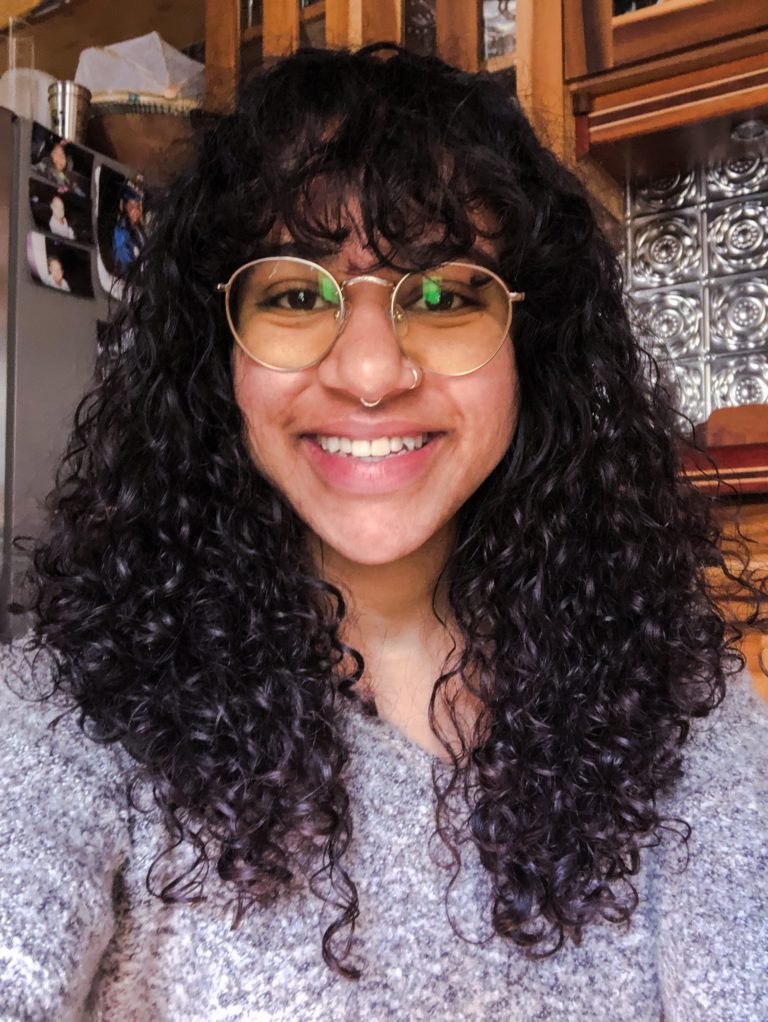
This guest column is a part of our Safe Views series, where Transy students share their views on how they feel safe, and unsafe, on Transy’s campus. Student writers responded to the question, “Do you feel safe on Transy’s campus?” and they approached that question from a variety of perspectives and viewpoints. This guest column is written by junior Diaka Savane.
Being safe and feeling safe are different things. Being safe refers to, in my opinion, the state of being in a position that will not cause harm, injury or loss. I believe this refers to the state of being physically safe. Feeling safe on the other hand must be intrinsically evaluated by an individual. Does this person feel protected, cared for, secure?
Being a student at Transylvania University, if someone outside of the community were to ask me if I felt safe, I would promptly respond with a confident ‘yes,’ since, prior to being asked to write this article, I had never considered, nor evaluated, why I felt safe on this campus mentally and emotionally. This is not to say that my hypothetical affirmative statement isn’t true, but it is worth delving deeper into the complex concept of being and feeling “safe.”
In this column I will attempt to respond to the question “Do you feel safe at Transy?” When I think of ‘safety’ and ‘Transy’ I automatically think about the Department of Public Safety. Do I feel physically safe? Yes. I do not, however, trust that the department has my safety in mind outside of the physical. As a student of color on campus, and considering the current social climate of the United States, I cannot say that I have a high level of confidence in the department as a whole. Why might that be? First, I believe that certain DPS officers are tokenizing new officers which include two people of color, a member of the LGBTQIA+ community, and a self identifying female. Don’t get me wrong, a diverse work environment is an attribute to be proud of, but simply stating that it is doesn’t mean the job is done. When everyone begins to feel a level of safety that encompasses physical, mental and emotional, regardless of their background, that is what I call progress.
I personally have had more unsettling encounters with DPS than encouraging ones. One example is when, prior to a scheduled meeting with an officer, I was confused with another student of color even though this officer claims to want to get to know every student on campus. The very purpose of the meeting was to address the issue of grouping the neighborhoods and communities that live past Fourth Street together and generalizing the intentions of people living in this area of Lexington, predominantly African Americans, Africans and black people. Isn’t Transy supposed to be about community engagement, outreach and broadening our understandings of people who are ‘different’ from us?
Moreover, tokenization, micro and macro aggressions are not absent from this campus. Let me list a few examples for the readers who may not be aware. Have you seen a disproportionate amount of photos of people of color on brochures, the website and other promotional material for Transy? That is tokenism; or the sensationalization of people to the institution’s benefit. When I have been asked to participate in a photoshoot, be a part of a video, get put on a committee, or asked to write an article for the Rambler without having any particular association with the specific task, besides being a student on campus, it is because I am not white. The line between micro and macro aggression is blurred in these examples but nevertheless present.
How does this relate to safety? Studies have shown that microaggressions–also referred to as microassaults, microinsults and microinvalidations — can have an adverse effect on the psyche of the targeted individual. I, for example, have never been so aware of the color of my skin as I am at Transy. It’s a damn shame, but it has allowed me to grow and educate myself about social injustices.
Transy, being a liberal arts institution, means engaging in conversation about concepts, topics and theories uncomfortable and unfamiliar to our beliefs, backgrounds and varying levels of understanding both inside and outside of the classroom. Thanks to a conversation I had this past weekend I was able to realize something I had never articulated before; the fact that I am disconcerted by the unwillingness or lack of awareness of a large population of this campus to engage in conversation with people whose views differ from our own. I would like to admit my fault in this. Although I am fascinated by conversations about social issues, I tend to focus on the understanding that I predetermine to be ‘correct.’ I would argue, however, that being uncomfortable is one way we are able to grow. Embracing the challenge it is to confront or to be confronted by difficult subjects or simply differing views promotes understanding; and if not understanding, at least awareness…
This is all to say that I do not feel emotionally or mentally safe at Transy when I witness this blatant reluctance to engage in conversation or lack of awareness about the experiences of others. There is a limit to engaging in conversation, however, and that is physical safety. If someone is threatening to cause harm or is disrespecting civil dialogue, it is no longer worth your energy.
I realize that the fear of engagement as well as the realization that it is incredibly easy to shelter oneself from undesirable realities is powerful; but, perpetuating this tendency means being complacent with the status quo, leaving students, like myself, feeling uncomfortable, out of place and unsafe on college campuses.









Series Introduction: Safe Views
The Rambler’s Commentary Section has traditionally been the place where students can make their voices heard, and where the rest of campus will listen to them. With that role in mind, Managing Editor Taylor Mahlinger and I, as Editor-in-Chief, commissioned a series of guest columns focused on the ways that Transy students think about safety on campus. We wanted to hear how students felt, how they processed those feelings, and how they made sense of the ways that Transy, as an institution, thinks about their safety. We’re calling this series Safe Views, a title which both reflects the subject matter, and comments on the ways that a press should function as the protector of uncomfortable but necessary discussions.
We wanted to ask students a seemingly simple question.
Do you feel safe at Transy?
We went about investigating that question in two ways. The first part, and the core of this series, is a set of guest columns from particularly thoughtful student writers, where each of them respond at length to the question that we posed. You can read each of those guest columns on our site, and links to all of them can be found here.
The second thing that we did was create a short survey, which you can still access here, to provide every student with the chance to make their voice heard. While we won’t be publishing the raw data responses to that survey, we do want to provide a summary view. That’s what this column is for.
One of the major recurring themes that we’ve found throughout the series is the way that students interact with campus, and with the idea of safety, through the lenses of race, gender, and background. As one survey respondent put it:
On the other hand, some students don’t feel quite so privileged:
These considerations also run through our guest columns. Sophomore Alexa Valarezo and junior Diaka Savane write about the ways in which their racial identities dominate the ways that they are perceived on campus, and how that prevents them from feeling safe to be themselves much of the time.
This series is the start of a public conversation. I hope that it’s a conversation that centers student voices. As this series makes clear, students at Transy have a lot to say, and they’re more than willing to have these difficult but valuable conversations.