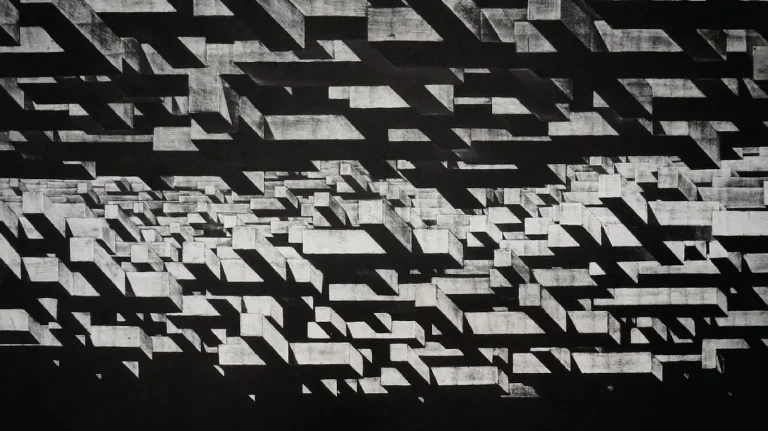
The Morlan Gallery’s exhibit Tropiciele/Pathfinders displays faculty work from the Academy of Fine Art in Krakow, Poland. The works are composed on paper, using a variety of techniques varying from contemporary takes on traditional mediums to the use of technologies such as robotic drawing machines. This exhibit title is a reference to the thematic exploration of art presented in the works. It explores the freedom of artistic expression and the wide variety of ‘paths’ it can take. The works are not necessarily connected visually but through the theme of finding one’s way in the world through artistic expression.
The exhibit contains the work of 14-20 faculty members from the Academy. The pieces were created using printmaking techniques such as intaglio, linocut, serigraphy, lithography, digital prints and ink, spray paint, and graphite on paper. These processes often involve engraving or using machinery.
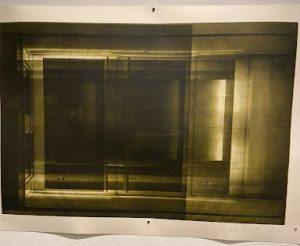
No Title I by Marlena Biczak is a printmaking piece created through intaglio. I found its use of color and motion compelling. The piece is almost divided on the right, as the lighting and image slightly differ from the rest of the work. However, this division appears to be more an indicator of motion than a separate element of the composition. The harsh tones of yellow washing over the gray and black structure in the painting create a unique feeling, resembling light reflecting off metal. This painting may represent the fast-paced nature of life and the theme of finding a path in the world.
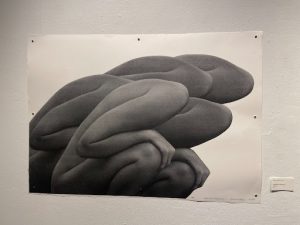
Siedzimy-czekamy by Stefan Kaczmarek is a work of serigraphy. The title translates to “We sit and wait,” reflecting the kneeling figures displayed. The artist creates an abstract depiction of the human body that appears realistic in some elements and distorted in others. The shading causes the skin to appear almost like a black-and-white photograph, as well as the natural curving of the bodies. The figures appear realistic until you notice they are closed off around the shoulders. They seem to be piling on top of one another to form a solidified group. This may allude to the idea of complacency within society and reflect the notion that group mentalities prevent some from thinking for themselves. It may connect with the theme of trying to find your path in society and avoiding conformity.
I had a great time exploring the artistic side of Transy’s campus. It was interesting to see artwork created at another university displayed here at Transy. If you want to check out this exhibit, it will be on display in the Morlan Gallery until February 23rd


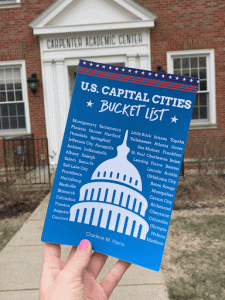 The format of the book invites you to write about your visits to city capitals. How did you decide on this layout?