Saturday, April 18, 2026
Home Blog Page 5

The Death of Free Press: The Quiet Creep of Authoritarianism

0
― George Orwell

One of the first targets of authoritarian regimes is the media. Authoritarian leaders, in a bid to consolidate power and suppress dissent, will attack the free press. Allegations of ‘fake news’ are used to delegitimize news organizations and sow doubt in the public. In extreme cases, regimes will make direct attacks on media institutions, such as threatening legal action or buying up news networks. The United States is currently on the path of descent into an autocratic state through the president’s attacks on the press.

Attacks on the media are not unique to the current administration. President Trump made his initial rise to power through charges against perceived bias against him and his campaign from mainstream news networks like CNN and MSNBC. Since his return to the White House, he has taken more extreme measures to stop news outlets from publishing content he doesn’t like.

President Trump signed off on a rare rescissions bill in June to pull billions of dollars in funding from the Corporation for Public Broadcasting (CPB), which helps fund public news outlets such as the Public Broadcasting Service (PBS) and National Public Radio (NPR). The CPB has announced that it will be shutting down due to these funding cuts, taking a serious blow to publicly funded media. This is a part of the president’s crusade against perceived government overspending, but in reality, it’s a means of consolidating power and suppressing voices that will actually oppose him.

This is a crucial function of the free press: to spread awareness and draw attention to important issues. To provide people with the facts and stories they need to know. It is the mark of a good news organization and journalist to seek out the truth, even when it’s inconvenient, even when it’s dangerous. 

Politicians are aware of this power and have historically cracked down on the press when it’s most convenient for them. The Pentagon Papers, which exposed the deception the US government engaged in during the Vietnam War, were published by The New York Times, which became the subject of a landmark Supreme Court case. At that time, the Supreme Court ruled in favor of protecting the freedom of the press and rejected the Nixon administration’s attempts to bury the truth. But now we live in a time where we dishearteningly see news outlets comply with the president’s demands.

 President Trump and his legal team have initiated a barrage of lawsuits targeting major media companies with allegations of defamation. Companies like ABC News and Paramount Global reached settlement agreements and have subsequently made questionable decisions. After airing an episode that merely mentioned Charlie Kirk’s death, ABC News briefly pulled ‘The Jimmy Kimmel Show’ off the air, though his show was quickly reinstated. Similarly, CBS, which Paramount Global owns, canceled ‘The Stephen Colbert Show,’ which was known for its criticisms of Donald Trump. Though CBS has officially stated that this decision was not politically motivated, it happened just a few days after Paramount Global reached its settlement with Trump.

The increasing encroachments on our country’s media spell out a dark future for our civil freedoms. But not all is lost, as several news companies are willing to stand up to the president’s punches. Publications like The Guardian, The Atlantic, and AP News have remained committed to publishing honest journalism and resisting pressure from Trump. The New York Times and  The Wall Street Journal have decided to challenge the lawsuits levied against them rather than settle. PBS and NPR have continued operations despite the recent cuts, with PBS adopting the slogan “Defunded but not Defeated.” 

It’s more important than ever to support journalism. In an age fraught with suspicion of institutions, political polarization, and creeping authoritarianism, the press must be there to seek out and deliver the truth to the public. Free expression and the press are key to combating the iron fist of an emerging political despot. The US is on the path to authoritarianism, and slowly killing the free press is a means to that end. We are not fully there yet; there is still hope that our media institutions will prevail.

Fulbright Scholar Yi Ru Lee and Her Hometown of Kaohsiung, Taiwan

0

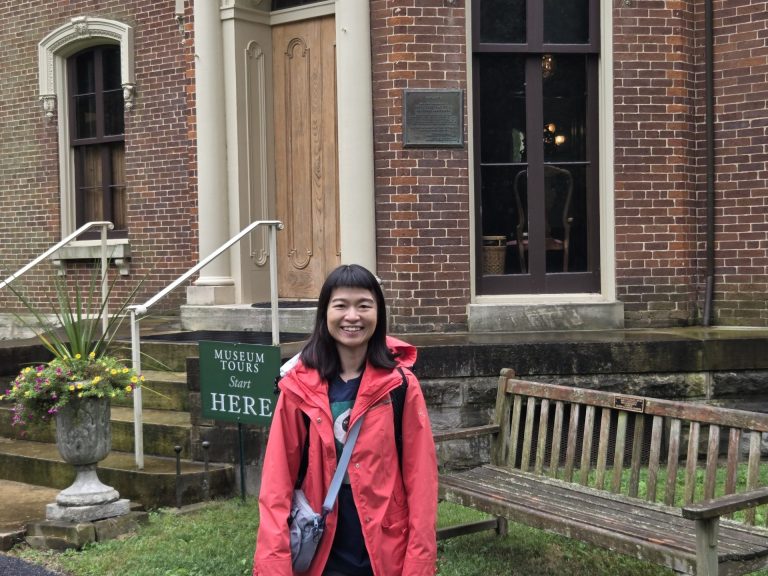
After being awarded a prestigious Fulbright fellowship, Yi Ru Lee made the trip from Kaohsiung, Taiwan to Lexington in August to teach Chinese at Transy this academic year. She is also taking classes as a student here. Lee is fluent in English after studying the language for her entire college career.

Known to students as Lee 老师 (laoshi), which means “teacher Lee,” she has been a bright and energetic presence on campus this semester, always expressing her kind nature and openness in talking to students and faculty.

Yi Ru Lee is from Kaohsiung, an artistically and culturally rich city on the southwest coast of Taiwan. She was originally born in Taoyuan, Taiwan, but as a kid moved to Kaohsiung for her parents to find work. She lived there until college and has not been back much since then. However, Lee said, Kaohsiung “is a place of warmth and sense of security” for her to go back to to see family and friends.

On my own trip this Summer with KIIS Taiwan, I myself briefly went to Kaohsiung to visit Pier-2, one of the city’s iconic locations, and stayed the night there during the group’s week-long bus excursion around the country. I only spent a couple days there, but I was curious about the traditions and activity in the area, so I was eager to speak with Lee about the foods, interesting locations, and traditions of Kaohsiung.

The first thing Lee mentioned about her hometown was the “breakfast shops.” Breakfast shops “open at 5 o’clock with super great deals,” she said, and serve a number of foods popular among foreigners and locals alike—including green onion pancakes and Chinese omelets. Chinese omelets are like regular omelets except the eggs are more thinly and delicately spread on a round skillet. There are a variety of fillings available, including vegetables, tuna, and meat. Breakfast shops are often the first stop for Kaohsiung residents to start their day.

Bubble tea shops are another extremely popular and important aspect of daily Taiwanese culture. Bubble tea was founded in Taiwan in the mid-1980s in Taichung. Since then, it has been a staple drink around the world. I asked Yi Ru Lee if bubble tea shops in Taiwan were also utilized as study or work spaces like coffee shops. “In America there is more seating at boba tea shops,” she told me. “However, in Taiwan, there are no sitting places at boba tea shops.”

As for food, Lee said that a popular option was Dandan Hamburger, which has a “mix of Western and Eastern foods.” The restaurant combines the traditional Taiwanese cuisine known as “mian xian fu” (dumplings and soup) with hamburgers, making for a unique culinary fusion. Lee said the meals have portions that are manageable and delicious. 

Kaohsiung’s most famous cuisine, Lee said, is its hotpot, particularly “man (满) hotpot,” or “mutton hotpot.” Being a coastal city, it is also incredibly famous for seafood hotpots. There are hotpot locations all over the city (there are around 94 businesses centered around hotpot in the city’s Sanmin District alone). “There are different kinds of hotpot broth that you can choose from,” she said. “My favorite one is either herbal broth or curry broth.”

There are a couple notable celebrations in Kaohsiung as well, Lee said.

“When it comes down to celebrations, pretty similar to the US, we do have the countdown to the New Year,” she said. “The most famous countdown is at Taipei 101 [the tallest building in Taiwan, where people from northern cities congregate for a New Year’s Eve countdown]. But Kaohsiung actually celebrates at Pier-2.”

Pier-2 reflects the artistry of Taiwanese creators. The art located there includes sculptures, bridges, and even entire buildings that are painted over. “I am not an art person,” Lee said, but added that she “enjoyed how cool the symbolism of art was and how you could interpret how you want to view the different pieces of art.”

“A festival that makes Kaohsiung stand out from the rest of Taiwan is the ‘Song Jiang Battle Ritual Festival,’” Lee said. This event occurs on the birthday of a god, namely the god 西秦王爷 (xi qin wang ye). The festival takes place at the end of March, an hour away from Kaohsiung. The 王爷 (wang ye) means higher power or deity ruler.

Lee said that the performance “originated from a form of Chinese Kung Fu. This ritual consists of around 36 people and they will do martial arts in front of god to please them.”

She described how thespians would skillfully perform battles between partners throughout a demonstration of art and history. The reason it is called a “battle ritual,” Lee said, is because “people will engage in sparring.”

But it is not violent, only a performance. Many people participate and watch the event as a celebration and pleasing practice to the gods of musical arts and the god 西秦王爷 (xi qing wang ye). These “battles” are fought with metal weapons, but they are not sharp. Lee explained that the weapons are given special “god stickers” with the “protection of the gods” so that when engaging with another human body, the weapons are blessed and do not harm the other person in any way.

“It’s really local and people do not mention this much online,” she said. “However, foreigners really need to go over and see something like this.”

I agree with Lee that people should try to explore all aspects of countries they visit. And they should try to visit as many countries as they can. Otherwise, you simply rob yourself of a potential new perspective on life. Yes, destinations like Greece, Italy, and Japan are more popular tourist locations—and for great reason—but if you properly take advantage of travel while you are young, you will find out that the world is much more intricate and distinctive than the canvas we have prematurely painted.

Studio 300 was… Scary?

Cutting-edge sound… futuristic technology… all-encompassing music… In one way or another, Studio 300 is undeniably impressive in the digital art and music scene. The festival, orchestrated by Dr. Tim Polashek, features various professors, students, and performers from not only Transylvania but also the Universities of Kentucky and Louisville. 

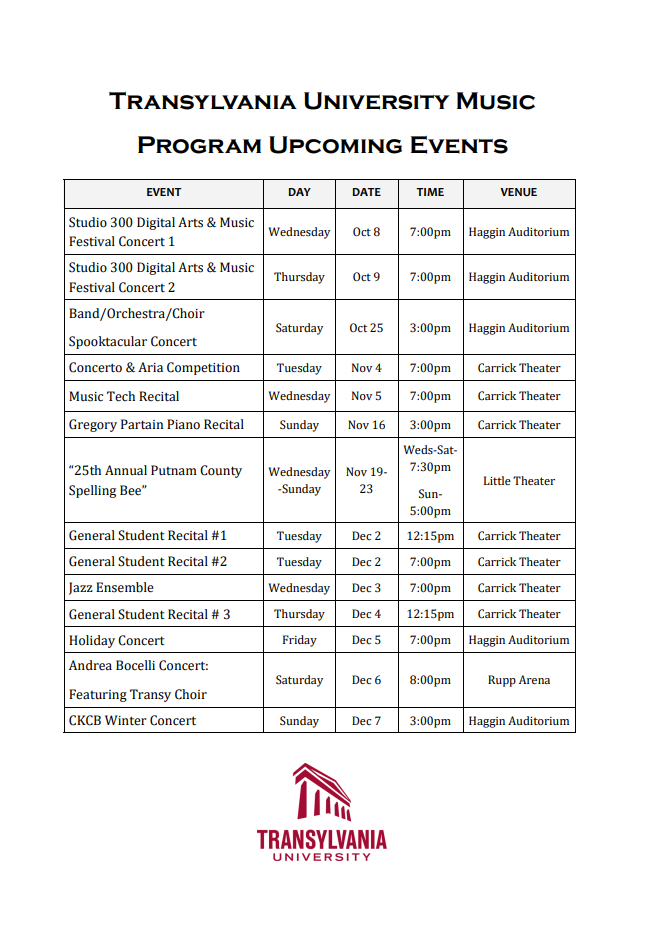
Studio 300 program from both concert nights

As a musician myself, I walked into Haggin Auditorium on Thursday, October 9, with expectations of being blown away by surround sound and interactive music-making; I sat down eagerly beside my friends, hoping to find inspiration from the unique approach to art. While the two-hour experience did leave me speechless, my lack of words was a result of fear. 

Wait… fear? How could a music festival bring distress to an audience member? Well, imagine being abducted by a group of invisible aliens. You can’t see them, and you can’t feel them, but you can hear their repetitive noises driving you into insanity. You can sense the booming of their spaceship in your chest. You can perceive their neon lights as you defy gravity, levitating in the air. 

Now, such descriptions of supernatural fright may seem unwanted for non-horror lovers. However, the unsettling volume and bright lights all played into the incredible performances of the festival. Despite only attending one of the two interactive nights, I still processed the time, effort, and creativity put into each act. 

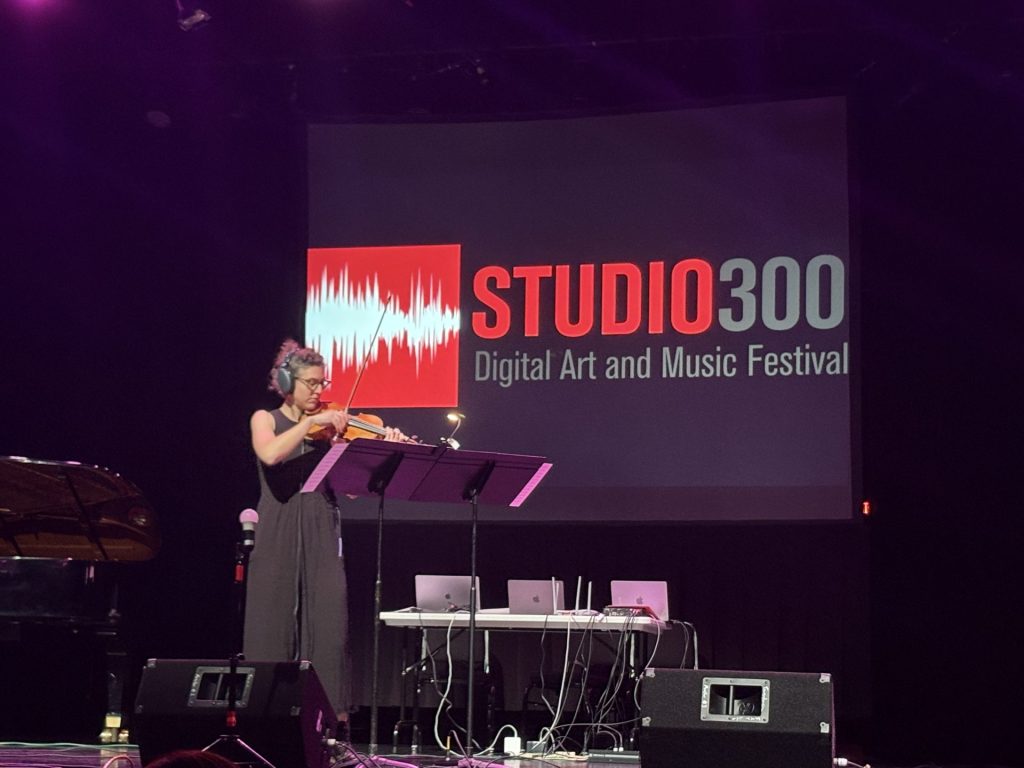
Emily Graber performs “Violin Phase,” starting off the Studio 300 concert

Igniting the auditorium with an electroacoustic piece on violin, Dr. Emily Graber executed a piece by the name of Violin Phase, in which she inspired feelings of anticipation and anxiousness in audience members. Graber’s repetitive melodies, harsh bowing, and interactive composition were stressfully enchanting to listen to, and acted as the motor for the alien spaceship, endlessly running to fuel Studio 300. 

The following two pieces were both electroacoustic music in 8-channel surround audio, yet had utterly different purposes. Addison Bird described her piece, “The Beautiful,” as encapsulating the bittersweet reality of technological advancement in America. While beneficial to electronic art forms, technology has paved the way to become an isolating entity, leaving people feeling empty and alone in the digital world. In contrast, Hubert Howe created Inharmonic Fantasy with the intention of digitally executing what no human could: the 19-tone equal temperament. To put it in simple terms, Howe wanted to research and enact a piece composed of inharmonic partials, which are too precise to be performed by human instruments (Studio 300 Full Program). The sounds conveyed by both pieces left a sense of shock and thrill in all listeners; Bird and Howe lured the audience into the Studio 300 spaceship with excessive volumes and enthralling note changes. 

The fourth performance of the night was a mixture of a laptop ensemble and acoustic instrumentalists from the University of Louisville. With animations of birds orchestrated by students on laptops, along with bird and nature sounds produced by a saxophone and several violins, listening ears were carried through a magical thicket. As Birds Go Back to their Forest, played the role of the spaceship ascending into the air, sending audience members to the new land of musical enlightenment. 

Also from the University of Louisville, professor Yunze Mu found purpose in his 8-channel surround sound piece through personal heartbreak (Studio 300 Full Program). Basing his composition on the endless search of blind love, Mu combined metaphors of galactic trains with dynamic audio. The programmer’s piece, Galactic Railroad, became the speed of the alien spaceship, rushing the audience past the starry remnants of old lovers. 

The succeeding piece to the electroacoustic story was an animation by the name of Water Dust. Composed by Patrick Chin Ting Chan, the graphics of geometric cubes, transformative shapes, and weaving colors questioned the dimensions and boundaries of worldly elements and emotions (Studio 300 Full Program). The philosophical soundscape acted as the cool down to the overwhelming abduction; audience members had a chance to collect their once troubled minds and relax in calm uncertainty. 

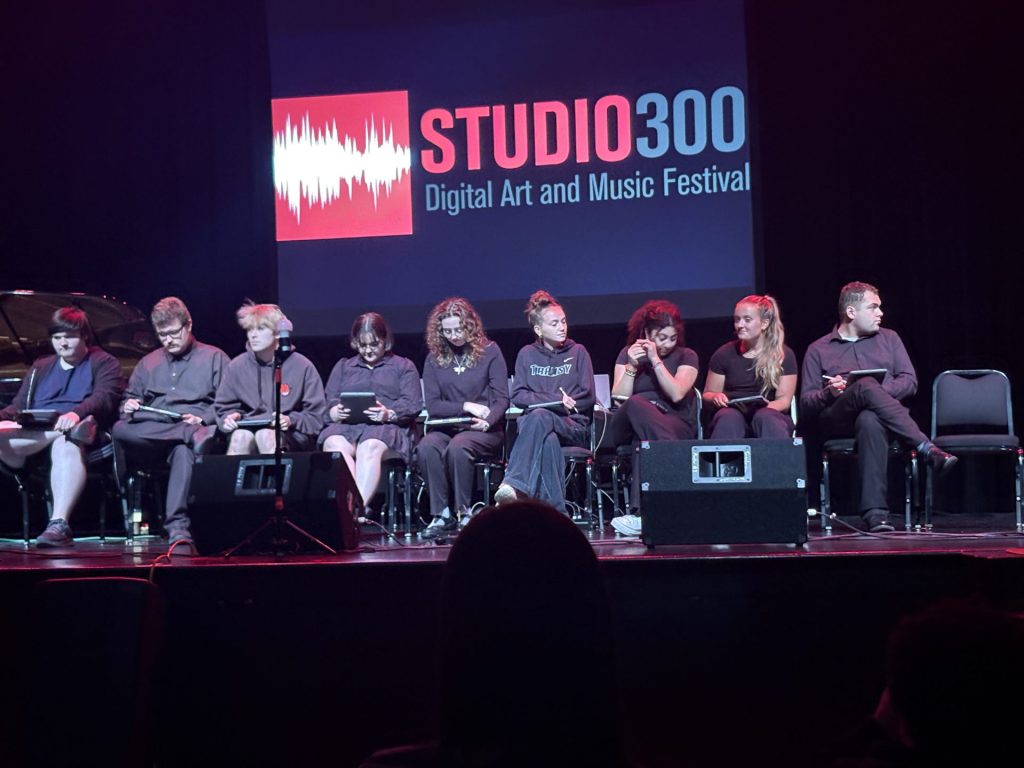
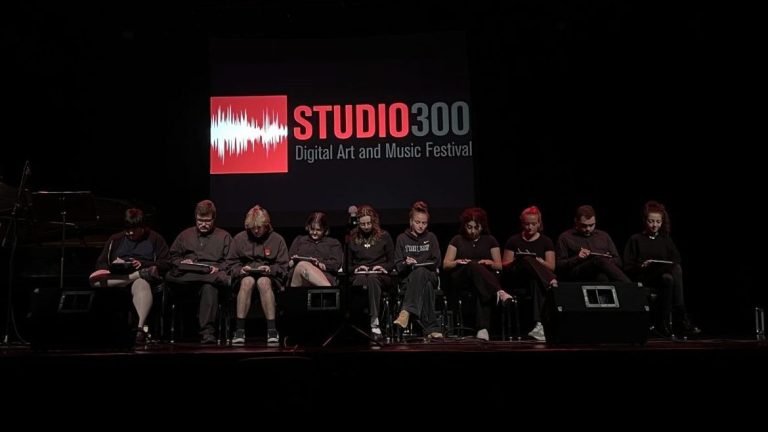
Polashek’s students prepare their iPads for the TITE performance to close out the Studio 300 concert

The final night of Studio 300 concluded with a performance by TITE (Transylvania Interactive Technology Ensemble). Students from Polashek’s Interactive Music and Multimedia class had the opportunity to create individual sounds and apply them to iPad interfaces (Studio 300 Full Program). The controlled chaos ensued within the bounds of the stage, functioning as the audience takeover of the spaceship! Independent noises from the performers’ iPads led the revolution to seize the ship and find the audience’s way back home with new findings in music. 

The Studio 300 Festival may have been one-of-a-kind in its relation to alien abductions; however, the eerie theme has not subsided in the Music Program. Show up to the Spooktacular Concert on Saturday, October 25, for an afternoon of ghostly melodies!

More events from the music program to come!

GALLERY: Hear Ye Hear Ye! The Rambler Hosts the First Ever Transy Renaissance Fair

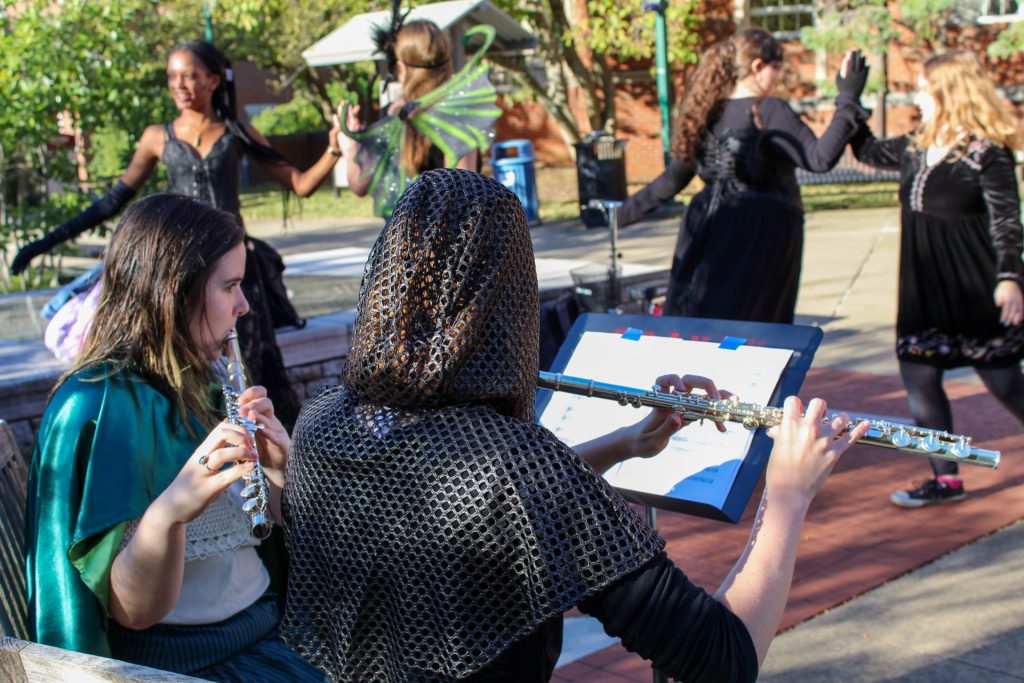
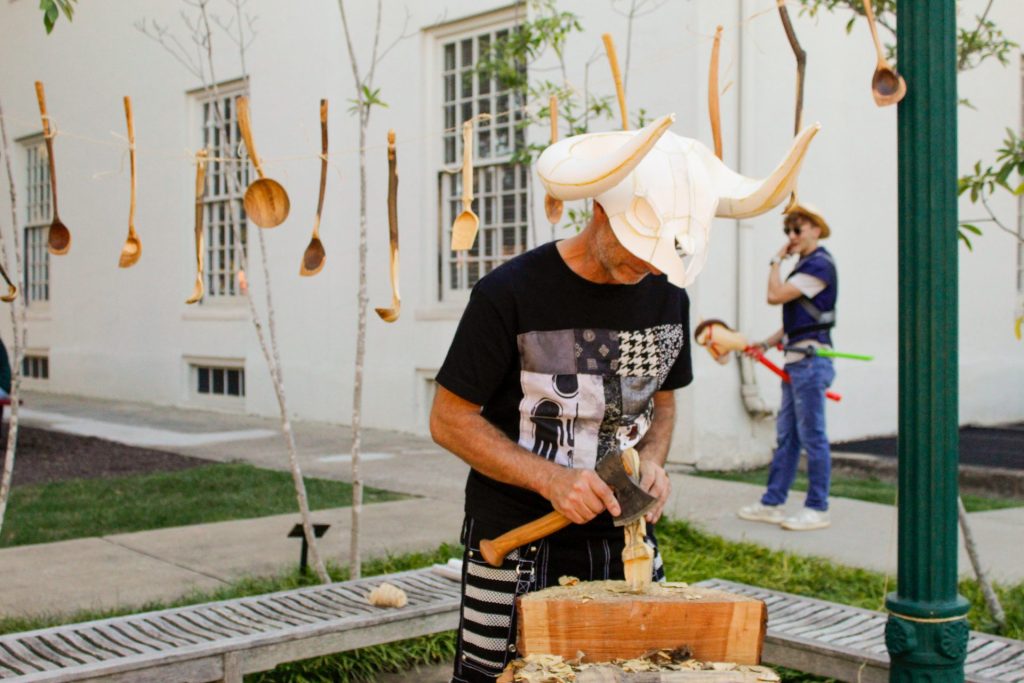
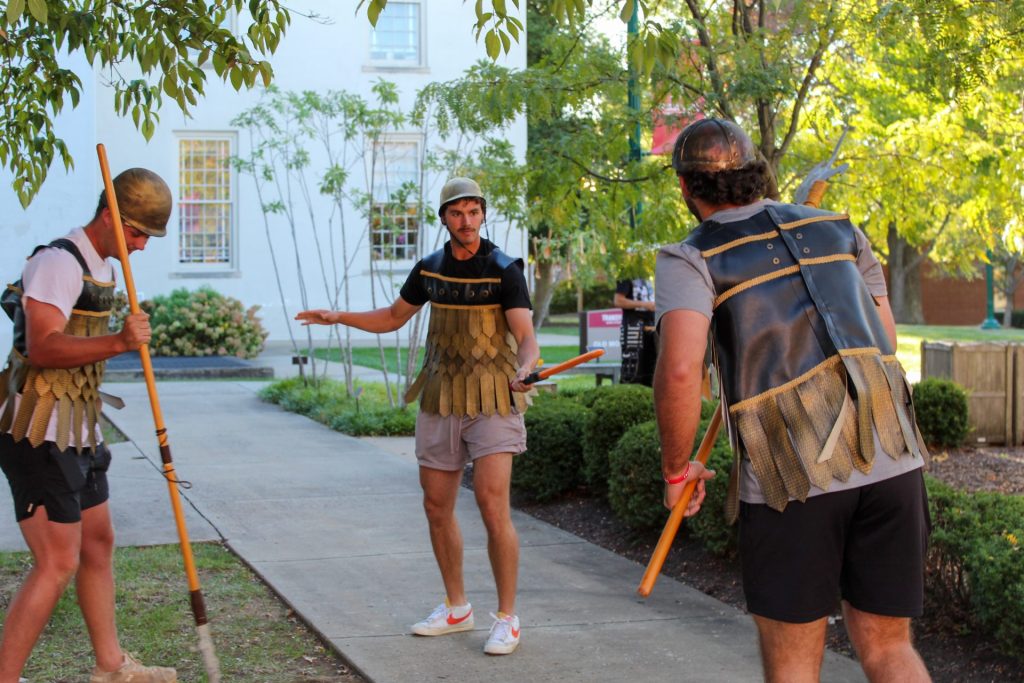
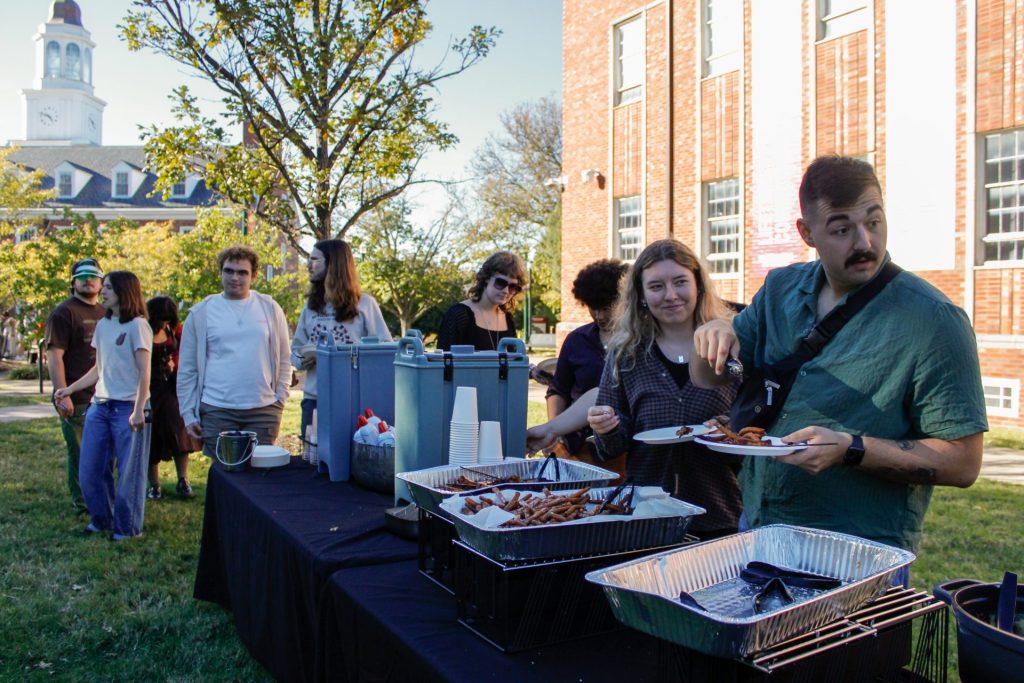
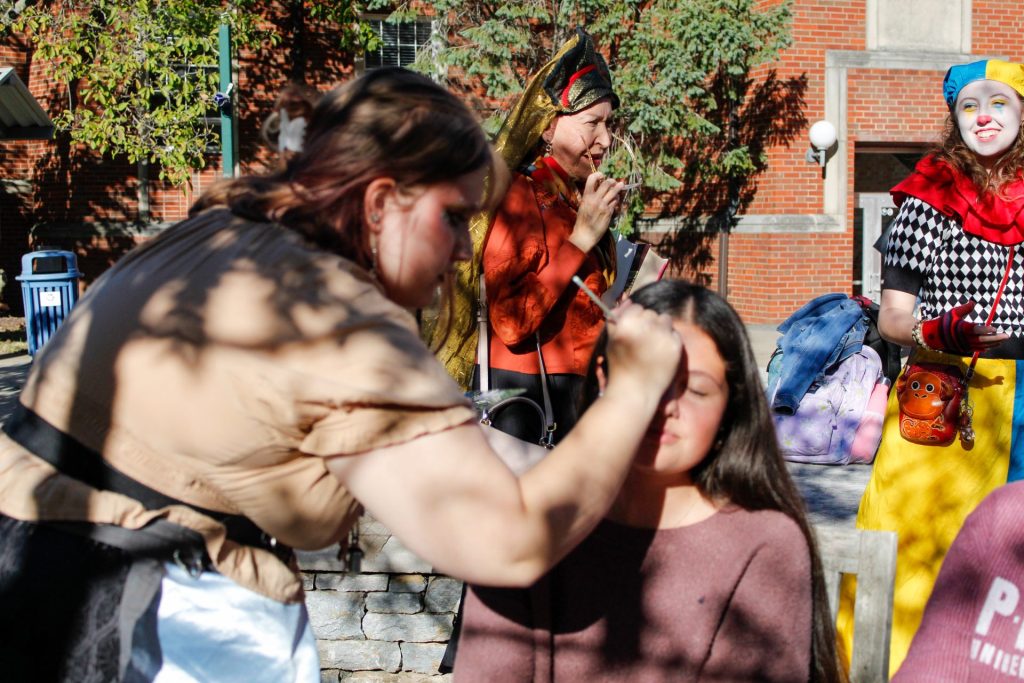
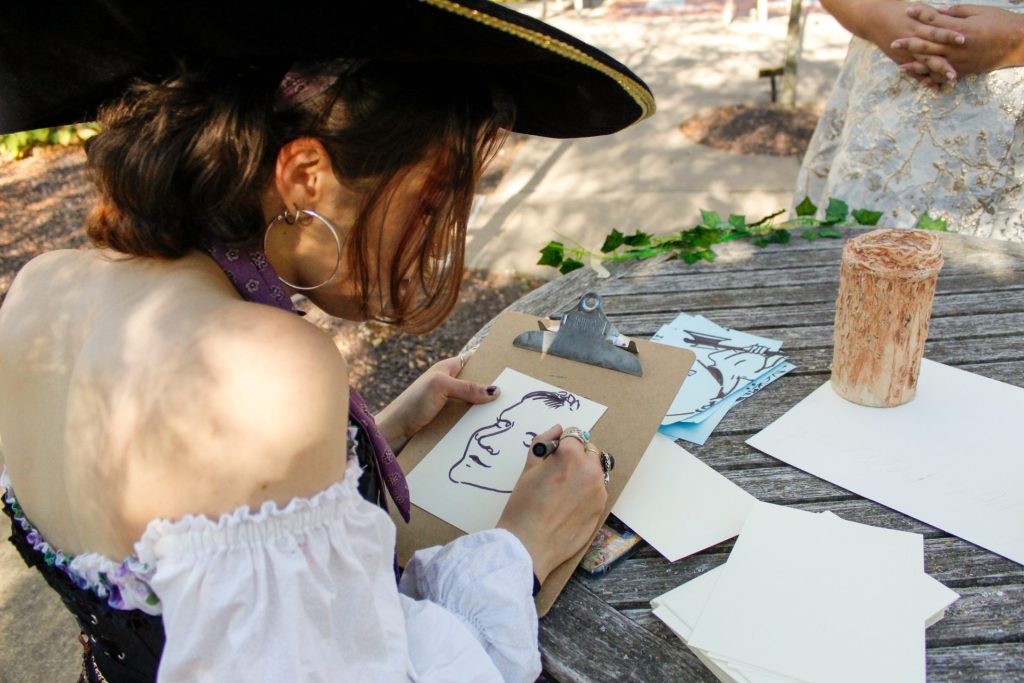
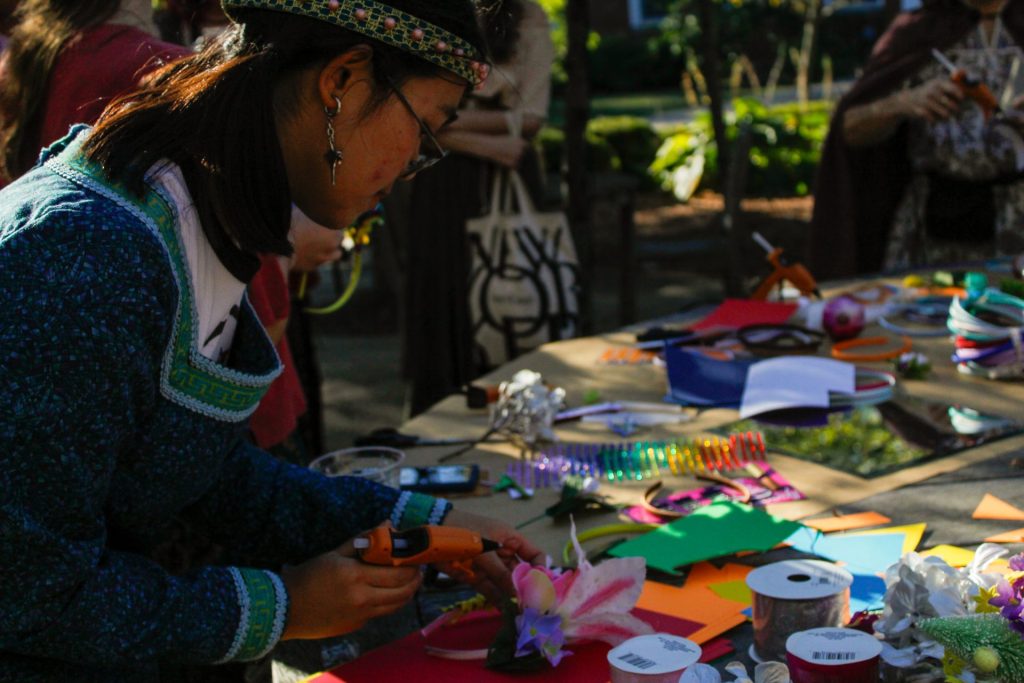
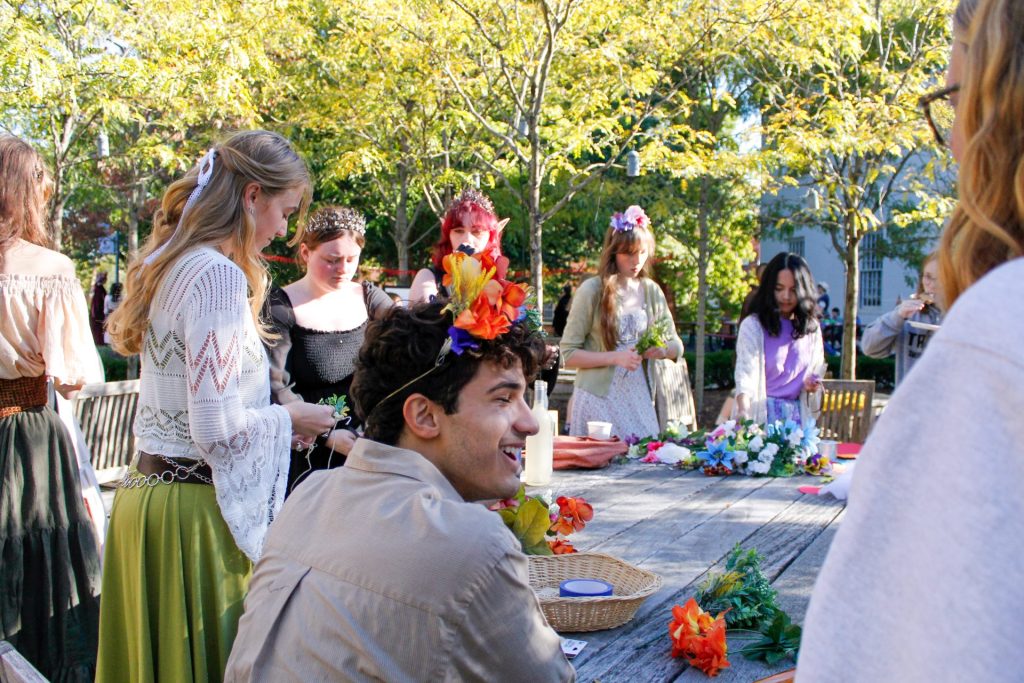
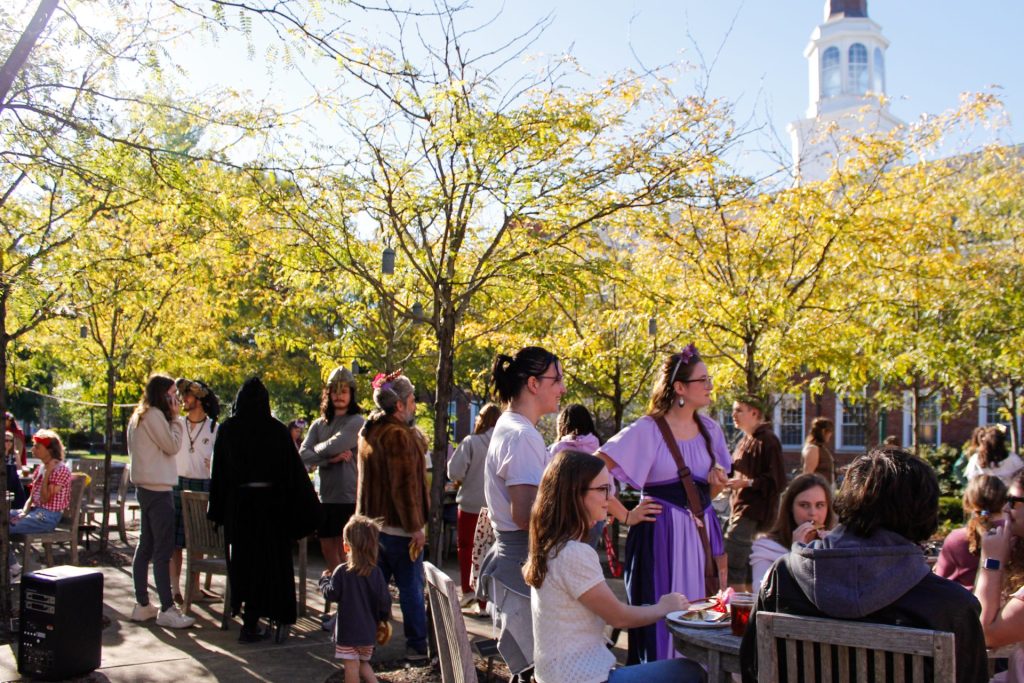
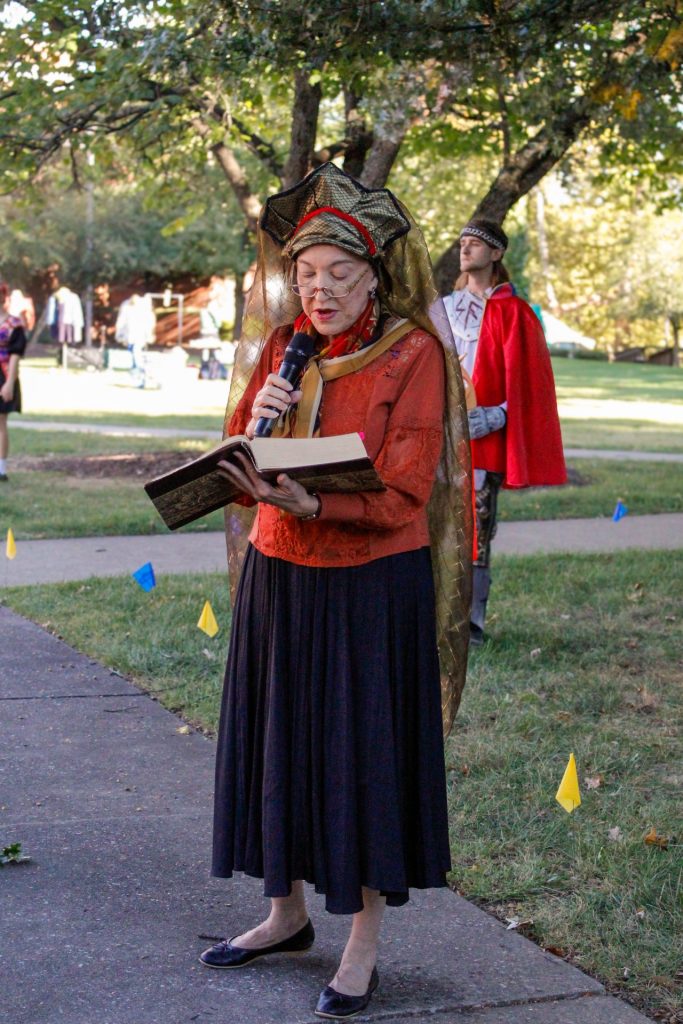
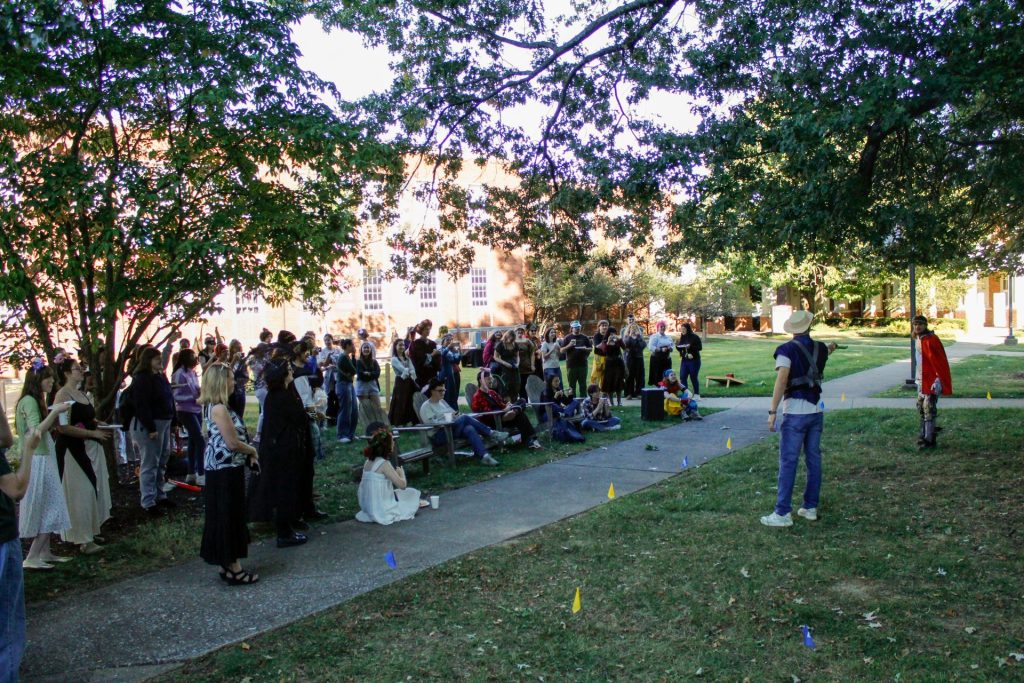
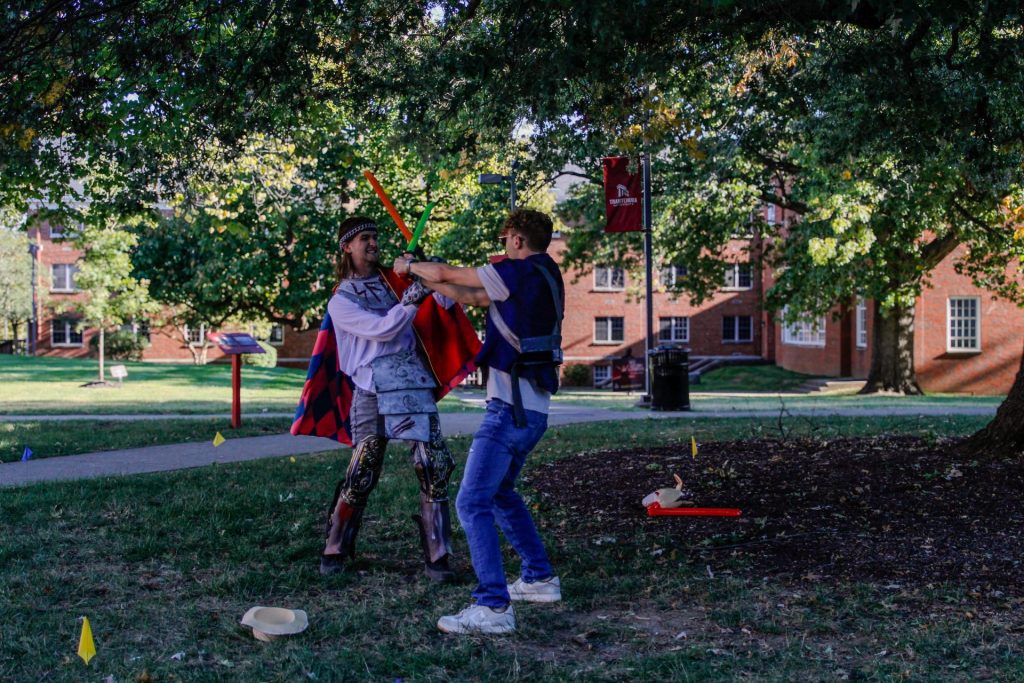
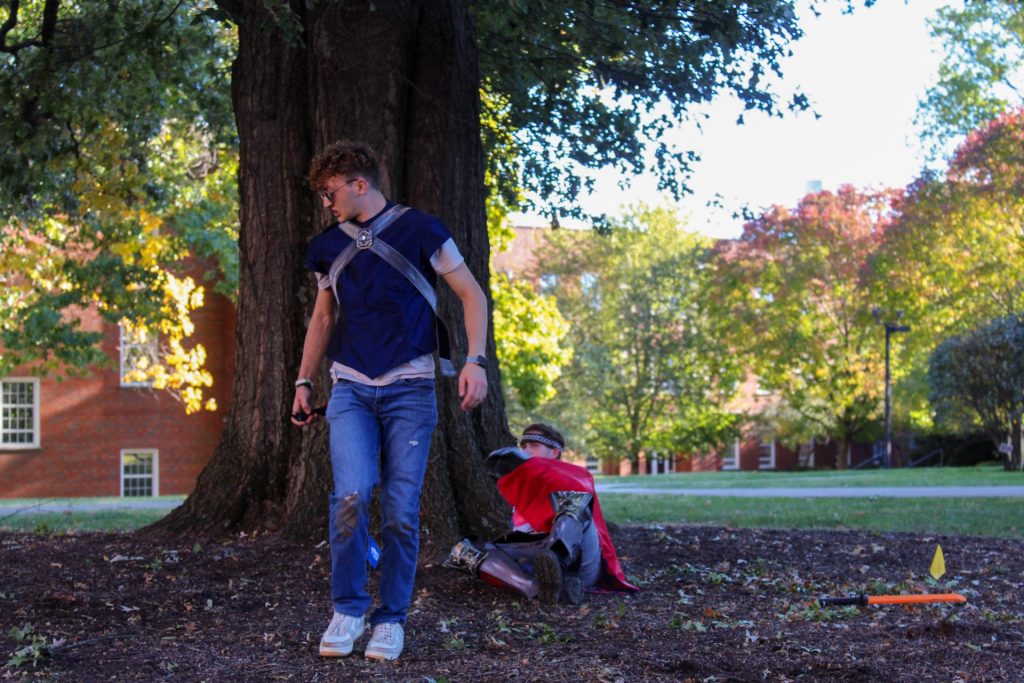
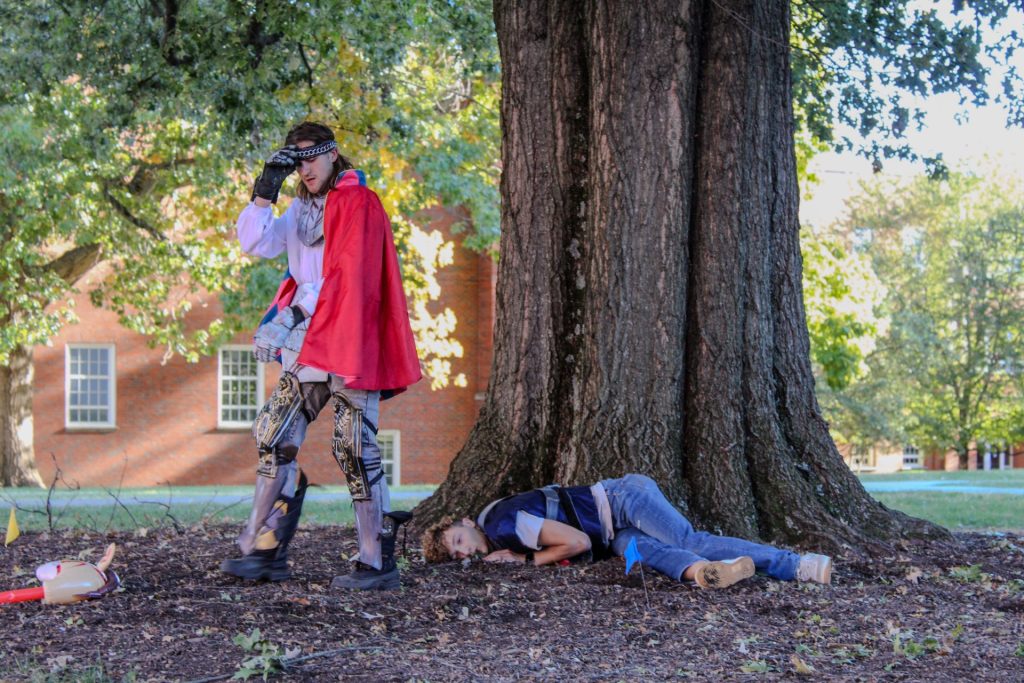
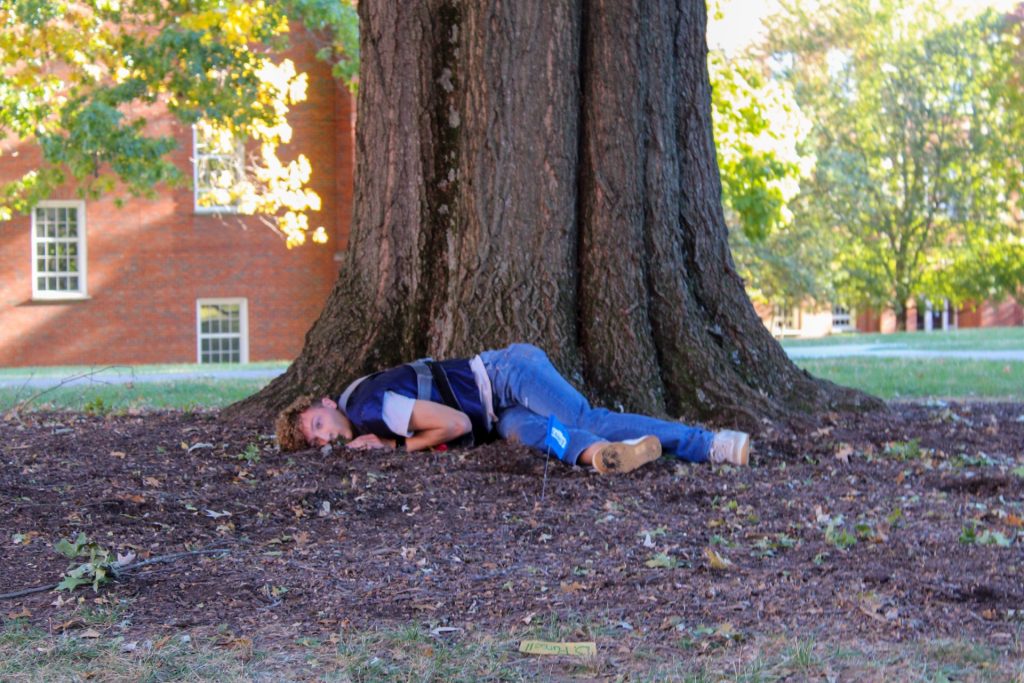
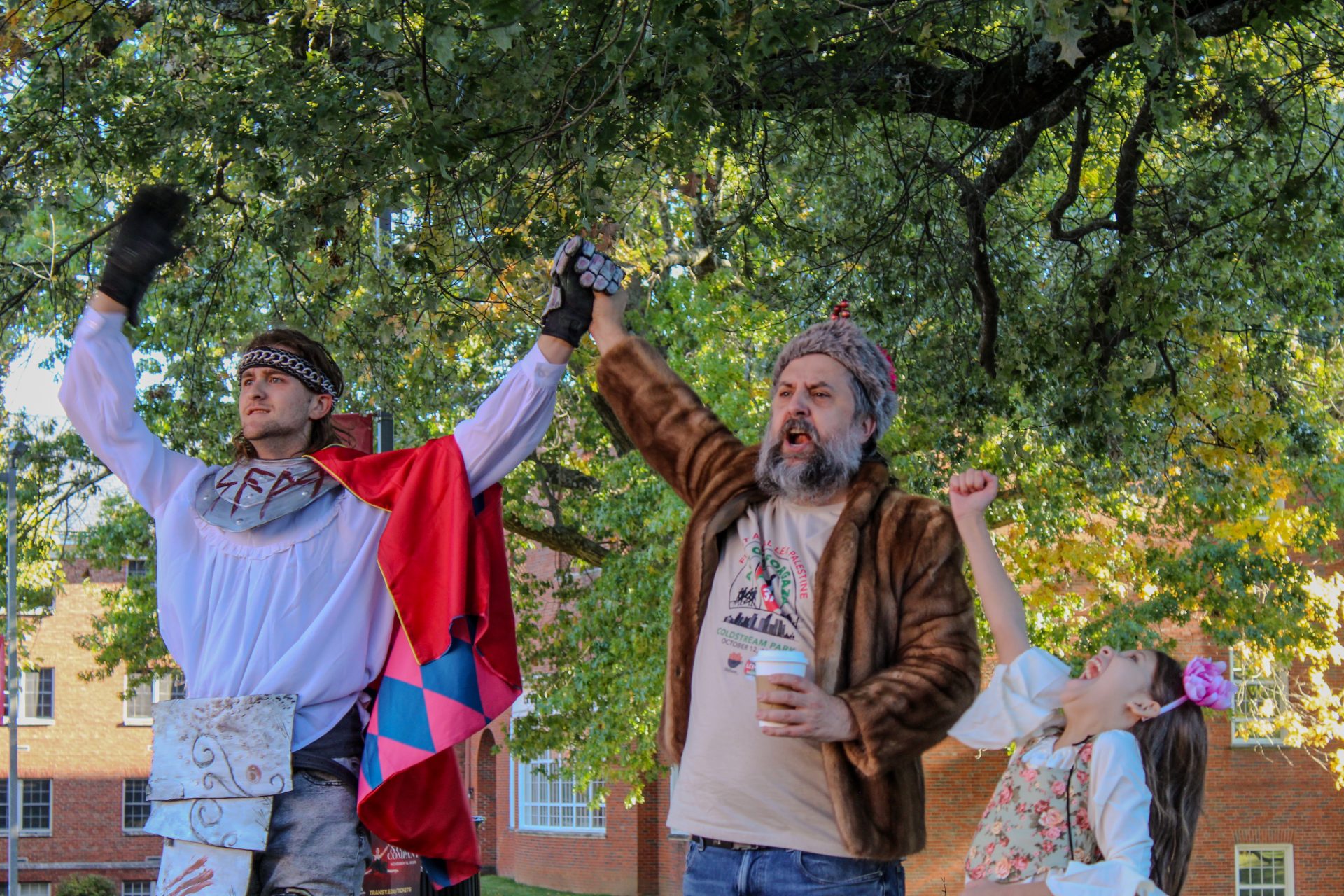
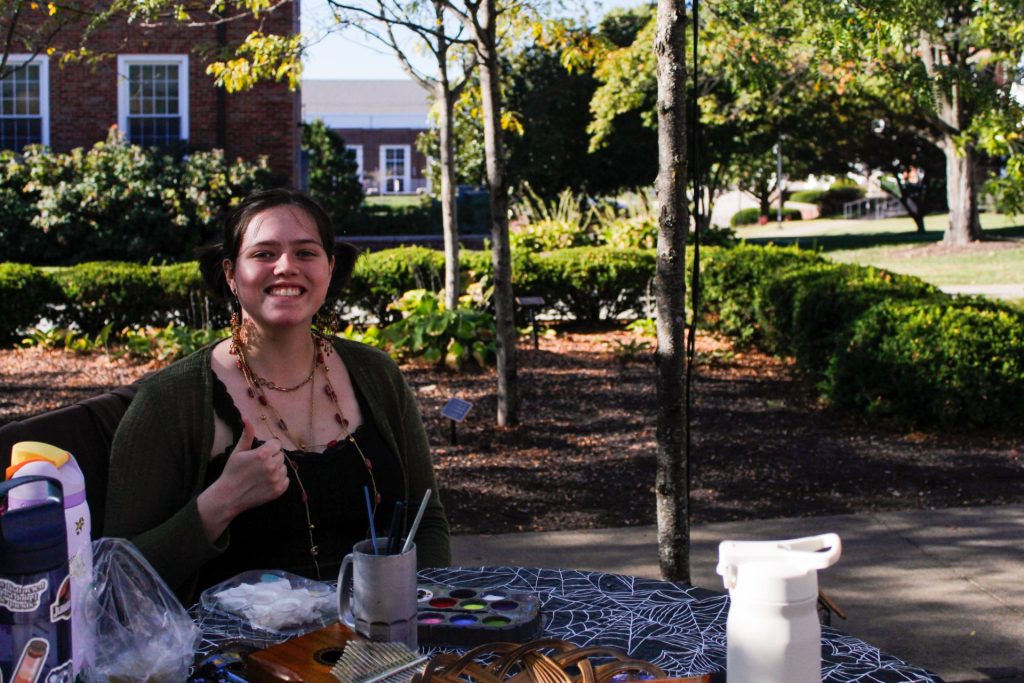
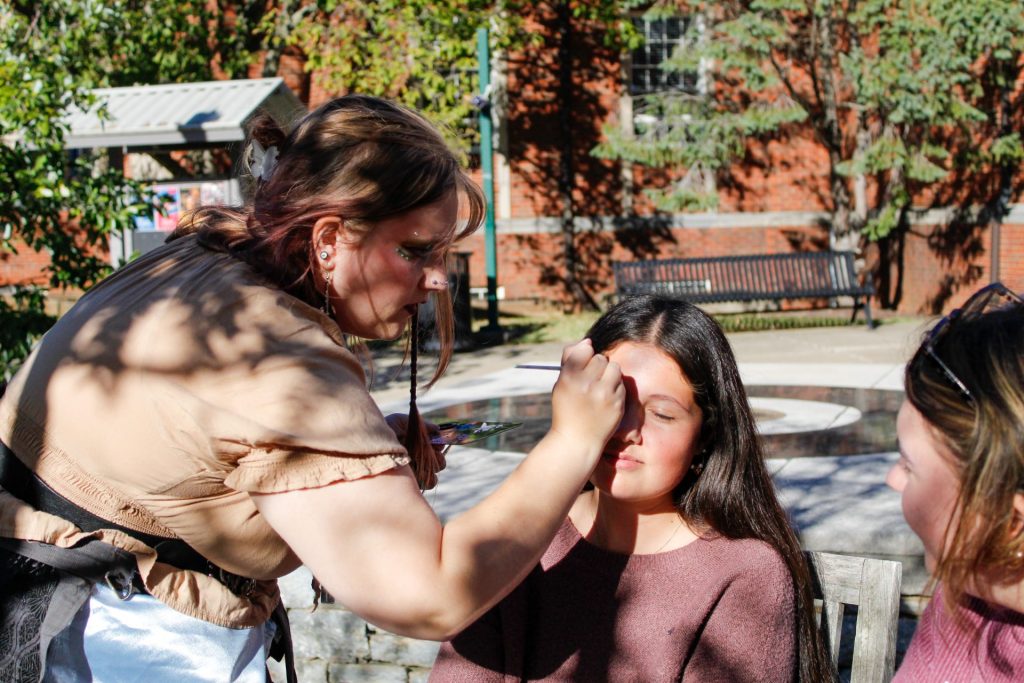
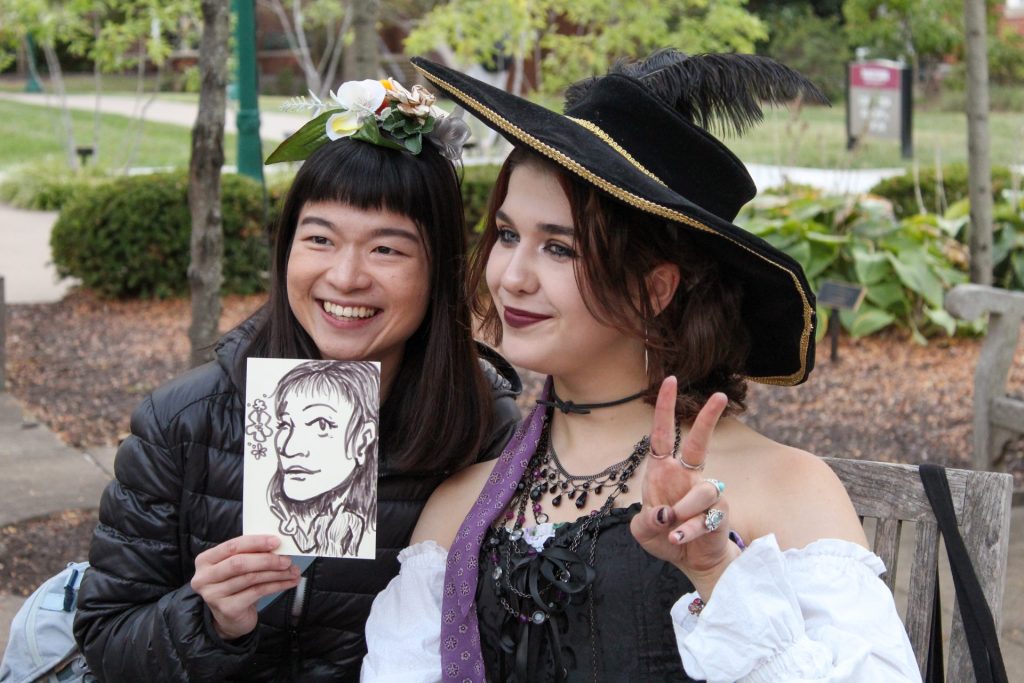
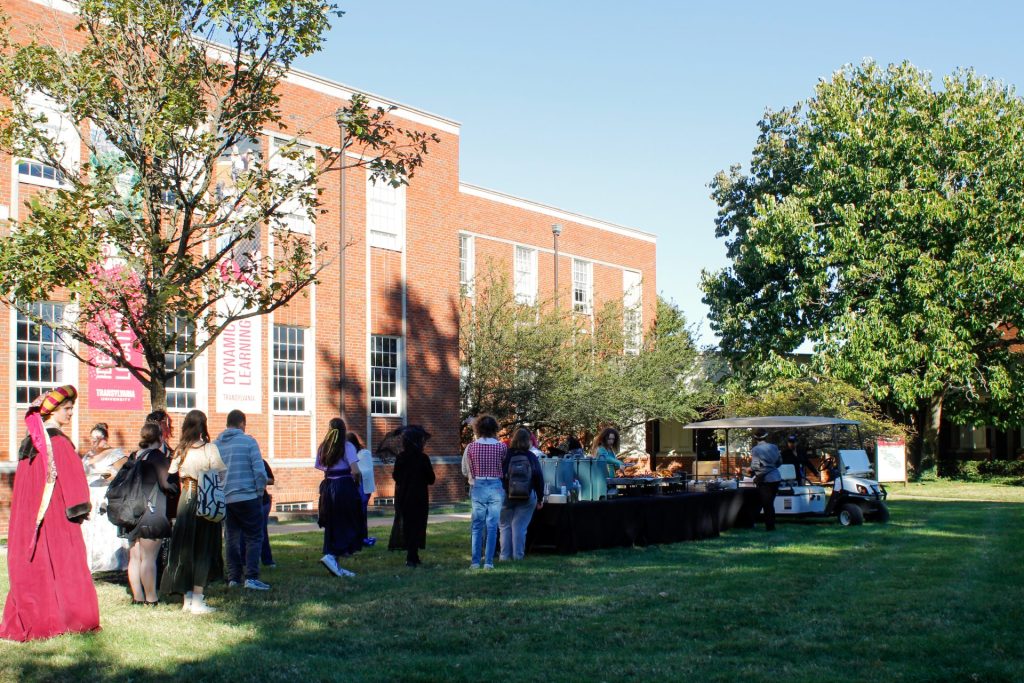
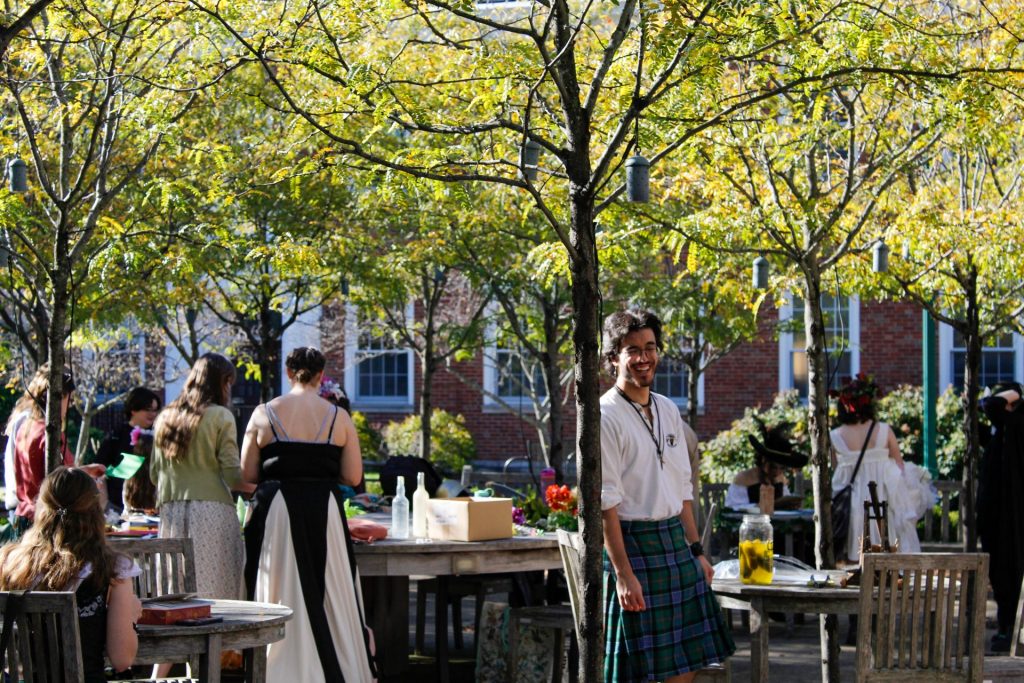
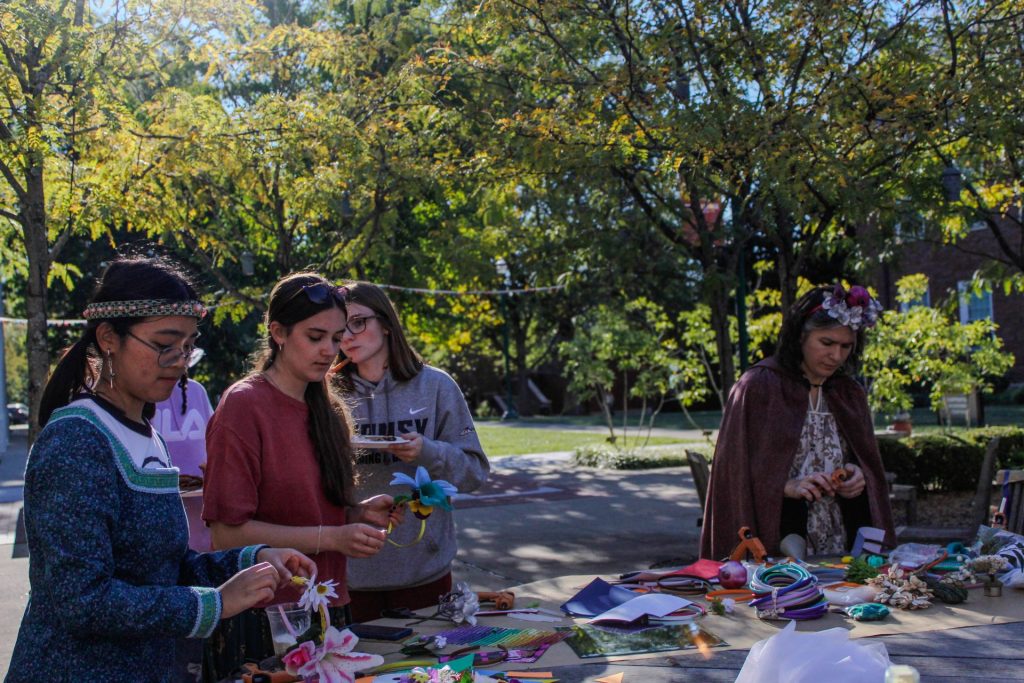
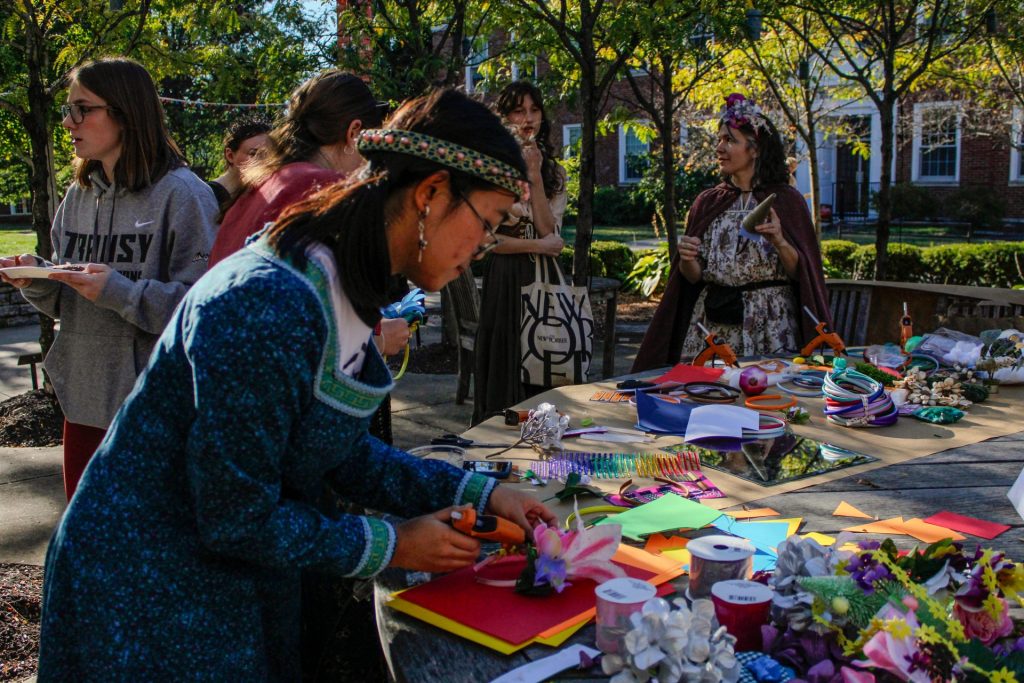
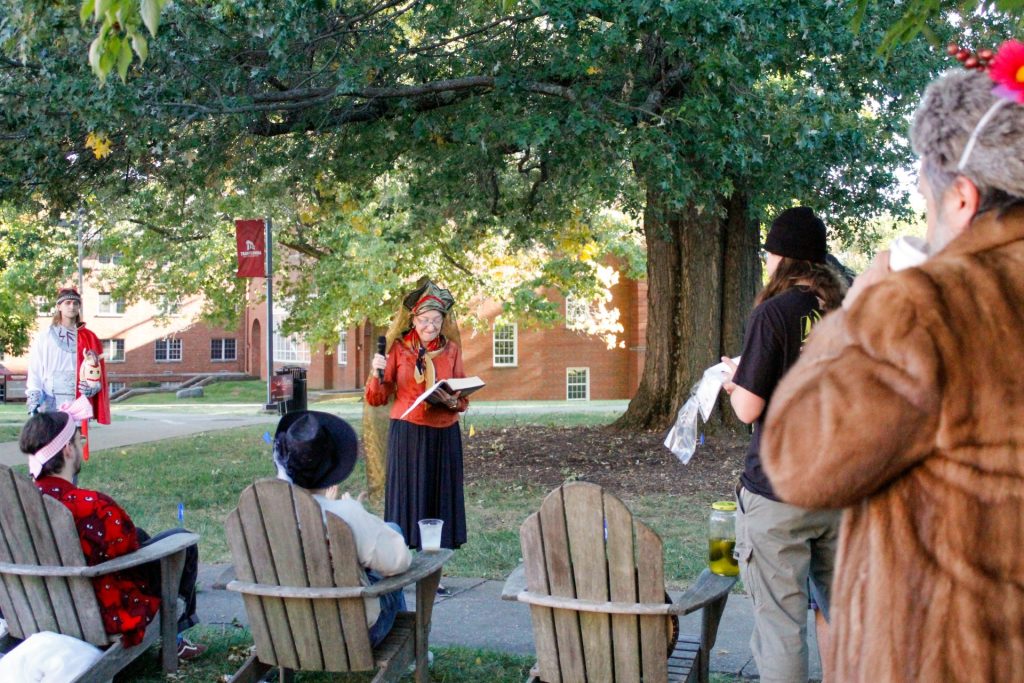
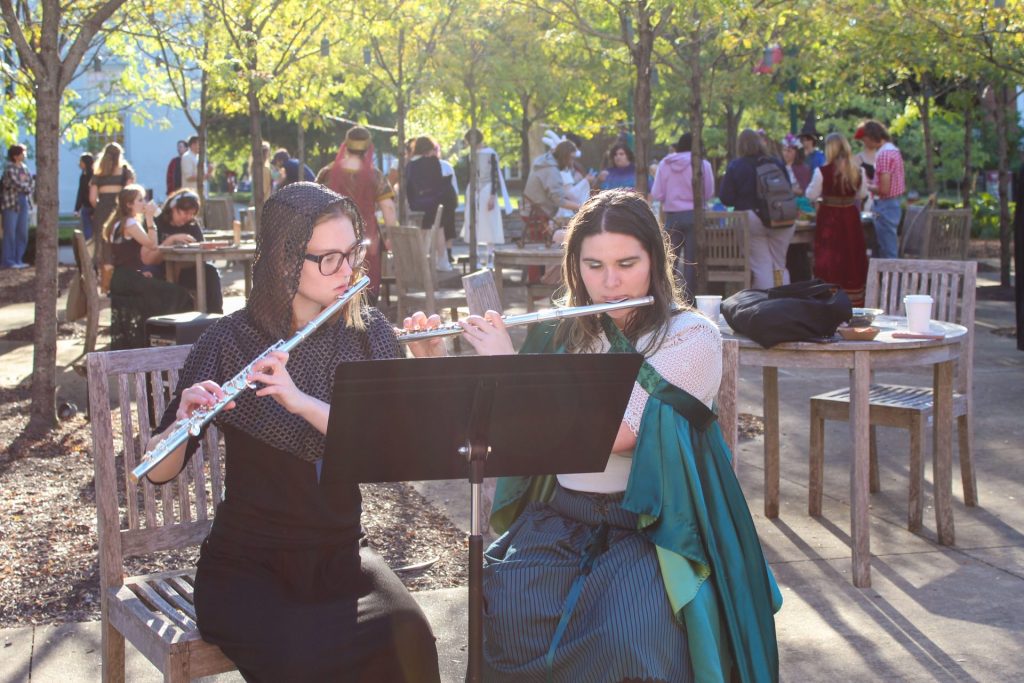
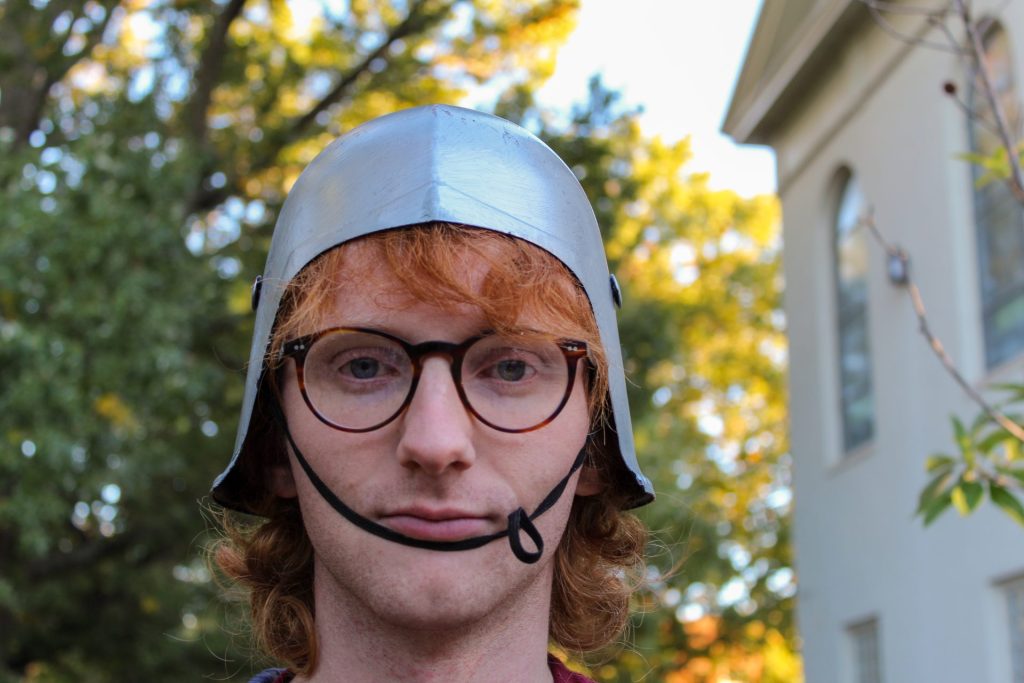
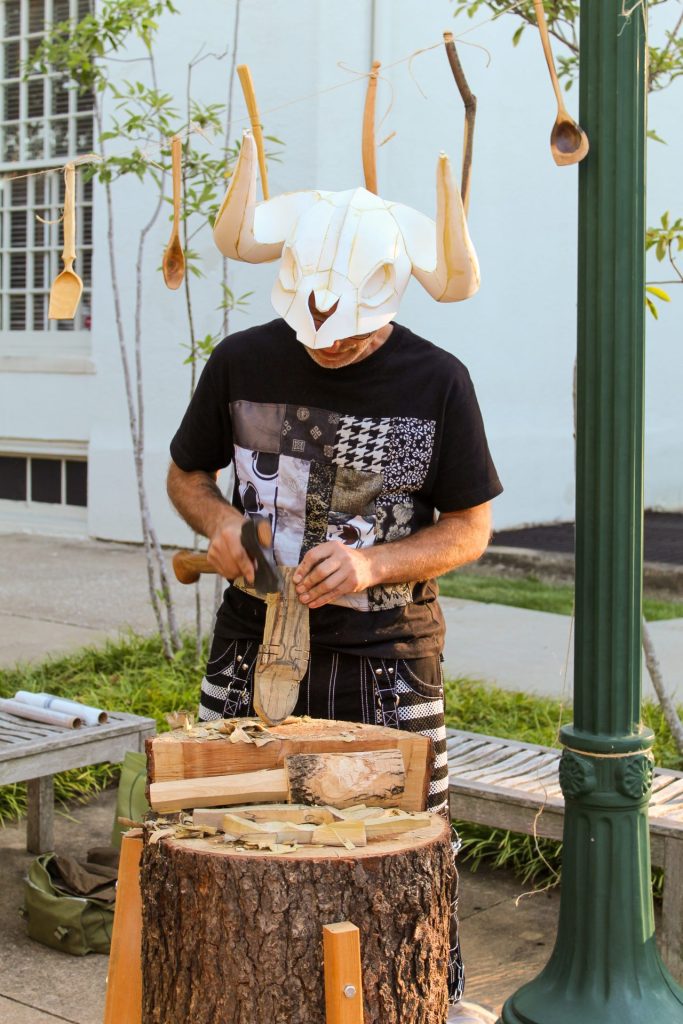
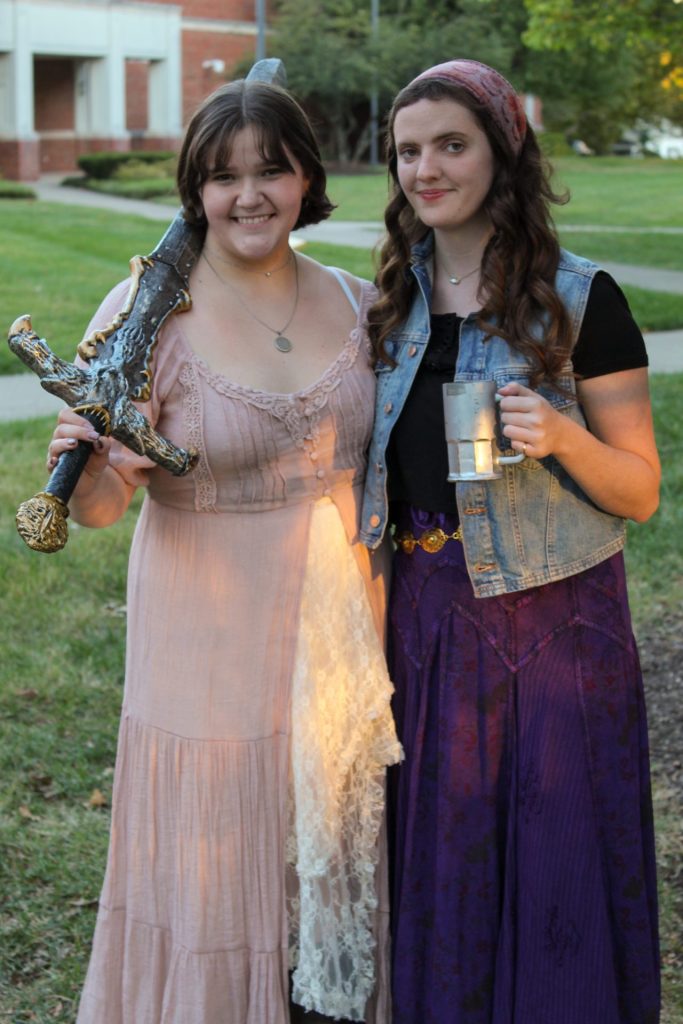
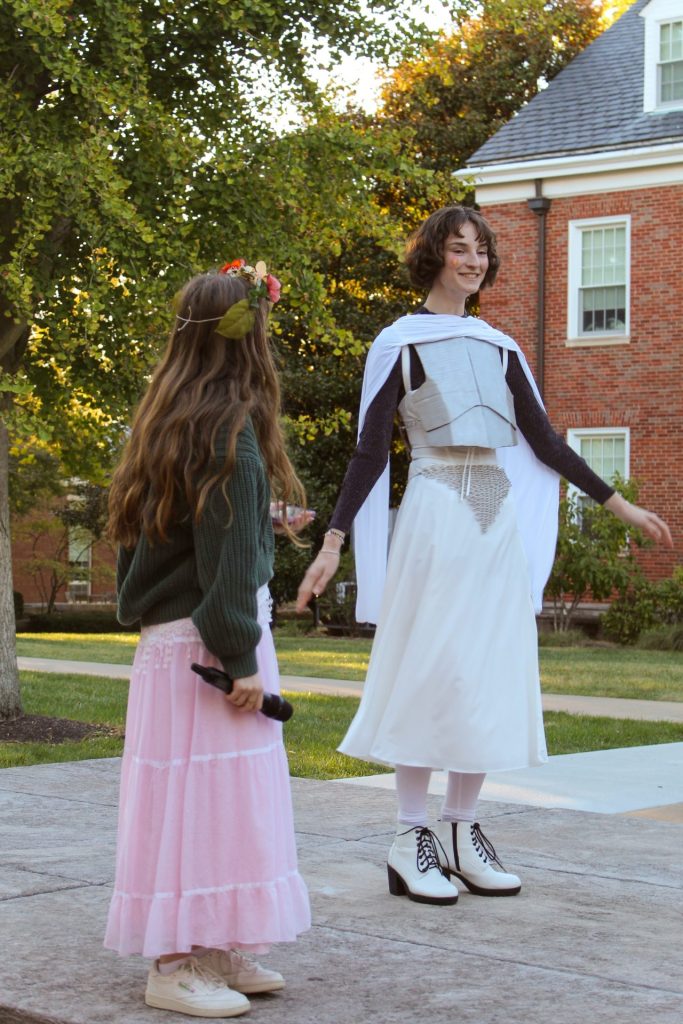
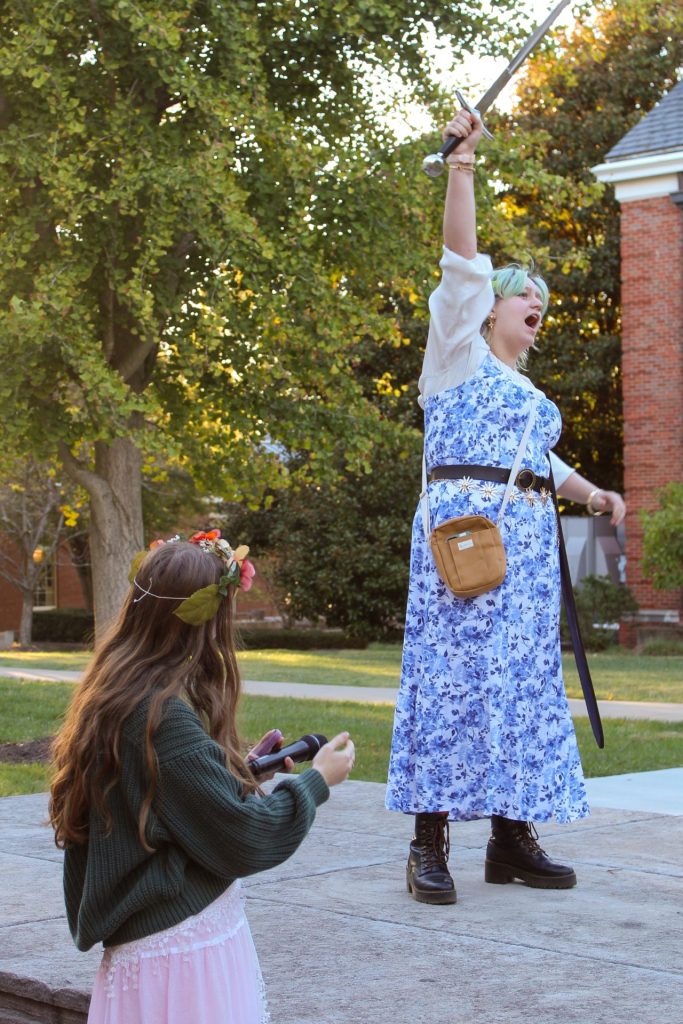
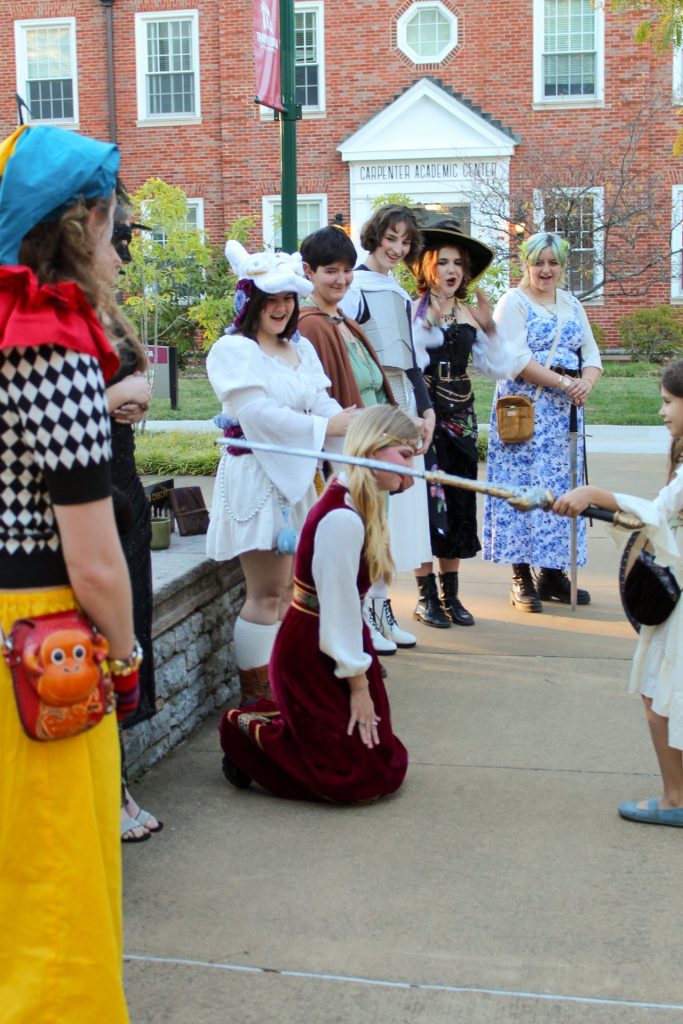
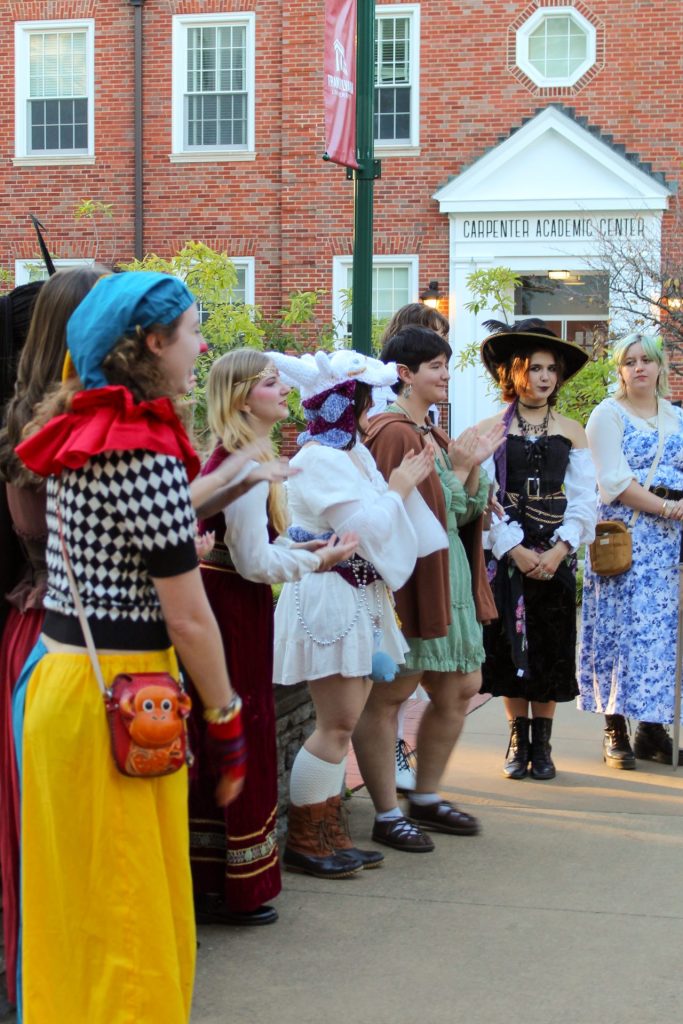
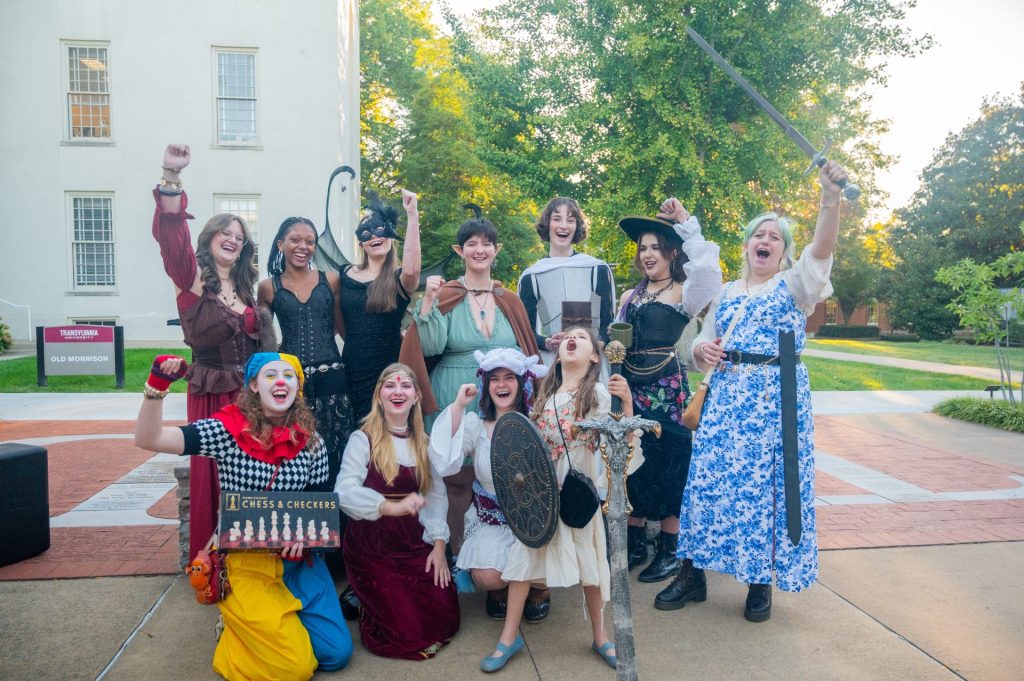
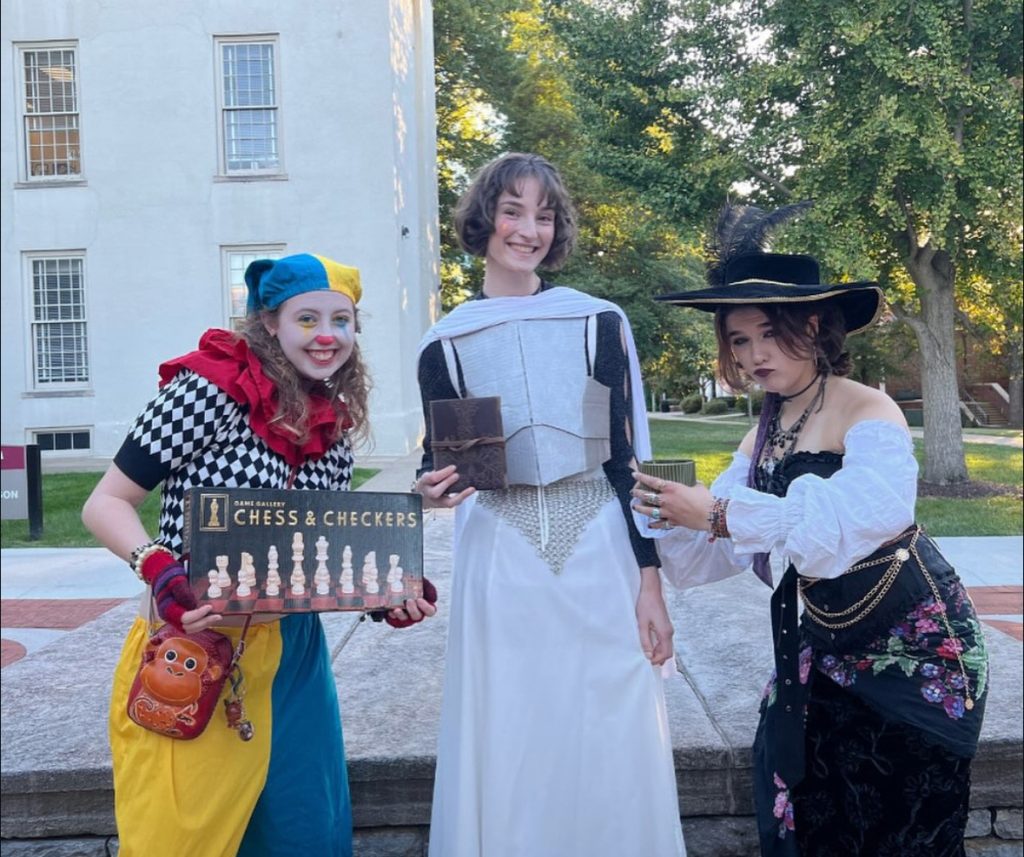
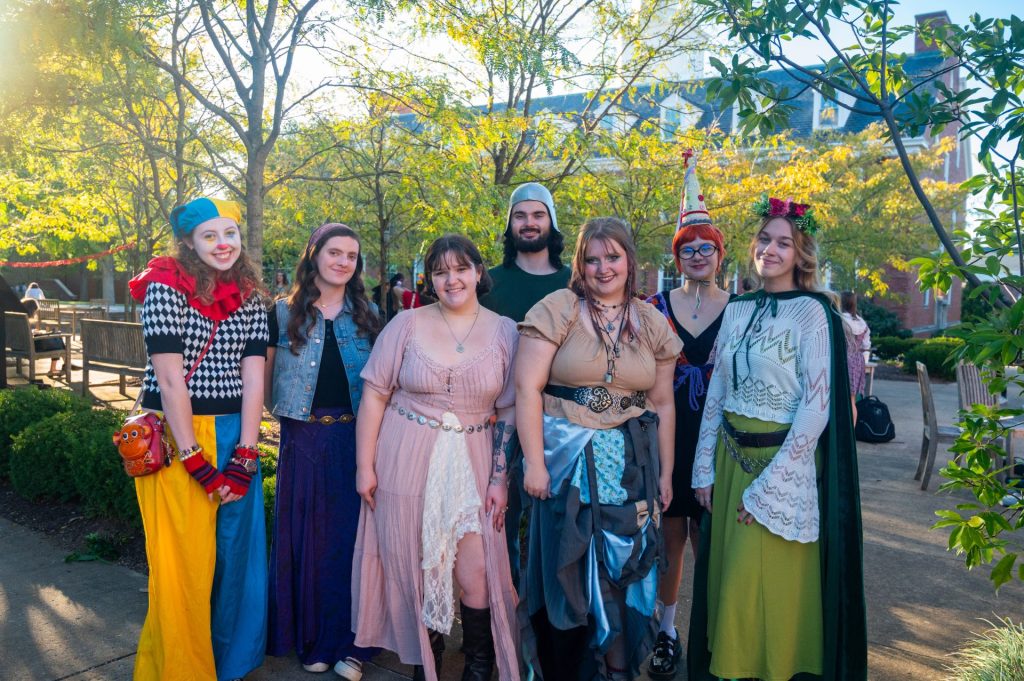
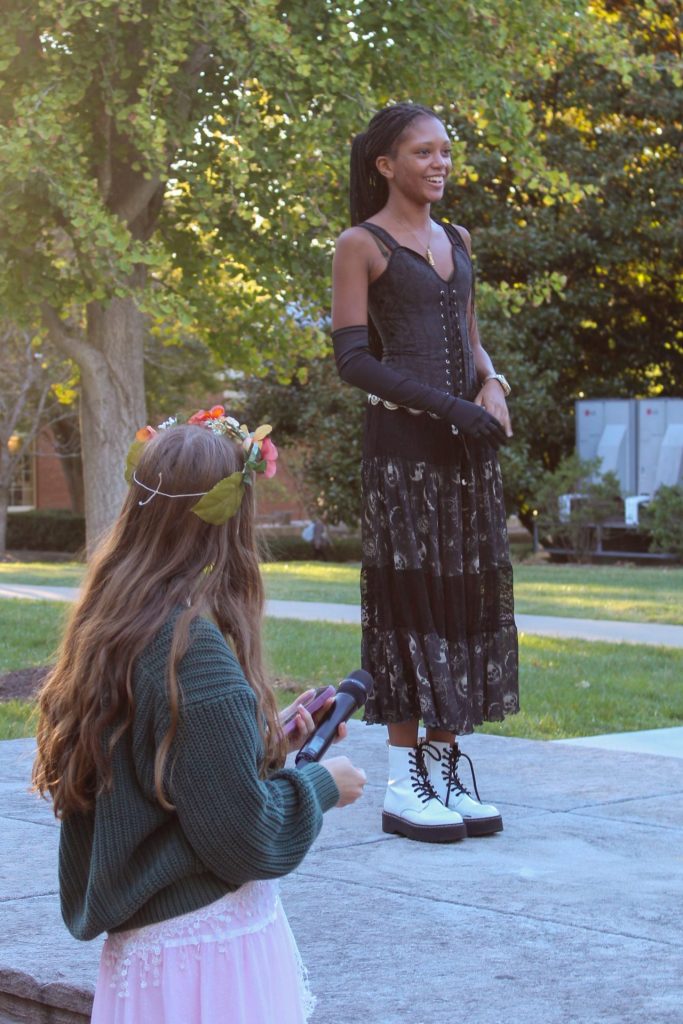
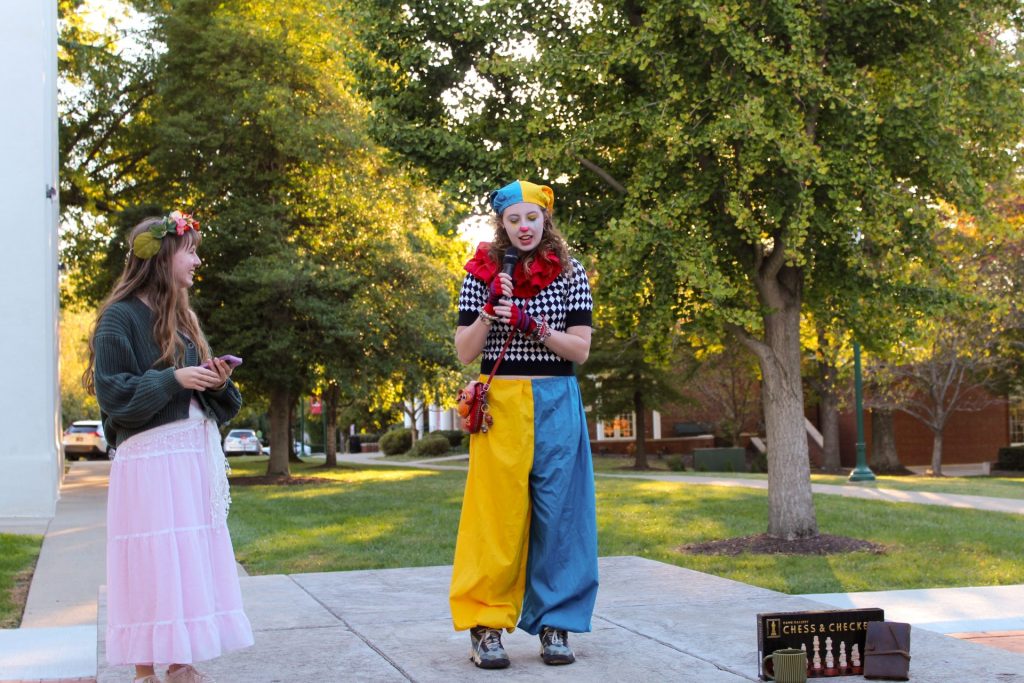
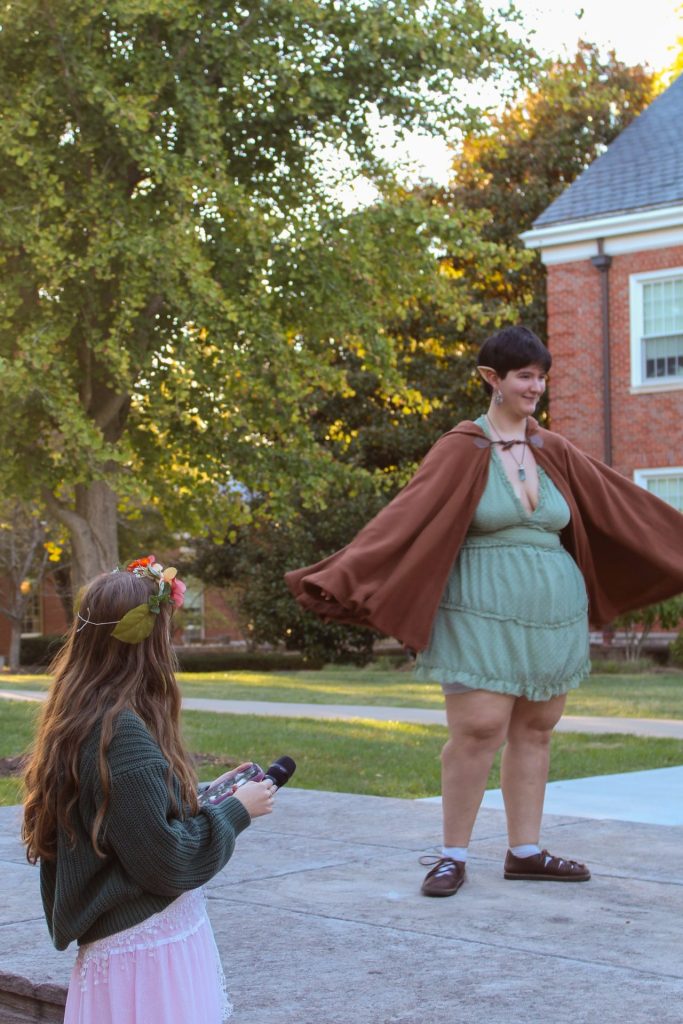
Huzzah! On Thursday, October 16th in Alumni Plaza, we — the Rambler — hosted Transy’s first ever Renaissance Fair with great success! The event included many collaborations with faculty and clubs, and brought in an amazing crowd of students in a display of festive fall campus camaraderie. SAB hosted the Costume Contest – judged by President Lewis, Ryan Benjamin, and Marigold Ramsey – which included three categories with amazing prizes: Spencer Page winning a leather notebook for “Most Historically Accurate” as Joan of Arc, Katie Axon winning a chess/checkers set for “Most Unique” as a colorful Jester, and Hannah Goss winning a mug for “Most Detailed” in her layers of renaissance garb as the caricature lady. A crafts table hosted by Transy’s TEAL organization and Arts Professor Grace Ramsey included the making of flower crowns and festive headbands. Transy’s very own Caf food services hosted a pop-up table with food and refreshments including “bat-wings” (chicken stretched to appear like bat wings), butterbeer beverages, and more themed food that was a hit with hungry festival-goers. Madame Cochis of the French Department gave a pre-battle Shakespearian reading before our Knights’ Duel performance by knights Samuel Goss and William the Thrilliam; and Kurt Gohde of the Arts Department was able to whittle spoons with an axe as an amazing demonstration of his sculpting skills. Student members of the Rambler hosted their own tables with activities such as tarot and palm readings, face painting, a photobooth, caricatures, and to top it all off our very own Pickle Priest.

High Fashion: Fraternities Host Lexington Designer Albert Lukonga

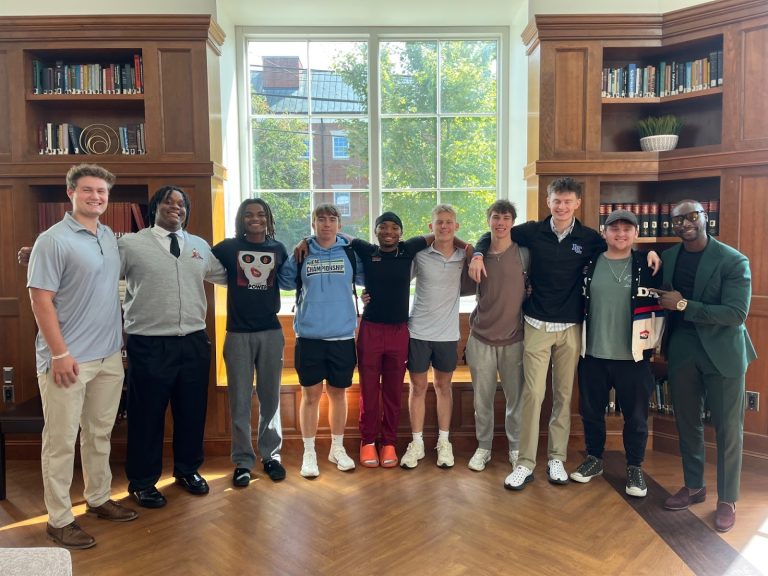
Transylvania’s Kappa Alpha Psi and Phi Kappa Tau recently partnered to host “The Power of Dressing,” an event featuring Albert Lukonga, co-founder and executive designer of Albert Couture—the first-ever Fashion House in Kentucky. This event was a part of Kappa Alpha Psi’s K-week, a weeklong series of events hosted by the fraternity. Lukonga, whose clients include David Beckham, Taylor Swift, and Governor Andy Beshear, among others, shared his personal story and lessons in both style and entrepreneurship.

Born in the Democratic Republic of the Congo, Lukonga and his family moved to Zimbabwe during the Second Congo War. There, he grew up speaking British English and became fluent in six languages, working on his seventh (Mandarin), which he deemed essential for success in the global fashion industry. In 2006, his family relocated to Lexington, KY, where he attended Morton Middle School and Henry Clay High School, participating in soccer and track before enrolling at the University of Kentucky. 

Known for dressing sharply, Lukonga quickly realized the power of first impressions. He stood out at fraternity parties in suits tailored by his mother. Although he initially planned to become a cardiologist to please his parents, by shadowing doctors at UK Hospital and being complimented by coworkers who directed him to fashion, he realized his true passion and decided to pursue fashion full-time. 

A self-taught designer, Lukonga gained early experience working at Jos. A. Bank before traveling abroad to deepen his knowledge of textiles, fabric sourcing, and business operations. His breakthrough came during a trip to Europe, where he boldly introduced himself to manufacturers as “Albert from Albert Couture.” Despite skepticism, he secured samples by confidently promoting his emerging brand and began selling custom suits directly to clients in Lexington. By sourcing directly and minimizing overhead, he maintained high profit margins and built his business from the ground up.

When COVID-19 came, he adapted by offering appointment-only services and charging $100 per consultation, which ultimately expanded his client base.

During a candid Q&A, Lukonga encouraged students to leverage social media to connect with industry professionals and emphasized that the most important career decision is choosing a path that feels right for you. For men, he said they should own a well-fitted black suit and white button-down, focusing on fit over price. He also recommended learning basic skills, such as ironing, via YouTube. For women, he suggested investing in professional wardrobe staples, noting that shoes and hair make the strongest impression.

Lukonga views fashion as a tool for expressing personality and building a personal brand, something that everyone needs in today’s world. Regarding networking, he said it doesn’t matter whether someone loves or hates you; you just need them talking about you. 

For Albert, style is all about personality. He credits much of his creative inspiration to his closest friends from around the world—chefs. He noted parallels in artisanal food and high fashion: both combine taste, color, and individuality to create something truly unique. Learning to love your individuality is key.

Albert Lukonga’s journey and advice resonated deeply with students. As Albert Couture enters its eighth year, he continues to prove that passion and persistence are key to professional success.

Froyo & Free Will

As college students, we experience an increase in our range of choices as we leave the house and grow older. However, some days it feels too monotonous; the same routine, same classes, same everything. It just gets boring. We have free choice, but as college students, we are simultaneously bound to the rules and guidelines our professors give us. You may be thinking, when was the last time I really did whatever I wanted to do? If only there was a place in existence that gave you pure choice and utter agency, you’d feel like a kid in a candy store. 

I have news. This kind of place is real. It is only a few miles away, actually. 

It’s froyo. 

Froyo is so empowering because it gives you ultimate agency. Where else can you perfectly customize your order? You never have to choose between flavors or toppings, because you can just get all of them! It might feel silly to think that frozen yogurt gives people agency, but it is true. 

When I walk into a froyo establishment, it feels like the possibilities are endless. I am simply full of childlike wonder. I’d venture to say that experiences like these are what we all need from time to time. 

Judge Michelle Childs on Judicial Integrity at Pre-Law Society’s 4th Annual Distinguished Lecture

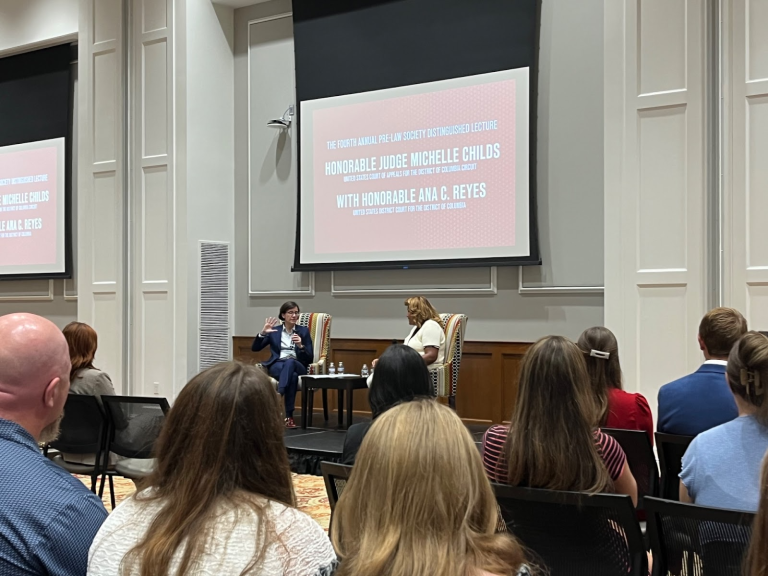
The Transylvania and Lexington community had the opportunity to engage in a thought-provoking conversation with Judge Michelle Childs, currently serving in the U.S. Court of Appeals for the D.C. Circuit, at a recent event hosted by the university’s Pre-Law Society. The event was moderated by TU alum Judge Ana C. Reyes, a U.S. District Court Judge for the District of Columbia.

Judge Childs, widely respected for her measured and human-centered approach to the law, shared reflections on her journey through the legal system, from her early years in South Carolina to her current role on one of the most powerful appellate courts in the country.

Born in Detroit and raised in South Carolina, Childs graduated top of her high school class. She was a first-generation college student, earning her undergraduate degree in management from the University of South Florida. She went on to complete both a J.D. and an M.A. in personnel and employment relations at the University of South Carolina in an accelerated three-and-a-half-year dual-degree program. Later, she earned an L.L.M. in judicial studies from Duke University.

Childs began her legal career practicing labor and employment law in South Carolina at Nexsen Pruet. She became a partner in just seven and a half years, becoming the first Black woman to be named a partner at a major law firm in the state. Her career then took a turn toward public service when the governor appointed her as deputy director in South Carolina’s Department of Labor. She subsequently served as a Commissioner on the South Carolina Workers’ Compensation Commission, and later was elected as a state circuit court judge.

Childs was nominated by President Obama in 2009 to serve as a U.S. District Court Judge for the District of South Carolina, a role requiring Senate confirmation. In 2022, she moved up to the D.C. Circuit Court of Appeals, after a “vitriolic” confirmation process that drew bipartisan support—including from Republican Senator Lindsey Graham, who she believed affirmed her qualifications to his fellow Republicans.

In her appellate role, Judge Childs has been involved in several high-profile cases, including the initial Trump presidential immunity case, litigation involving Holocaust survivors, Guantánamo Bay detainee matters, and more.

During lunch with students from the Pre-Law Society, Childs was asked questions that reflected current political tensions and the role of the judiciary in polarized times. When asked how she stays motivated during divisive times, Judge Childs emphasized the importance of civil discourse and approaching all relationships with care. She reminded students that judges are bound to rule “without fear or favor,” and that her decisions are based solely on the law, not public sentiment or political affiliation.

In response to a question about partisanship in the judiciary, Childs stated, “We follow the law. I’ve ruled with Republicans, and they’ve ruled with me.” She explained that although the media sometimes distorts judicial opinions through out-of-context soundbites, thanks to cameras in the courtroom, it’s the responsibility of judges to maintain composure and clarity in their reasoning.

According to Judge Childs, the importance of strong writing, research, and analytical thinking is that these skills will take aspiring lawyers far. She encouraged students to build a strong network of mentors and to make time for family and friends to maintain a work-life balance.

She also advised students to choose two or three areas of law to explore deeply rather than trying to master everything at once—though it appears she has. Attention to detail, a meticulous mindset, and creativity are all qualities that she believes make an effective judge or attorney.

“When sentencing,” she said, “I try to see defendants as people, so I can learn the best way to help them move forward.”

Judge Reyes brought moments of humor to the lecture. At one point, she joked, “When I rule in line with the administration, “I’m called an idiotic fascist” when ruling against them, “I’m an idiotic communist.” The audience laughed, but Judge Childs used the moment to pivot to a serious point: public criticism, while expected, cannot and does not influence judicial behavior.

Both judges also spoke candidly about the threats they have received in their roles. Judge Reyes mentioned getting “equal opportunity threats” from both sides of the political spectrum. Judge Childs described how even pizza deliveries have become a form of harassment. Reyes cut in, “Are you serious? You’ve never ordered a pizza to your own house?” Childs would rather go to the restaurant herself than have it delivered. After seven unwanted pizza deliveries were sent to her home, the U.S. Marshals Service notified her that she had been added to a “Do Not Deliver” list.

Both judges expressed that threats only validate their vocation. In light of these occurrences, they are inspired to speak out about the importance of the judiciary. Judge Childs said that we must stand tall for the judiciary because “without that independence, the rule of law fails.”

She also shared her belief that her time as a district court judge, where she worked with tight deadlines and direct human impact, gives her an advantage on the appellate bench. She admitted that it was not fair that appellate judges have up to three months to make decisions, while trial judges must often make decisions quickly. Reyes wholeheartedly agreed.

Judge Childs ended the session by reminding attendees that while we all hold unconscious biases, everyone must confront them; grounding decisions in law is the foundation of judicial integrity.

The Fall 2025 Faculty Showcase: Bringing Students and Faculty Together in Talent

The fifth week of the 2025 Fall Semester has rolled around, and with it came the Faculty Showcase on September 30. Held in Carrick Theater, music professors with specialties in various instruments and vocals performed for the crowd of students and fellow faculty before them. 

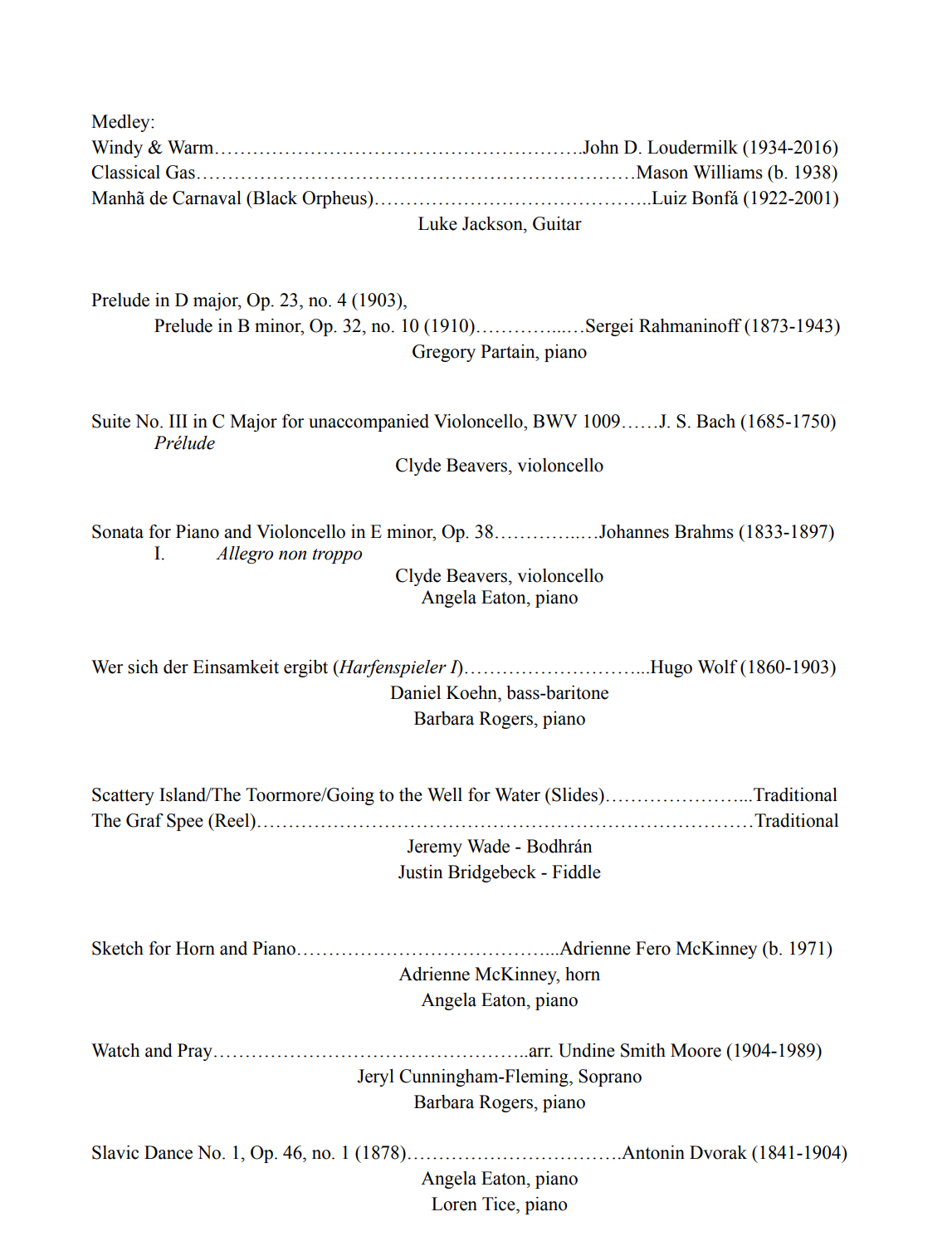
Settling into the warm-lit theater, the crowd was initially mesmerized by the opening plucks of Professor Luke Jackson’s guitar. Jackson performed a medley of three pieces, awing the audience’s ears with his intricate strumming, picking, and overall unfathomable techniques; the guitarist also conveyed his passion for playing through his squinted eyes and subtle facial satisfaction.

Next up was Dr. Gregory Partain on piano. With enthralling dynamics, Partain did Rachmaninoff’s preludes complete justice. Partain’s focus was prominent through his precise hand movements and consistent eye contact with the keys. 

After the pianist’s smooth exit, Clyde Beavers wowed on violoncello. The Juilliard graduate moved his bow swiftly and with aggression, causing notes in C Major to soar through the theater; Beavers also performed a duet with pianist Angela Eaton. The duo’s combined passion and Beaver’s anger for the sonata left chills down the backs of all in attendance. 

Upon the pair’s hand-held adieu, Dr. Daniel Koehn’s booming voice was amplified with the addition of Barbara Rogers on piano. The bass-baritone, who has performed in several opera roles, filled every nook and cranny of the theater with his powerful volume and vibrato. Singing a piece by the name of “Wer sich der Einsamkeit ergibt”, Koehn transferred emotions of torment to each listener. 

Taking a shift in genre, Jeremy Wade and Justin Bridgebeck transported the crowd to Ireland; the combination of Irish fiddling and playing of the bodhran, along with the synchronized rhythms and shared smiles, left the audience elated. Angela Eaton returned for the seventh act as an accompanist for horn player Adrienne McKinney. The notes erupting from the French horn established a universal calmness and admiration for the flowing tunes. 
Following McKinney and Eaton was the penultimate performance of the night: Jeryl Cunningham-Fleming’s soprano vocal artistry was supported by Barbara Rogers on piano. Fleming sang a piece titled “Watch and Pray”, an African-American spiritual that touched the hearts of each member of the crowd. Incorporating elements of opera and jazz, Fleming’s wide vocal range and visible empathy for the characters of the song were truly remarkable. 
Ending the showcase with a bang, Eaton returned alongside Loren Tice for a joyful piano duet. The two’s obvious friendship reflected through the pair of playing hands, making for the perfect ending to an inspirational night. 

The Faculty Showcase marked the end of just one of the many performances held by the Music Program. Look out for the upcoming Studio 300 concert on October 8th and 9th!

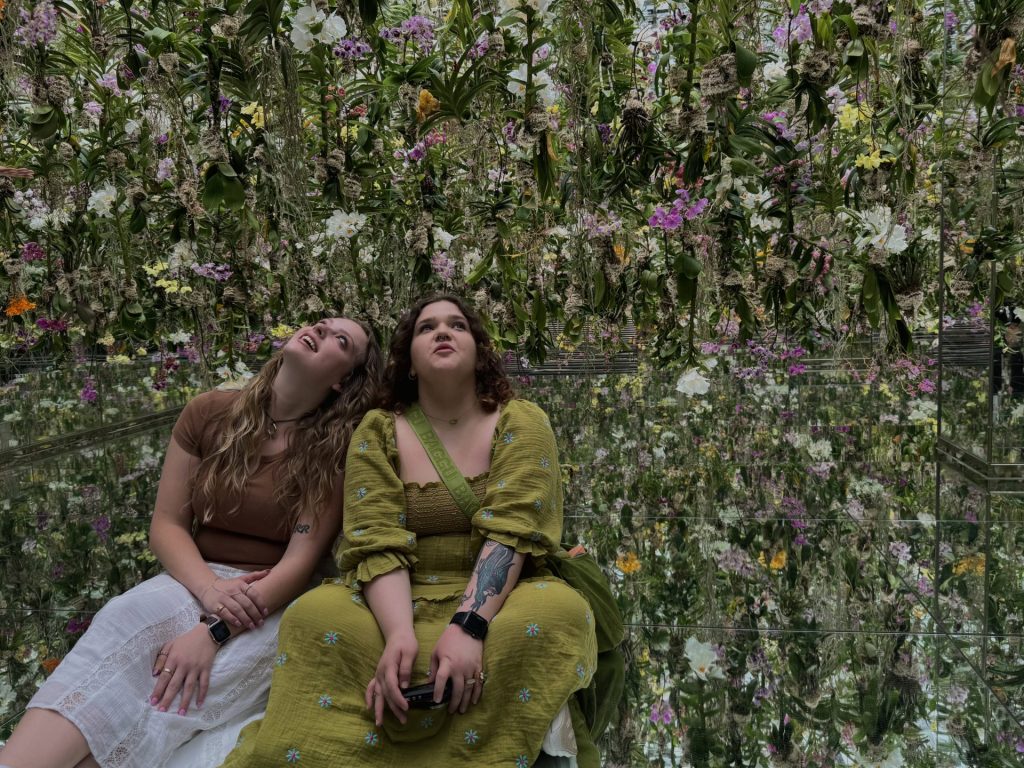
GALLERY: “Lights, Camera, Anime!” Japan Travel Abroad Captured in Photos

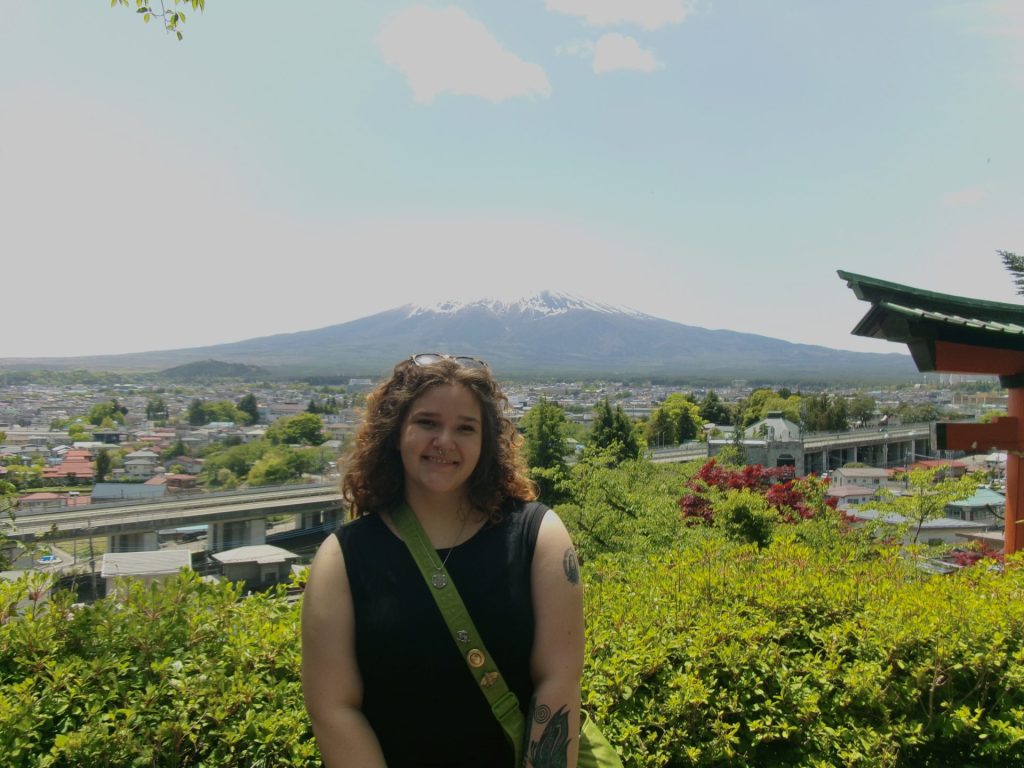
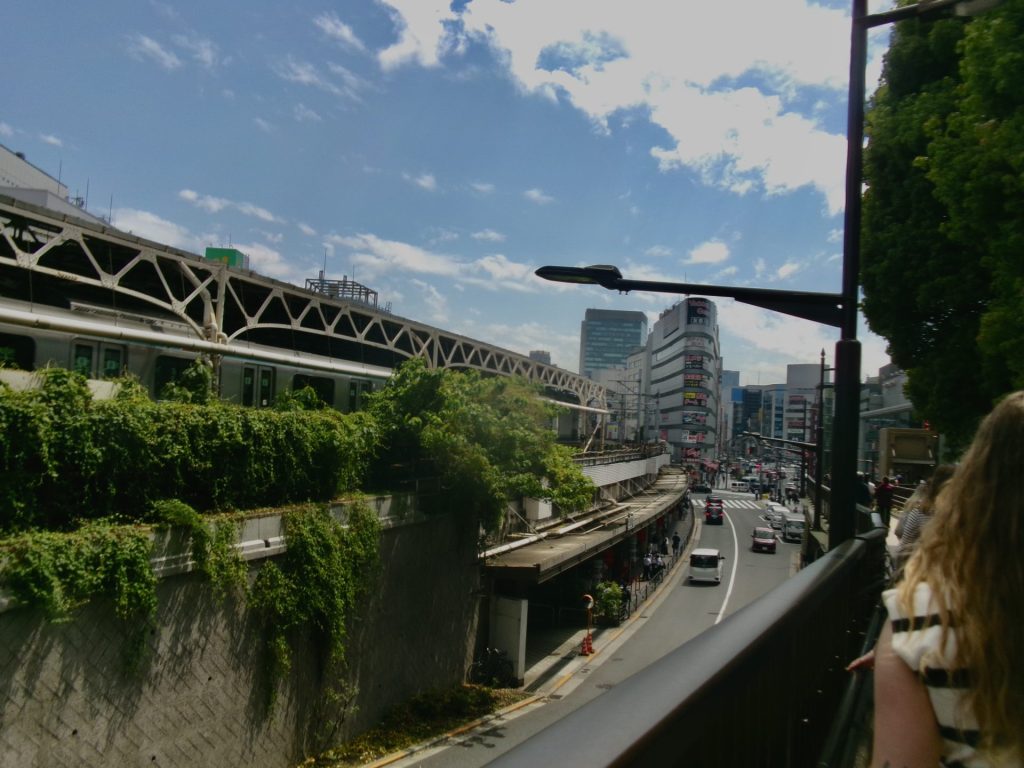
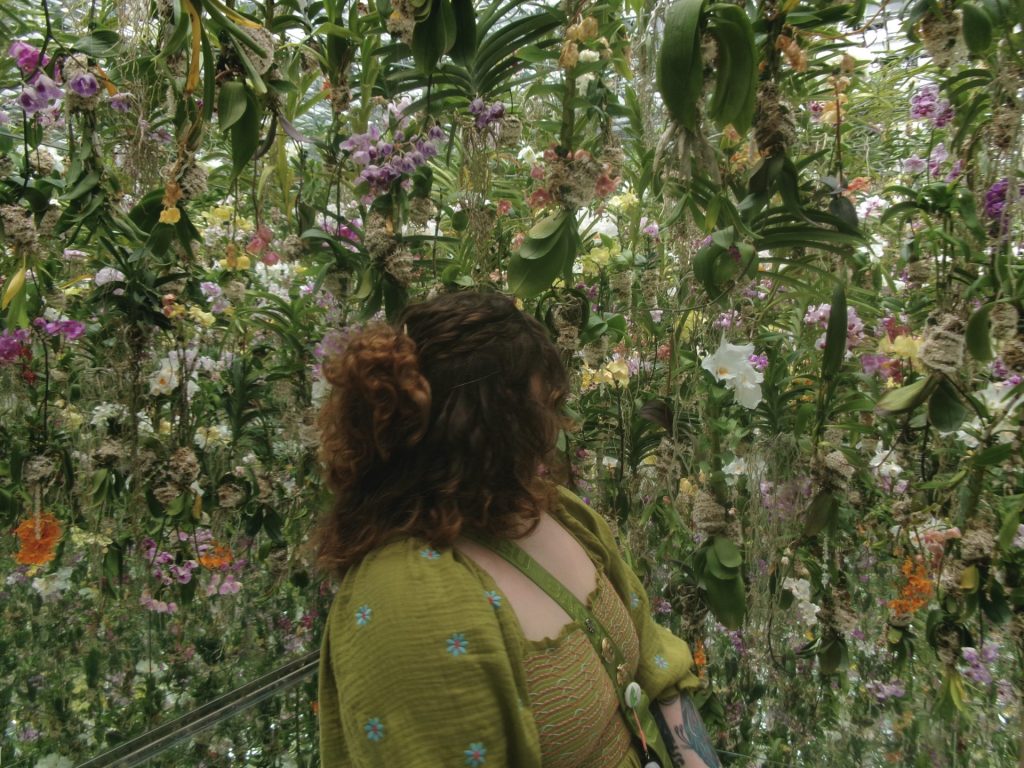
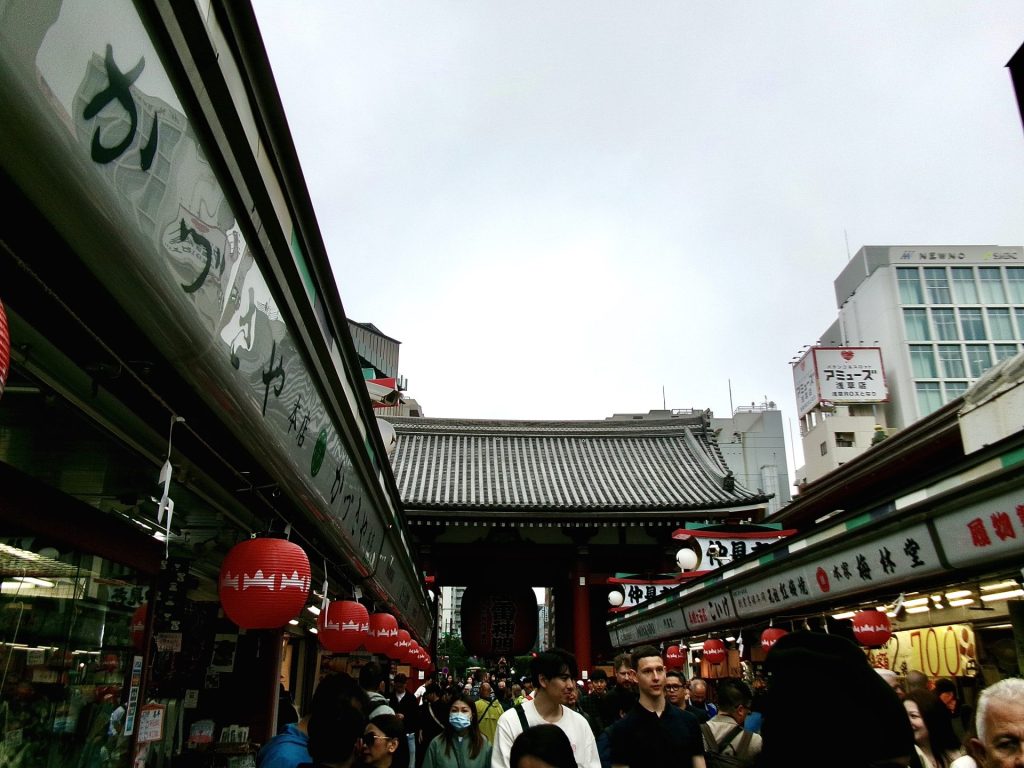
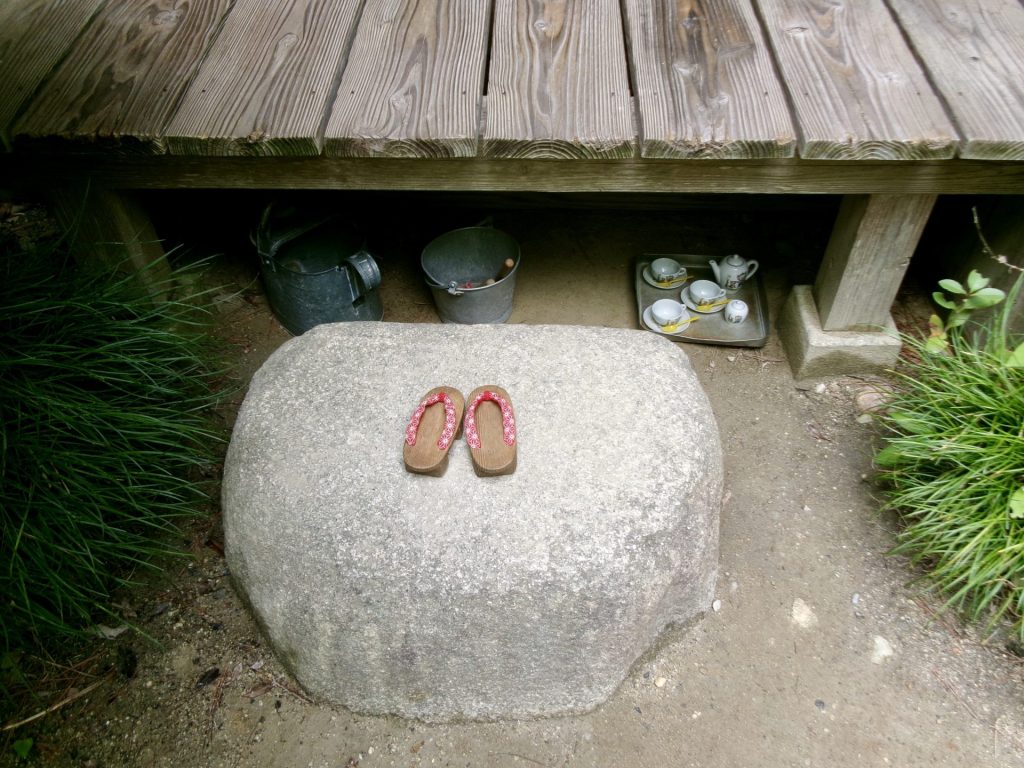
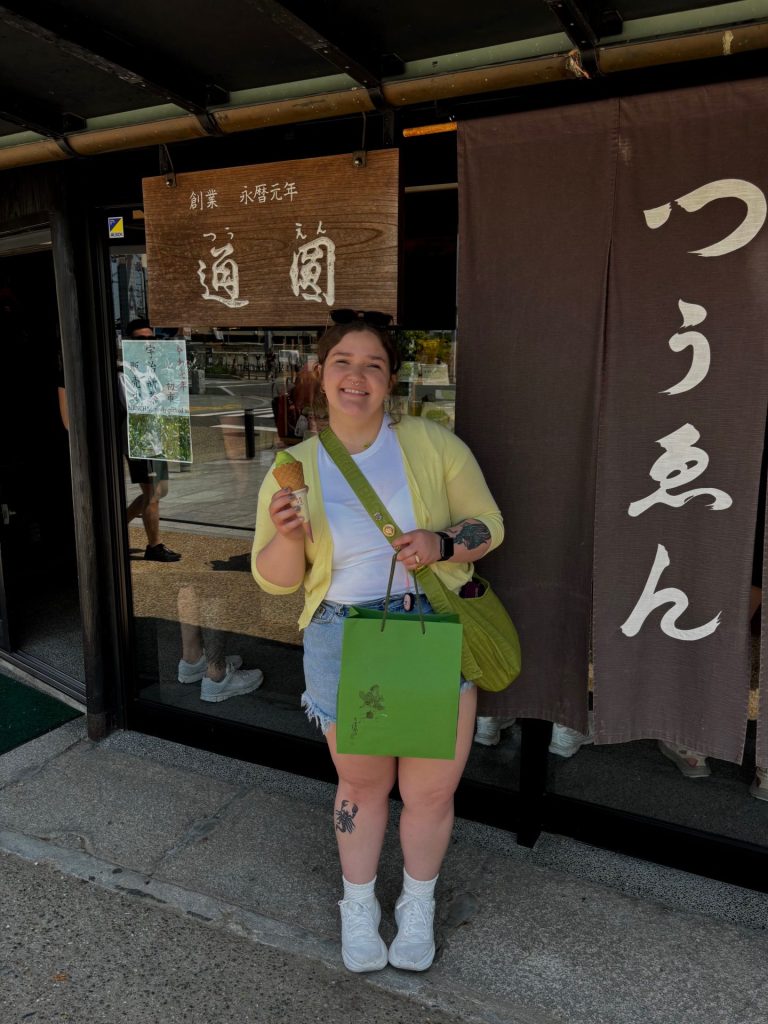
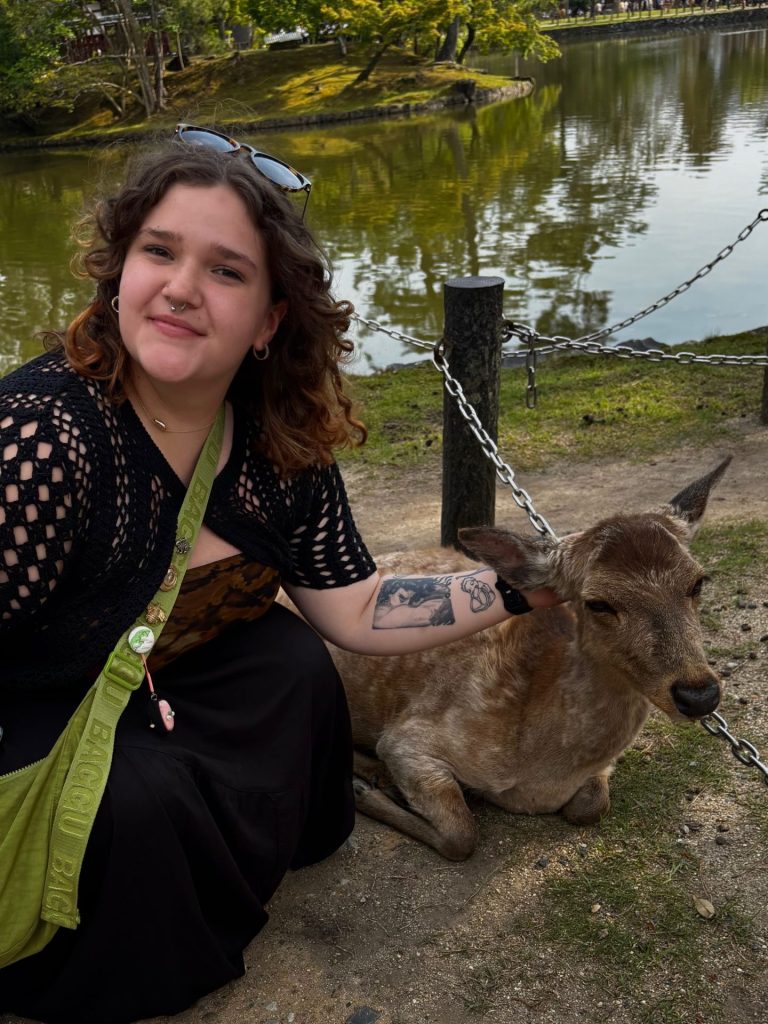
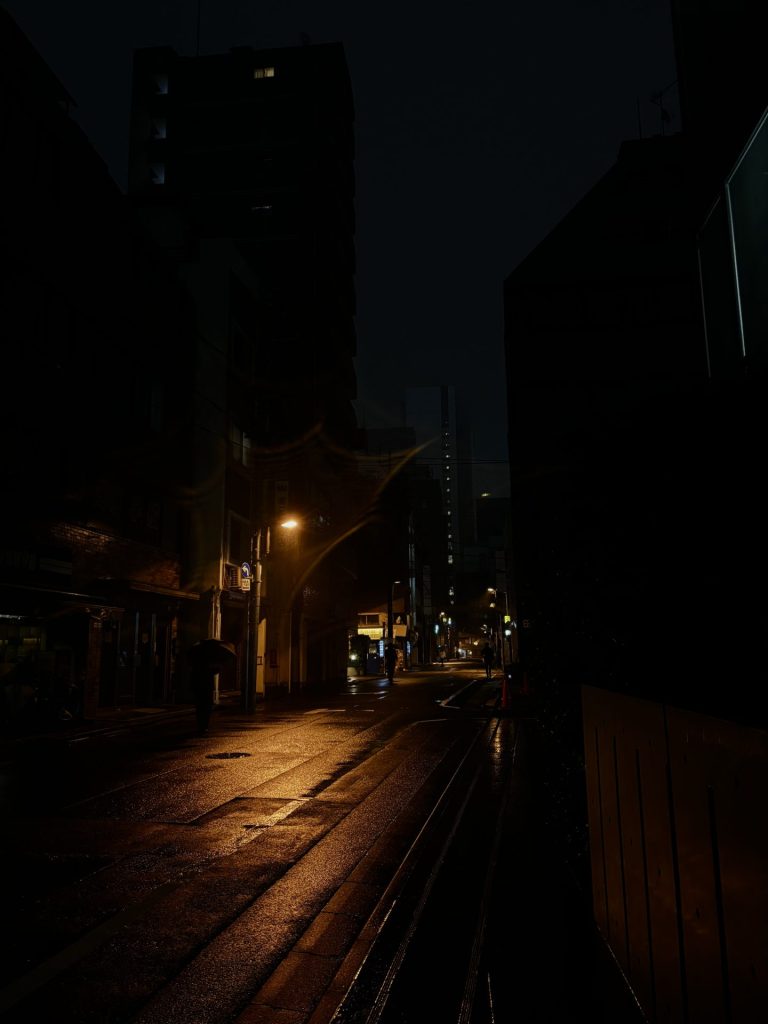
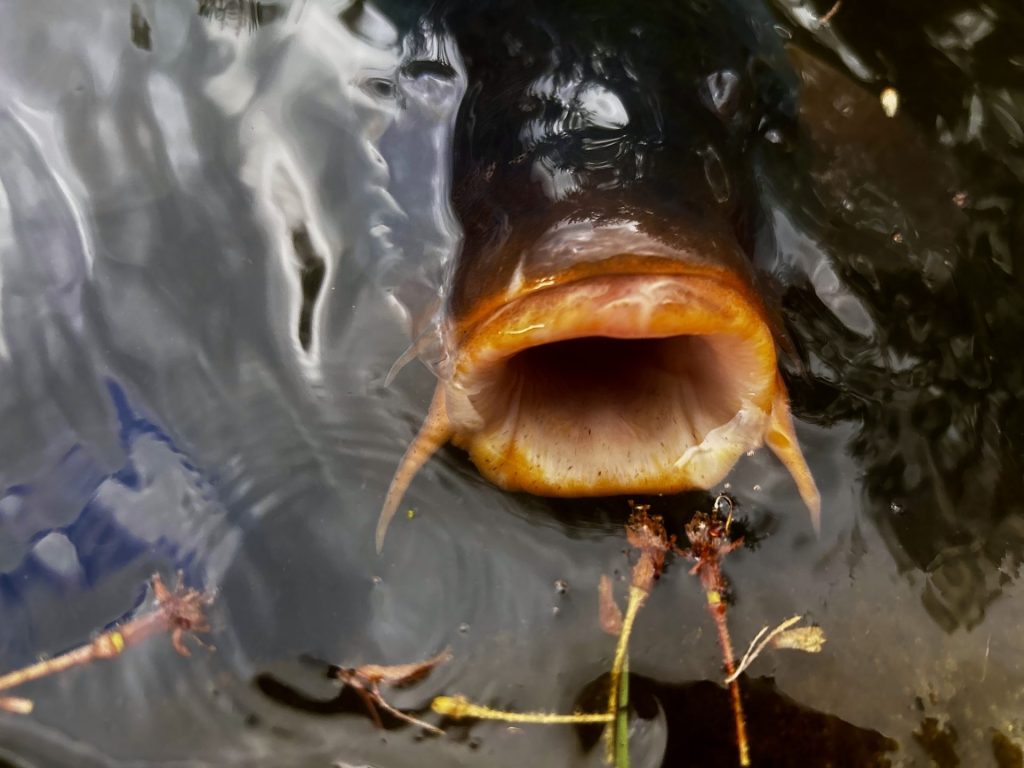
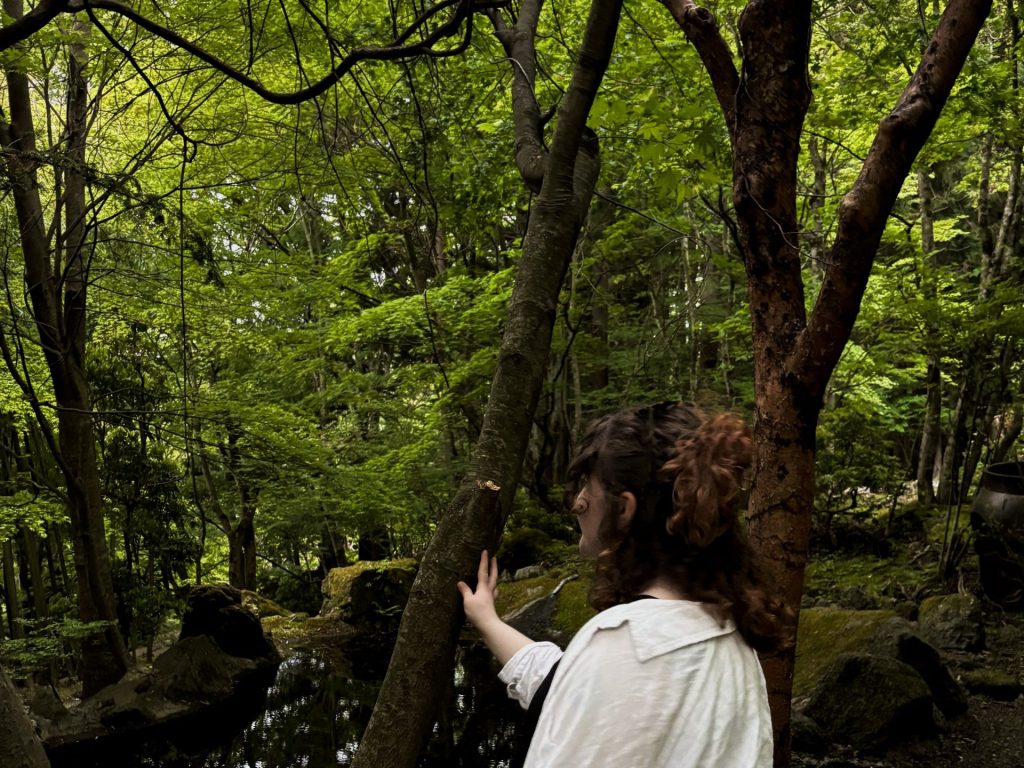
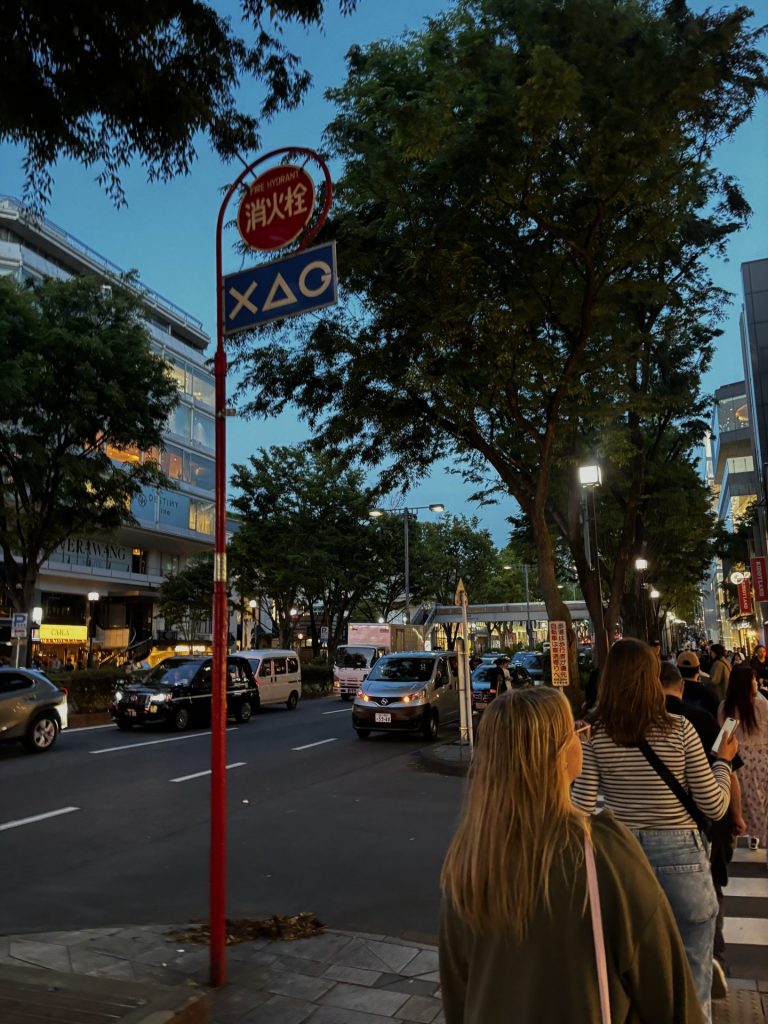
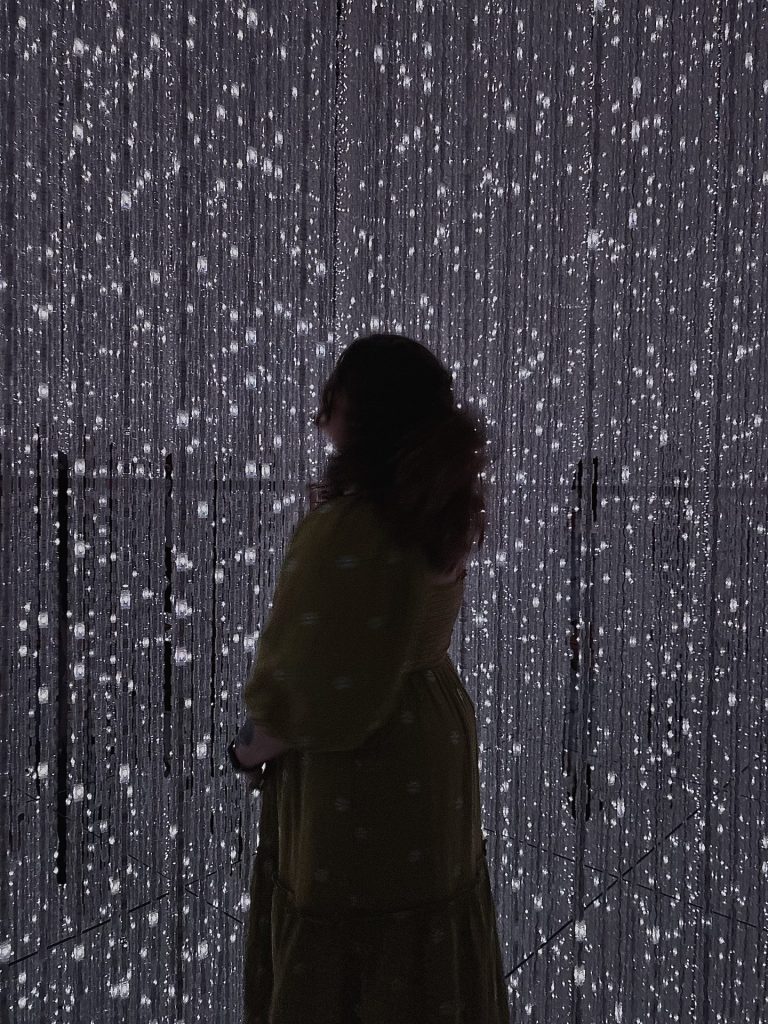
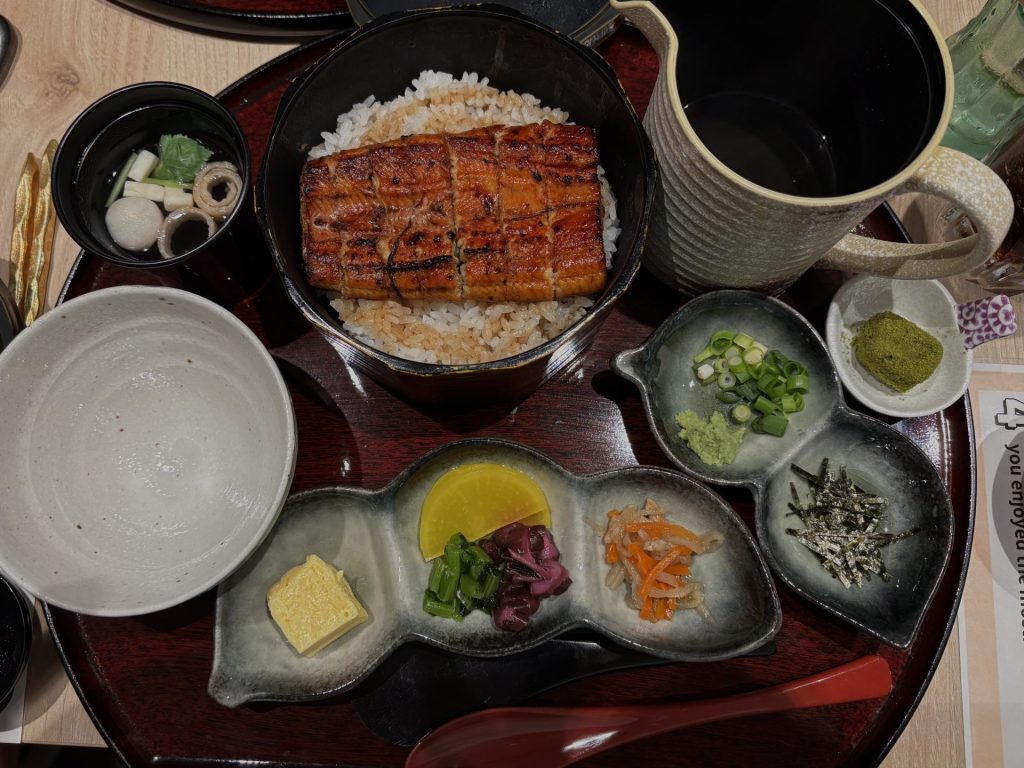
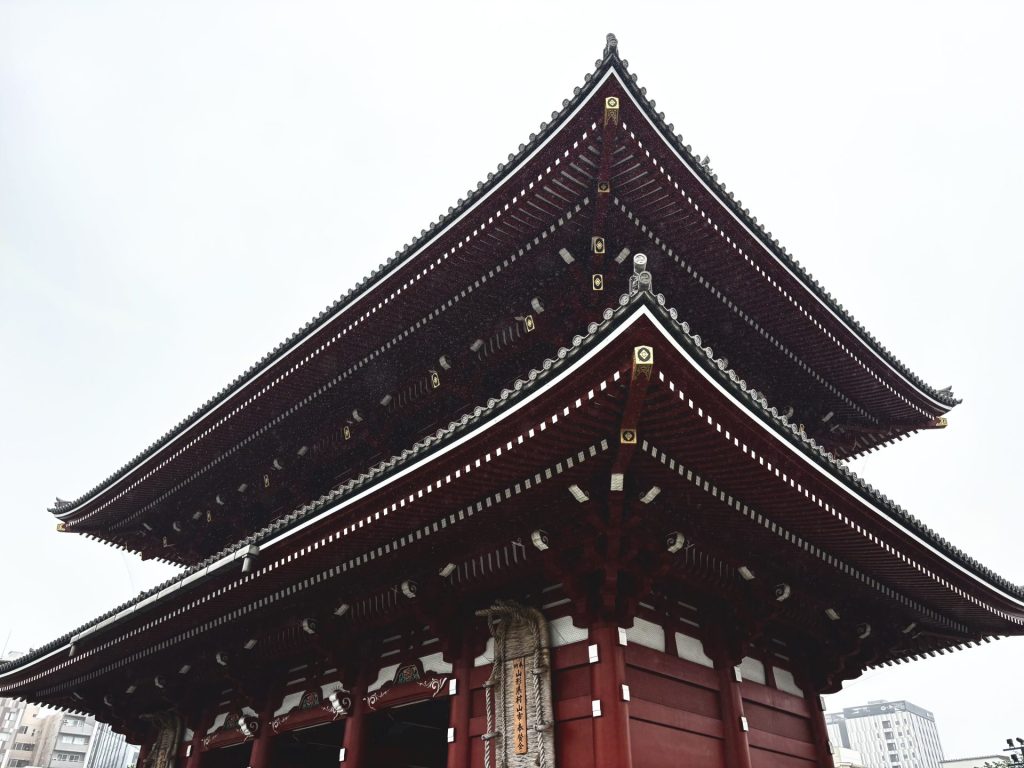
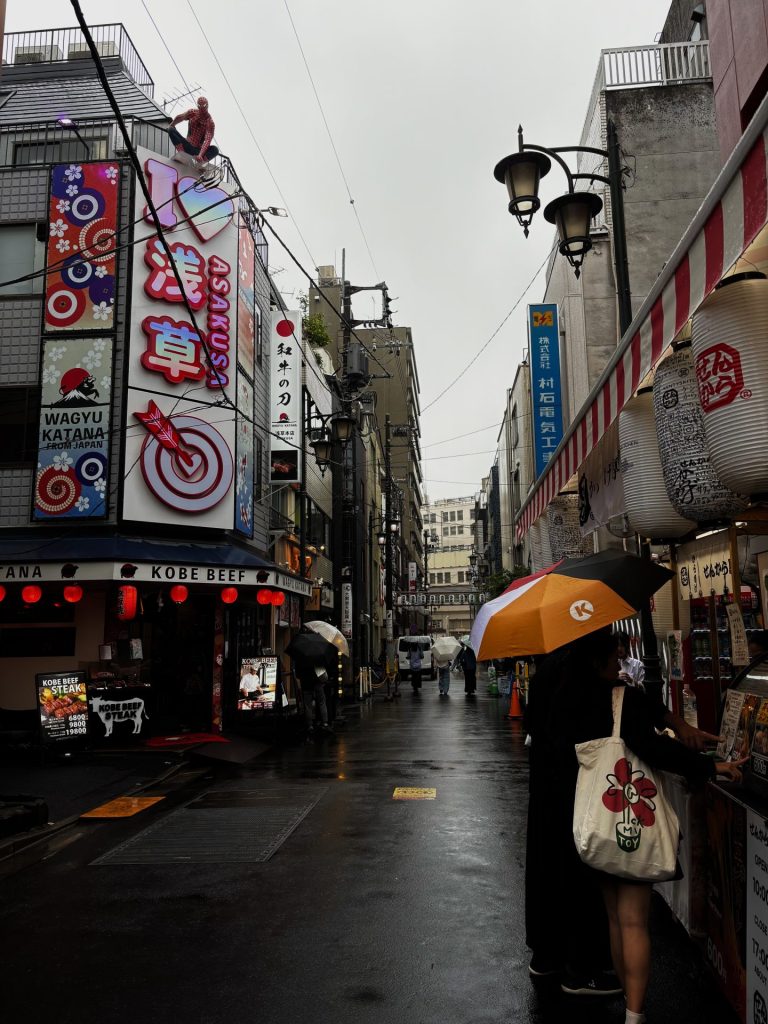
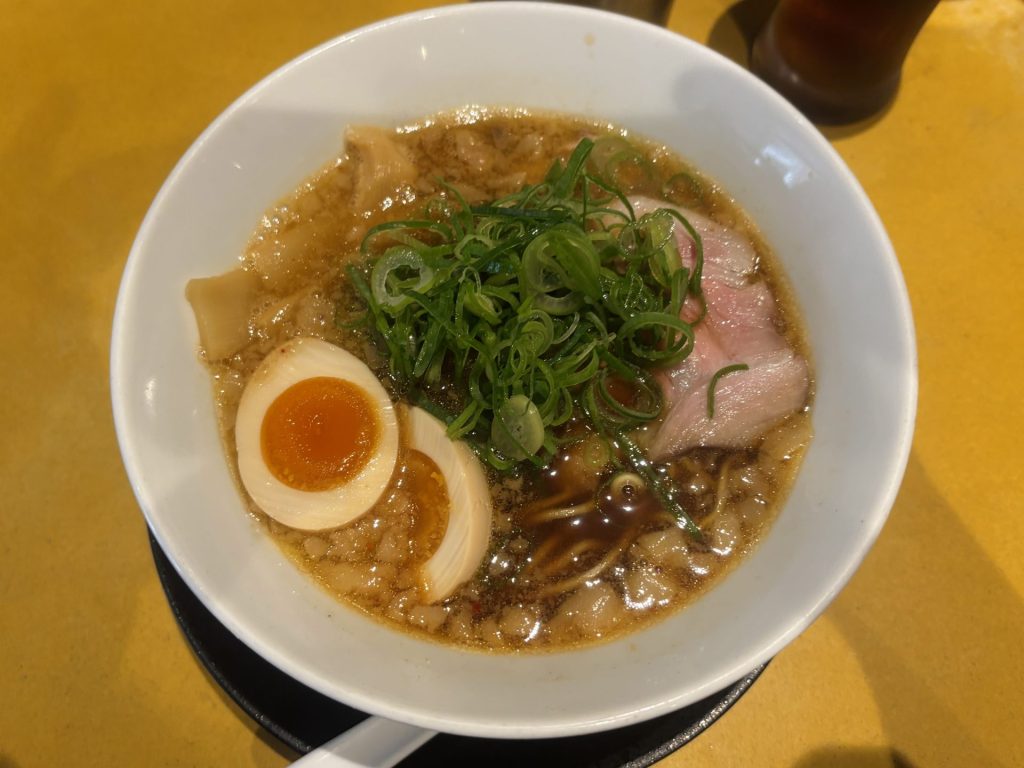
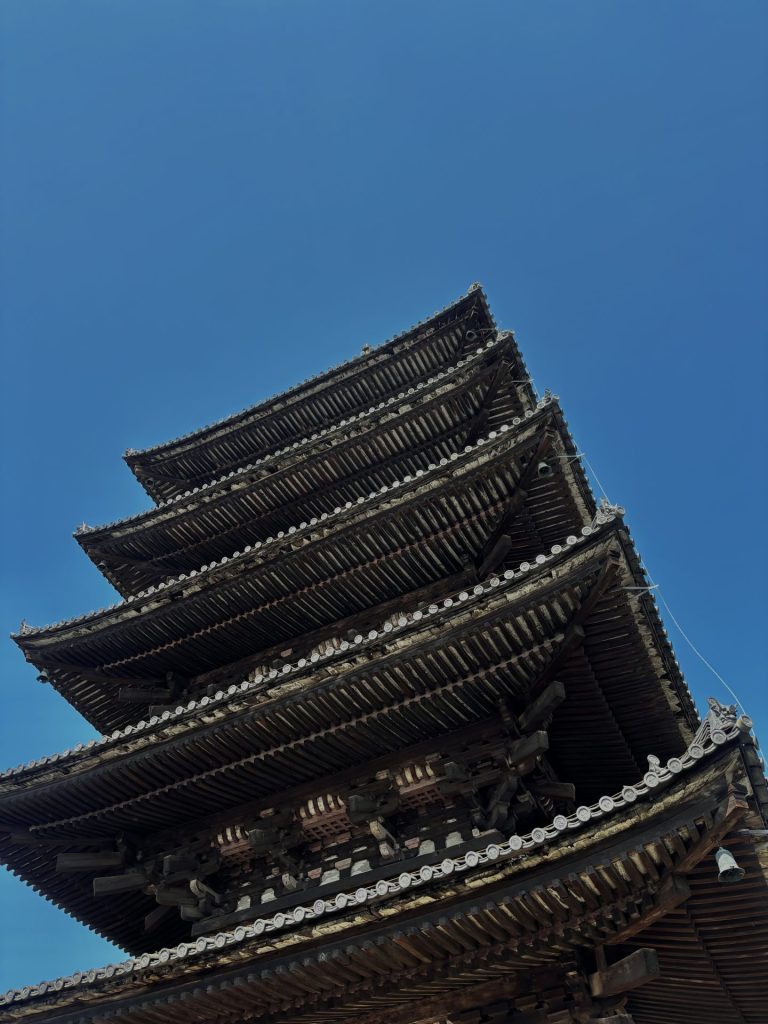
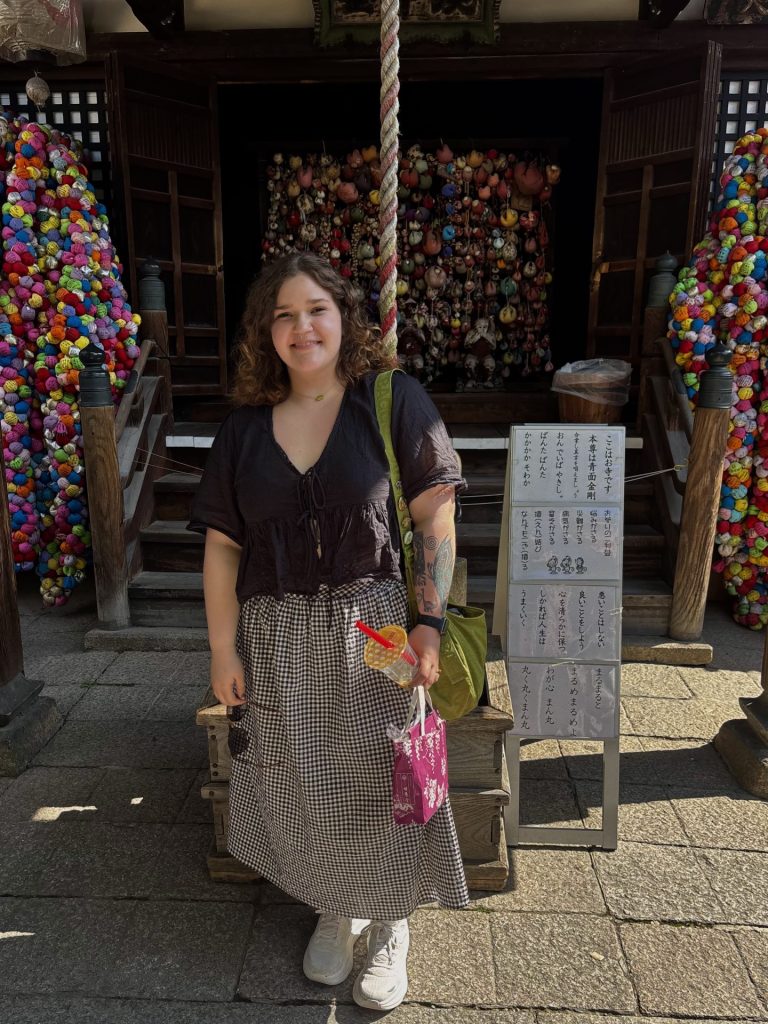
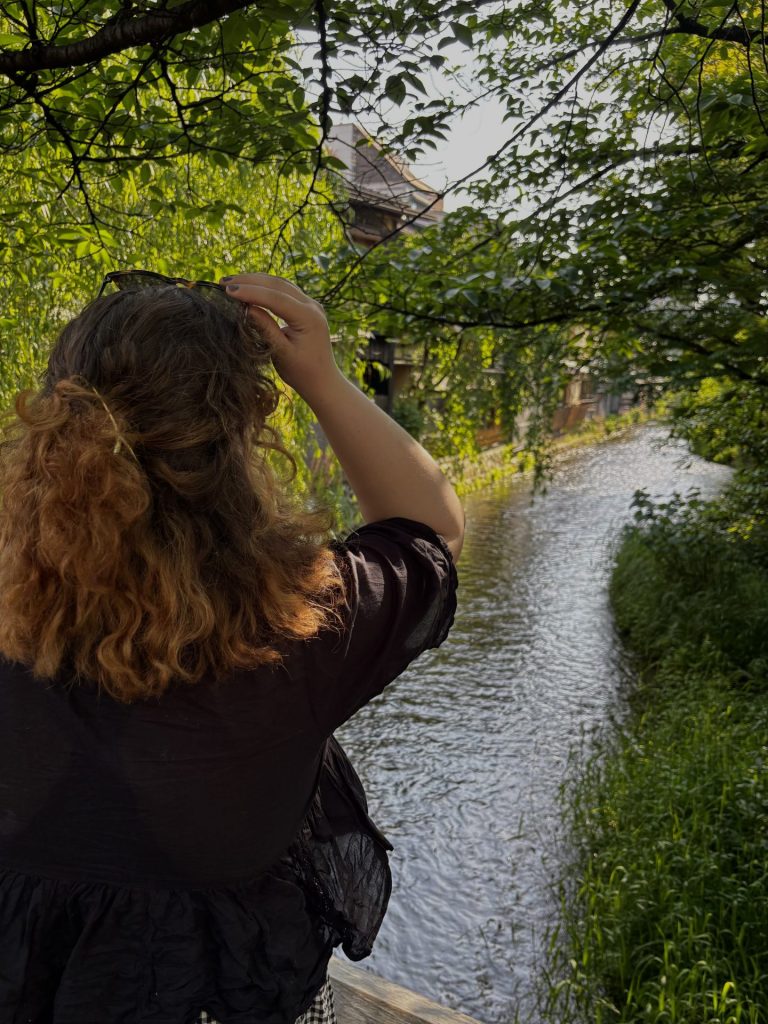
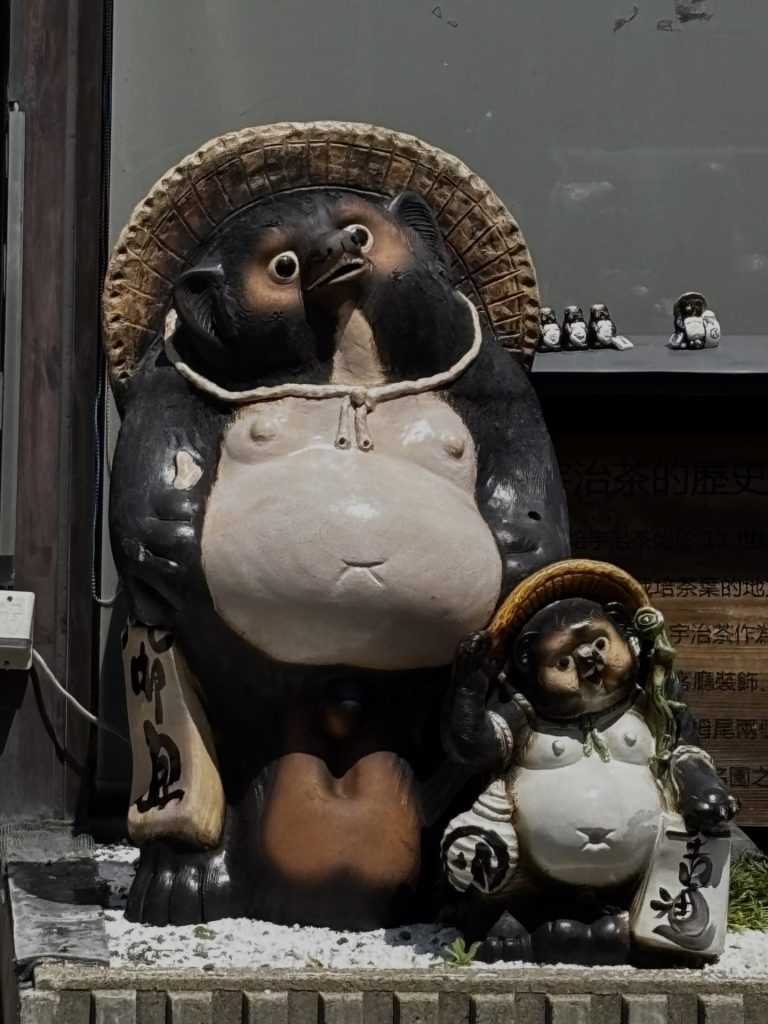
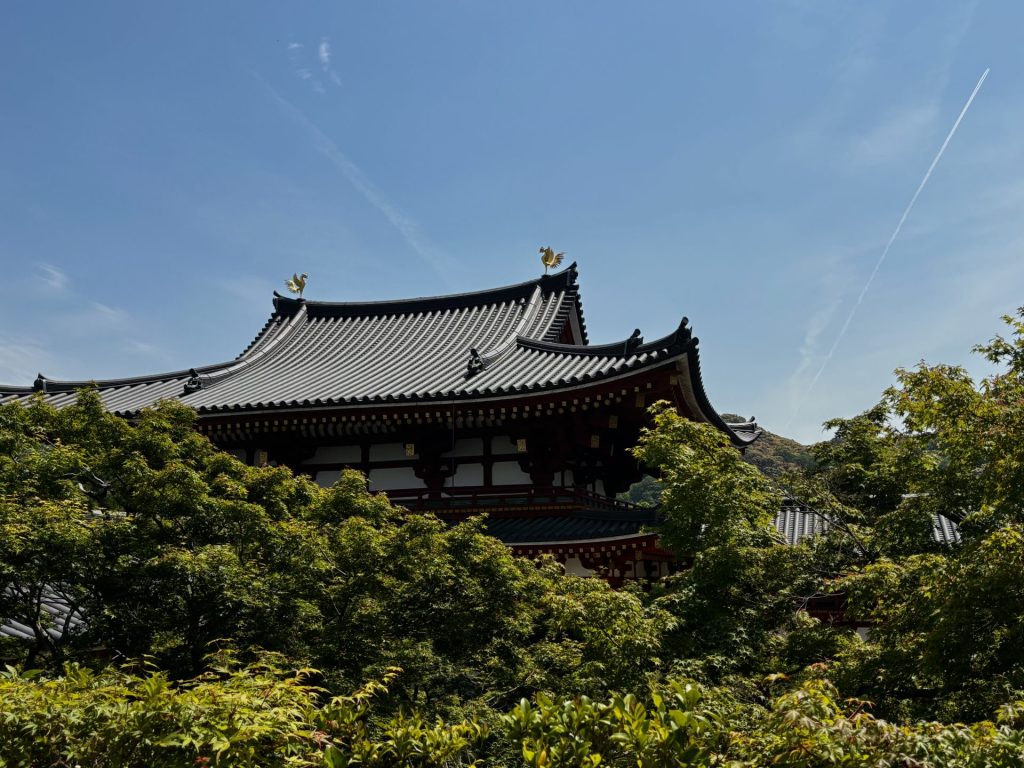
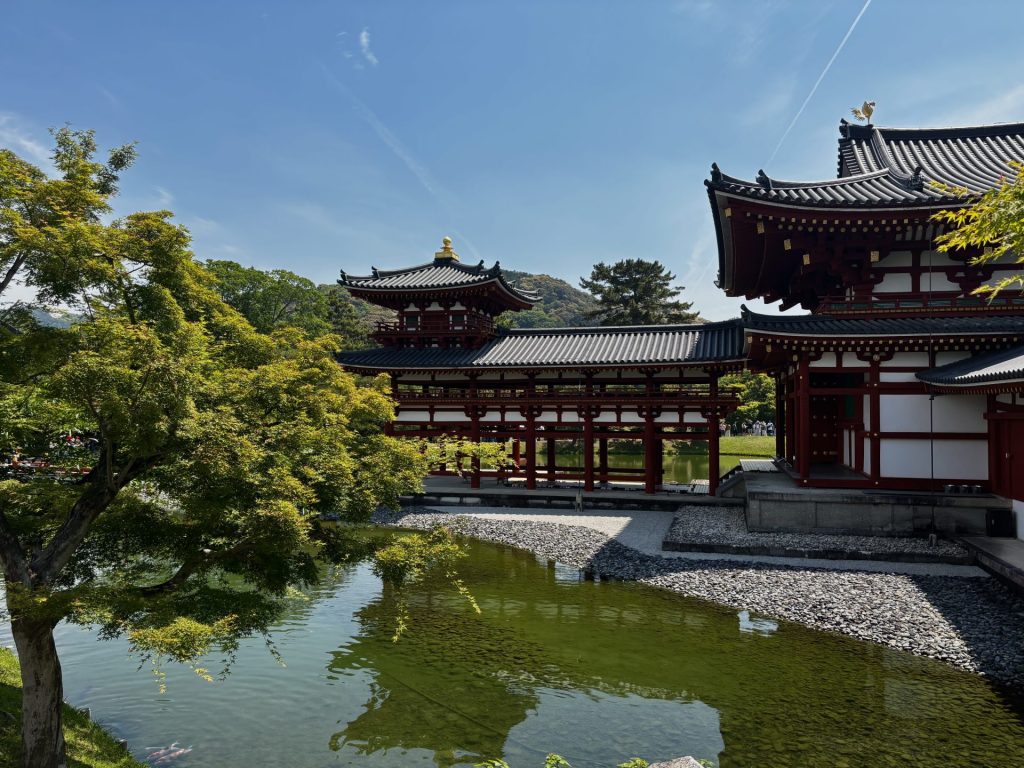
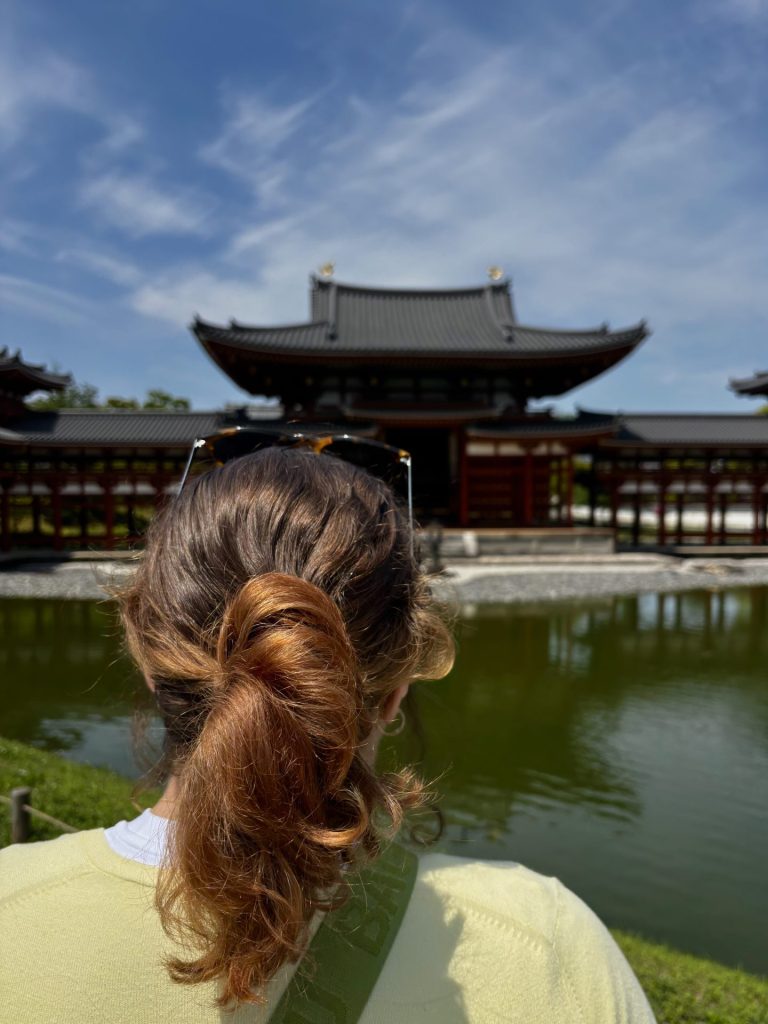
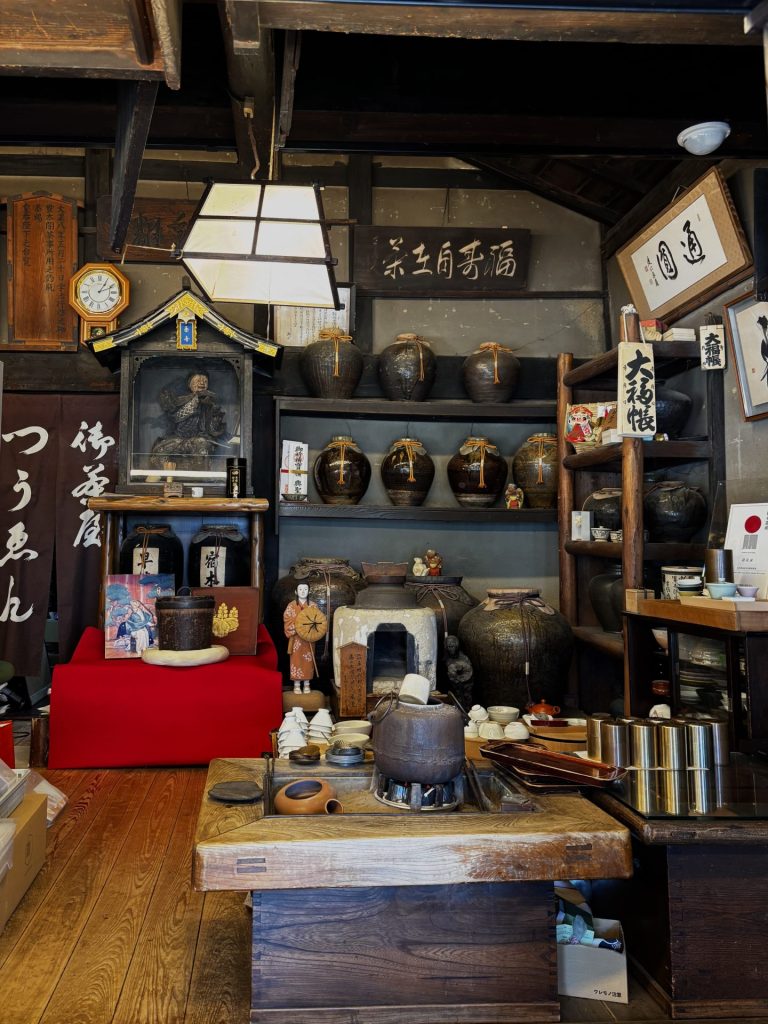
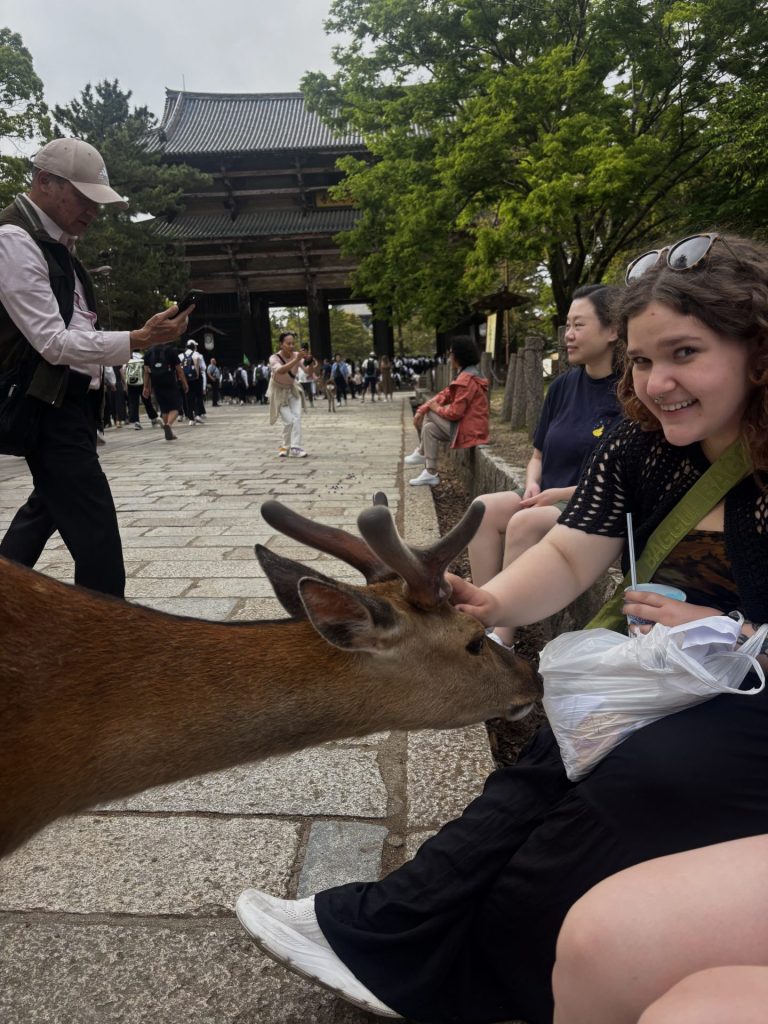
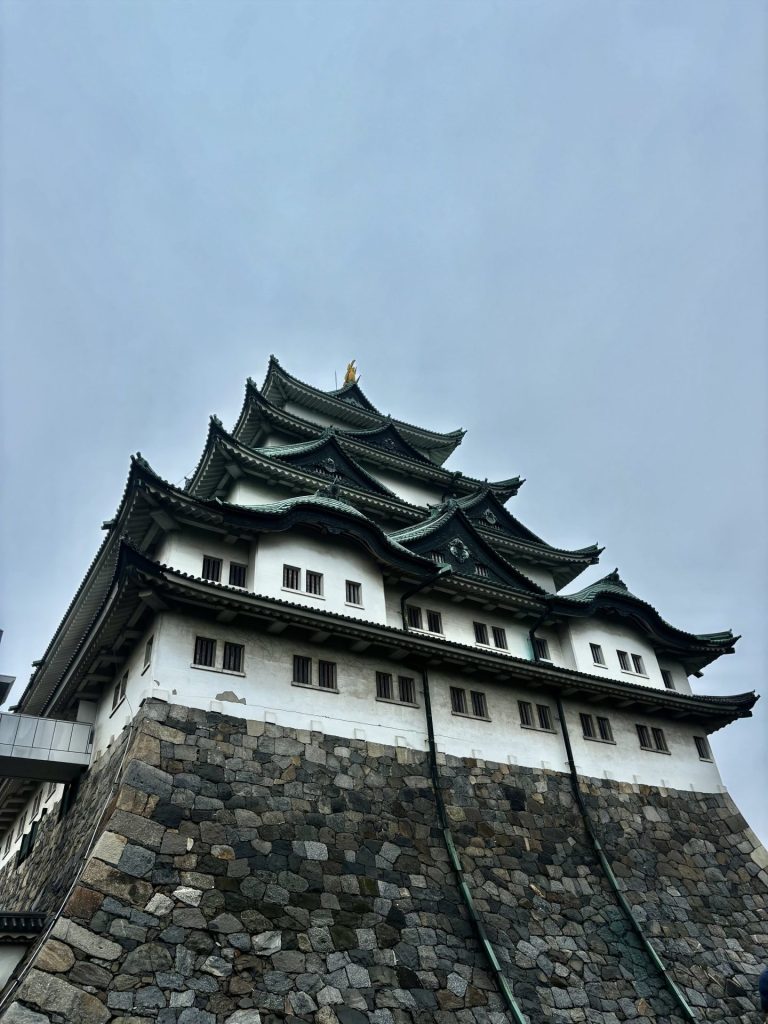
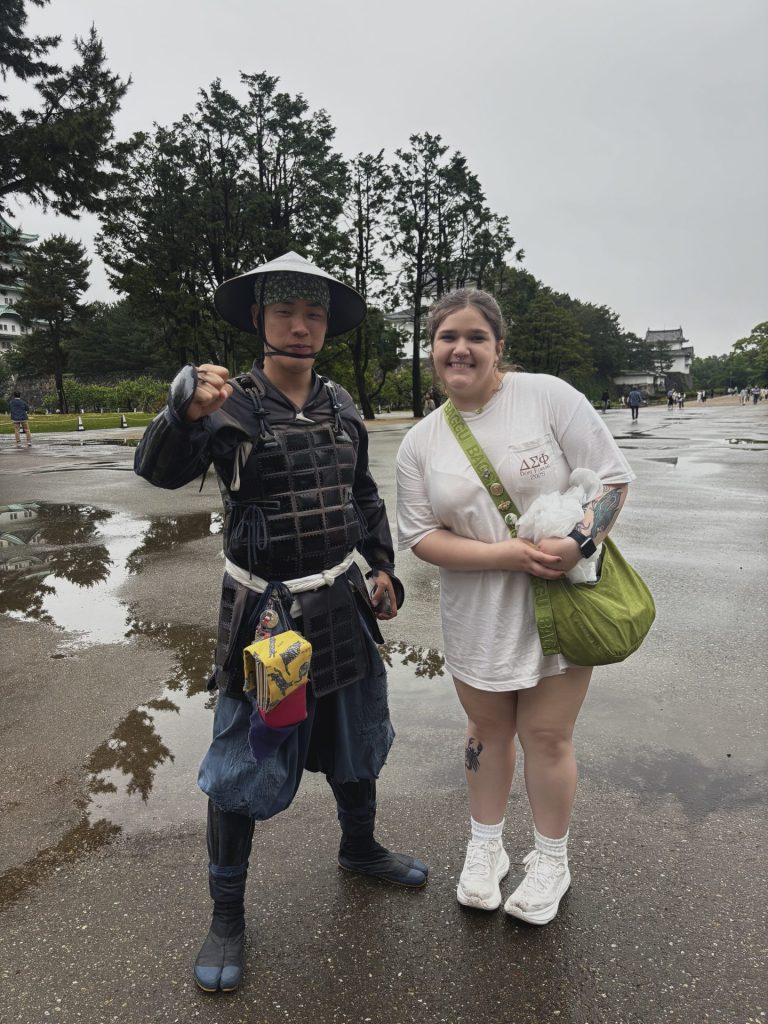
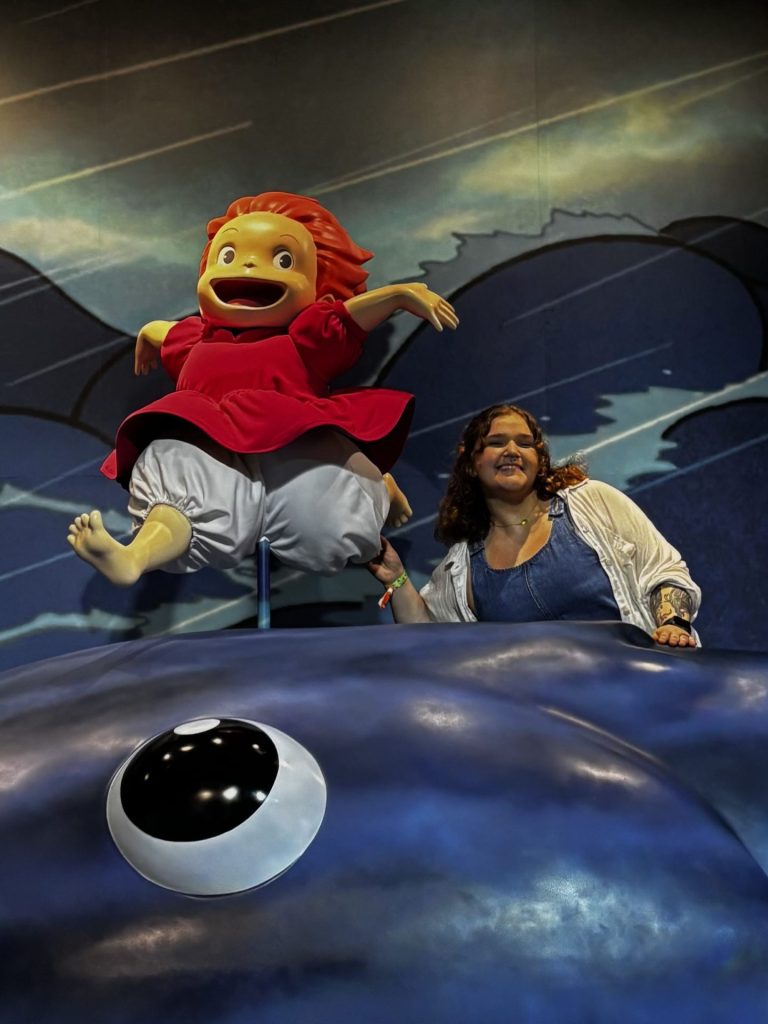
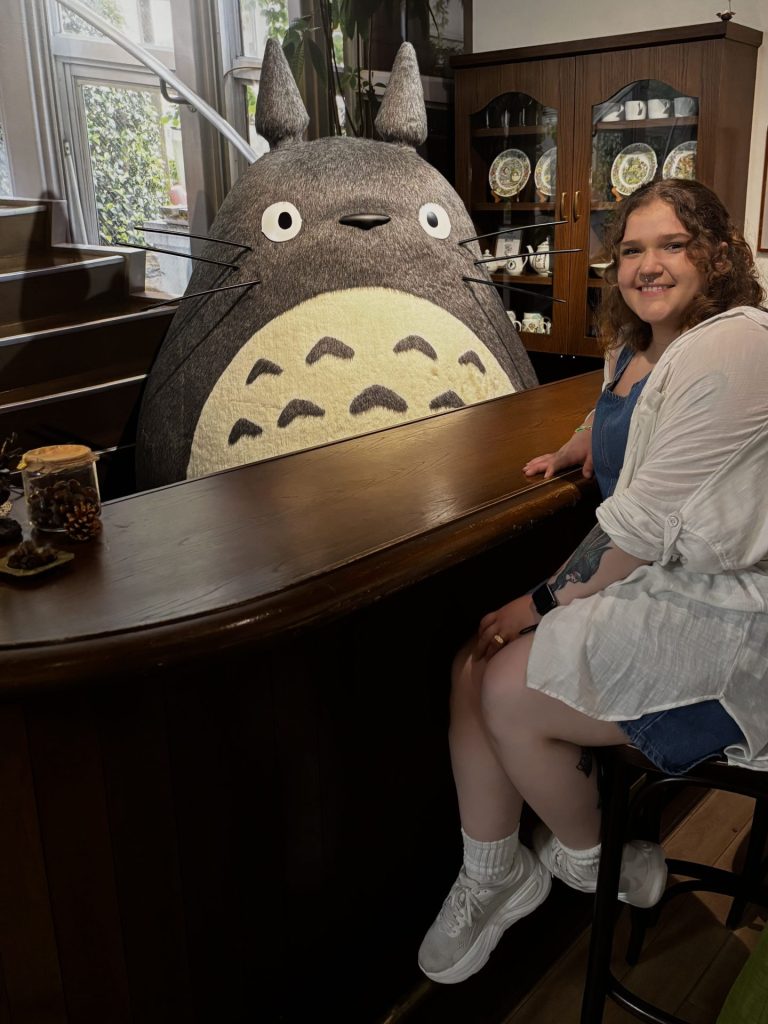
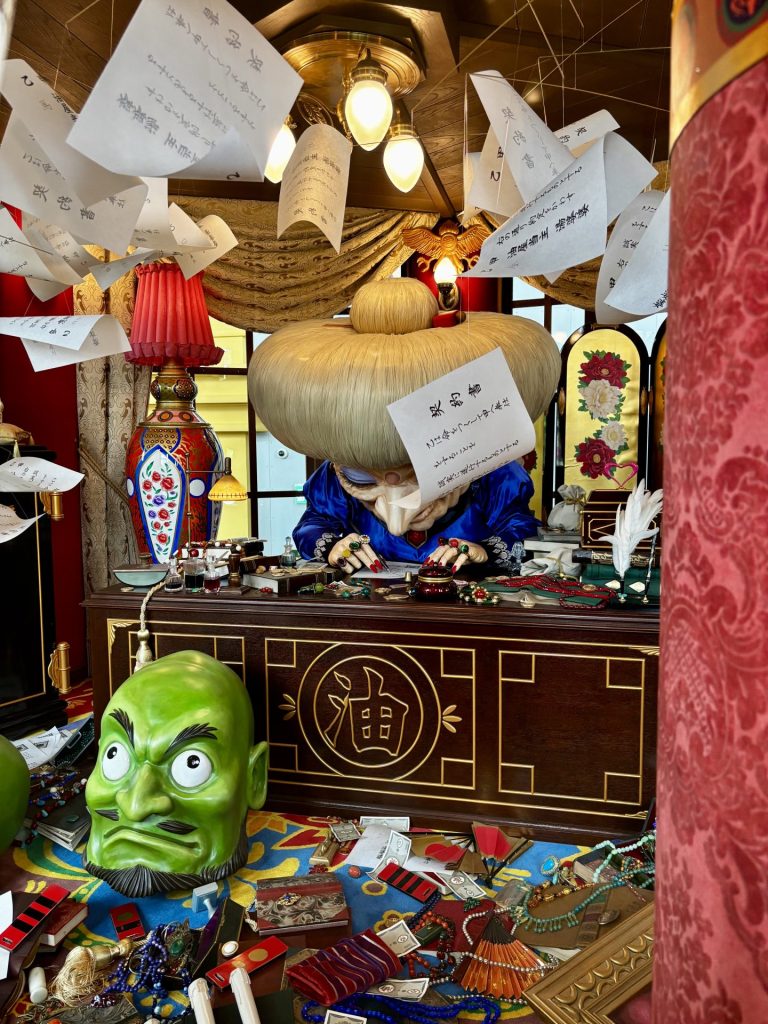
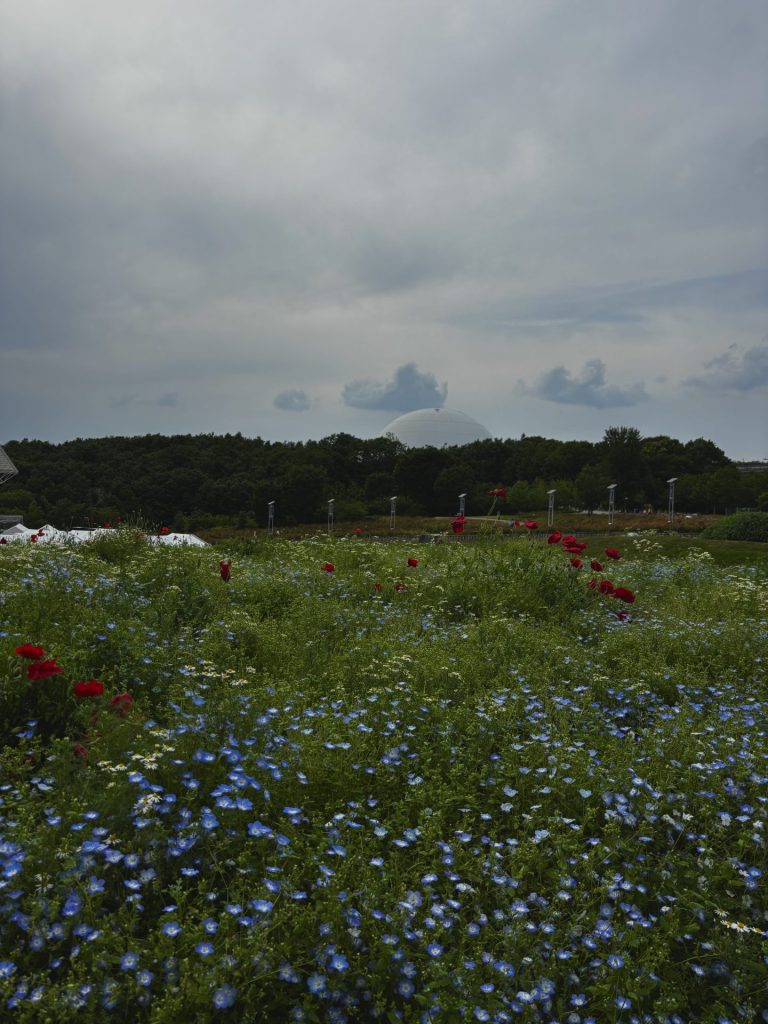
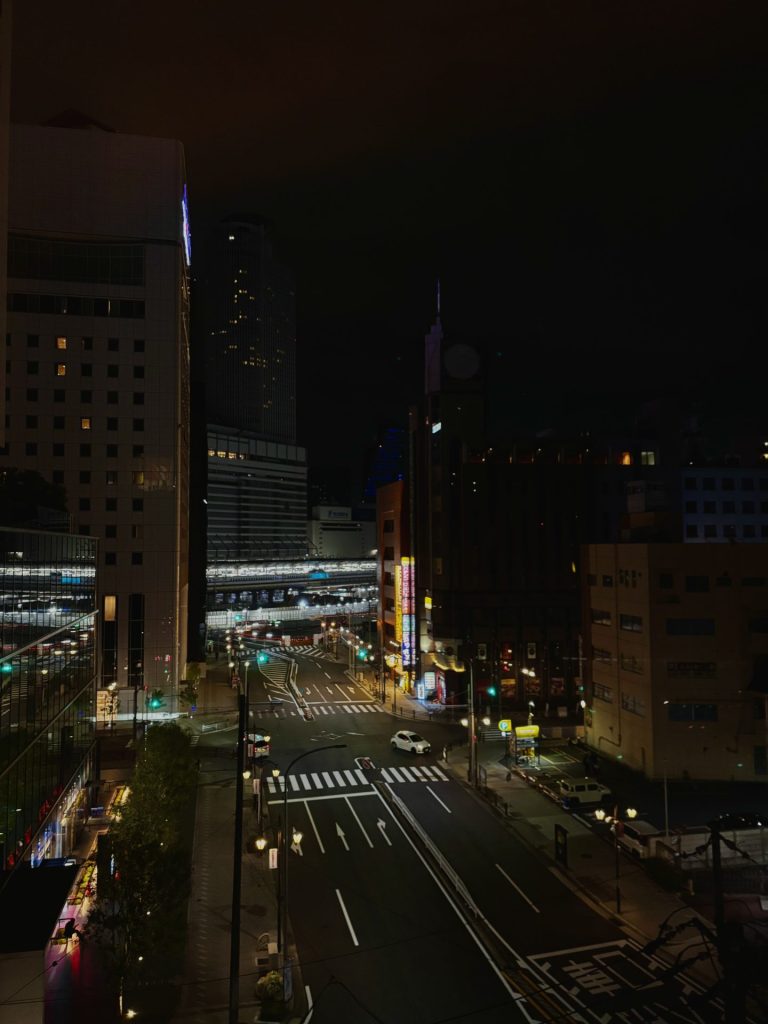
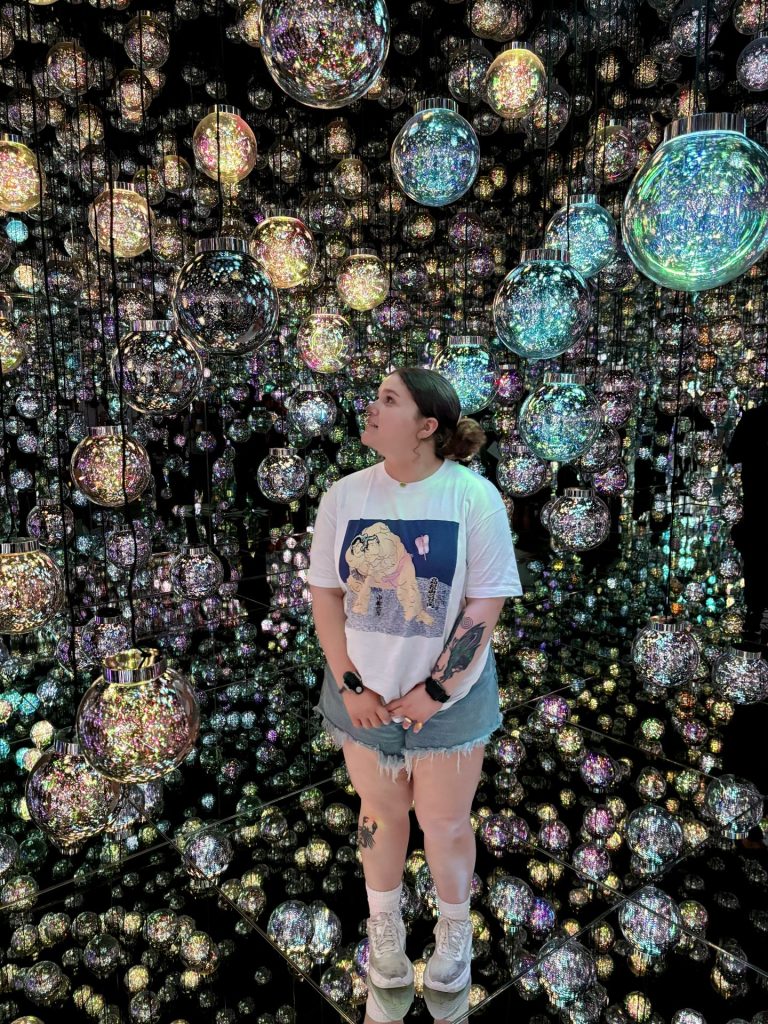
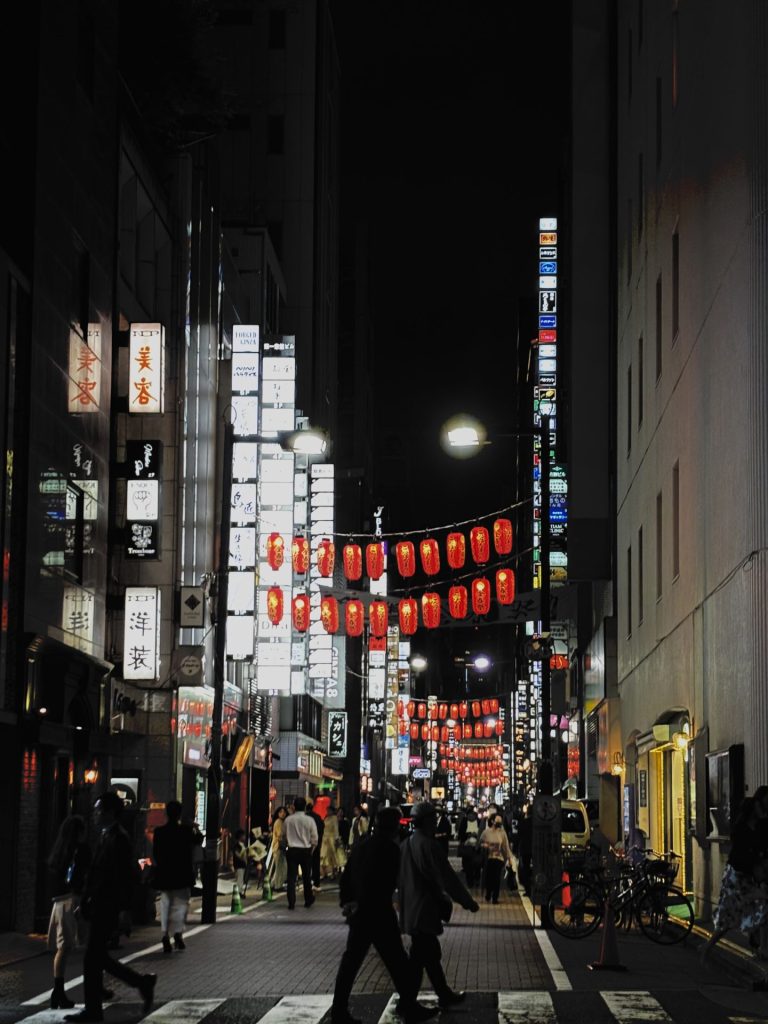
The May term study abroad class “Lights, Camera, Anime!” Taught by Arts Professor Kurt Gohde and Art History Professor Wei Lin was an incredible experience. Not only did we learn the history behind anime as an art form—but also the incredible culture(s) in Japan that are often reflected in this art form. Some of my favorite experiences were visiting the Ryōan-ji temple in Kyoto and seeing the breathtaking tsukubai, as well as having free time to explore Japan. I also visited one of the oldest tea houses in the world! I am forever grateful for this opportunity and the growth it provided me as a person. A special thank you to Kurt and Wei Lin for taking us on this journey, I hope to see this taught more in the future.

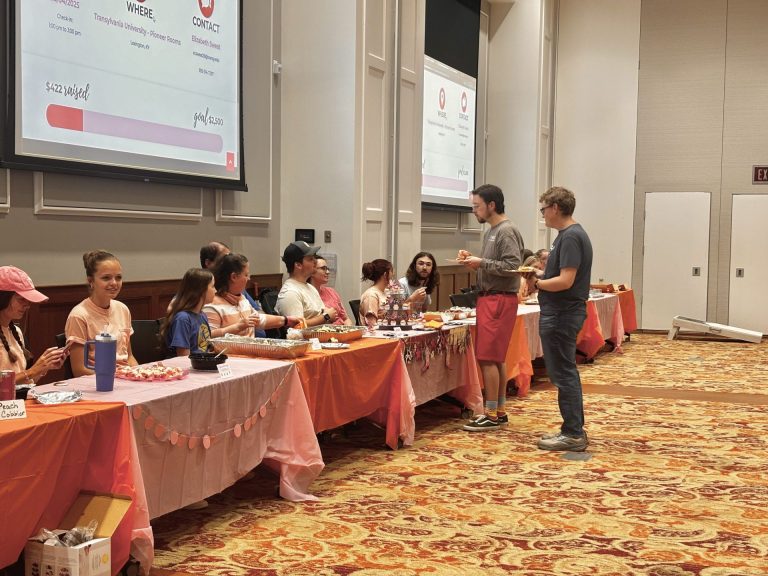
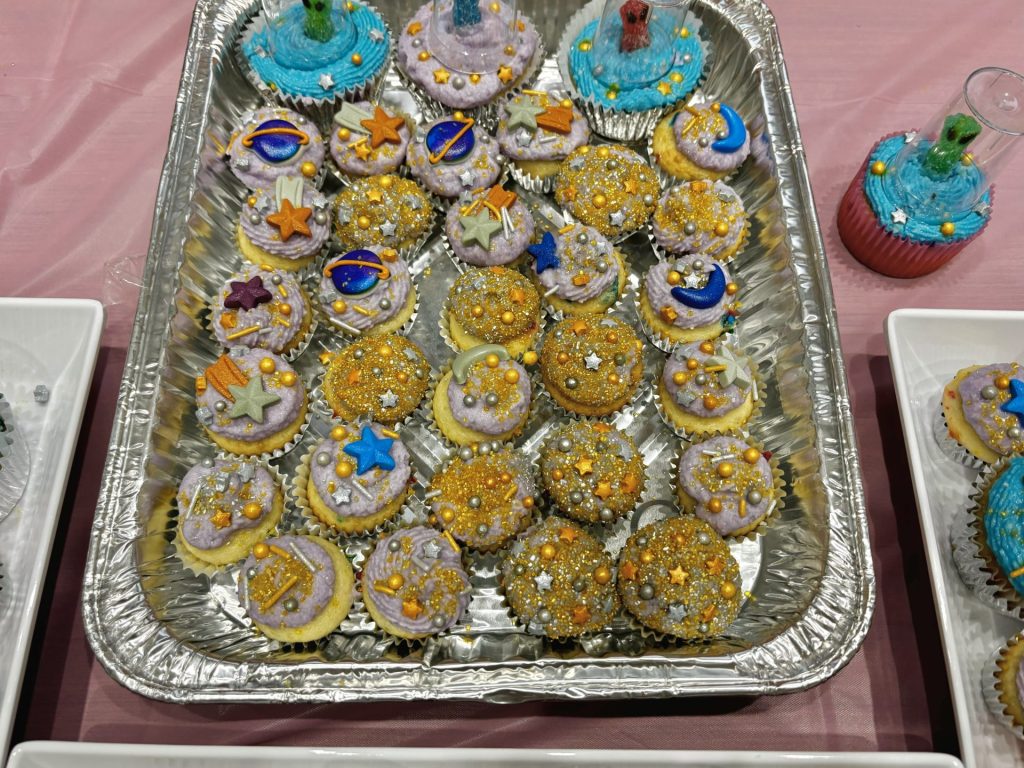
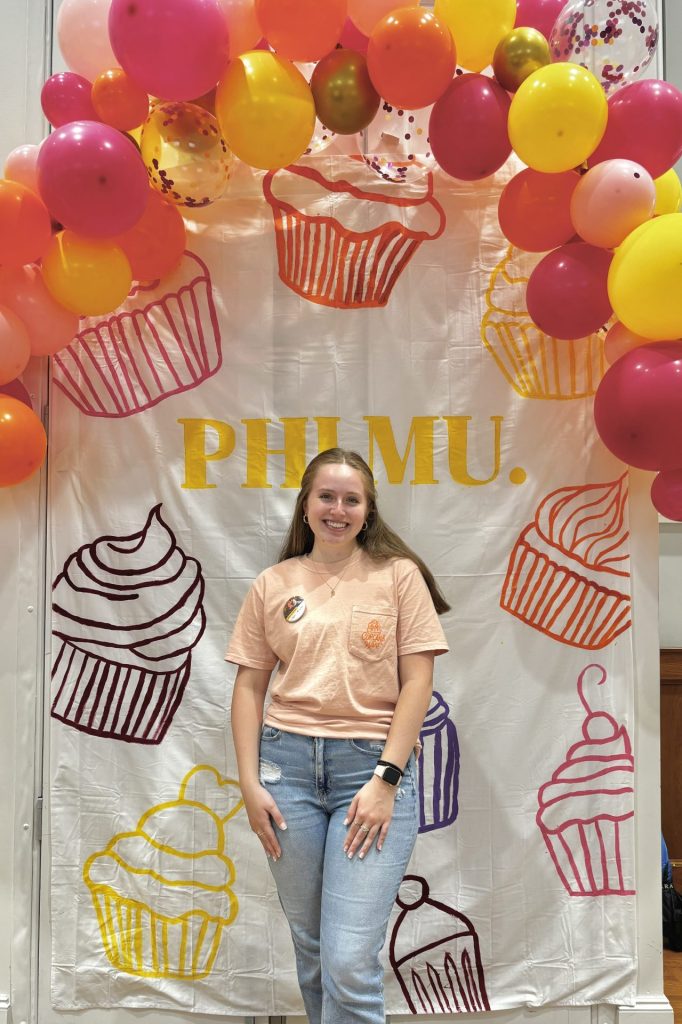
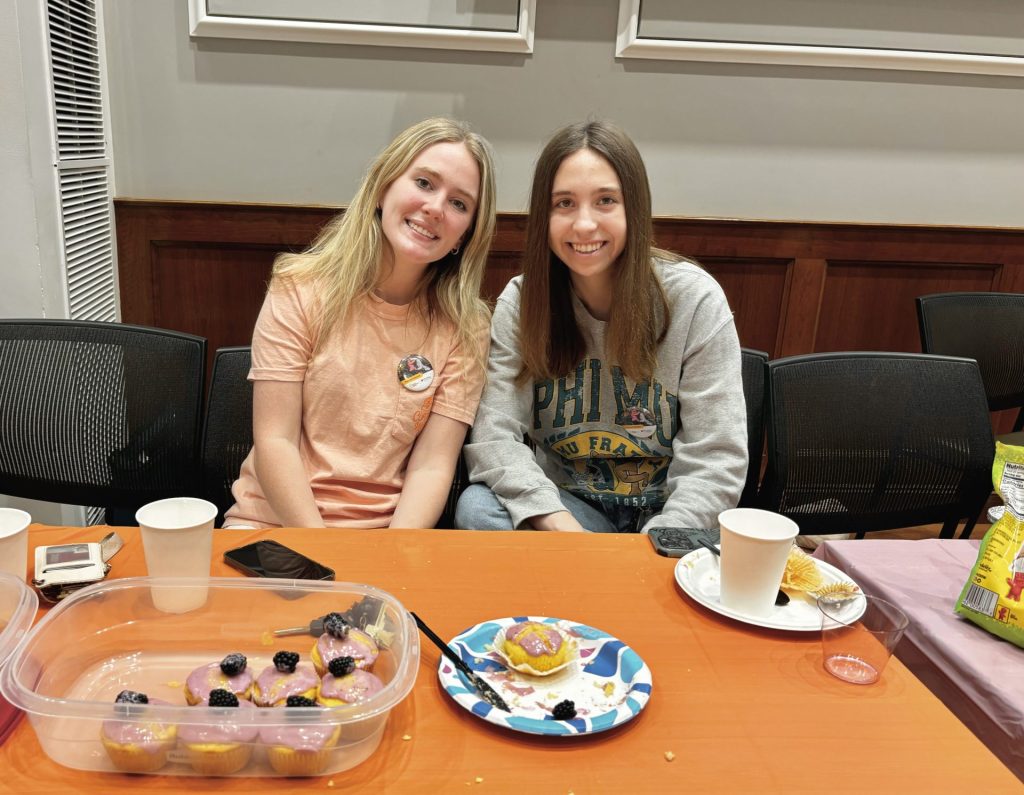
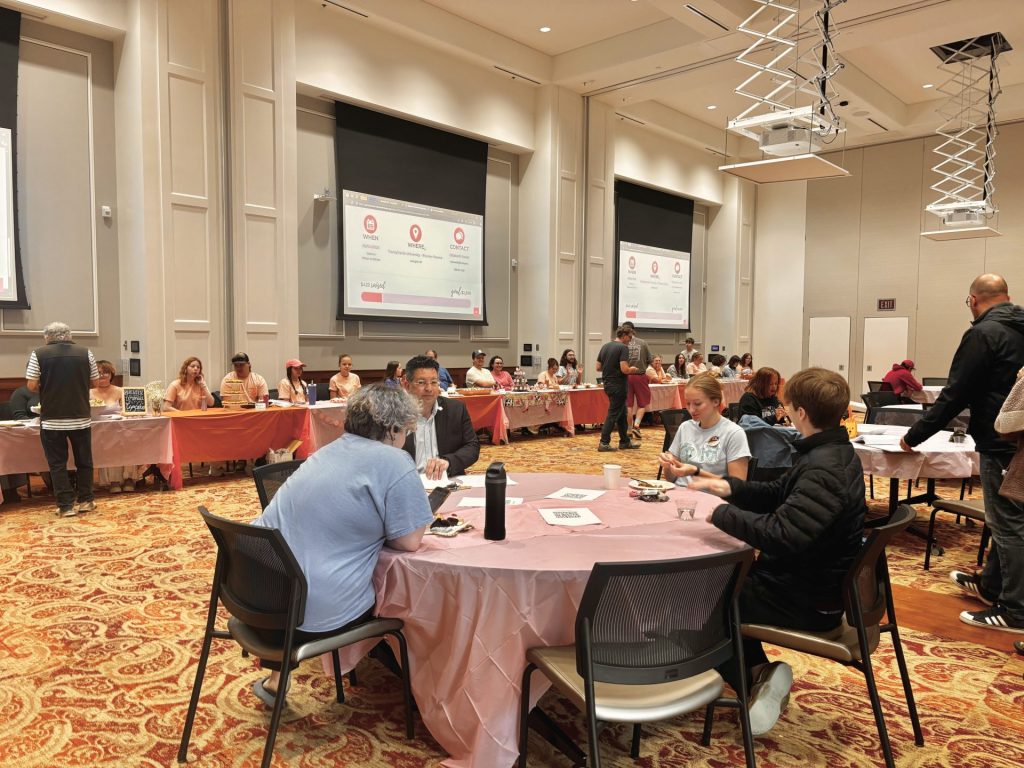
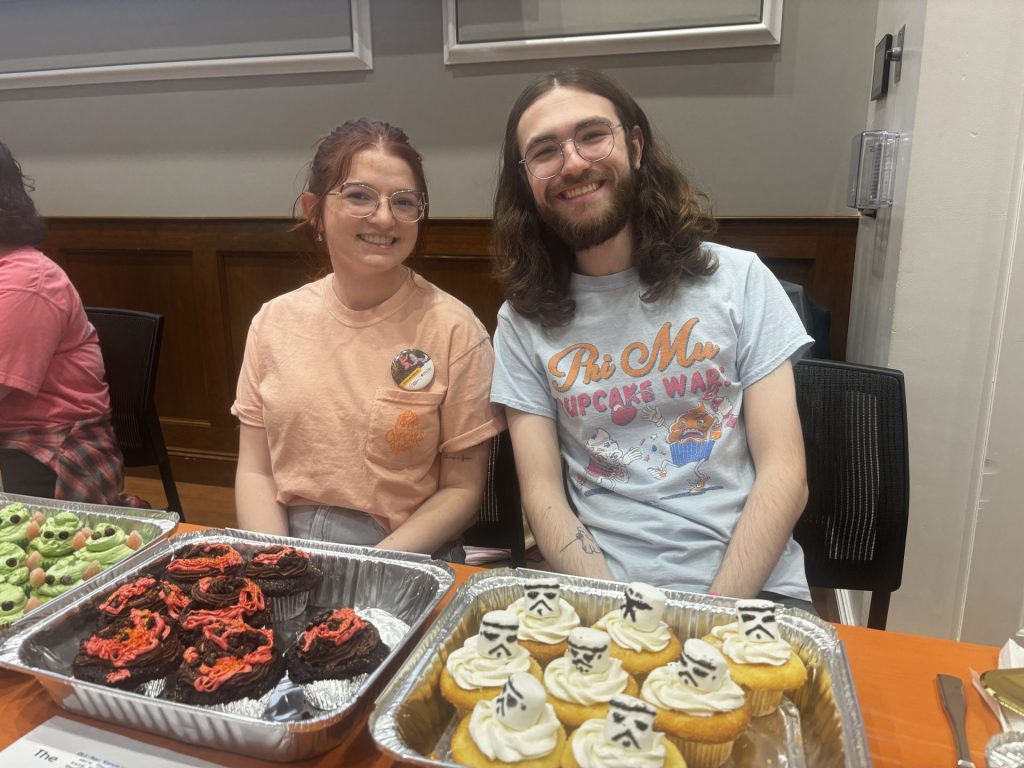
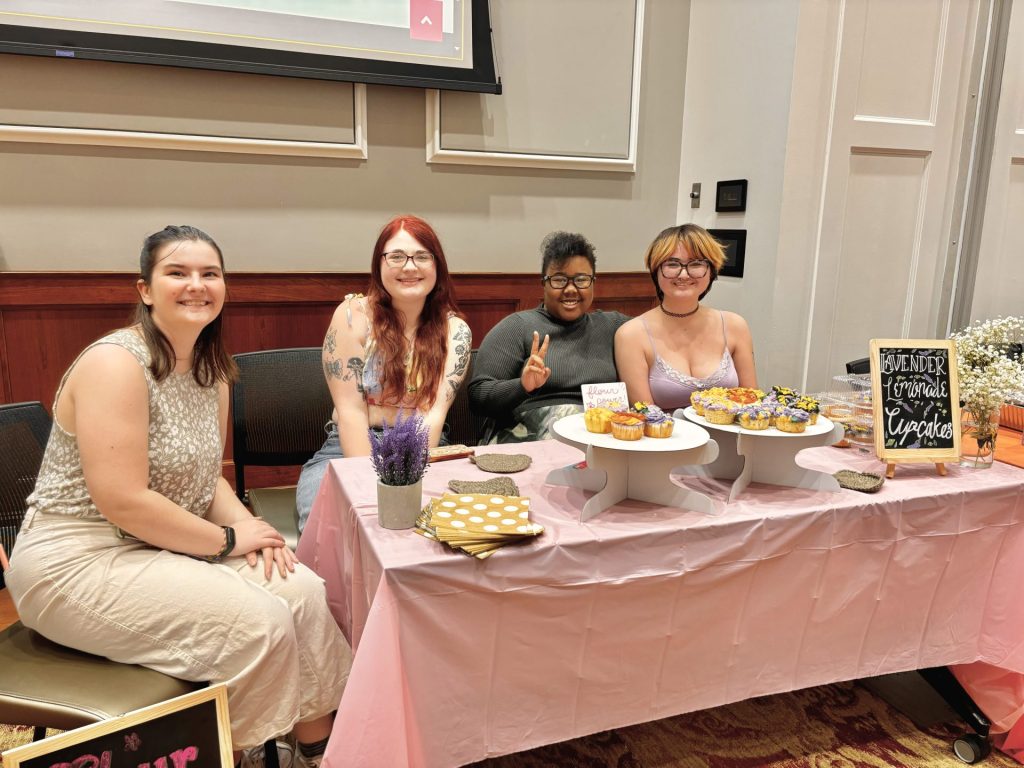
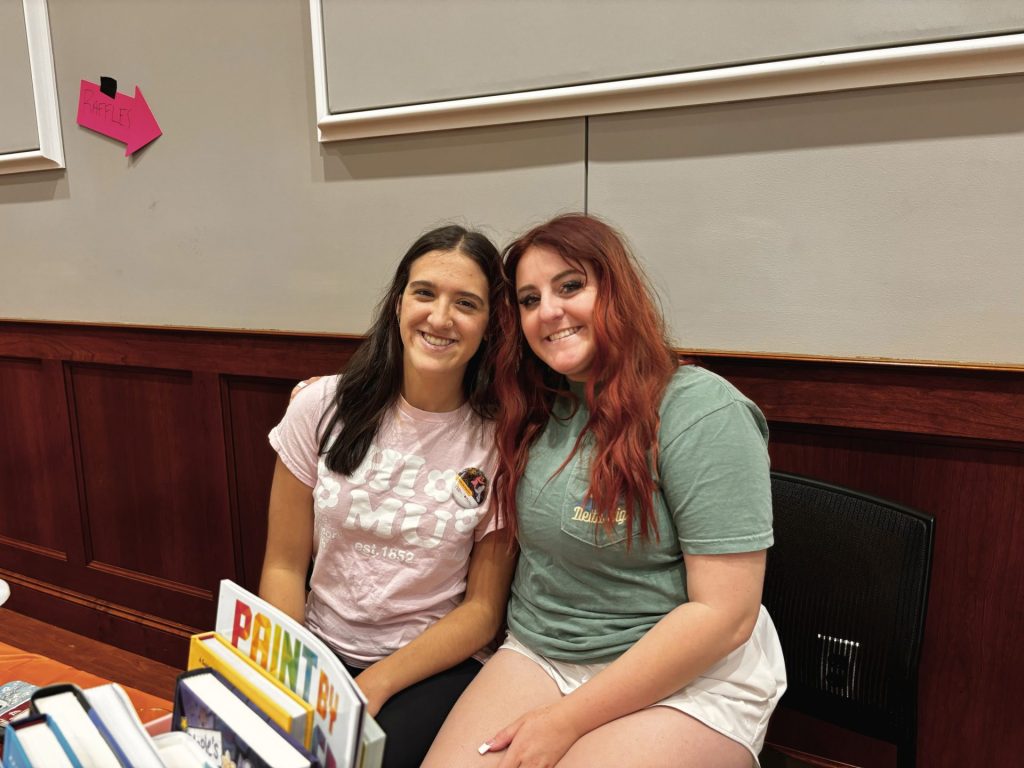
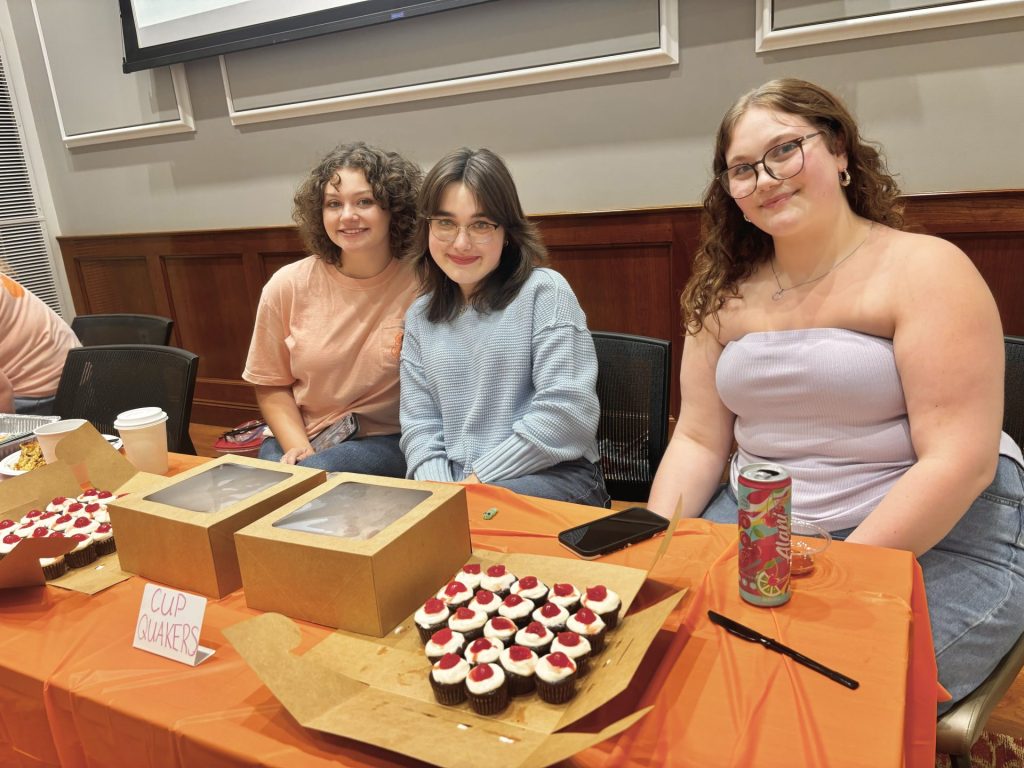
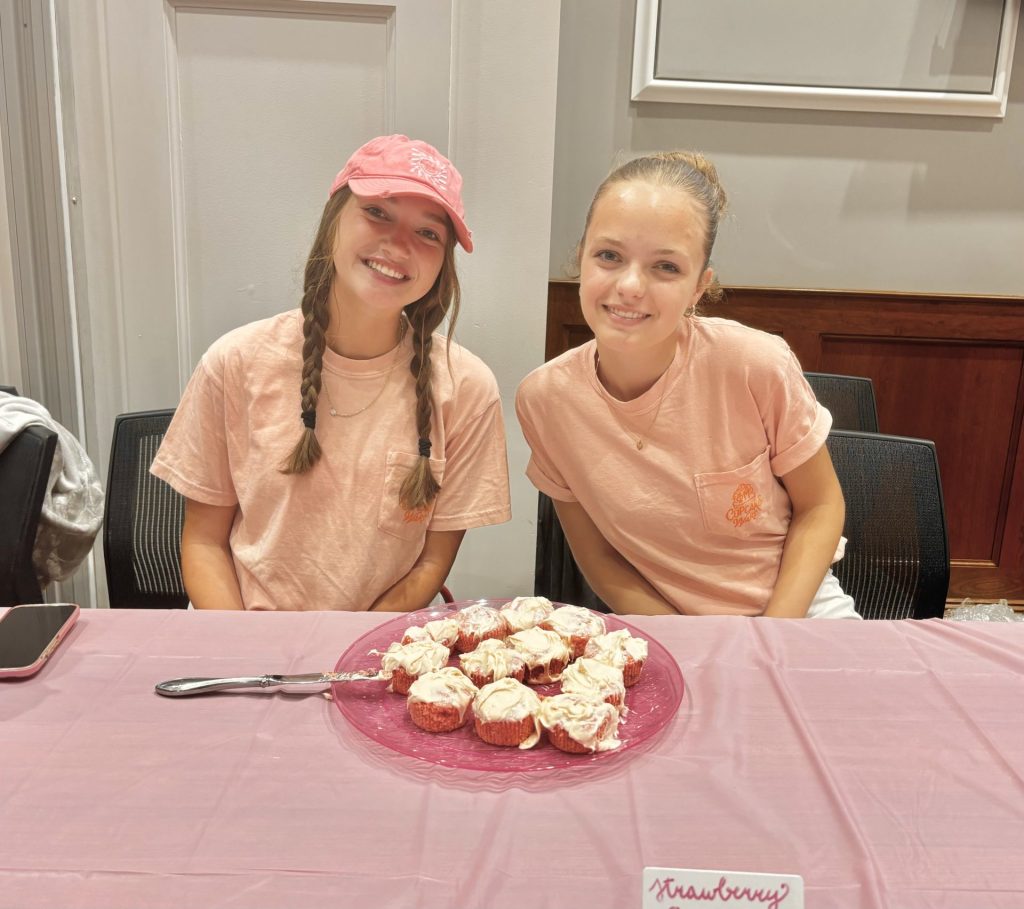
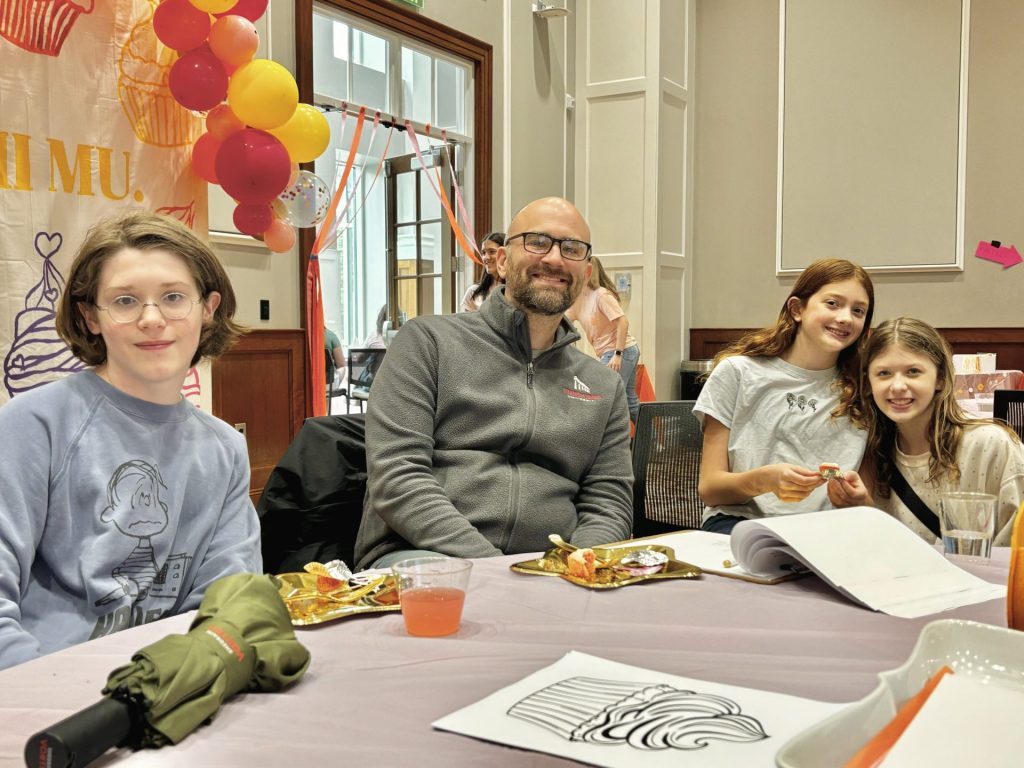
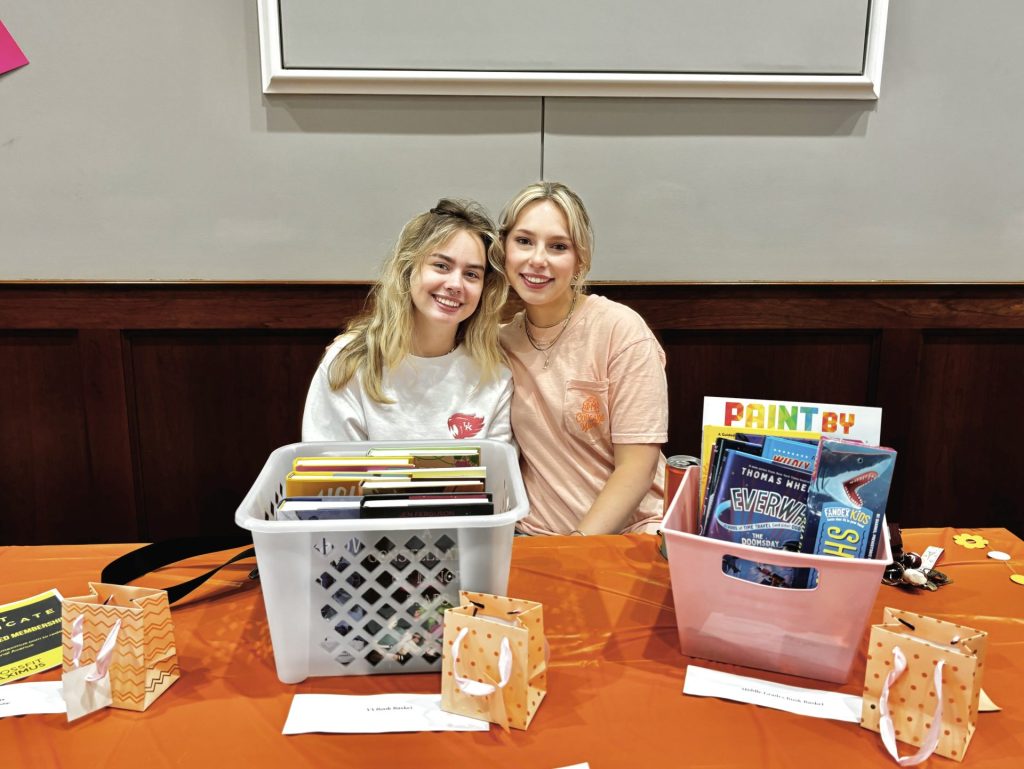
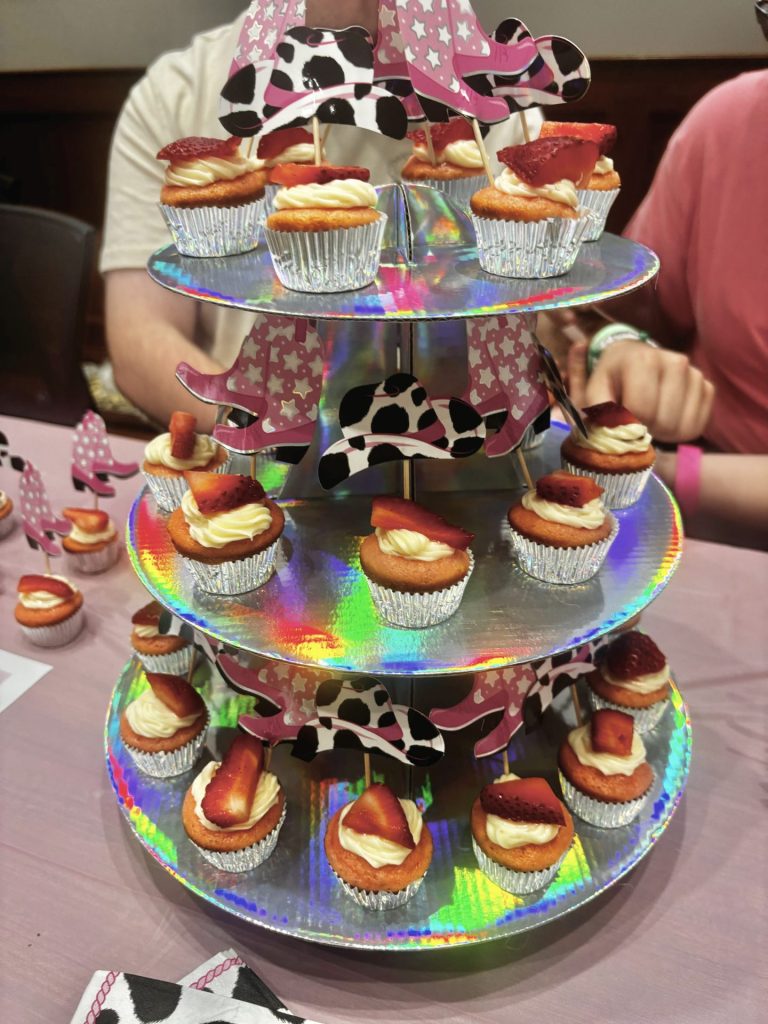
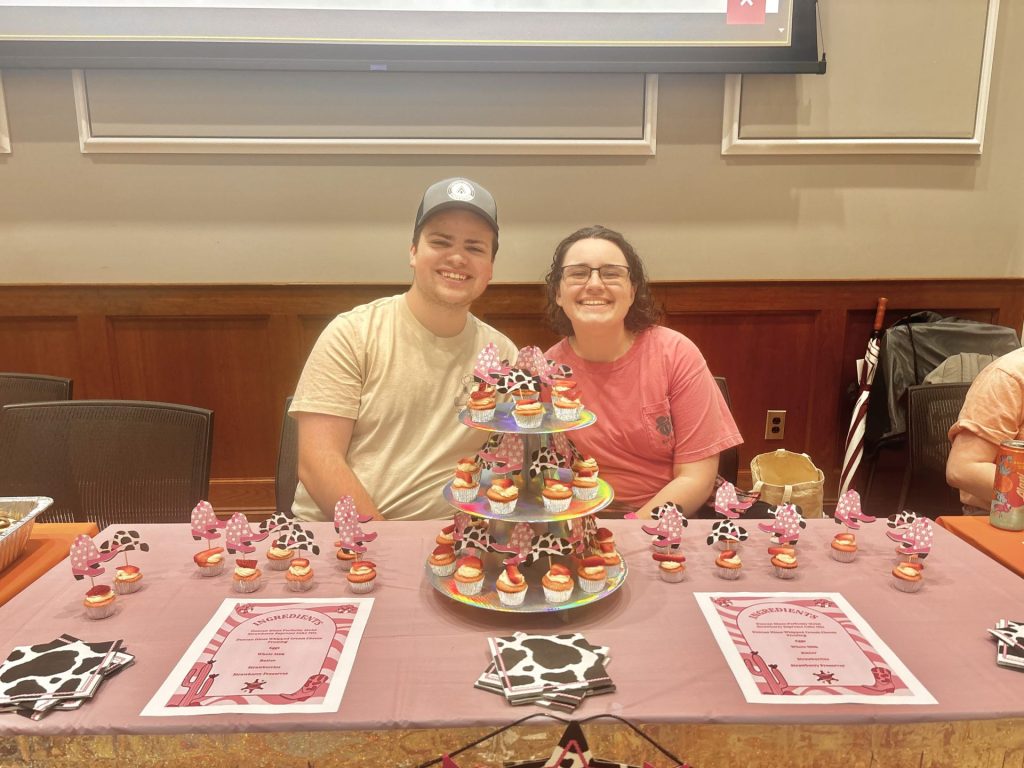
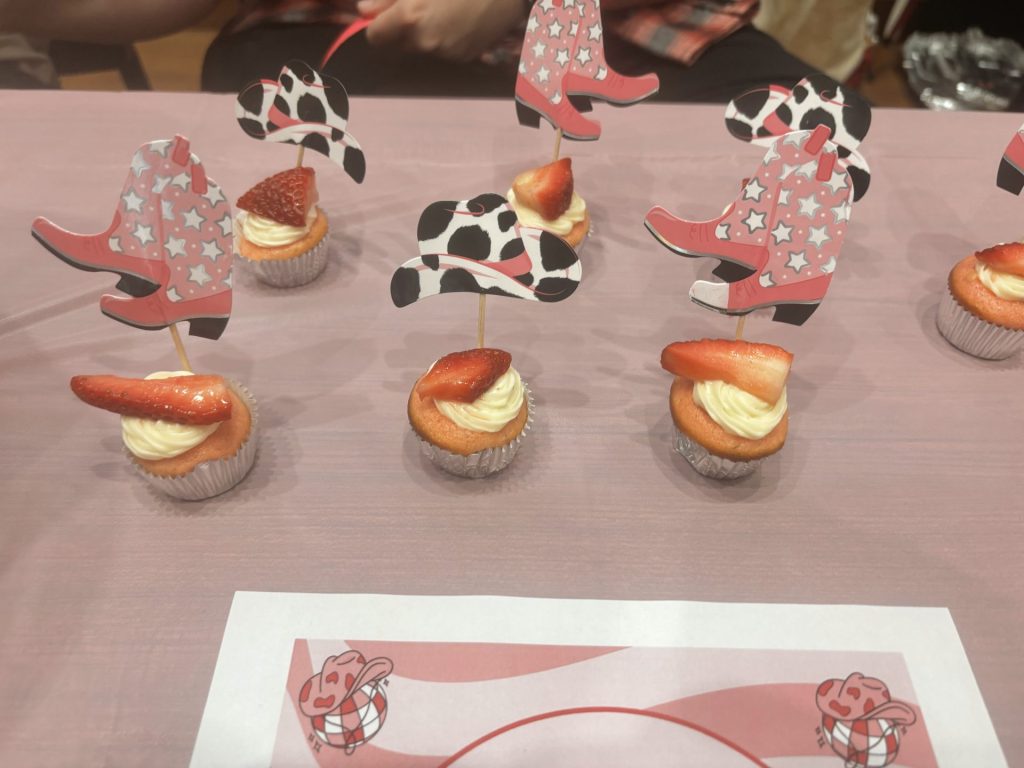
GALLERY: Phi Mu Hosts Annual “Cupcake Wars” Event for Philanthropy

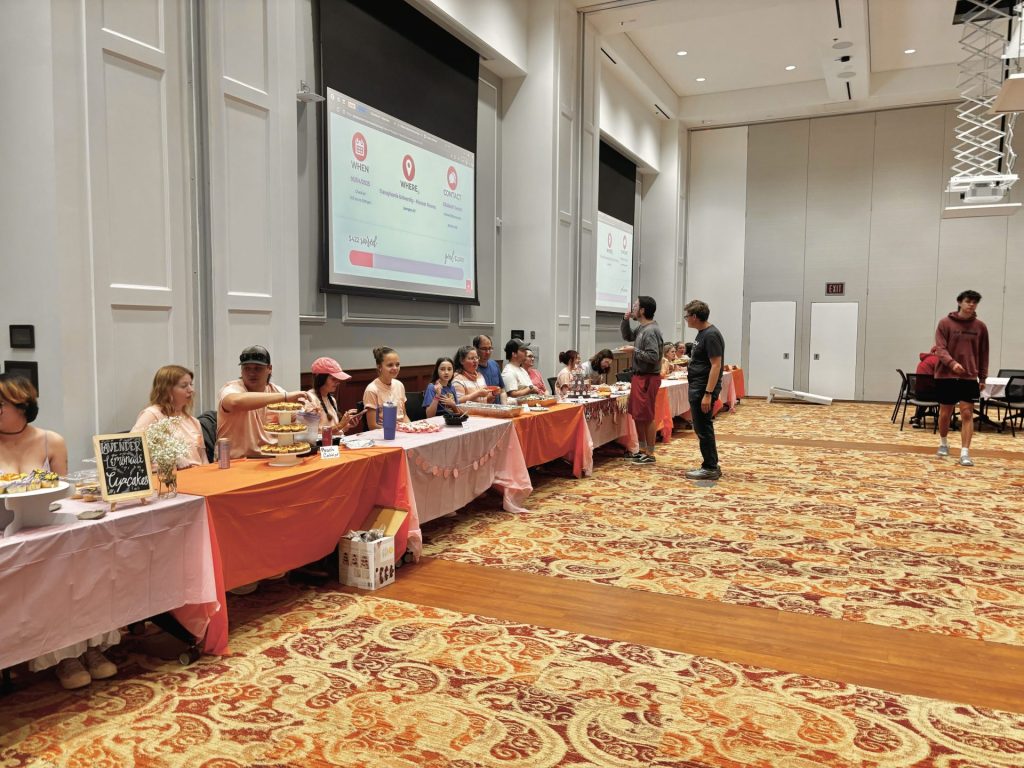
This May 4th, Transylvania’s Phi Mu took to the ovens for their annual Cupcake Wars philanthropy event. Each year, the sorority members and other student teams battle for the best bake with decorative and delicious cupcakes. The event raises support for the Kentucky Children’s hospital, including letter writing to the hospital, events like raffle baskets, “Pie a Phi,” corn hole, and of course cupcakes. The event was photographed by Madalyn Stump below.

Weather

Lexington
overcast clouds
68.3 ° F
68.3 °
68.3 °
76 %
4mph
97 %
Sat
72 °
Sun
58 °
Mon
56 °
Tue
69 °
Wed
69 °