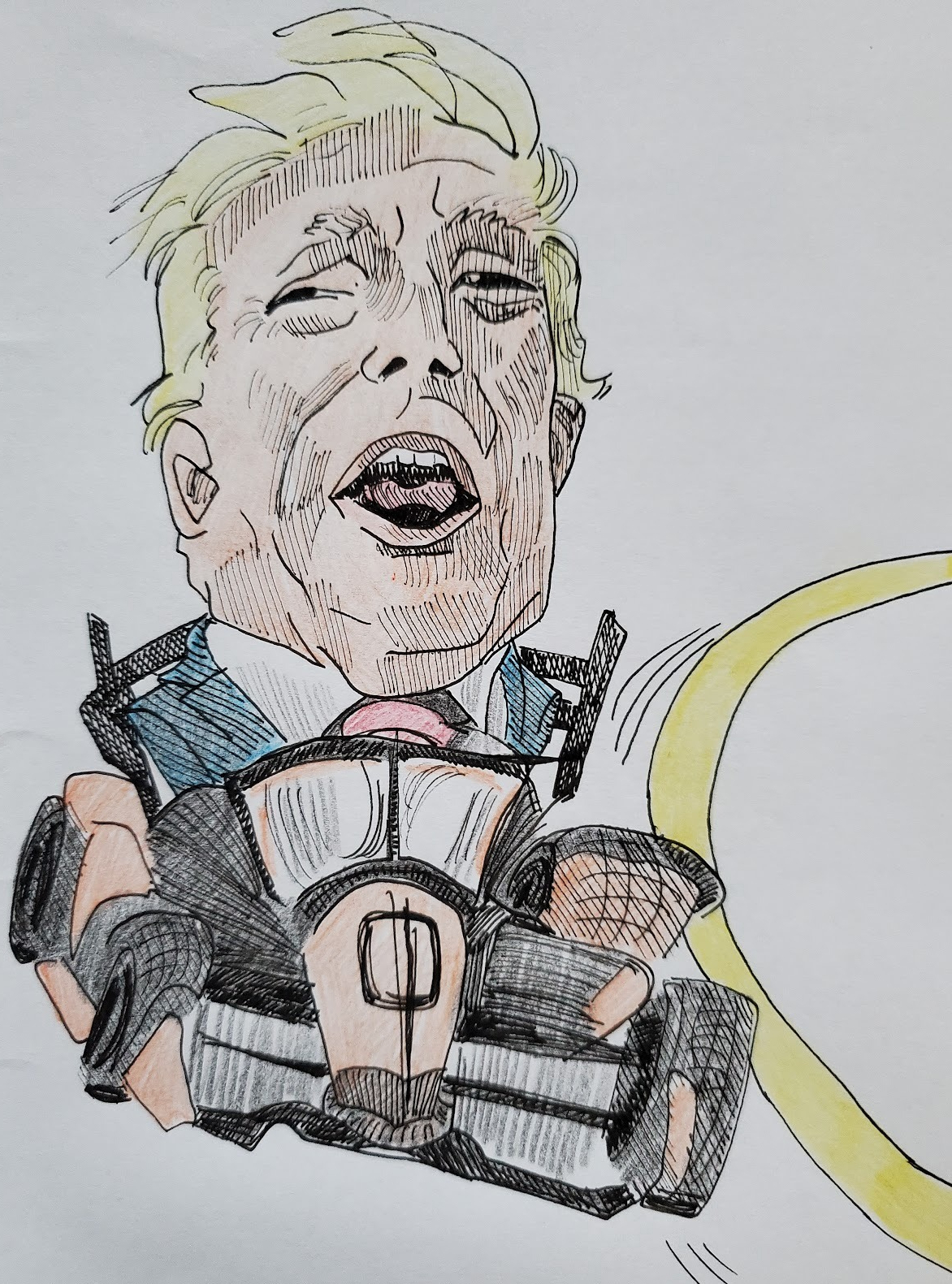
I love race cars. It’s not a secret: I have racing-themed water bottles, bags, baseball caps, shirts, and jewelry. When I sleep, 21 drivers and cars watch over me.
My name is Hope Riester. I’m a junior, a physics major, and I grew up in Northern Virginia. I love racing. F1, F2, F1 Academy, WEC, IMSA, NASCAR, ARCA, Australian Supercars. Four wheels? I’m in.
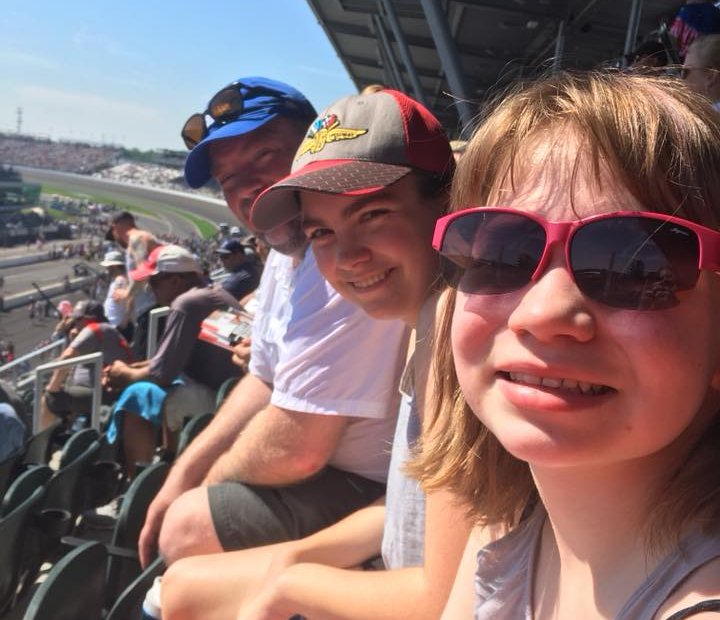
But the series I love most of all, the one I call “my wife,” is IndyCar. I grew up rolling my eyes at the races on the TV every Sunday. My dad loved them, and I thought it was boring. But sometime during my first Indy 500 in 2018, at age 12, I woke up from a 40-lap-long nap and—something happened. I was hooked.
I didn’t even acknowledge it until my senior year of high school. Now, I have a shared calendar with my dad and older sister. It has every IndyCar practice, qualifying, and warmup session, as well as every race. It has the whole F1, F2, and IndyNXT schedule, the schedule for the 24 hours of Le Mans, the 12 hours of Sebring, and the next five NASCAR races. If you quiz me, I can name the entire IndyCar grid for the year. I can give you statistics about the Indy500 in my sleep. I have a 76-slide presentation about IndyCar. Last time I gave it, it was two hours long. My best friends refuse to hear it.
But racing doesn’t always make me happy. Like many other sports, the fanbase, athletes, and teams are mostly men. Motorsports are notoriously conservative. When you think of a NASCAR fan, who do you think of? I can already picture the picture in your mind: Dixie tattoos, bandana, MAGA hat, Supercuts mullet. Never heard of sunscreen, “Let’s go Brandon” bumper stickers, sipping on a light beer from whatever company isn’t being endorsed by a transgender person.
In 2020, NASCAR banned the Confederate flag, to loud backlash from many fans. Historically, NASCAR has explicitly aligned itself with conservative politicians and causes. When the infamous segregationist George Wallace was running for president, the founder of NASCAR, Bill France Sr., served as his campaign manager. His son, and current CEO of NASCAR, Jim, has donated more than $30,000 to conservative causes in the past 12 months, according to the Federal Elections Commission.
It’s not just NASCAR, though. IndyCar, my favorite racing series, is just as conservative, if not moreso. Billionaire and owner of the series Roger Penske has donated more than $800,000 to Republican groups this past year. During the 2024 election cycle, he donated $1.1 million to Donald Trump’s SuperPAC. In 2019, Trump awarded him the Presidential Medal of Freedom.
The people who profit off my viewership are using those profits for causes that harm me, my family, my friends, and countless others. Not ideal. But I can deal. I can donate to causes I do support, including organizations interested in inviting more women, queer people, and people of color into motorsports.
I don’t know. I’m still thinking it through? But there is nothing inherently political about IndyCar. Cars don’t vote.
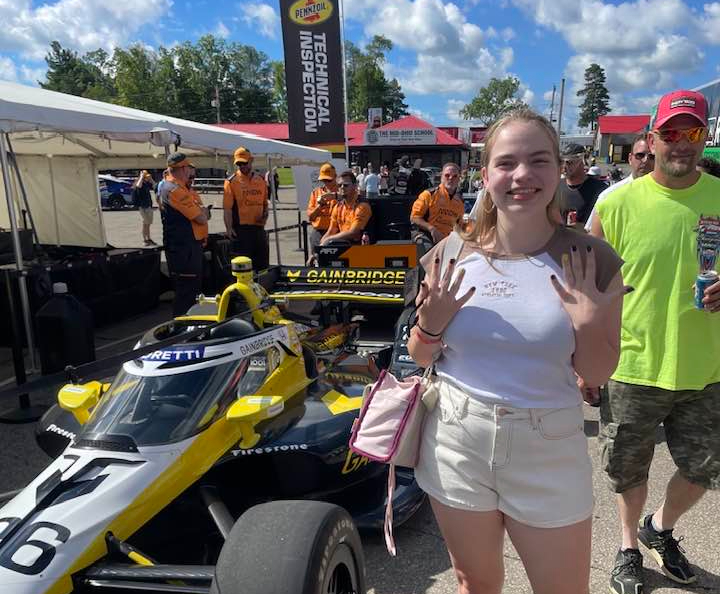
Even if I wince at terrible statements by the owners (and, yes, sometimes the fans), there is still so much I can’t resist: The rumble of twin-turbocharged V-6 engines; the grunt from the sweaty man standing way too close to me when a driver makes a particularly daring save; the connection between current and former drivers, fans, and sponsors. I love the deep respect IndyCar has for its history, and its passion for the future. I love going to races, the smell of burnt tire rubber, the sun beating down on me, knowing I’m going to be sunburnt to hell. I love the stories of failure and resilience, I love the incredible skill that drivers have, I love the way that the community can band together in times of sorrow and grief. I love my group of friends who react to IndyCar news with unintelligible inside jokes. I love the race. Something in me just resonates at 235 miles per hour. It’s why I major in physics. I like when things go fast, and some day I’d like to help them go faster.
—
But two months ago, IndyCar did something that I still don’t know how to react to. You probably didn’t hear about it—it happened on the same day a new batch of Epstein files were released. Also, no one cares about IndyCar.
This year, as part of the 250th anniversary of the Declaration of Independence, an extra race has been added to the IndyCar calendar. On August 23, IndyCars will race on the National Mall, as part of the Freedom 250. The President signed an executive order to make it happen. The Department of the Interior is going to pay for it.
This should be perfect for me. I’ve been saying for years that IndyCar needs to expand its market to the East Coast, especially the Mid-Atlantic or New England. The race is going to be 12 miles from my house! Free general admission, too. And it will be promoted by Monumental Sports, who own the Washington Capitals, my favorite hockey team (yes, I’m into hockey, too). I should be elated.
But this event infuriates me. Before even getting to the political implications, it’s a logistical nightmare. IndyCar initially released its 2026 schedule in September, without a D.C. race. August was already grueling: an Aug. 9 race in Portland, Oregon, followed by a race near Toronto the next weekend, a two-race weekend in Milwaukee on Aug. 29 and 30, and then the season finale in central California on Sept. 6. Now there’s no more weekend off after Toronto; adding the new Freedom 250 race in D.C. makes six races in five weeks.
Team members will have to go back and forth across the continent and between time zones. Truck drivers will have to drag team haulers thousands of miles. Engineers will have very little time to make adjustments and improvements to the car before getting right back on track, with, at most, two days at the shop before getting right back on the road. And on a race weekend, team members are working at least nine hours outside for three days straight, usually in grueling heat. As a fan, this means teams will be sloppier and make more silly mistakes. More silly mistakes means less good racing.
Washington, D.C. could be an amazing location for an IndyCar race. But doing this on such short notice (with a federal administration that has been marked by chaos and incompetence from the moment Trump was sworn in for his second term) could be a recipe for disaster. To host an event in our nation’s capitol, a multitude of governmental and non-governmental entities have to work together to put on an event of this scale. Any miscommunication could lead to monumental issues. Everyone involved must be meticulous; it’s hard to feel confident given the current massive budget shortfalls and chronic understaffing.
There’s another danger that makes me worried given the lack of preparation time. Sounds at certain intensities and frequencies can pose a threat to the structural integrity of older buildings (at the temporary track in St. Petersburg, Florida, for example, the Dali Museum near turn 10 is rattled by the cars passing by). The section of the National Mall where the circuit will be is mostly surrounded by old buildings and sculpture gardens; the National Archives building is surrounded on three sides by the temporary track and is more than 90 years old.
Then there’s D.C.’s climate, considered “humid subtropical,” which could be trouble in a race scheduled for August. Over the past few years, D.C. summers have been getting hotter and more humid, with the number of extreme humidity days rising significantly. This kind of weather can be dangerous for anyone, but especially drivers, who get very little airflow in the cockpit of an IndyCar, and are using significant amounts of energy in their cars. But there’s more. The weather in the area can be temperamental at best, but August is the height of hurricane season. During this time of year, severe thunderstorm warnings happen multiple times a week. It’s not unlikely for practice sessions or qualifying to be rained out, or for the race to be significantly delayed.
Even if there isn’t severe enough rain to red flag and stop the race, it could be run under the cautionary yellow flag. In this case, cars aren’t allowed to pass each other on track and have to run at a specific speed, behind a pace car. If it rains hard enough, are they going to run the whole race under yellow? That’s not what fans come for.
—
I’ve known for a long time that this is a conservative sport. I have gone to races and cheered for drivers anyway, because I believe that all sports can cultivate community. My experiences as a near-D.C. native have shown me that politics don’t have to limit human connection. However, pushing a race through executive order is different.
The political division in this country over the past few years has made it exceedingly difficult for me to put aside my differences with people who support the current presidential administration. My struggle comes from the past year’s deportation policies, Medicaid cuts, the dismantling of the D.O.E., invading countries for no reason and…the list goes on.
D.C. has been hit especially hard over the past 15 months of this administration, because it’s a federal district, and much of its economy and the metro area relies on the federal government. Mass budget cuts and sudden layoffs have left people struggling to make ends meet. Month-long shutdowns have left employees at home or working without pay, impacting them and every business that relies on federal workers. ICE has been kidnapping people off the streets since before protests erupted in LA and Michigan. The National Guard has been occupying the city since July and have blocked kids returning home from school from entering Union Station after getting off the Metro station.
And while all this is going on, D.C. residents still have little power in the democratic system, despite their population being larger than the state of Vermont or Wyoming. If you had an eighth grade field trip to D.C. (you probably did), you may have noticed that their license plates say “taxation without representation.” That is because D.C. has one representative in congress and she is not allowed to vote on any resolutions.
D.C. residents have been fighting. But without elected leaders with the power or media coverage, it’s incredibly hard to fight back with the same pressure as other cities. Plus, people here are tired. They’ve been living as political bargaining chips for a long time, subject to the control of individuals who do not actually live in their city or participate in their culture.
So, yes, I love racing, but I am furious about this race. It’s being held because of an edict from a leader who seems to have genuine contempt for the city I love, and as a result, the residents of that city are going to have contempt for the sport that I love. This will feel the same as the military parade to them: a busy portion of the city inaccessible for several days just so that loud machines can disrupt their streets.
The goal of a race like this is to bring in more fans and draw more interest to the sport. This will be a “street race”: instead of a permanent track, the race will be held on actual downtown streets, right in the middle of one of the most recognizable urban cores in the world. That has undeniable appeal! But making this entire spectacle yet another half-baked effort by Trump to bring glory upon himself could alienate potential new fans—especially if the fans who do show up are the sort likely to create a hostile environment for fans like me.
For years, IndyCar has been trying to figure out how to grow its fan base. After some disastrous decisions in the late ‘90s, when the league literally split in two, the sport has been slowly climbing its way back to relevance.
Interest in motorsports has been booming the past five years, and now is the time for IndyCar to capitalize. But that means finding ways to keep the interest of a new kind of fan. According to a survey conducted by F1 and Motorsport Network, women account for three quarters of new F1 fans; half of Gen Z respondents to the survey were women.
These are the same fans who can be brought to a more competitive series like IndyCar. Races often feature more daring passes or saves than FI races. IndyCar is also more economically accessible, as the average single day ticket is almost 90% cheaper than the average FI single day ticket. A recent study showed that women sports fans make 85% of their household purchasing decisions, which means that not only are they a relatively untapped demographic, they’re also a highly profitable fanbase.
But Gen Z women are also overwhelmingly progressive. According to an NBC survey conducted in September, only 26% of Gen Z women approved of Donald Trump’s job performance. Overall, 36% of Gen Z men and women approved of his performance in September. According to an Economist/YouGov poll conducted in February, that overall number has dropped to 25%. Young fans can energize this sport. What will they think when a marquee event for IndyCar is lorded over by Donald Trump (and given the nationalized politics inherent to D.C., will likely have a highly partisan atmosphere).
I wish I could say I was excited to attend this race, but it’s unlikely I’ll even tune in. I don’t think I’ll be able to get past the anger and hurt that my favorite series is doing something so antithetical to why I am a fan at all: human connection, ingenious engineering, and fun races.
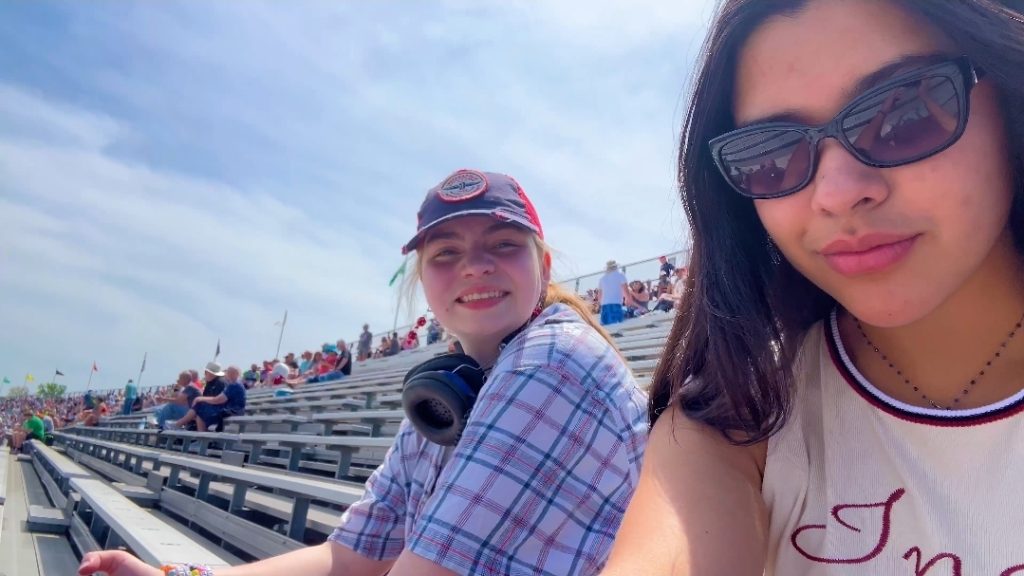
I live in the “White House.” Not the one you’re thinking of, it’s what me and my three best friends call the place we live together (the house isn’t white; long story). ) My roommates and I are all very liberal, and we spend a lot of time discussing current events. I usually serve as fact-checker/historian.
I have also spent the past two years trying to get them—and everyone else I know—to watch IndyCar. Now, I’m not sure to approach that. How can I sell something to my friends that has caused so much internal conflict? How can I answer their well-founded skepticism with optimism?
My dream, as a fan, is to be able to share IndyCar with my friends without worrying about what the series might do next. I want to be able to show the thing I love off, and not feel like I have to hide a dirty little secret. I want them to feel a little bit of what I feel when I see Danny Sullivan’s ‘Spin and Win’ in the 1985 Indy 500, the whole paddock standing outside to watch the tornado at Iowa Speedway last year, Dennis Hauger driving backwards at Phoenix Raceway this year, Josef Newgarden’s pass for the win on Pato O’Ward on the last turn of the last lap of the 2024 Indy 500, Scott Dixon making fuel out of thin air. I’ll just have to hope they can see that part of racing—the part that can be for everyone—even as the sport seems more and more determined to pander to people who don’t want anything to do with people like us.