
In seventh grade, I looked down at my legs on a chair, the way all girls do, and saw my thighs spread out and realized I had a body. There is a term for coming to an understanding that you have a mind and can think, this idea of “gaining sentience,” but I cannot come up with the word for learning that you have a body. Maybe there isn’t one. Maybe it’s just puberty, which some adults refer to as “blossoming.” I was not a blossomer. Of this I was sure. I did not blossom. But I did look at my thighs splayed out below me, and I hated them. That is how girls realize. The moment they realize their bodies they begin to hate.
My younger sister realized before me and always talked about outlining rolls of fat on her stomach with Sharpie and taking scissors to cut them right off, and so I imagined the same. I would hunch over to make and find a roll and then grab it and picture the scissors and the gushing of the blood and the strip of skin in my other hand. And then I couldn’t stop imagining, so I imagined cutting my fingers off too, and then my ears, and then my chest, even though I didn’t hate them. Maybe because I didn’t hate them.
I did like my calves, which were always strong but which grew stronger and larger when I started Irish dancing halfway through middle school. I never imagined cutting my calves off. Instead, I flexed them in social studies, noticing as they grew in size and hardness over time, and tracing the muscle with my finger. They were what I liked about my legs. It was a relief to get over the exhausting exercise of hatred. No one is born to hate.
My Catholic school choir friend Amelia told me the girls in my class talked about how I never shaved my legs. She told them I did. I loved Amelia, but she was a liar. I didn’t shave my legs, not then, and she knew that. She was a liar because she loved me, too.
It was Amelia who made me realize people can love you even if you’re weird and they aren’t. Not like you. Come watch Descendants on my parents’ bedroom floor. Tell me a secret. I’ll hold your hand if you hold mine.
I shaved a strip of hair up my leg in the shower with my dad’s razor and immediately told my sister. I always felt guilty for something. I was in seventh grade, and my mom got mad at me, and I still don’t know why. I am 21 years old, and I always feel guilty for something. Guilt never goes away if you were made for it, and you’re made for it when you grow up Catholic. That’s the stuff you learn in religion class, but mostly what you learn from silent in-class adoration on Fridays when you read Saint Maria Faustina Kowalska’s Divine Mercy in My Soul in the pews and she tells you and only you that Suffering is a great grace; through suffering the soul becomes like the Savior; in suffering love becomes crystallized; the greater the suffering, the purer the love. And that’s when you learn that suffering is love. And that’s when you learn you were born to suffer.
I loved a boy named Elijah more than I loved myself, though that was not hard. In one of dozens of journal entries, I wrote that his eyes were black and his freckles were constellations and his nose was “a potato but still cute.” I liked his cologne. I liked that he wore cologne. He was 4’11” in seventh grade, shorter than me by a few inches, and that made me love him more. He somersaulted behind the stage at our schools’ performance of “Madagascar the Musical Adventure Jr.” These were the most interesting things about him. I did not like how he sounded when he sang, all shrill and wobbly. The first time he sang in front of me, it made me cry. I pretended it wasn’t him I heard.
I wrote long love letters on math worksheets in tiny cursive letters that no one could read but me, and I showed them to him during language arts and snatched them away if he looked too close. Every time the clock showed all the same numbers I wished that he would love me too: 11:11 wishes, 12:12 wishes, 3:33, 5:55. There is no 6:66, but I didn’t mind because that was Satan’s number and if I wished to the devil, he would make sure Elijah would never love me. But God would make sure Elijah always did love me, even from the very beginning. I believed praying to the God of the past meant I could change it. It never changed. I considered selling my soul.
With the realization of my body came a deep feeling of strangeness, like I did not belong because there is something wrong with me. I knew it was something in the way that I walked and talked and held myself and presented the flesh and the muscles and the tendons and the bones that made up my body. I ran into things too often: shoulders into walls, forehead into doorframe, ankle onto desk leg. I dropped things: lunch trays, water bottles, mechanical pencils, all the textbooks I carried in my arms in between classes because I didn’t like the way a bag felt on my shoulders. I fell: down the stairs, up the stairs, walking to classes, running in gym, standing in line for the teacher’s desk, off the lunch table benches, standing completely still, over because I always leaned my chair too far back, into bushes, into friends, over cracks in the ground so subtle they might not have even existed in the first place. I talked: too much.
A third of the mornings before school, I promised myself I wouldn’t talk all day because there is something wrong with me. No one could (or would) tell me what it was, and they told me there wasn’t anything, but they looked at me when I talked, and they knew there was, and I knew there was, and so everyone knew it, but no one ever said it. It was middle school, and I was not normal—no middle schooler is. But it felt like I was missing some fundamental piece of soul or a guide to the universe everyone else had, the kind that would make it all finally click into place. I thought that maybe I could find it if I looked hard enough, so I was always looking, but I told myself that if I talked too much, I would scare it off, or it wouldn’t appear at all because it would see that I was unworthy. Lord, take from me the double darkness in which I have been born, an obscurity of both sin and ignorance.
When I was in seventh grade, I prayed to three saints and then Mary and then God every night when my mom was pregnant again (her seventh time). I prayed for the baby to live, and for it to be triplets, and for me to be normal. And the baby did live, but it was one baby, not three, and I was still strange. Mentally and physically. I had just gotten my first pair of glasses and chose ones with horrific blue rectangular librarian-wire rims and nose pads that gave me migraines. I cut my hair into a bob, but it rebelled. Maybe it was the Great Clips scissors. Maybe it was just destined to be so. It flipped up at the ends, in the inverse of the quintessential medieval pageboy cut. That haircut was one of the things I hated the most about myself, though I was the one who wanted it in the first place. I have almost always hated my hair, no matter how it has looked.
In moments of great stress, it is my hair I become the most conscious of as I begin to feel my breath move rapidly in and out and in and out. I feel my hair on my neck and on my face and on my scalp, and I feel the dirt it carries. Touch only makes it worse. In moments of great stress, I have always imagined buzzing my hair off or chopping it off with craft scissors if I have them, but I usually just put it up, covering it in whatever fabric I can grab nearby: a t-shirt, my baby blanket, a bathrobe. I do not buzz it off because I care too much about how I look, or at least how I think people perceive how I look. I have always preferred discomfort physically to discomfort mentally. But I’ve never gotten not looking weird quite right. I think now of my tenth-grade pixie cut from when I thought I was a lesbian, or the choppy bangs and rushed split dye (half blue/half black) of eleventh grade, or, yes, that seventh grade hair. It haunts me still. Not because it looked bad (it did), but because I did it trying to look good, and it didn’t work. I can’t tell if it ever does.
I was always called precocious when I was younger, which means smart but really, really annoying about it. As a child, I was precocious as a concept; in middle school, I was precocious with a body—body meaning small frame, awkward angles, big calves. I walked up to people with my stilted gait and asked them questions I knew the answers to in order to make myself look smart. When a girl from sixth grade left the school, I celebrated, because she was the smartest person in my class, and now that title would go to me.
I think almost all of the precociousness was due in part to my infatuation with books. I identified myself as a reader, as though it was a classification that set me apart in some way. In many ways it did, by my own design. When a teacher assigned the first chapter of a new book, I came to class the next day with all of it finished, rather than enjoying the community that comes from reading with a group. I was passionate but performative.
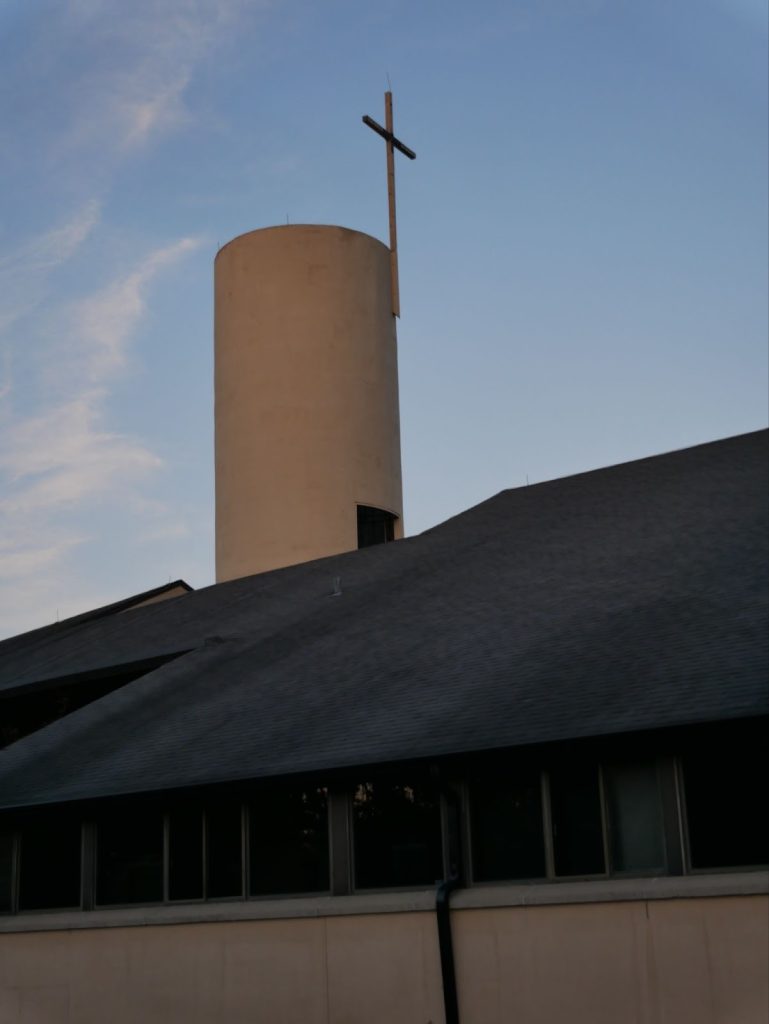
In seventh grade, I was in four choirs: my Catholic school’s Star Singers and Star Tones, my church’s Youth Ensemble (directed by my dad, the Seton Catholic Church music director), and the local Lexington Singers’ Children’s Choir. I additionally participated in audition-only honor choirs and sang in talent shows and during school masses. And I did it all with Amelia.
“Friends by circumstance” isn’t fair to the situation, but I don’t know if we would have been friends in the same way, or maybe at all, if it weren’t for singing. She had a beautiful voice, clear and sweet and high in a way that our teacher compared to the incomparable Julie Andrews. And she herself was beautiful: dark brown hair, crystal-clear blue eyes, long black eyelashes, pale with a splash of freckles across her nose, smelled like nothing in particular (a positive attribute in the context of middle school). She was the only girl I knew who wore mascara. We rode to choir together, sat together, drank out of each other’s water bottles together, and gossiped together. We told each other about our crushes and who was dating and who broke up and who kissed under the stairs at the Halloween Dance, and if they were ugly. At home, after seeing her, I always prayed for forgiveness, because no matter how fun it was, gossiping was a grave sin, and I never stopped myself. It is a sin that I imagine I will forever partake. I am not without my vices. I may be more vice than woman.
Our school choir teacher, Mrs. Steele, was evil. Ginger with a vibrato-heavy voice and a heft to her walk that came from always wearing an orthopedic boot for some unspecified ailment; she took separate special interests in Amelia and me. Amelia was her star protégé; I was her project. Where Amelia was praised publicly and privately, I was pulled from class to go to a voluntary scoliosis screening involuntarily, because Mrs. Steele thought I stood so strangely that my spine had to be curved (it was not).

I cried so frequently during choir with her that people eventually stopped noticing when tears were streaming down my face while we sang or when I rushed from classroom to bathroom. The noise from the choir was too much, and Mrs. Steele’s focus on me with feedback on my posture, my forced smile, and my vowel shapes—those oohs and ahhs—was too frequent and targeted. I never knew how to fix anything she wanted me to fix, and my attempts were never rewarded. But the crying always stopped, and I always came back, and I always continued to sing, this time with my face and eyes a little redder than before. She never pointed it out; it was easier for her to pretend she didn’t notice it, but she did point out everything I was doing wrong physically. I was already hyper-aware of my body: the way my shoulders were never far enough back, how my neck sat a little bit too far forward, how my feet always faced in, one pointing its toes at the back of the other one’s heel, a habit I still have not broken.
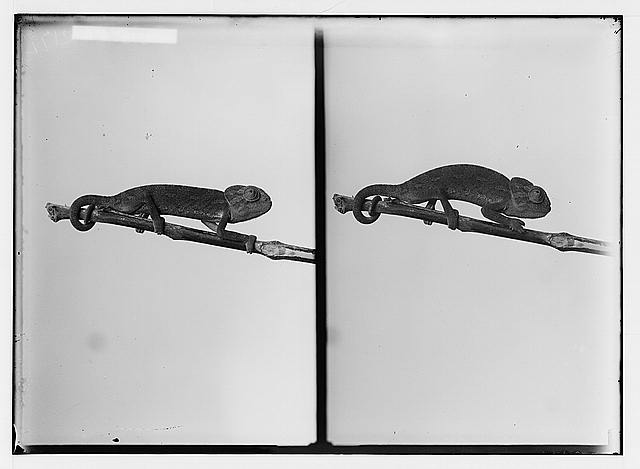
Mrs. Steele screamed at me once for something (probably talking too much) and then sat me down and told me I was a chameleon—that I changed personalities with the environment, that I was more defined by fluidity than self. She said she knew what it was like, that she was a chameleon too. I knew I should be hurt but didn’t know exactly why, and part of me thought it was a compliment, because it meant my attempts at transformation were, in some way, effective. It was true that I changed as much as I could to seem normal to people. Every person has a different type of normal, something I understood from a young age, and I wanted to be every type at once. But Mrs. Steele saying I was a chameleon meant that she saw through to the true me enough to know it was all pretend. Chameleons aren’t their colors; they are scale and casque and cone-shaped eye… a lizard, not an illusion. And I was flesh and bone and insecurity… a girl, not a chameleon.
I used to beg my dad to let me quit Star Singers, but he always told me to keep up with commitments, even if they weren’t ones I had necessarily wanted to make in the first place. There was a reason, though, that I always came back and recommitted, time and time again.
When it came to singing, I knew I was somewhat talented, but I was never good enough to be considered great. I wanted to be great more than anything, which was part of my constant return, as though being a member of multiple choirs would help me ascend to vocal heaven. I also wanted to live my life in prayer, and in Catholicism, singing about God is an act of prayer in and of itself. Shout joyfully to the Lord, all you lands; serve the Lord with gladness; come before him with joyful song.
I came before the Lord with song all the time, but it was not joyful. I was too focused on how my hands looked when I was standing in the choir area at the front of the church, or if my feet were pointed in again, or if my shoulders were too exposed in my dress, or if my voice would get caught in my throat when I went up to sing the psalm like it did every single other time. I was terrified I was going to get my first period right in front of the whole congregation, and then everyone would know I had a body, not just me. A moment of revelation for us all. Not battles or trumpets, but I thought it might signal the beginning of my end.
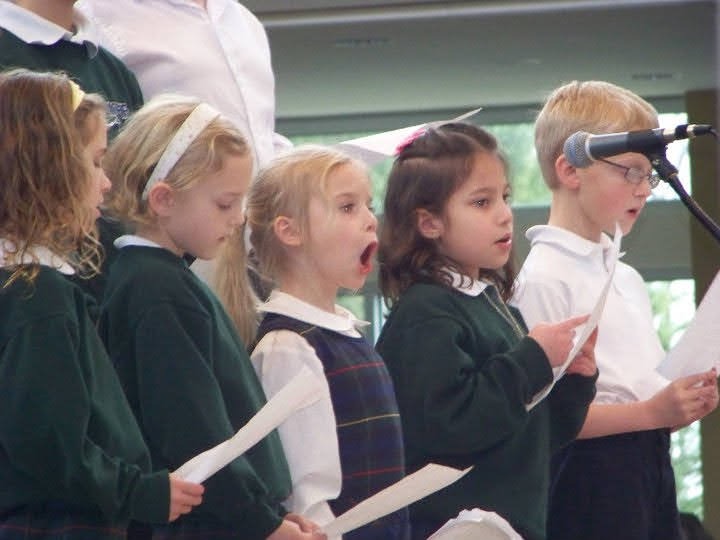
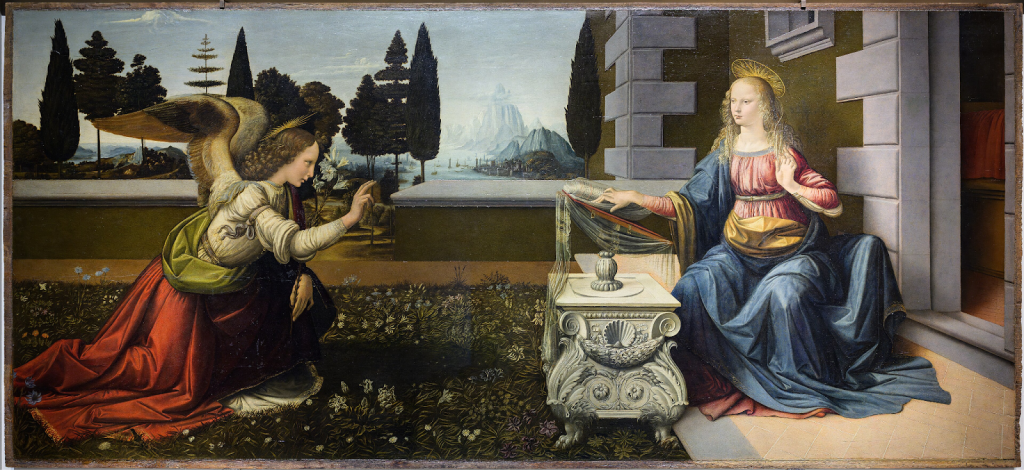
In seventh grade, I quietly thought I might be the Virgin Mary. I had the name (though with a Rose at the end of it), and I was, of course, a virgin—so who was to say God wouldn’t swoop down out of the heavens and impregnate me with the savior of the world? The only thing that held me back from truly believing this was the Catholic idea that Mary was perfect and sinless, the criteria for bearing the Christ. I knew I was a massive sinner. Each night before bed, I thought about how I used to crawl under lunch tables in kindergarten to steal snacks for a boy named Jimmy, who I loved and who did not love me (all I remember otherwise is freckles and a smile with a missing front tooth). The stealing was what I considered my gravest sin, but I thought about the love even more. It reminded me of Elijah.
Plus, there was the gossiping, and the thinking about boys and girls kissing and girls and girls kissing, and I knew there had to be something else off because I did not have the grace I imagined a perfect saint must have, what with all of my tripping and falling. I also imagined a saint was eloquent, but I figured I had time to work on that. I thought maybe times had changed, and now that the world was more imperfect, there could be no one sinless, and I would have to be the first choice. When I realized this for sure would not happen, perhaps through prayer or the development of common sense, I devoted myself to becoming a nun.
I had a convent in mind: The Dominican Sisters of Saint Cecilia in Nashville, Tennessee. I had visited once when I was ten years old, and the idea had popped up again on and off ever since then. When I wasn’t completing homework or BuzzFeedBuzzfeed quizzes on my iPad (Which Harry Potter House are You?), or doing practice ACTs so I could eventually get into Princeton, I was looking up everything I could about the sisters. I joined their newsletter. I watched their YouTube videos. I prayed their prayers and then prayed to Saint Cecilia and then to God to guide me to where they wanted me to go. I didn’t even have to hear their response to know that they wanted me to don the habit and attend the convent’s college and teach little Catholic children for the rest of my days.
The thing that ultimately turned me off from it was when I saw a video of them playing basketball on a blacktop outside the convent. Their habits flew as they dribbled up the court, sinking three pointers and dancing in celebration. The sisters of Saint Cecilia wore pure white floor-length tunics with long sleeves, along with the quintessential black nun veils, and I remember the sun hitting the sisters’ outfits and making them glow, almost as if the Lord was choosing to bless them for their skills on the court. It made me sad. I was never able to play sports; my body wouldn’t let me. I was an old action figure with barely opposable joints. Here is a girl who wants to move her body but can’t, what else is there to say?
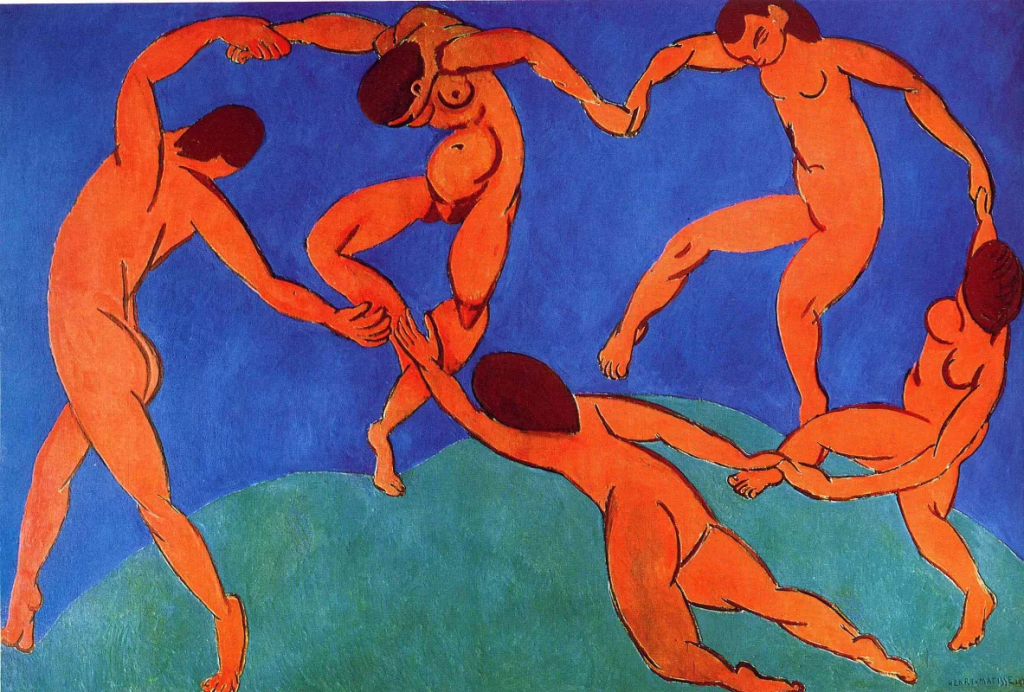
But I did learn how to move my body in seventh grade when I started Irish Dancing, albeit in a way that was still very strange and unnatural. I think what got me invested in it was that I didn’t have to use my arms; when doing solos, they were supposed to be glued to my sides with my thumbs clenched inside my fists at all times. I only had to think about one thing: my feet, and moving them as rhythmically as possible. I had rhythm, the result of choir for years, and a musical family of nine, and I loved stomping and spinning around. I spun around constantly on my own time anyway. There are two kinds of Irish Dancing shoes, each indicating a different style of dance. Soft ghillies for light, silent styles, and hard shoes, for pummeling the ground into submission; for making it listen to the sounds of the Irish old world.
I loved getting to wear hard shoes. I loved pounding the stage with my feet and making sounds that everyone around me heard. When I danced, I felt truly listened to for one of the first times in my life, and it was my use of my body that did it. I didn’t think about Irish dancing’s strangeness—I thought about rhythms and learning to control my body enough to not fall down. To instead stand up straight and proud and jig a little jig.
I have always been scared of embarrassing myself, terrified that a moment of weakness would unveil my guilt and shame. At a performance at a nursing home, during a solo in the group’s big closing number, I fell. My ankle gave in. I remember the wooden planks that made up the dance floor, and how pale they were in the nursing home lights, and how the music thrummed (Tell me ma, when I go home), and how the old ladies gasped, and how my face burned red and how, in defiance of my nature, I stood up and began to dance again. In any other moment, during any other event, I would have run off sobbing. I ran off sobbing when I sang, all the time. But there was something new there, something powerful, some part of this performance involving my hard shoes and the rhythm I loved and the clapping of all of the dancers around me that led to this bravery, this unheard of Mary Rose bravery.

For me, being good at Irish dancing was never the point; seventh grade is a bit too old to begin Irish Dancing, especially when everyone else began in fourth grade or earlier, and I was never going to meet the standard for my age. It wasn’t in the cards. The point was belonging, the point was being listened to and understood, the point was using my body for something instead of letting my body use itself against me. Here was a girl who was made for this. What else is there to say?
But I never felt like a girl, not then. Not in dance, in my dress, and not in class, in my khaki shorts, sitting by myself while the other girls wore their plaid maroon skorts and had each other. I always felt different and alone. What tied me to girlhood was the hatred that began with bodily realization, not any intense devotion or connection to the concept. I have always found it difficult to have female friends; it almost feels like building friendships with women requires a deep level of self-awareness that I am not capable of, and having female friends has always seemed so key to girlhood and womanhood. How does anyone figure out who they are without people like them to show them the way? How do you figure out your body?
Maybe you don’t. Maybe I didn’t. Today, still in Kentucky, I stare at my face in the mirror until it changes shape into someone I do not know, and I press my nails into my hands hard, so I won’t talk more than I need to, and I imagine leaping across the floor, ghillies on, whenever there’s enough room for it. I whisper prayers into my pillow at nighttime when I feel my sins start to crawl up my throat, grasping and clutching, and I beg God not to let them find something to hold on to. Away from me, Satan! I do not sing, and I do not miss singing. I do not dance, but I do miss dancing. When I stand in line for food, I think through how I will cut my chicken with my fork and how I will lift my fork to my mouth and what I will do if the chicken drops onto my plate, and while I think about it, I nearly run into the person in front of me. My pencil falls off my desk during a silent moment in class. I feel my hair in my eyes. I imagine what it must feel like to be human.
I don’t know if I’ve ever stopped believing what I learned in seventh grade, that love is suffering. I’ve stopped believing in God now. Maybe I don’t even believe in Jesus, but my soul still clings to some notion of mortal sin I can’t seem to shake. I don’t think you can ever fully shake free from the guilt you were born into. I see my hands move in front of me and cannot grasp that they are mine. That this is my body… that this is my blood. But then I look at my thighs splayed out below me, the way all girls do. I hate them, but less now. And I remember I have a body.