Hello everyone! I founded the Casey Corner two years ago in hopes that it would inspire and confuse the Transylvania University community, and I hope that I have done just that. Casey Corner has brought me immense joy to produce, but it is unfortunately time for me to retire. However! Casey Corner will not be leaving with me! I am leaving it in the very capable hands of Kate Polson, who will hand deliver you a Casey Corner for as many print copies as she’s got before her eventual retirement. Thank you to everyone who took the time to read and ponder Casey Corner and I would like to especially thank the Rambler staff for uplifting and supporting my wacky ideas. And an especially special thank you to Kate, whom I have no doubts will do an incredible job as the Casey Columnist. Goodbye!! — Casey Casey, the once One and Only Casey Columnist
I had a dream that I was watching a mouse run through a field of barley. Hopping from one stalk to the next, not out of a need for survival, but a need for fun. When I awoke, I asked myself, “am I the mouse or am I the field?”
The woodcutter lamented to the scholar about the nature of impermanence.
“I look around the forest and I see new trees grow in the shadows of their fallen forebears”, the woodcutter groaned, “they are the same trees my parents knew and the same trees their parents knew, and it burdens me that so much changes but it all looks the same. If I didn’t know which trees I had cut, there’d be no way to know that they fell at all. Isn’t it unfair that we get something once, and once it’s gone you can never return it? I can plant the same sapling in the same spot, but it won’t grow into the same tree.”
“No”, replied the scholar, “you still carry every moment with you. It is not gone, but instead transformed into a memory. Everything you are and everything you do comes from every moment of your life you have lived.”
“But we only have so many moments!” shouted the woodcutter. “We get some time on this earth and then at the end, we die. Is there even a point to this life if the moments end!”
“No”, replied the scholar, “there is no point. You have no goal other than the goals you give yourself. There is no way to know how many moments you get, you’re just lucky to have them at all. So make the most of what you have.”
“You know what, you’re right!”, exclaimed the woodcutter. “I want to make the most of this life and what I have left, and I’m going to start by having a great big dinner tonight to celebrate! Would you please join me?”
I generally don’t like to drive, but I have occasionally been known to make a vehicular promenade from time to time. When I am piloting my steel chariot, I can’t help but notice that every car is merging into each other’s lanes over and over like a french braid so as to pass the wagon in front of them. What the hell is going on here! Why is no one satisfied with where they are or who they’re behind! I’m going 90 in a 55; am I still too slow for thee? Praise be the king of the road who passes all the other jalopies with style and ease! Oh how I bend and applaud those who make dust of the meager peasants laid before them! I am kidding of course, I bow to no one. Really, I mean be content with where you are! Everyone is on a journey together and we gotta share the same road, so quit scurrying and start steadying! I think you’ll find that driving becomes easier when you make it a cruise, so put on some easy listening and compose yourself. I have an inclination that Mungo Jerry might be calling your name and buddy lemme tell you, the weather is fine.
I ran out of garlic mayo the other day. I had made a simple ham and cheese sandwich to bridge me from morning responsibilities to afternoon debauchery. I squeezed the bottle of garlic mayo and all that greeted me was a small “poot!” without even a drop of the egg based dressing. I had used the last of it without even knowing I was using it only two days prior. Garlic mayo is one of my favorite condiments, and in my mind, no sandwich is complete without a schmear of that fatty topping. Without my garlic mayo, a sandwich becomes a desert with no oasis to clear my dry throat. We have other sauces in the fridge, sure, and I like them well enough. But, they’re not garlic mayo. Neither ketchup, nor mustard, nor barbecue, nor even buffalo sauce compare to the silky richness of a good, cold garlic mayo. I’m not writing this to make you hungry or to remind you to put sauce on your grocery list, but rather I am spinning a cautionary tale. There are some things in this world that will disappear before you notice them and there is nothing you can do to stop them. There’s no use worrying about if you can predict it or when it will disappear, so cherish it while you have it. I may be without my garlic mayo now, but when I look back I remember every sandwich I enjoyed with the sacred condiment. I wish I had my garlic mayo with me right now for one more sandwich, but I can’t. It’s gone. So please, cherish what you have. Open your fridge and tell every sauce, every beverage, and even the leftovers that you love them. Because someday they will be eaten or expired and you will realize what you lost. But don’t just eat it, savor it. Taste it all before you take another bite. Don’t even open your mouth until you run every single crumb over every single one of your taste buds. Because when it’s gone, it’s really gone. And when it has departed you may feel like a part of you is missing. It’s ok to be upset, but remember what you had. Dry your eyes and look back at every bite you took along the way. Know that you did everything you could. And then make a note on your shopping list.
A wizard sits alone in the tower of his alabaster fortress, casting spells into his orb which bring life to his thoughts. Upon the wish receiver sits several sweet rolls, the leg of a profoundly plump phoenix, a glass of ghoul tea, and a cuban sandwich. “Blast it all!” the wizard screams out. “This orb is defective! How am I to attain unyielding power when all I can bring to life is the stuff of a glutton’s dream!” In a blind rage the wizard scoops up the orb and raises it above his head. Just before he delivers swift justice upon the cobbled floor, the wizard catches a glimpse of a label on the underside of the orb. It reads: “WARNING: YOU WILL ONLY RECEIVE WHAT YOU NEED.” The wizard sighs, sets the orb back on its pedestal, and takes a bite from the cuban. He mutters, “I knew I shouldn’t cast while hungry.”
In the Monkey’s Forest lives the Tree of Many Fruit, which is a very magical and important tree. It grows fruits of all varieties, each shining like a gem through the dense leaves. It is foretold that the greatest of these fruits is grown only at the very top of the tree, though none of the monkeys have ever seen it. The littlest monkey, hearing this rumor, decided to scale the tree and find out for himself. He climbed past the oranges, the pears and the apples, past the grapes, the peaches, and something he thought was a cherry. As he raced towards the top he saw papaya, star fruit, and his favorite: pineapple. Every single fruit was ripe and juicy, but he ignored them to chase the rumored fruit at the very top. He climbed and climbed and eventually made it to the top, but found no branches to cling to. The littlest monkey fell back down, completely and utterly fruitless. Had he grabbed something on his way up, maybe he could have slowed down enough to see what was really at the top. But fear not! For monkeys are excellent climbers and fantastic fallers. He rests now, but he will get up and try again. The question remains: will he try for the top again or lower his expectations?
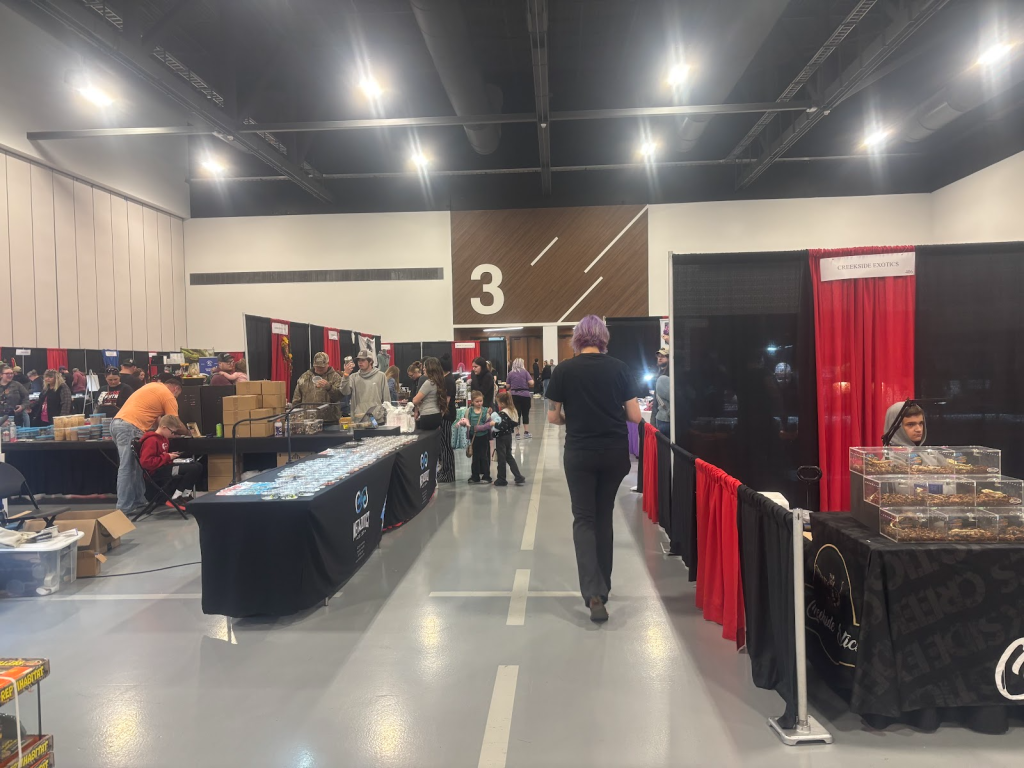
“On Saturday, October 1st, as you entered Ballroom A of the Central Bank Center, you could immediately see rows and rows of tables stretching to the back of the room, with dozens of people shuffling between them. On either side of the main path through the center of the room, there are hundreds of small containers, and inside each of them are a plethora of snakes, lizards, turtles, and other small creatures. The Kentucky Reptile Expo had returned to Lexington.”
That is how I opened my first-ever Rambler article as a freshman in October of 2021. I had recently joined the Rambler due to a spur-of-the-moment decision to add my name to an email list at that year’s Pioneer Palooza. I had never done anything close to school journalism, but I was looking for at least one way to get involved as a new student, especially after a year-plus of social isolation due to the COVID-19 pandemic. I was unsure whether I really wanted to see this newspaper thing through, and I was even more doubtful that the club would survive long enough that my choice would matter. The Rambler was largely in hibernation throughout COVID, and like most student organizations, it was having difficulty recruiting and restarting with the new year. That was before considering larger crises in getting people invested in student journalism, and the effects of conflicts with the Transylvania administration that had occurred just before COVID hit. By the end of that month, the only other student organization I participated in was defunct, and it seemed very possible that the Rambler, despite its long history, could at least temporarily follow.
Four years, eight print releases, and over two hundred articles and photo galleries later, the Rambler is in a considerably stronger place than it was during the doldrums of the pandemic. I was lucky to witness this revival as a four-year contributor to the Rambler, writing nearly fifty more articles after that first piece in October 2021. I also began editing articles in my sophomore year, and starting my junior year, I served on the Rambler Leadership Team as Copy Editor.
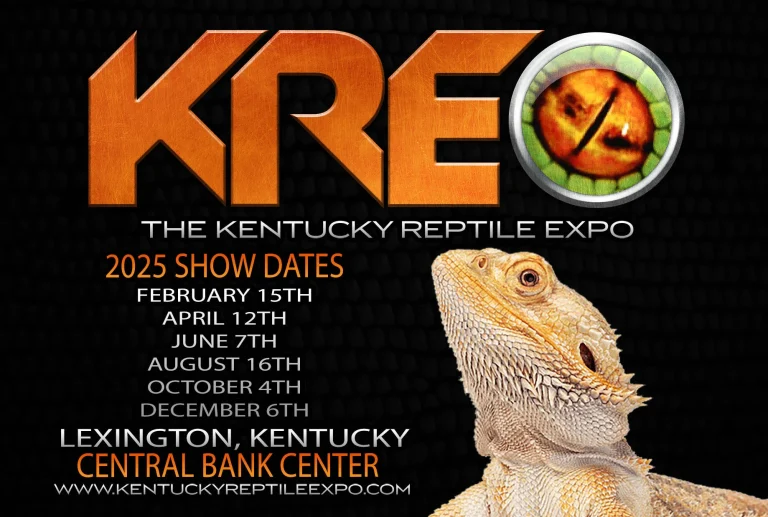
In that first article in October 2021, I covered the Kentucky Reptile Expo, a showcase and marketplace for live reptiles and (mostly) related equipment and merchandise that comes to the Central Bank Center roughly every two months. It was the first proper article published that school year, and was titled “Seeing Snakes: the Kentucky Reptile Expo” (I remember brainstorming titles and reading an online article that claimed ‘seeing snakes’ was a 19th-century term for hallucinations; I did not, and still have not verified whether that is in any way true). While that opening paragraph was maybe a bit flowery – a pattern that unfortunately has not disappeared from my writing – it was accurate then, and it remained accurate when, on April 12th, 2025, I made my second visit to the Kentucky Reptile Expo.
Photos by Nate Brother
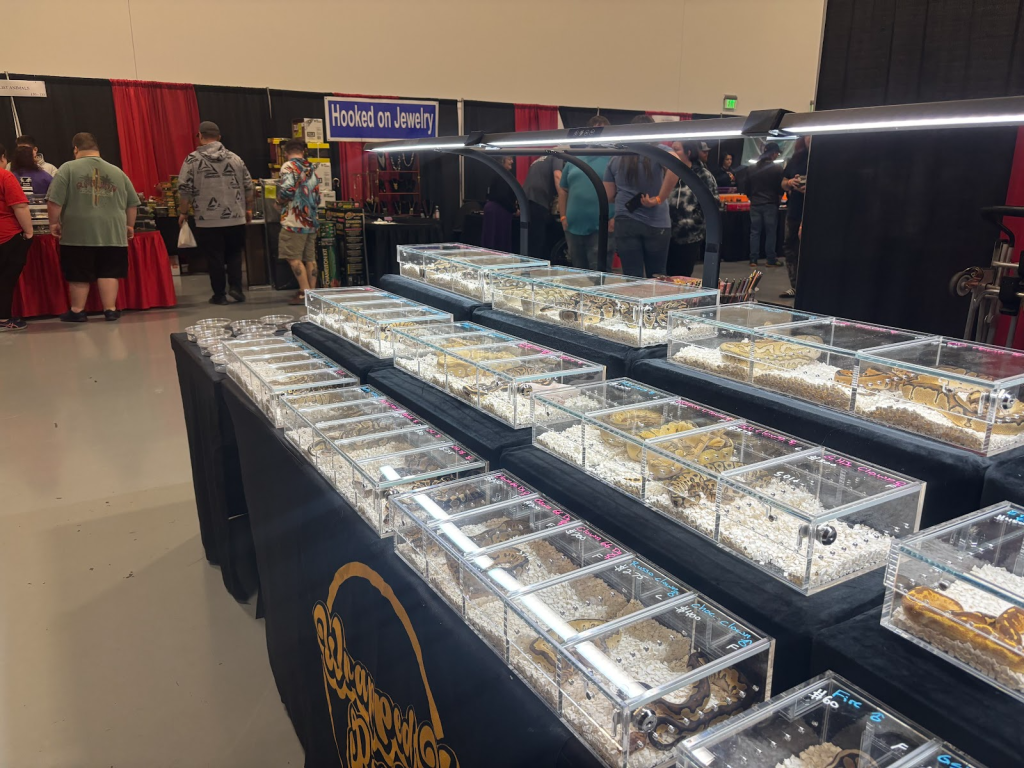
Despite being forced from Ballroom A to the smaller Exhibit Hall C (thanks a lot Kentucky Optometric Association), the general layout of the expo was mostly the same. Several tables stretched to the back of the room. Some vendors took up small spaces, while larger vendors had dozens of containers with snakes, turtles, lizards, and others stretching across the room. Some vendors recognized that many of the attendees, especially children, were there to see the animals rather than take them home with them, and set up photo opportunities, such as someone who sold photos with a large python in the corner of the ballroom. There were other animals for sale, such as insects like tarantulas, small parrots, and the large bins of white mice that were displayed by several of the reptile vendors (in 2021, I wrote that it was “unclear whether the mice were being sold as pets or reptile food,” which, with some hindsight, seems like willful ignorance on my part).
Scaled Sisters, a pet vendor and rescue organization based in the Cincinnati area, was one of the booths that I was able to speak with both in 2021 and 2025. The owner of Scaled Sisters, who has been coming to the Kentucky Reptile Expo for around twelve years and had a table full of leopard geckos and bearded dragons, spoke about how they cater to the different audiences that come to the event. She explained, “We do get some people who it’s their first time seeing these reptiles, and we like to introduce them so that they’re not as scared. And then we see people who are looking for their first pet or another pet…and want to ask questions about that and adopt.”
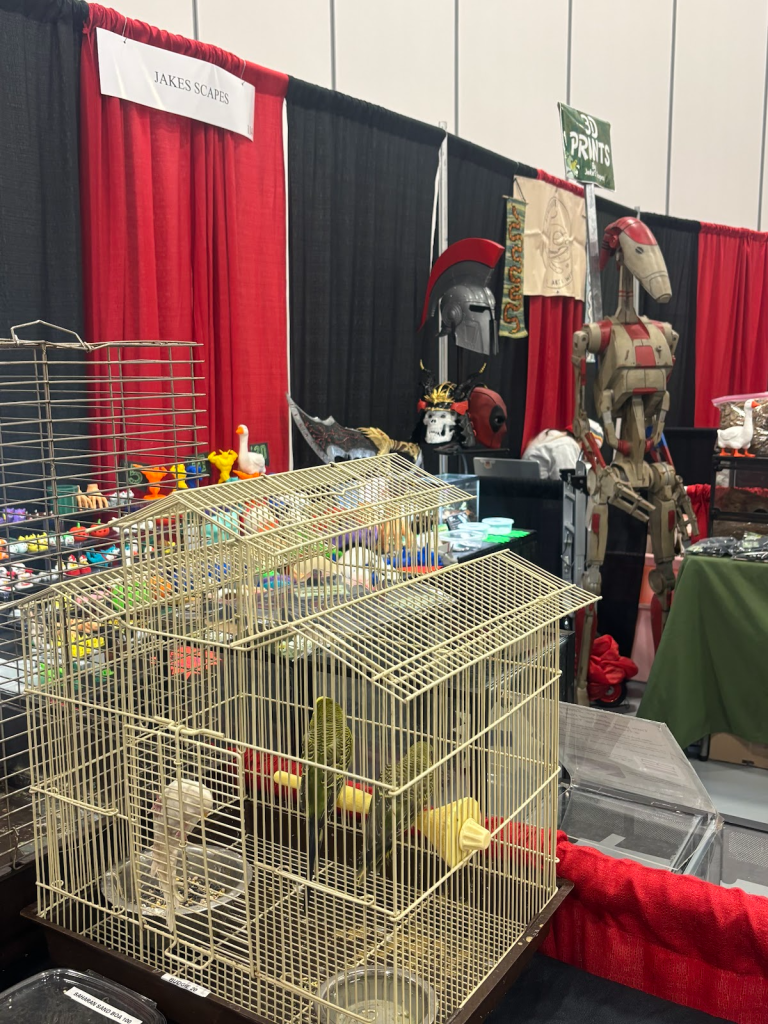
One aspect of the expo that, while present during my first visit, had grown significantly in the intervening years was the prevalence of booths and items with little to no relation to the reptile theme. While live animals and animal-care related booths still took up most of the space, there were numerous booths selling homemade arts and crafts, minerals and gemstones, and action figures and other memorabilia that were primarily targeted towards “nerd culture.” The visual that most emphasized this juxtaposition for me was a booth selling parrots directly next to a vendor who was selling a to-scale model of a Star Wars B1 battle droid.
Betsy Diamond with Mama Growing Magick, a first-time vendor at the expo selling gemstone jewelry, spoke about what drew them to the Kentucky Reptile Expo. Diamond had previously come to the event with their children and had heard good things from artist friends who were also vendors at the expo. Diamond was very complimentary of the expo, stating, “It’s really nicely organized and there have been a lot of great interactions with people.”
During my first visit in October of 2021, the spectre of COVID-19 hung over the expo like a cloud. Most attendees were in masks, and everyone I interviewed emphasized how much smaller that edition of the expo was than in previous years. Three and a half years later, while less obvious, the effects of COVID were still felt by the vendors at the expo. The Scaled Sisters table agreed that the expo had never recovered to its pre-pandemic size, and commented on the effect the pandemic had on their business, saying, “Our rescue side got a lot more surrenders after COVID because people got animals when they were home. But then they had to go back to work.” Even Diamond commented that it seemed that the crowd was a bit smaller than it had been previously when they were just a visitor to the expo. Whether it be businesses that shuttered during COVID or the shift to online sales that vendors in the 2021 event noted that they had been relying on, it seems a smaller event may just be the new normal for the Kentucky Reptile Expo.
Despite the possibility that it will never reach its pre-pandemic heights, the Kentucky Reptile Expo is still the successful staple that it always has been, and serves as a great opportunity for people, whether they be reptile lovers or not, to connect over niche shared interests. It is this sense of excitement and community that was the most obvious commonality between my two visits to the Kentucky Reptile Expo, and something that had not diminished at all in the forty-two months between them.
I write this article now in August of 2025, almost two months after graduating from Transylvania and having moved to a new city. With some distance, I can confidently say that joining the Rambler was one of, if not the best, decisions I made during my time at Transy. It was the only student organization, and one of the only sources of consistency across my four years at Transy. It was a massive help for me both academically, helping me grow my writing and editing skills, and socially, allowing me to meet some of my best friends at Transy. Joining or working with the Rambler is something I strongly encourage for anyone, though if you are reading this article, I am sure you could guess that.
Looking back on my Rambler career, it of course would not be possible without all the Rambler contributors who helped keep the Rambler afloat and have helped me to leave it in a much better place than where I found it, especially the editors in chief whom I was able to work with. Thanks to Allison Spivey, who was the only Rambler contributor who returned after the COVID pause and dedicated her senior year to bringing the Rambler back from the brink. Thanks to Jack Thomas and Josie Grant, who took on the unenviable task of leading an already imperilled student organization straight out of freshman year and gave the Rambler the badly needed continuity in leadership it needed after COVID. Thanks to Katie Axon, whose unparalleled creativity and passion have and will continue to push the Rambler to new heights. Thanks to every person who added to the Rambler over the past two years, whether it be submitting a single article or piece of art, or serving as a multi-year member of our leadership team. And thank you to everyone who has read and supported the Rambler.
The Kentucky Reptile Expo returns to Lexington on October 4th, and is typically held bi-monthly.
Are you a recently arrived freshman who, for one reason or another, did not bring a car with them to campus? Are you looking for a way to avoid downtown traffic and want a new way to explore the city? Or maybe you are just looking for an easy way to get some exercise outside the Beck Center hours. Fear not, this guide is for you. From August 2021 to May 2025, I was an on-campus Transylvania student who got around entirely on foot, without the use of a car. And while this may sound like a daunting proposition to those in a similar position to myself four years ago, I have found that, with careful planning, walking can be an efficient and healthy way to traverse and explore Lexington, and can offer a new perspective to those who are used to only seeing the city from behind a windshield.
The guide below will go over various walks and destinations around Lexington, both for those without a car and those who just want to walk for walking’s sake.
Downtown Lexington: Transylvania’s proximity to downtown Lexington provides a myriad of dining, shopping, and entertainment options for students, all within easy and navigable walking distance due to consistent sidewalks and the gridded street plan. Coffee shops like Third Street Stuff, Nate’s Coffee, and Lussi Brown Coffee Bar are all within a five to ten-minute walk from campus, perfect for refueling before or in between classes. For those looking to escape Transylvania Dining, downtown also has several dining options. Goodfellas Pizzeria and a Jimmy John’s location sit directly across from each other on Mill Street, less than a ten-minute walk from campus, and can provide a quick takeout meal at most hours of the day. Other local lunch spots close to campus include Doodle’s, Big Blue Deli, Taste of Thai, and Zim’s Cafe inside the old courthouse.
Photo by Nate Brother
Downtown Lexington is also host to many local events, whether they be weekly like Thursday Night Live and the Saturday Lexington Farmer’s Market at the Fifth Third Pavilion, or annual fairs like the Cold Brew Festival in August or the Halloween Festival and Thriller Parade in October. Rupp Arena and the Central Bank Center are a convenient ten to fifteen-minute walk from campus – a great way to avoid parking fees – and host countless concerts, University of Kentucky basketball games, and annual events like the Lexington Comic & Toy Convention in March.
Downtown Lexington is home to two movie theatres within easy walking distance: LexLive, a larger entertainment complex complete with a bowling alley, arcade, and sports bar, and the Kentucky Theatre, a historic repertory theatre that more often hosts arthouse films and special events screenings. There are also great parks to walk to in Downtown Lexington, including historic Gratz Park directly across Third St from campus, Thoroughbred and Northeastern Parks on the corner of Midland Avenue and Short Street (complete with climbing boulders), and the Gatton Park on the Town Branch, the recently opened park behind Rupp Arena with an amphitheater, expansive playground, and trails along the historic namesake stream.
UK Campus: A benefit of Transylvania’s location is that, while being a very small liberal arts college, students have access to the resources of not only the city of Lexington, but the much larger University of Kentucky just over a mile south of campus. A walk to the UK Campus is fairly easy, with the hill between Vine Street and High Street being the only potential obstacle. My preferred route has always been going up Upper Street, which takes you through the mostly shaded Historic South Hill neighborhood and is centrally located between the campus and surrounding neighborhoods.
The neighborhoods surrounding the UK campus are full of restaurants and cafes to serve the UK student population. There is the typical chain fare that surrounds major college campuses, like Chipotle, Insomnia Cookies, and Raising Cane’s, a block north of campus. There is also the small South Upper Target location, which, while not ideal due to small size and generally higher prices, is the closest grocery/department store to the Transy campus and is within a more reasonable walking distance than the New Circle Walmart or the Euclid Kroger. The area also contains local favorites like Okome Asian Grill directly next to the Limestone Chipotle, Joe Bologna’s, and Cinco de Mayo on the corner of Upper and Maxwell, and Old School Coffee at the corner of Mill and Maxwell. Old School, a fifteen-minute walk from campus, is a great spot for coffee, breakfast, and studying, though it can get a bit busy during the school year and has a two-hour seating limit.
The campus itself naturally has many resources for students and, for the most part, is fairly navigable. Something to note is that you can always count on some part of the UK campus being under construction – see the White Hall renovation and the construction of the new health education building at the time of writing – so knowledge of alternate routes to navigate the campus is important. While the Gatton Student Center and the green spaces around campus are good for studying or reading, the likely destination for most Transy students is the William T. Young Library. Located near the south side of the academic region of the UK Campus, the massive six-floor facility is unsurprisingly the best-equipped place in Lexington for studying and research. The library accommodates all possible study behaviors, with each floor reserved for different noise levels and choice of long communal tables, private carrels, or enclosed group study rooms. If there is a book you need for a class that is not available in the Transylvania library or bookstore, there is a good chance you can find it in William T. Young. The walk, just under two miles from Transylvania’s campus, is not very strenuous and well worth it for the reward, though those who are going there to study or check out books should consider their ability to make the trek with a heavy bag or backpack.
The highlight of a walk to the University of Kentucky campus, though the furthest from Transy’s campus, is the University of Kentucky Arboretum, the state botanical garden of Kentucky. The 100-acre public park is a horticultural garden and living museum managed by the UK College of Agriculture that specializes in preserving and showcasing native Kentucky flora. The Arboretum contains over two miles of trails, including the Walk Across Kentucky, a trail that goes through recreated environments of seven regions of Kentucky, and a trail through the Arboretum Woods, a remnant of once common Bluegrass forests. Once on the UK campus, those wishing to walk to the arboretum can proceed down University Drive, then cut through the Kroger Field lot to reach Alumni Drive. The front entrance to the Arboretum is not accessible to pedestrians (trying to enter that way would involve going over a ditch, then bolting across Alumni without a crosswalk, which I wouldn’t advise). However, there is a side entrance accessible via sidewalk that can be reached by crossing Alumni at the roundabout across from Kentucky Proud Park, with the entrance at the small parking lot near the Greg Page Apartments. A walk to the Arboretum from campus is almost exactly three miles, so a round trip plus walking the Arboretum trails may be a bit much for a beginner walker. For those without a car, recruiting a friend to hike and reconnect with nature is a fantastic way to destress. On the other hand, for people looking for longer walks, a personal favorite route for me was heading to the Arboretum through the UK campus/University Drive, walking the Arboretum trails, then heading back by proceeding down Alumni towards Tates Creek Road, then turning right and heading up Tates Creek and High to get back to campus, making a roughly ten-mile loop.
Chevy Chase: The Chevy Chase neighborhood and the nearby shopping district are a roughly two-mile walk from Transy. After going through downtown, the quickest route to Chevy Chase is down High Street, flanked by neighborhoods like Transylvania Park and Aylesford. Along the route are many local businesses like Black Swan Books, High on Art and Coffee, and Kentucky Native Cafe, a particular highlight for nature-lovers. There is also Woodland Park, which contains its own walking trails, tennis courts, a skateboard park, and hosts annual events like the Woodland Art Fair. The Chevy Chase shopping district, at the intersection of High and Euclid Avenue, has some of the best restaurants that Lexington has to offer. There are more obscure chain options like Parlor Doughnuts, Joella’s Hot Chicken, and Graeter’s Ice Cream. There are even more local options like the acclaimed breakfast at Josie’s, the atmospheric Charlie Brown’s Restaurant, Lexington’s oldest bar at the Chevy Chase Inn, and the Cajun offerings of Bourbon n’ Toulouse, a personal and local favorite. Chevy Chase also has great connectivity to other walkable parts of Lexington, like the UK campus and the historic Ashland Park neighborhood.
Distillery District: Passing the new Town Branch Park and turning left onto Manchester Street, walkers are greeted with a sign welcoming them to the Distillery District, a tourism-focused revival of the historic center of Lexington’s bourbon industry. While parts of the district are spread out and walkability varies along the Manchester/Old Frankfort Pike corridor, a walk to the district is a worthwhile experience at least once. The area is most known for staples of Lexington entertainment, from performance venues like the Manchester Music Hall and the Burl to the refurbished and tourable James E. Pepper Distillery. There are many restaurants as well, like a larger Goodfellas location and Crank & Boom Craft Ice Cream, all along an outdoor seating area with great views of the Town Branch.
Not far past the Distillery District on Old Frankfort Pike is McConnell Springs Park. The park, named for the settler who gave the city of Lexington its name, is centered around the titular artesian spring and contains over a mile of trails surrounding the springs and remnants of 19th-century Lexington settlements. While the park may seem a doable two and a half miles from the Transy campus, getting to the park is a challenge. The only sidewalk along Old Frankfort Pike, the yet-to-be-completed Town Branch Trail, ends near the Lexington Fire Training Center, so those wanting to get to the park would need to cross the road without a crosswalk and walk along the road shoulder. The park is also a natural pocket located at the back of the Cahill Industrial Park. All of these factors make a walk to McConnell Springs likely not a good idea, though if you can find a way to the park, it is a great hiking spot.
There are many more walking destinations throughout Lexington. There are historic sites with great trails, like the Lexington Cemetery and the Ashland Estate. There are more local restaurants that are within easy walking distance from campus, like Indi’s Chicken and Dingbat’s Pizza. The neighborhoods adjacent to Transylvania are very walkable, and the street grid makes it easy for anyone to customize their own walking route (my personal favorite neighborhoods to stop by were Hampton Court and Fayette Park). While the prospect of navigating Lexington primarily by walking can be frightening, and it is admittedly difficult at times, I can say for certain that it did not negatively affect my Transy experience. Walking became a consistent part of my day, was an easy way to ground myself in stressful times, and allowed me to get to know Lexington in a unique way. Whether by necessity or choice, walking through Lexington is undoubtedly a worthwhile trail to follow.
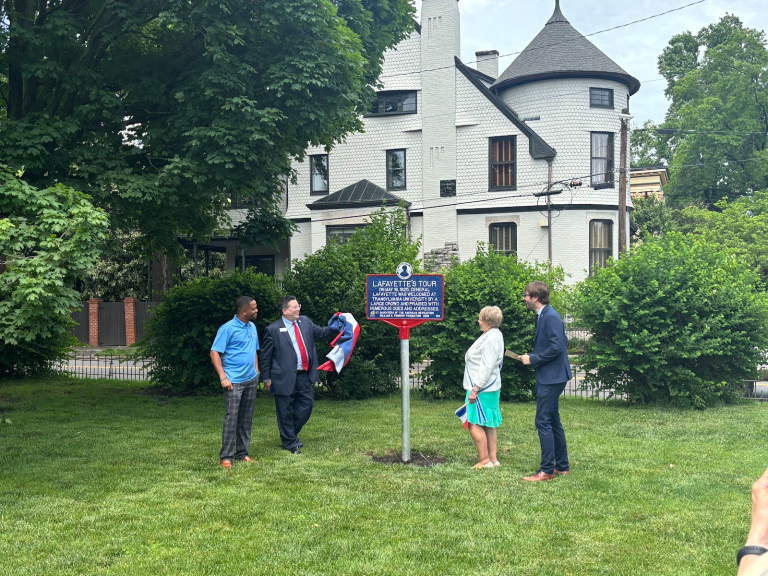
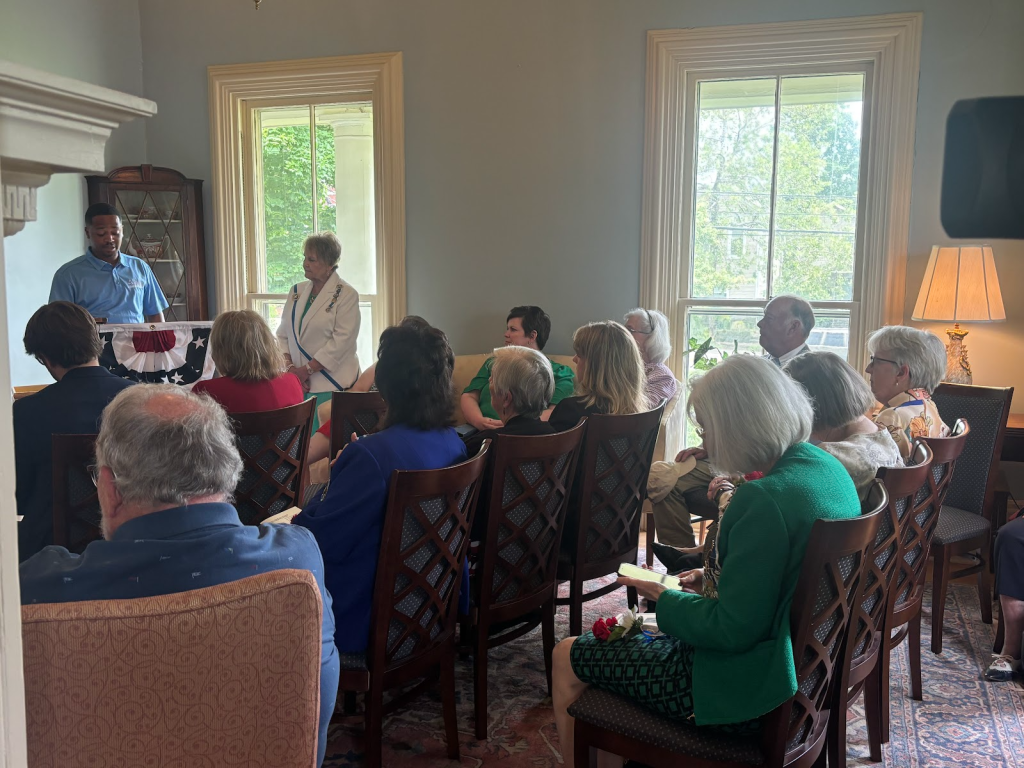
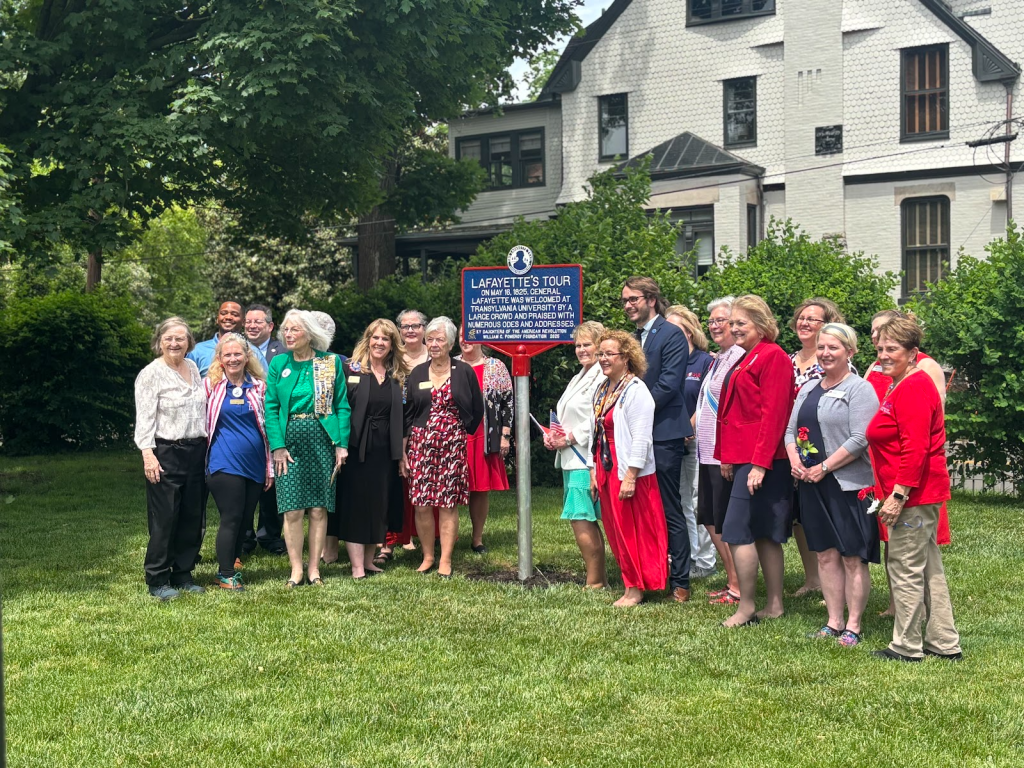
On May 16th, 2025, members of the Transylvania administration, local leaders, and over a dozen members of the Lexington chapter of the Kentucky Society Daughters of the American Revolution (KSDAR) gathered together in a small room in Graham Cottage. All were there to witness the unveiling of a historic marker commemorating the 1825 visit of Marie-Joseph Paul Yves Roch Gilbert du Motier de La Fayette, better known as the Marquis de Lafayette, to Transylvania University. The marker came about due to a collaboration between the Lafayette Trail, a nonprofit organization tasked with commemorating and educating the public on Lafayette’s 1824-25 tour of the United States, and the KSDAR, a longstanding heritage organization comprised of women who can trace their lineage to the ‘patriots’ of the American Revolution. The marker was one of three dedicated in Lexington on the 16th, marking the bicentennial anniversary of Lafayette’s visit to Lexington on May 16th, 1825.
The Marquis de Lafayette, the namesake of Fayette County, was a young French aristocrat and officer who, in 1777, came to America to volunteer in the Continental Army under George Washington, where he was quickly commissioned as a major general. During the war, Lafayette was wounded at the 1777 Battle of Brandywine, was key to lobbying state officials for continued support during the nadir of Continental morale in 1780, and co-led the decisive charge on Redoubts 9 and 10 with Alexander Hamilton during the 1781 Siege of Yorktown, a blow to British defenses that led to the surrender of Lord Cornwallis’s British Army and the effective end of the Revolutionary War. After returning to France, Lafayette became a key figure in France’s own revolution, co-authoring the Declaration of Rights of Man and of the Citizen in 1789, a core document of the values of the early French Revolution. Lafayette was eventually targeted by Robespierre and the Jacobins and fled France in 1792, spent five years in an Austrian prison, had his citizenship partially restored by Napoleon Bonaparte in 1800, and was elected a member of the French Chamber of Deputies following the Bourbon Restoration in 1814.
In 1824, Lafayette, by that time the last surviving major general of the American Revolution, was invited by U.S. President James Monroe to tour the United States in anticipation of the nation’s upcoming semicentennial. Lafayette obliged and spent a little over a year touring all 24 states, being celebrated at every stop along the way. On May 16th, 1825, Lafayette arrived in Lexington, KY. After a military parade in his honor, Lafayette visited Transylvania University, at that time located in modern Gratz Park. Lafayette spoke to the gathered student body, and was similarly praised in a speech by University President Horace Holley, countless odes composed by students, and was awarded an honorary doctorate of law (the events and speeches of Lafayette’s visit to Lexington are recorded in Edgar Erskine Hume’s Lafayette in Kentucky, available in general circulation of the Transylvania University library).
The marker unveiled 200 years to the day of Lafayette’s visit to Transylvania contains a short summary of the visit and the adoration expressed by the campus. The text of the marker reads, “On May 16, 2025, General Lafayette was welcomed at Transylvania University by a large crowd and praised with numerous odes and addresses.” The marker was officially unveiled in front of Graham Cottage on the 16th by Transylvania President Brien Lewis, State Regent of the Kentucky DAR Linda Conrad, Lexington Councilmember Tyler Morton, and Lafayette Trail Founder and President Julian Icher.
Each of the unveilers spoke to the small crowd gathered in Graham Cottage on the importance of commemorating Lafayette’s visit. President Lewis emphasized Transylvania University’s historic significance and efforts to connect current Transy students to that history, citing renewed modern interest in Lafayette due to his depiction in the 2015 Broadway musical Hamilton and the excitement he sees when modern students learn the “Lancelot of the revolutionary set” visited the campus two centuries ago. Conrad explained how the Lafayette markers fit with the DAR’s three-pronged mission statement of promoting “historic preservation, education, and patriotism.” Conrad explained the DAR’s goals for the markers, stating, “These markers tell the history of Lafayette’s visit and they educate the public about the life of the last surviving general of the American Revolution…The information on each of these markers preserves the history of his visit, and hopefully inspires a patriotic pride in our country.” Morton described the marker as indicative of the values Lafayette fought for that continue to be important to this day, proclaiming Lafayette’s visit to be a “reminder of the enduring values of freedom, democracy, and solidarity between nations. Two-hundred years later, we still draw inspiration from his courage and his unwavering belief in liberty and justice for all.” Icher recalled the events of Lafayette’s visit to Transylvania for the gathered audience. Icher specifically focused on Horace Holley’s address, which categorized Lafayette as a “providential figure” and “moral man” whose visit was an endorsement of the continuing American experiment. The address also emphasized the importance of a liberal arts education in promoting republican principles.
The marker at Transylvania was one of three unveiled in Lexington on the 16th. A marker at the Ashland Estate commemorates Lafayette’s visit with the family of Henry Clay, and a marker at the Masonic Lodge on Harrodsburg Road commemorates the ball held for Lafayette at the Grand Lodge of Kentucky. Additionally, an interpretive sign noting Lafayette’s visit was installed in Gratz Park by the city of Lexington as part of the year-long 250Lex celebration commemorating the city’s semi-quincentennial.
The impact of the “meme” has evolved from a sporadic cultural phenomena to a multi-billion dollar industry. Internet memes have proven themselves as modern prisms of culture, identity, and personality that no other kind of cultural diffusion such as film or music can match. But what does this mean for Transylvania students?
Transylvania Meme Study Results
After posting a Google form to TNotes, I would argue the university’s population reflects a shared concern of desiring more originality/diversity throughout campus. Predictable data commonalities showcased Transylvania’s dominating student body represented a white female Kentuckian (92.9%, 57.1%, 82.1% respectively) who regularly shared a wide variety of meme formats at least once a week (78.6%). Memes were mostly humorous and many Transy-specific/Yik Yak memes centered around President Brien Lewis, FSL life, and shortcomings ofTransylvania. Despite traceable similarities, the respondents did seem to favor original memes with niche content (78.6%) like older cartoons (42.9%) and 2015-2019 content (64.3%) winning out against a preference for targeted feeds (only 7.1% branded preference). Moreover, many students felt like the memes they shared represented their identity (67.9%) and correlated memes with positive emotions (96.4%).
But what is a meme?
Originally, the term “meme” was coined by biologist Richard Dawkins’ in 1976’s The Selfish Gene as cultural units which spread like disease. For example, the recently revitalized “Ice Bucket Challenge” exemplifies a mutated evergreen meme. However, Dawkins’ biological model has seen some backlash. Limor Shifman details in her 2008 book Memes in Digital Culture that “reducing culture to biology narrows and simplifies complex human behaviors.” Sociologically-defined meme history asserts human society is very mappable but never totally predictable. Yet, I counter that the idea of a meme’s target audience can be adhered to large swaths of users confidently.
Furthermore, Facebook data scientists showcased a 2014 analysis which alarmingly idealized Dawkins repetitive mutation theory if “a variant [matched] the subpopulation’s beliefs or culture.” Basically, political polarization was inherently readable based on memetic content such as feelings about Obamacare. This study underpins ideas of platforms like Facebook that actually limit a bridged dialogue.
The value and potential danger of Internet memes
While almost always a “complex amalgam of ideas, textual practices, and communicative strategies” meme construction vastly differs depending on the context or “niche” it is placed into (Shiffman). Gaming memes such as the “You died” format relies on the understanding of an audience familiar to this popular game over screen. Similarly, recent J.D. Vance Photoshop memes rely on the context of a tense debate between the vice president and Ukrainian leader Volodymyr Zelenskyy. Both examples offer something beyond the sum of comedy with much fiery discourse behind the scenes. However, politics are seen as more critical to the wellbeing of the public. Niches, therefore, can interlace conceptually but are weighed upon by a different cultural scale.
Memeology features unique generational division as well. Gen Z and Millennials pioneered meme use to express mood, identity, and worldview. Memes thrive off of the relatability of being “inside the joke.” But relatability might come for adolescents like my younger sister in the form of school or soccer memes while my mom’s feed is more centered around family and political memes. Memes break barriers through their personalized potency which subtly replaces traditional identity-building tools. Algorithms are built to eliminate and demonize the necessity of meeting opposing viewpoints. But, as playwright Richard Foreman warns, this metaphorically creates a society of “pancake people” homogenizing all creative ideas into algorithmically designed nothingness.
How do memes succeed?
So what about “brain rot?” Overblown digital consumption applauds “retention-based” artistry as platforms such as YouTube and TikTok have come under fire for AI-positive policies promoting an shortform-dominant attention economy. Social media isn’t fighting financially, it’s dealing cosmic trading cards of time and influence. While brain rot seems new, the reality of culturally isolating extremist content is just much more obvious this time. Still, conceptual understanding of an “online influencer” has now spurred a lot of distaste for such rampant manipulation.
YouTube’s golden goose Jimmy Donaldson (MrBeast) has notoriously underlined online success equates to analytical understanding and relentless optimization towards human psychology. Donaldson’s approach to gauging content blueprints with an “interest market cap” (view ceiling), preaches there can “never be a perfect video” but always a more refined path. Despite differing views, this connection between creators and viewers is ultimately what drives memetic growth. Content series such as “Skibidi Toilet” or “Italian brainrot,” are seemingly nonsensical, yet, are insatiably alluring due to a storied journey of funny characters
Virality & Neuroscience
Laughing which changes personal and professional lives. Many parents are now starting to censor their children in social media posts due to safety, privacy, and consent concerns. Virality also uplifts misinformation such as Mary Kate Cornett, a college student who suffered a false sexual allegation. Cornett’s lawyer Monica Uddin relented that “the law has not caught up with the speed at which a lie travels online” complicating memetic justice. Even worse, some stigmatizing memes can barely be controlled at all.
Neuroscience underlines the importance of dopamine centric feedback loops in addiction. As Stanford psychiatrist Anna Lembke explains, humans’ biological survival needs for positive connection “kept us alive for millions of years.” But, a post-scarcity environment has toppled humanity’s brain chemistry rendering music’s dopamine-laced infusion into shareable trends a perfect chemical storm. Going viral does involve a natural element of luck. But as 2017’s rapidly uniting trends showcased, common threads of abstract elements (Fortnite emotes) peppered with novelty (fidget toys/slime) and a bombastic music-fueled economy (TikTok) light a primal lightbulb for orchestrated memes. Good memes are immediately recognizable, planting seeds of connection within shared experiences.
Conclusion
While often dismissed as pointless byproducts of human creativity, memes represent deep cultural tokens of the human experience. Cultivating memes that champion change is pivotal towards opening a dialogue in our continually separating society. The meme is the new cultural king; it deserves to be revered as such.
For the past four years, Transylvania has hosted a Pride Week during the first full week of May to relative success. It’s an odd choice, I’ll admit. After all, Pride is traditionally held in June, so logically, it doesn’t make much sense for the administration to make a big deal out of something they have no obligation to celebrate. And yet, they do. Personally, I suspect their insistence is at least partially inspired by Transy’s large LGBTQ student population, as well as a few key faculty members.
But regardless of the reason, the gesture is appreciated. Speaking personally, I come from a small town where queerness was never even talked about, much less celebrated. For me, this is one of the only moments of Pride I get a year, and I know there are other students on campus who feel the same. And honestly, it’s nice to feel seen, to know that there’s a community around you – big or small.
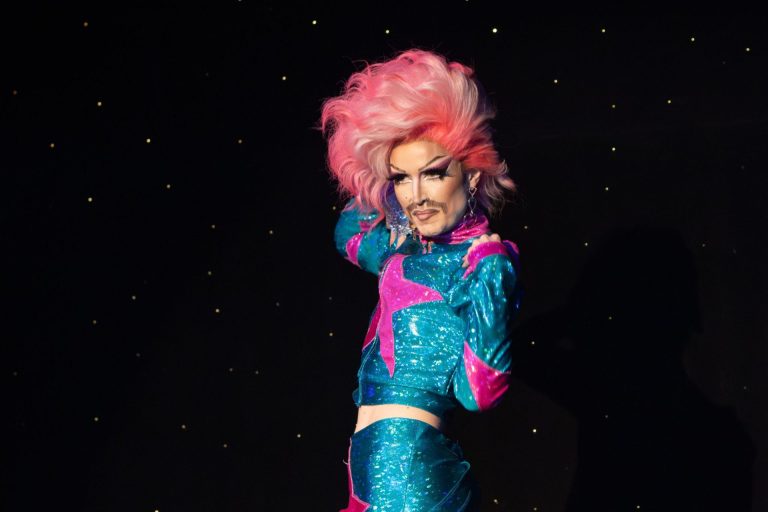
It was precisely that feeling of community that graced Transy’s fourth annual drag show on May 1. The event was hosted by the Housing and Residence Life Department, showing up beforehand to set up the traditional candy bar and mocktail station. Guests got sugar-high to combat the end-of-year exhaustion before heading into Carrick Theater.
That night’s MC was the lovely Uma Jewels, who kicked off the night with a rendition of Chappel Roan’s “Pink Pony Club” and followed it with an homage to the film Kill Bill. Kristin Mingle and Jayda Mack returned to the stage, practically veterans after four years of lighting up Carrick’s stage. Dr. Amaya Virgin had a powerful entrance, lip-synching to “Bring on the Men” from the Jekyll and Hyde musical while twirling around two feathered fans. Starlette was another wonderful addition to the lineup, as was Lasher L’Cher, who arguably stole the show with his final number, where he dressed up as Waluigi and strutted around the audience in-character.
It was absolutely, undeniably fun. Everywhere you looked, people were cheering and singing along to the music, some waving small Pride flags of their own. There were twelve numbers in all, two for each performer, and even as it got late and people grew tired, the energy in the room remained high. When the night was finally over and the performers came out for their bows, they received a well-deserved standing ovation.
As of now, I don’t know whether Transylvania will hold another show next year. I’m graduating in a couple of weeks, so even if they do, it’s doubtful I’ll get to see it. Still, I’m hopeful, as I know many others are, that this annual tradition will continue for years to come. After all, for us, this isn’t just a show— it’s a celebration.
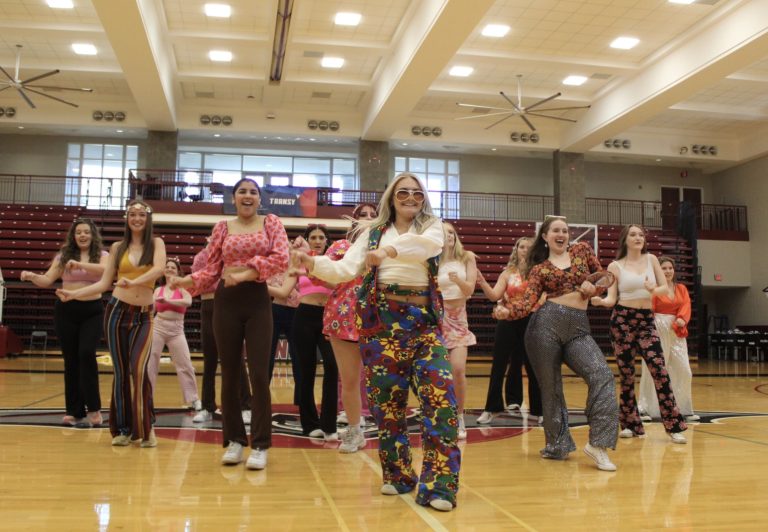
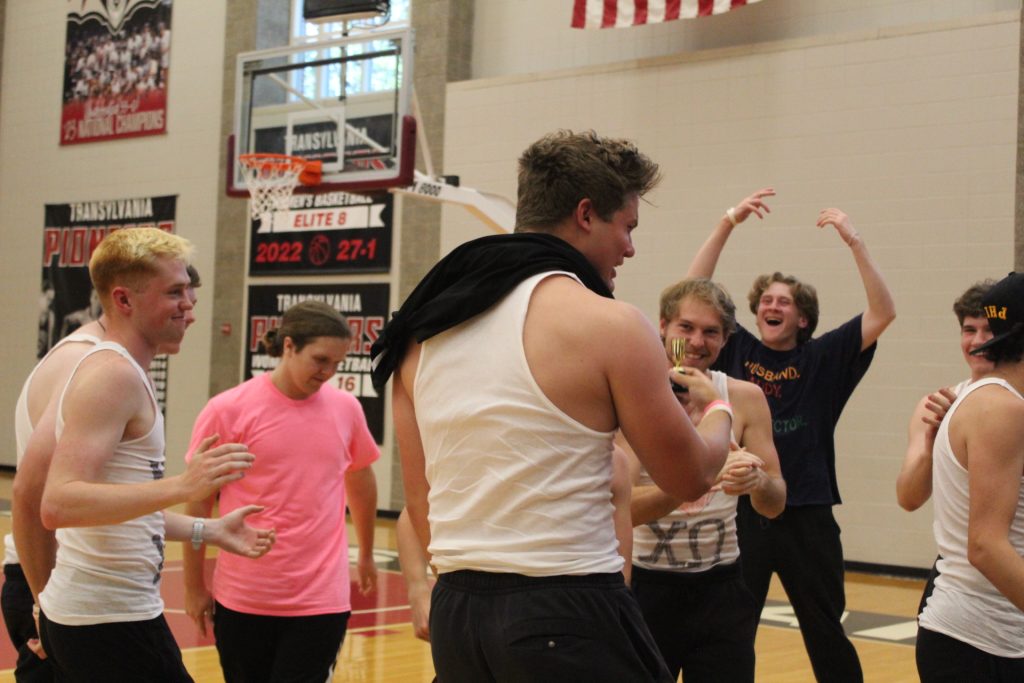
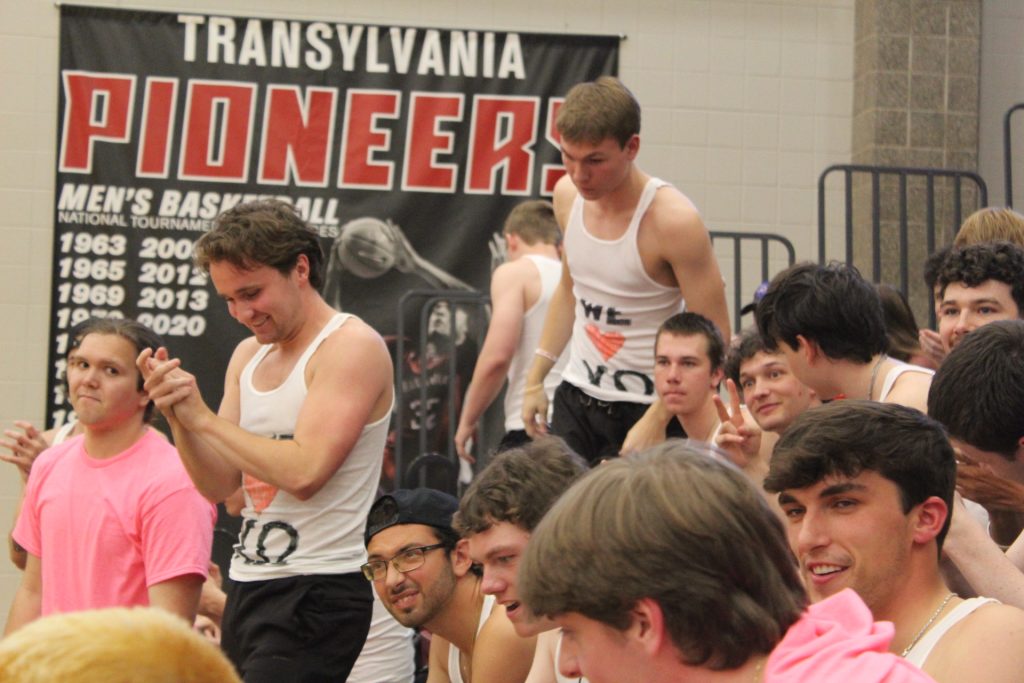
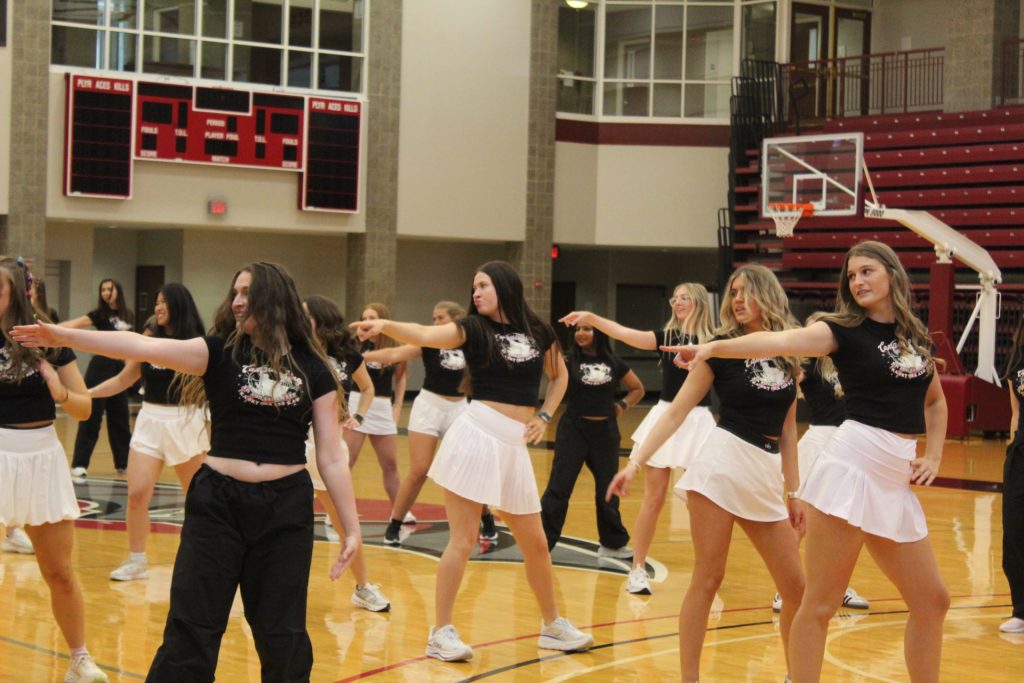
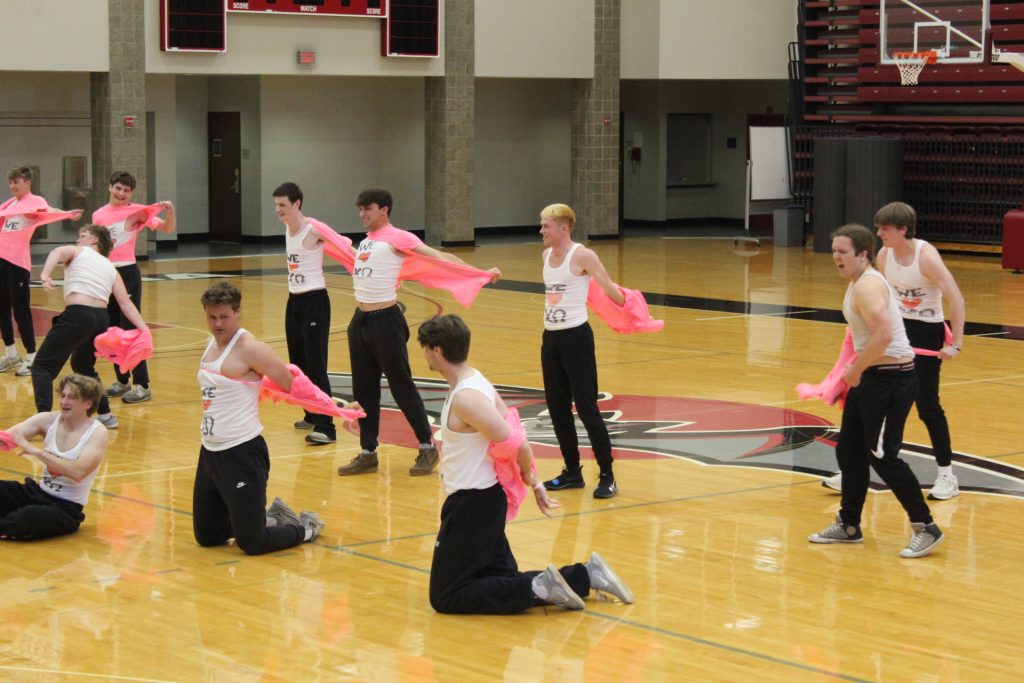
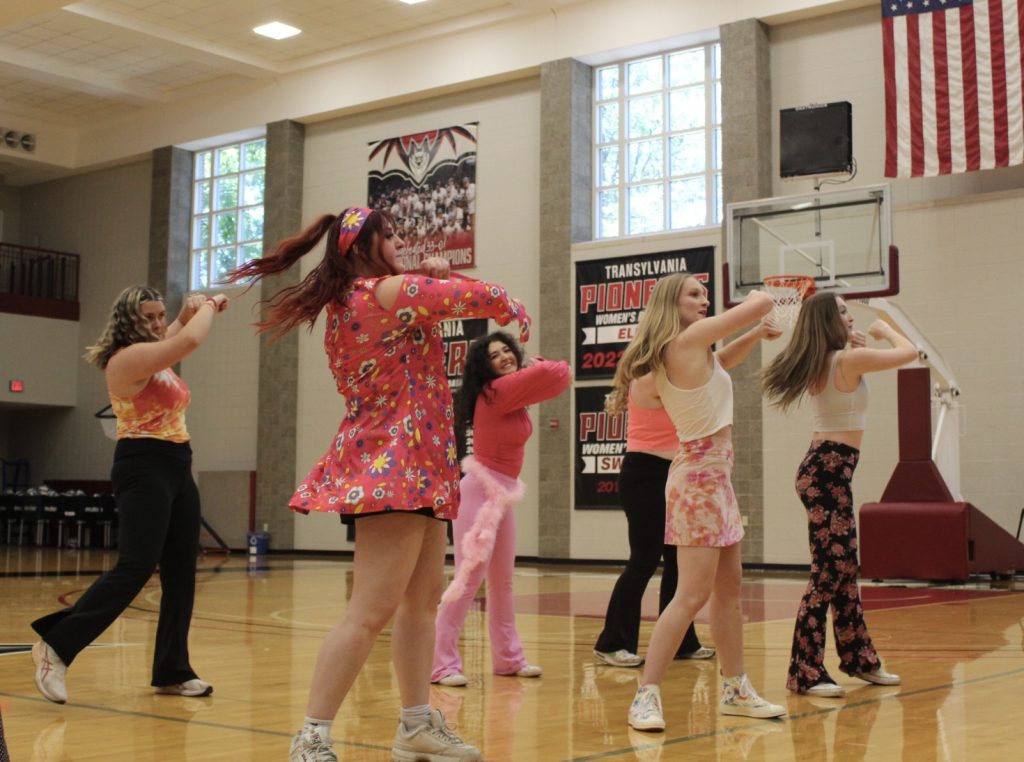
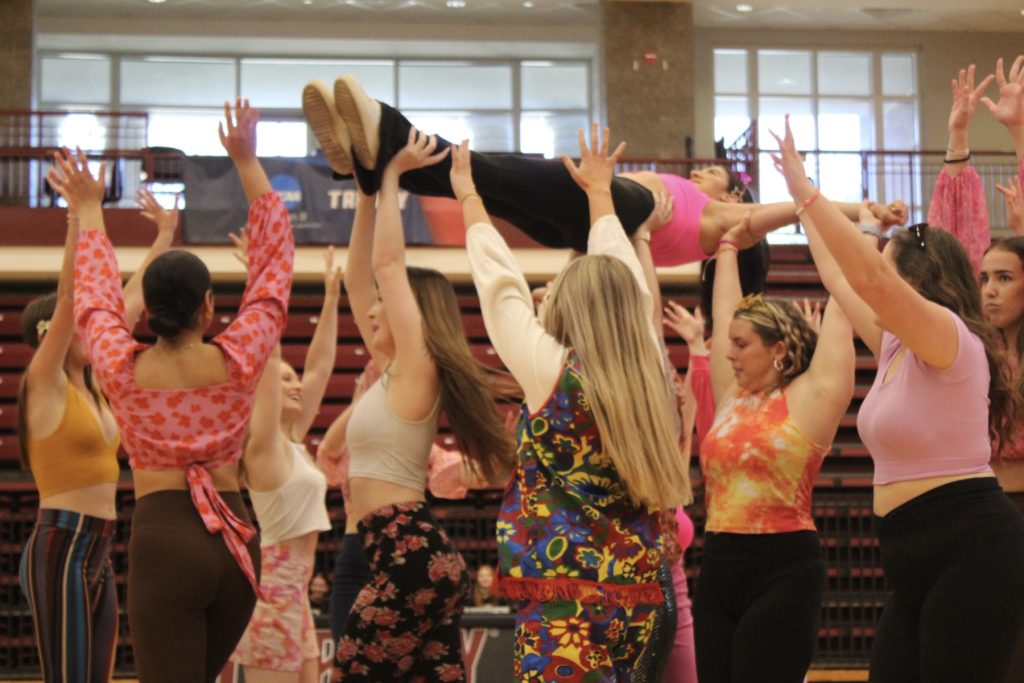
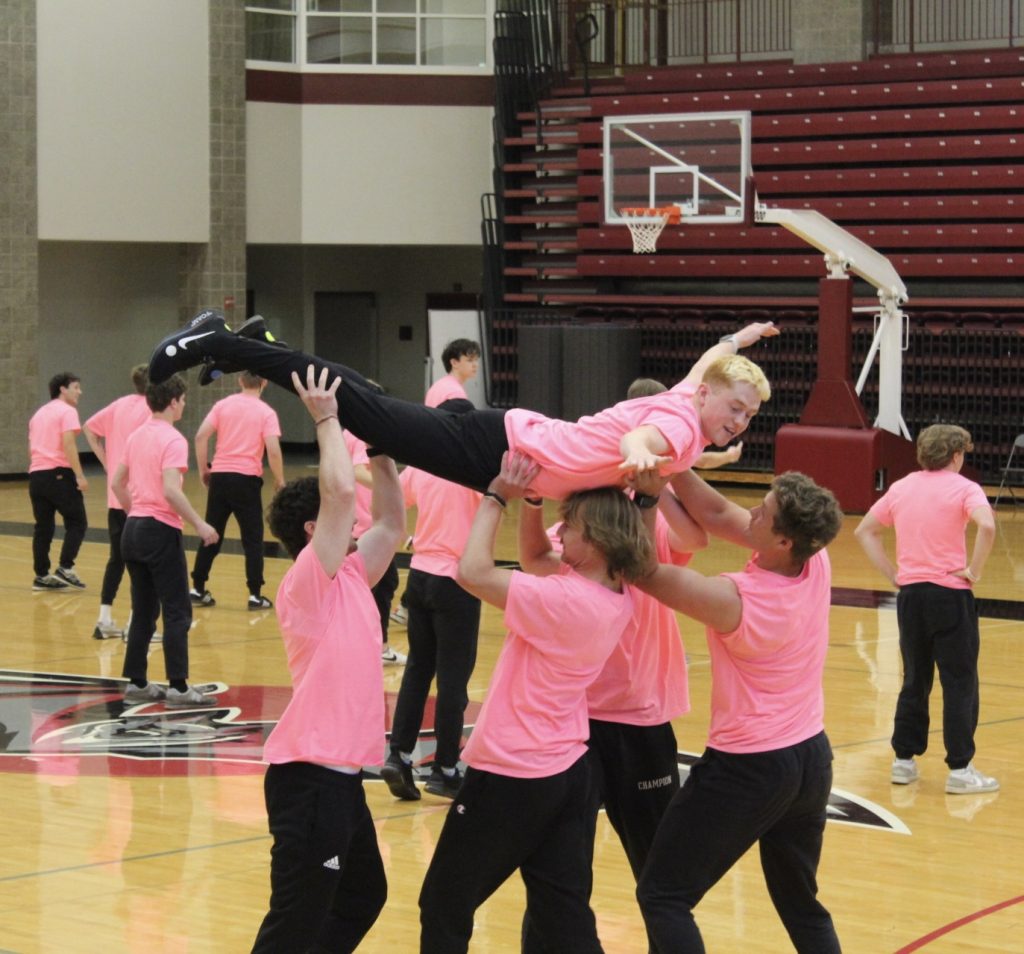
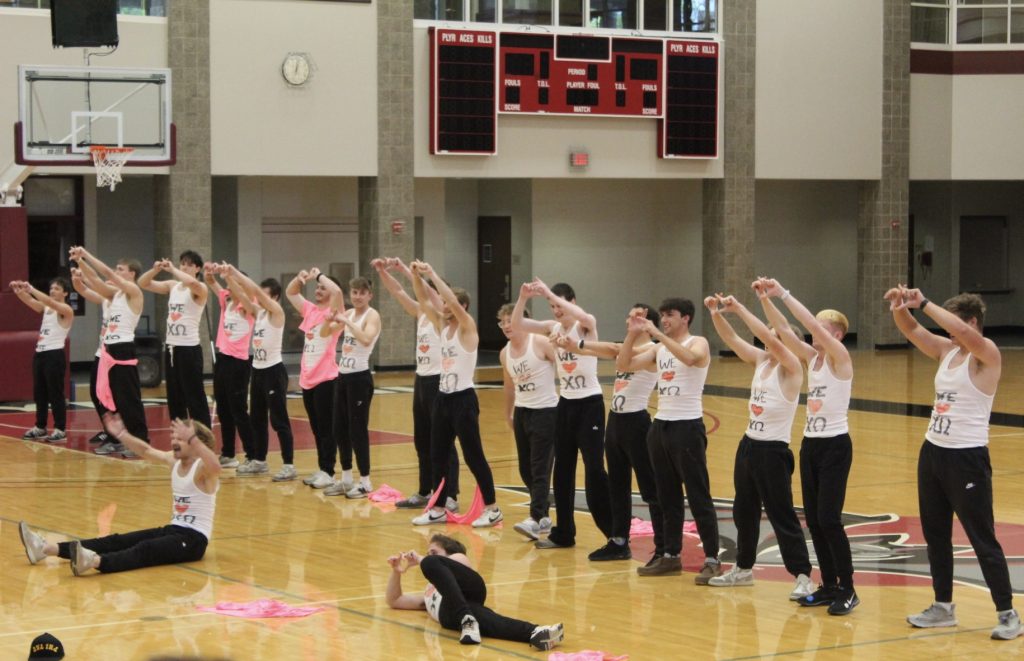
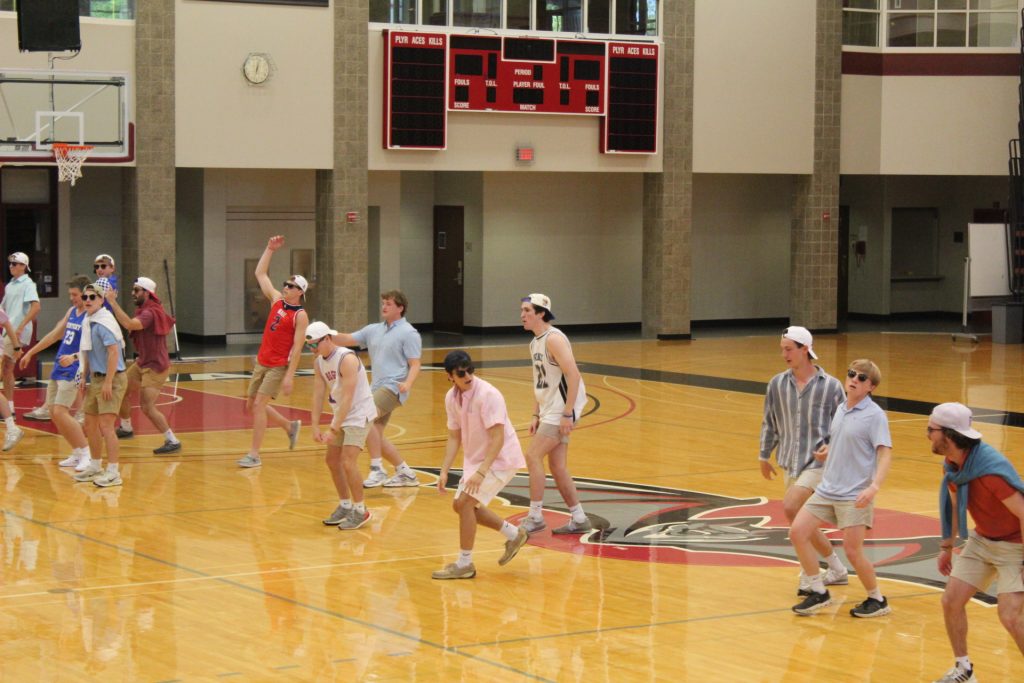
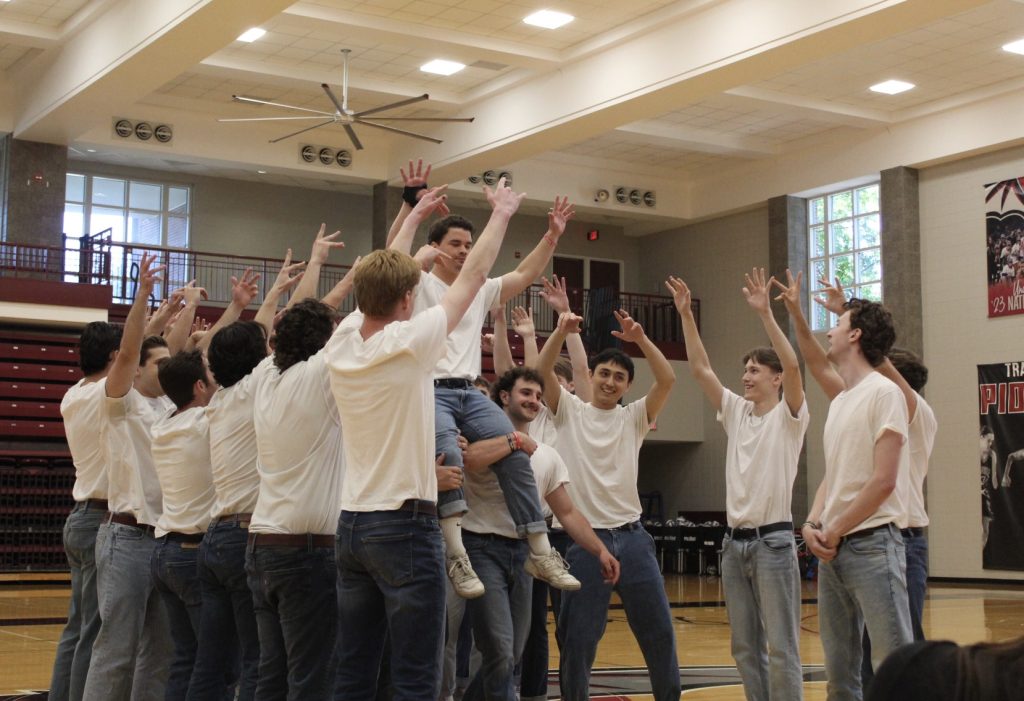
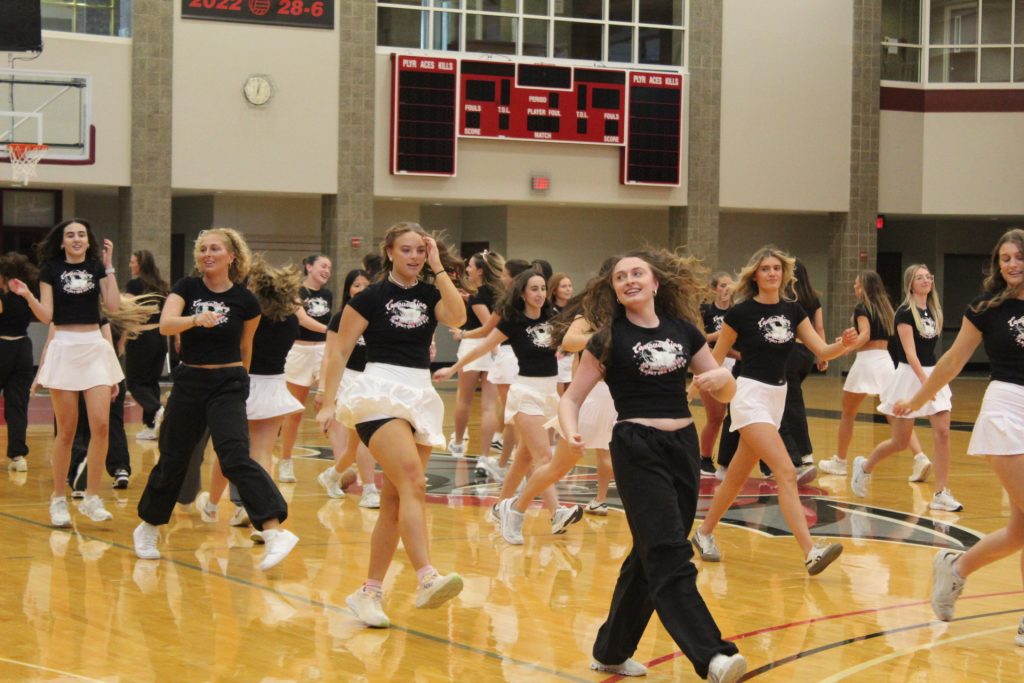
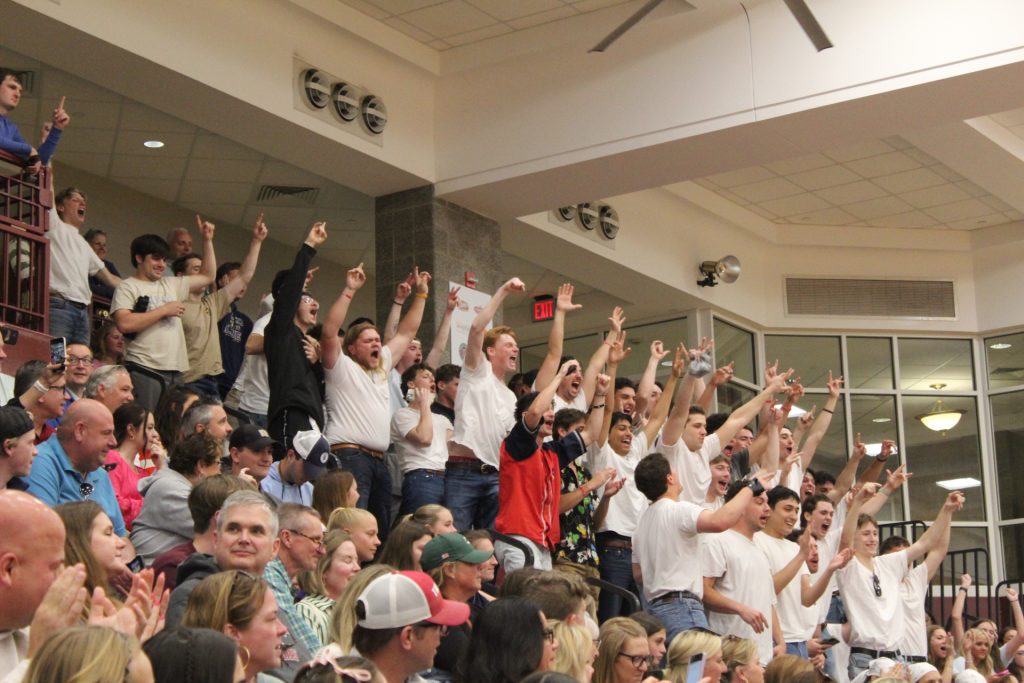
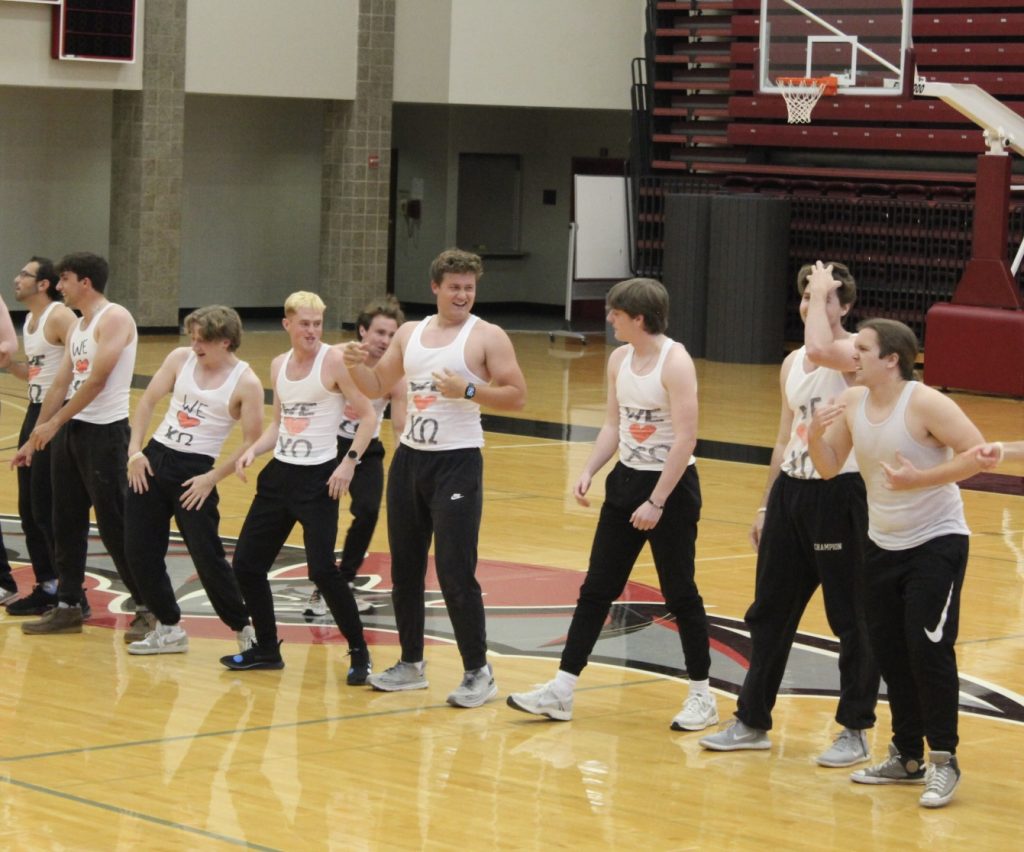
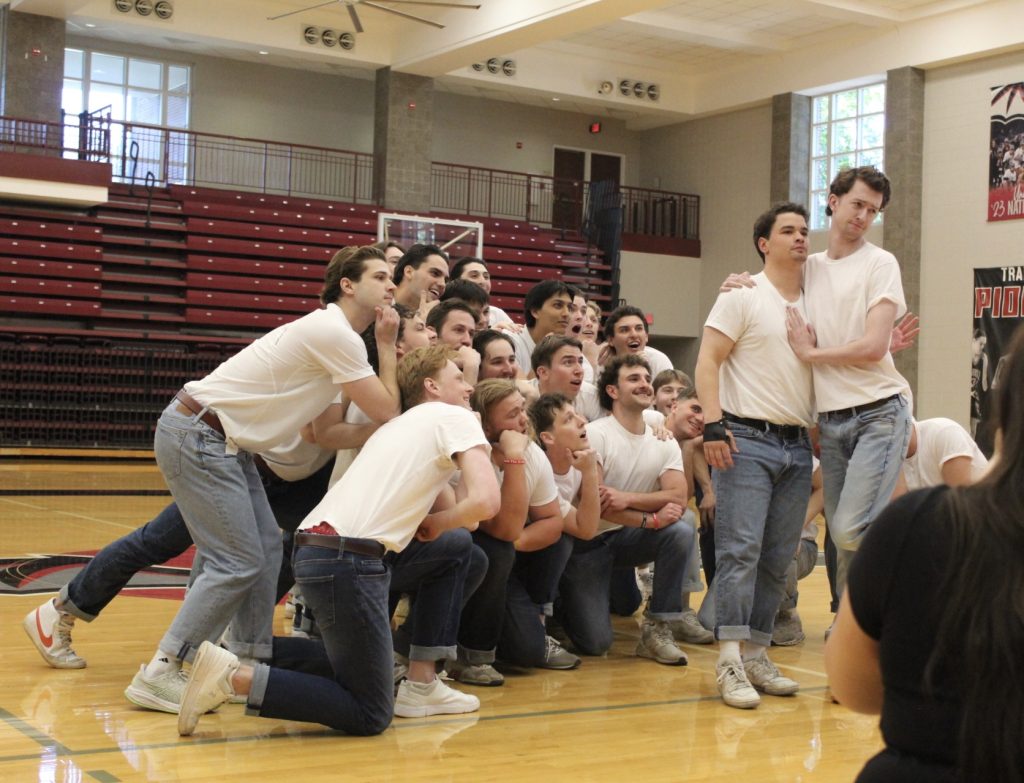
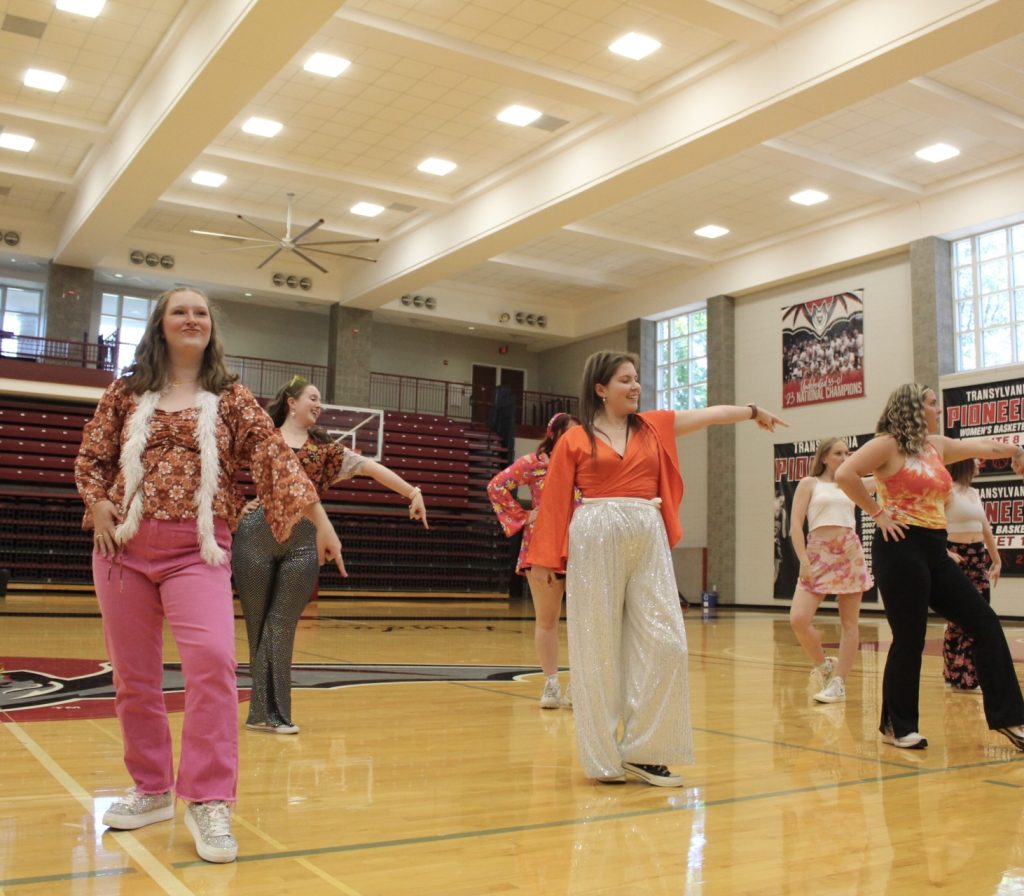
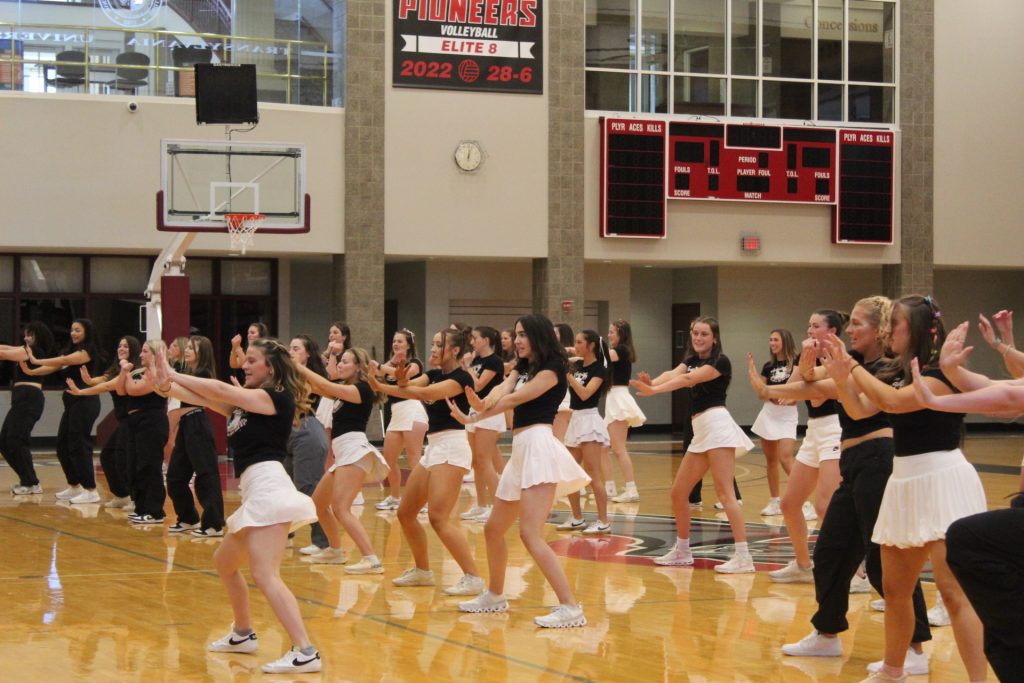
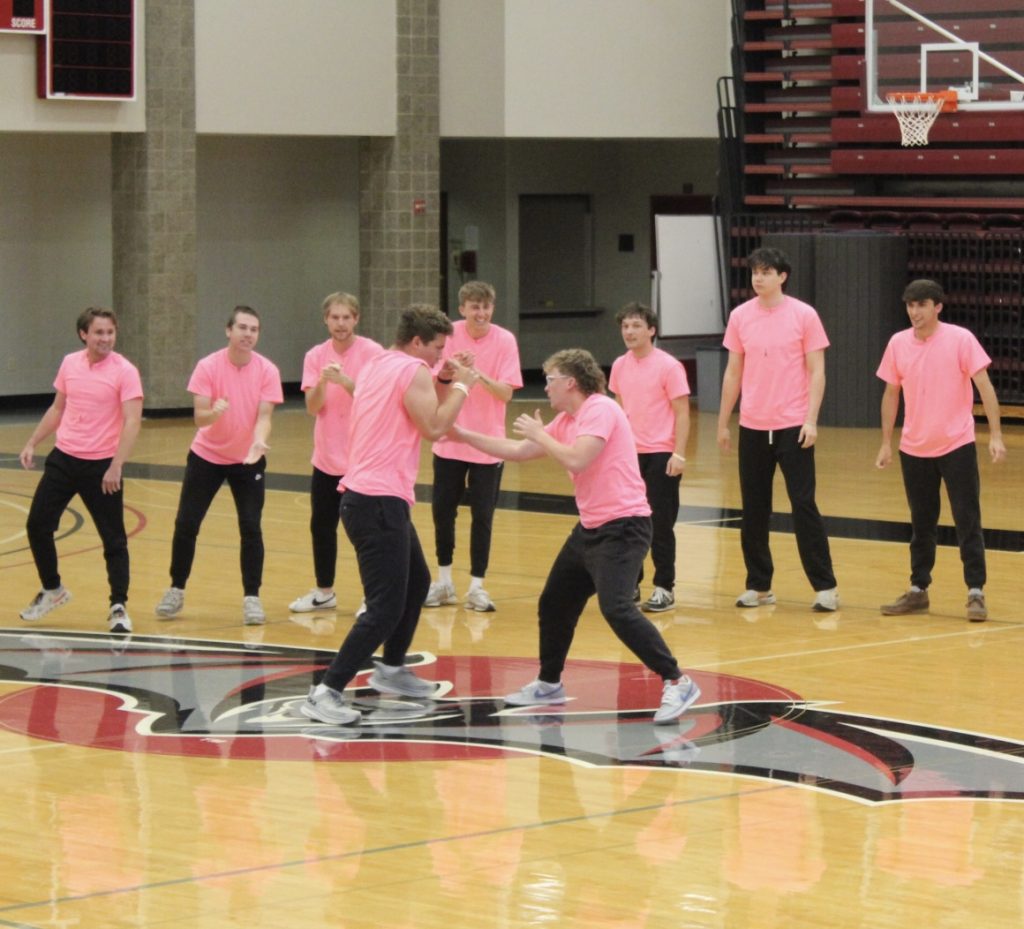
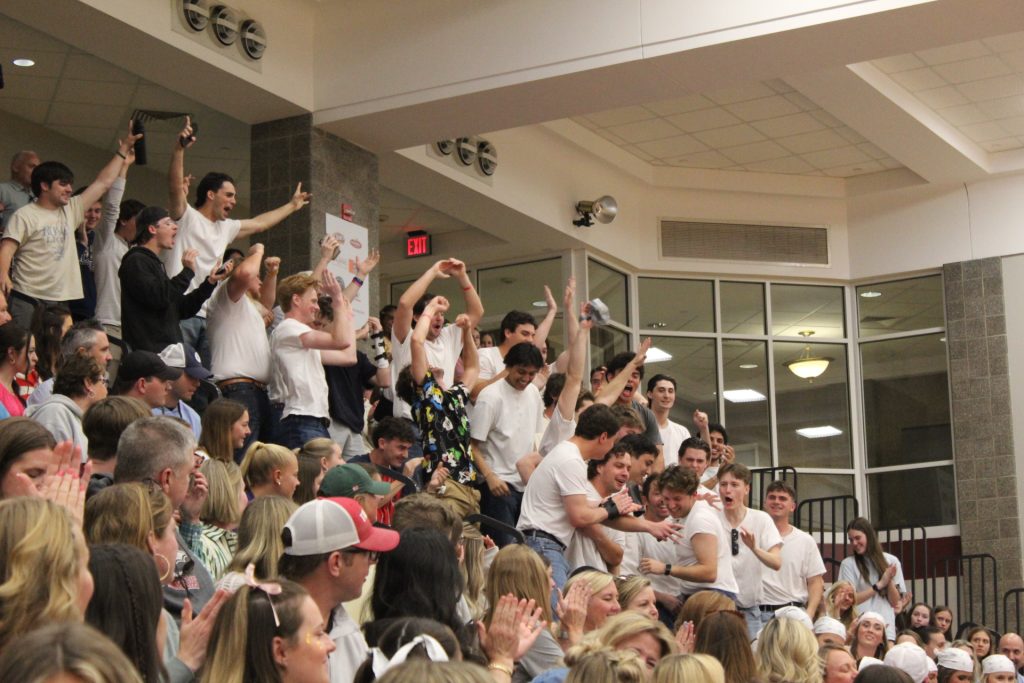
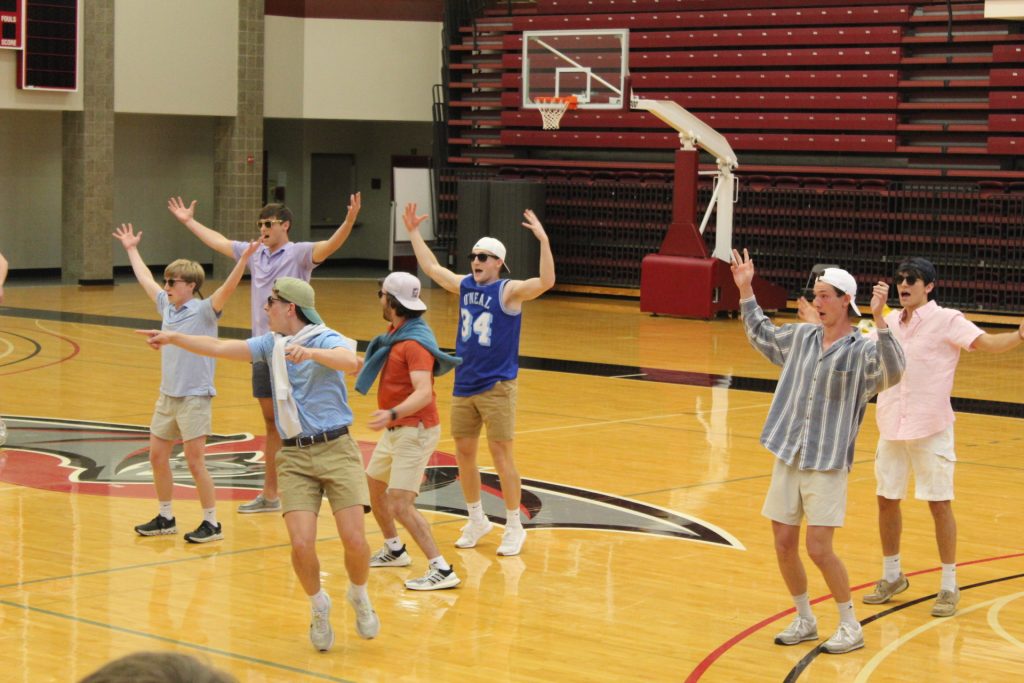
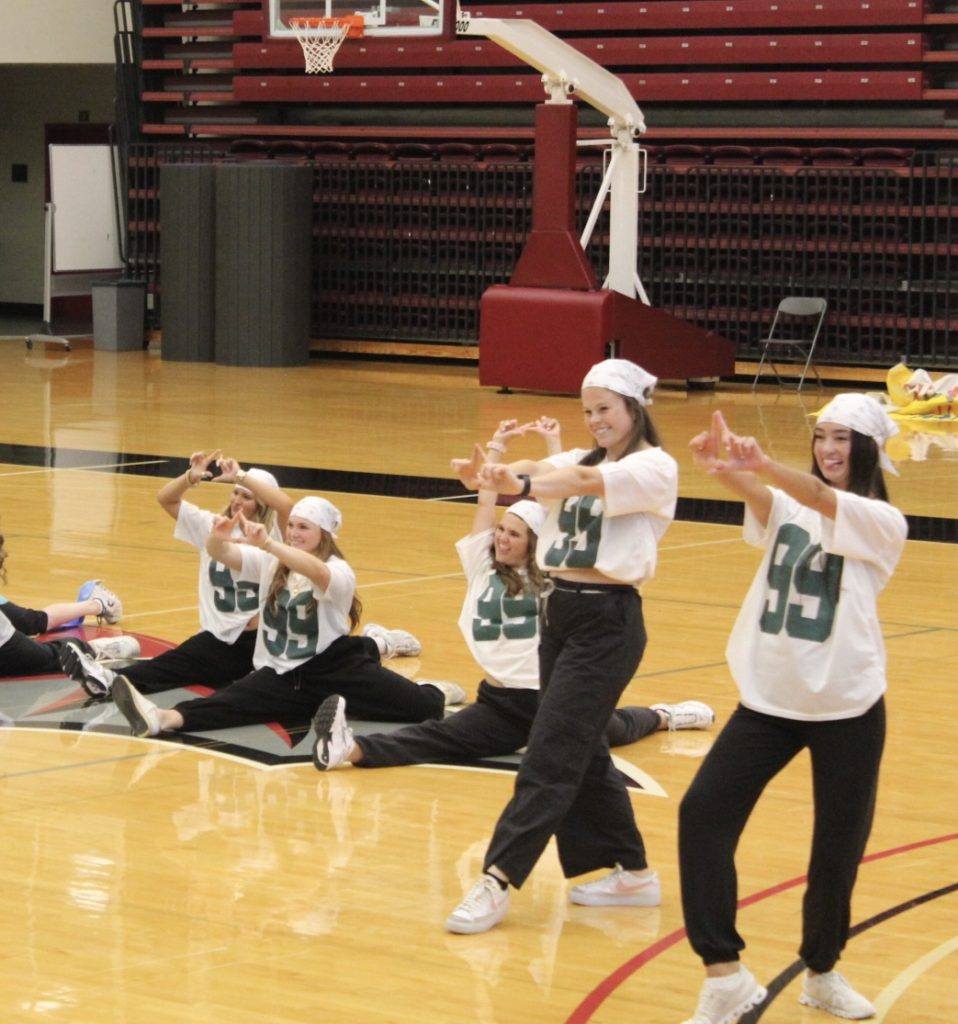
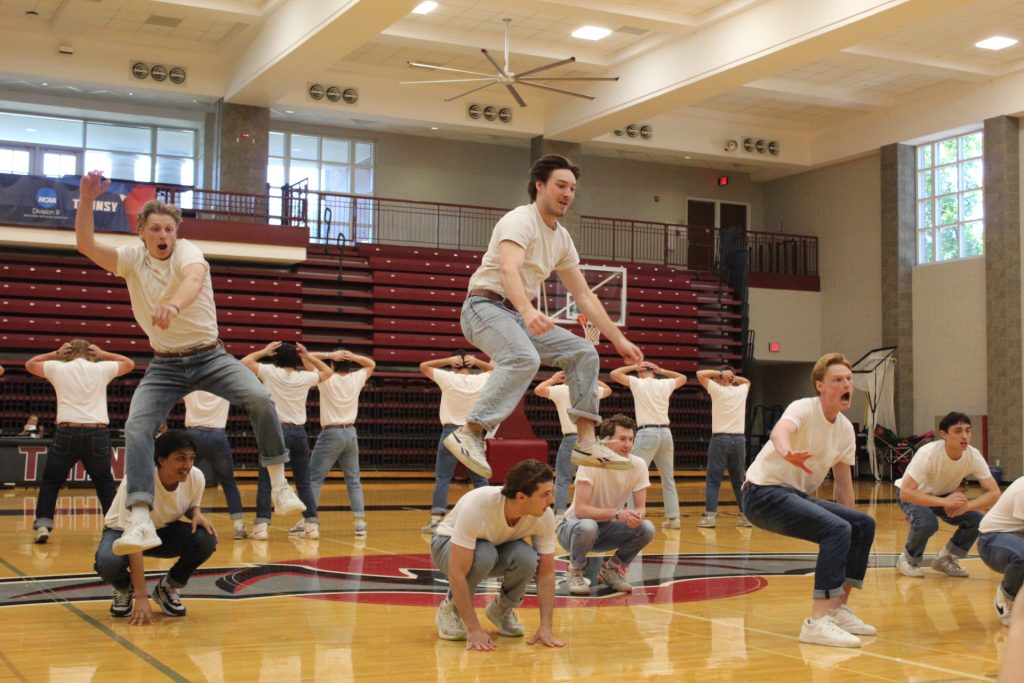
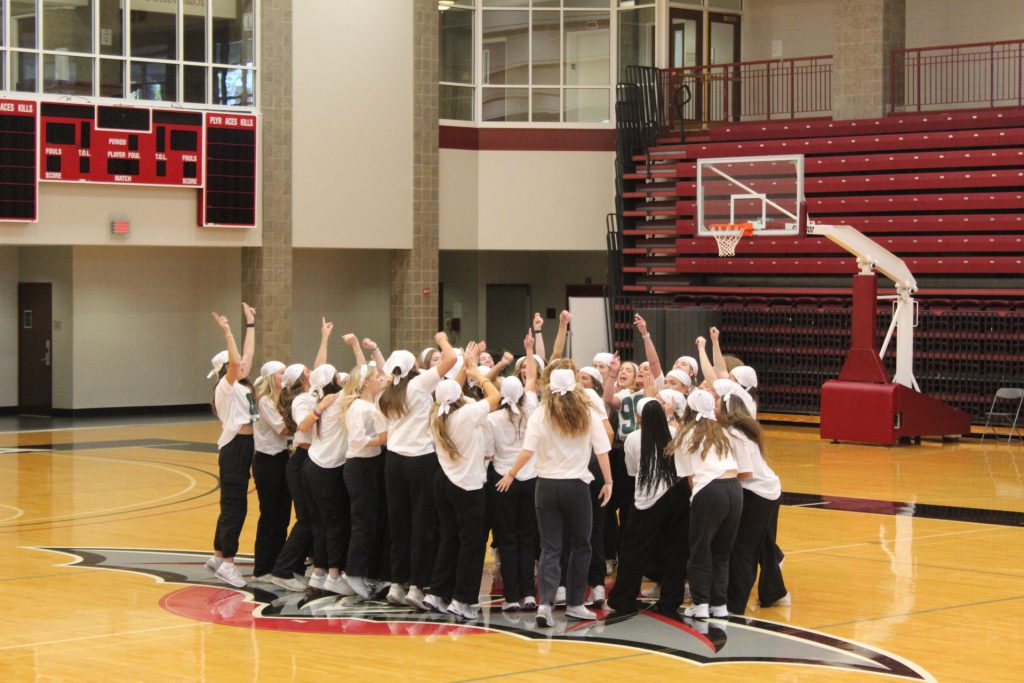
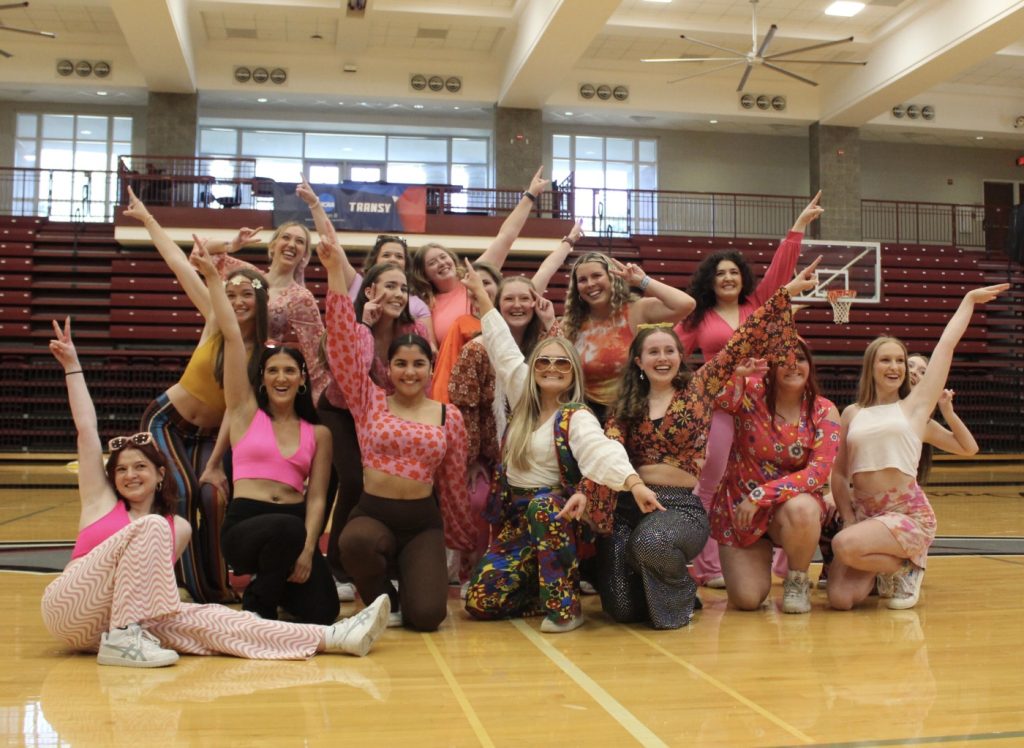
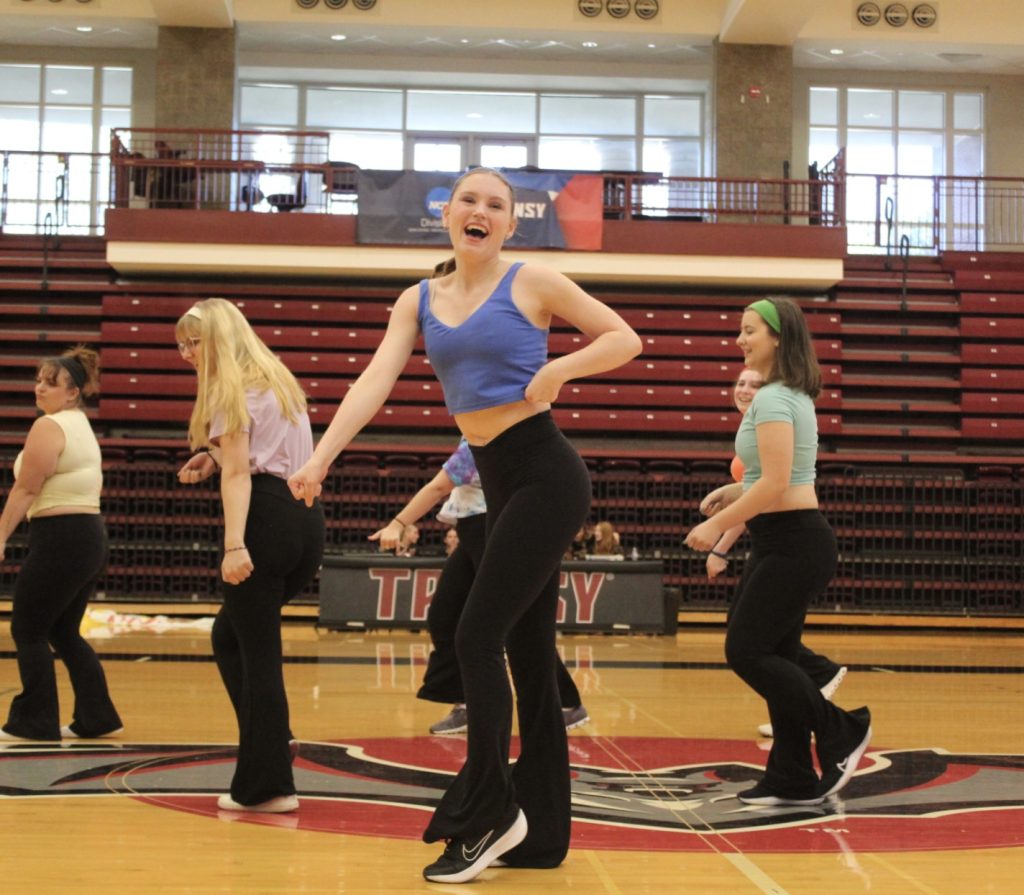
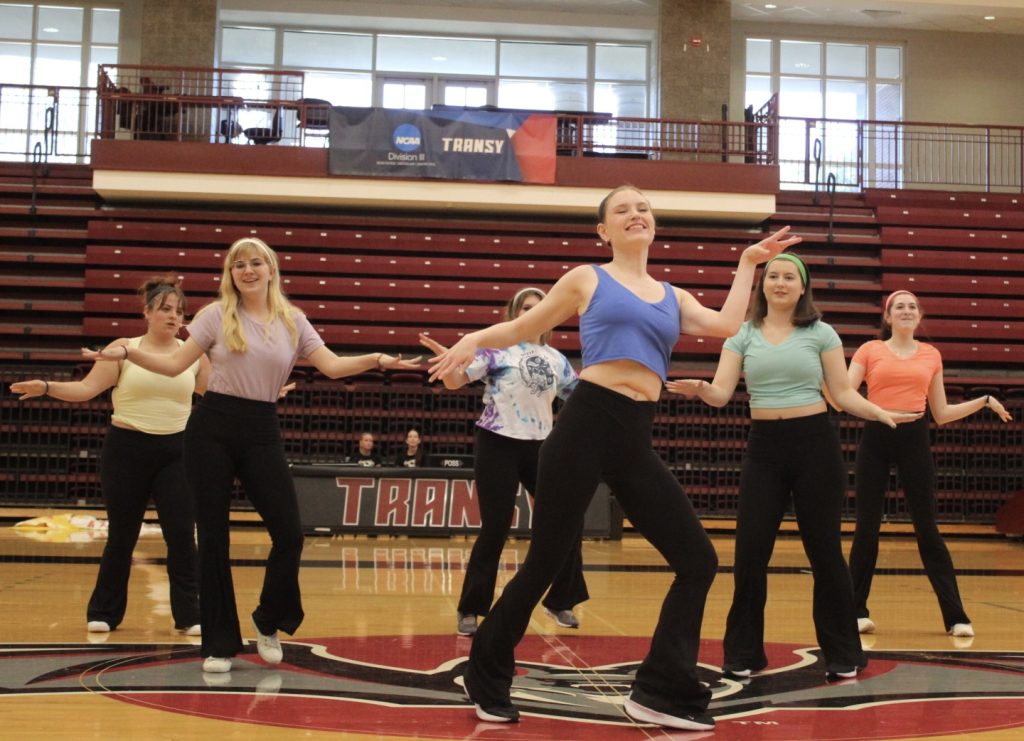
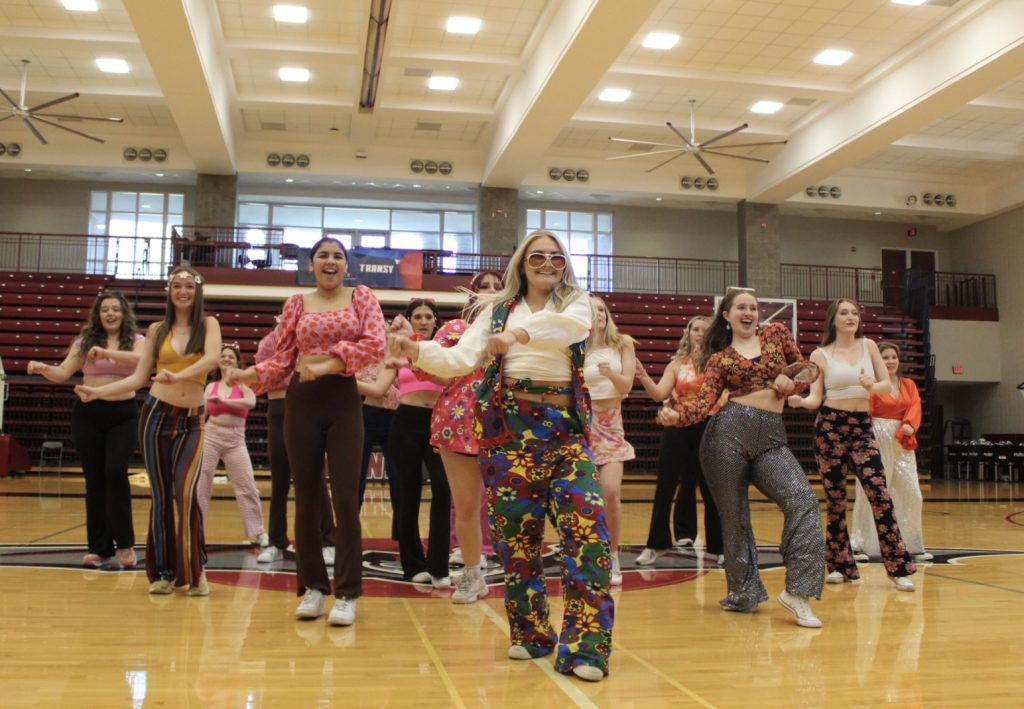
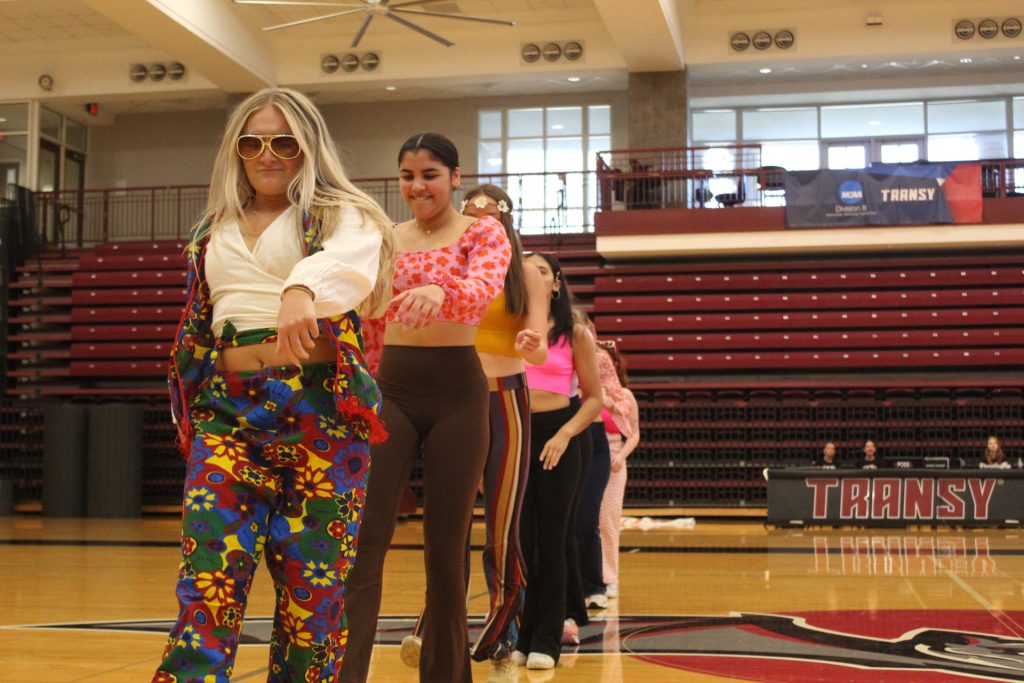
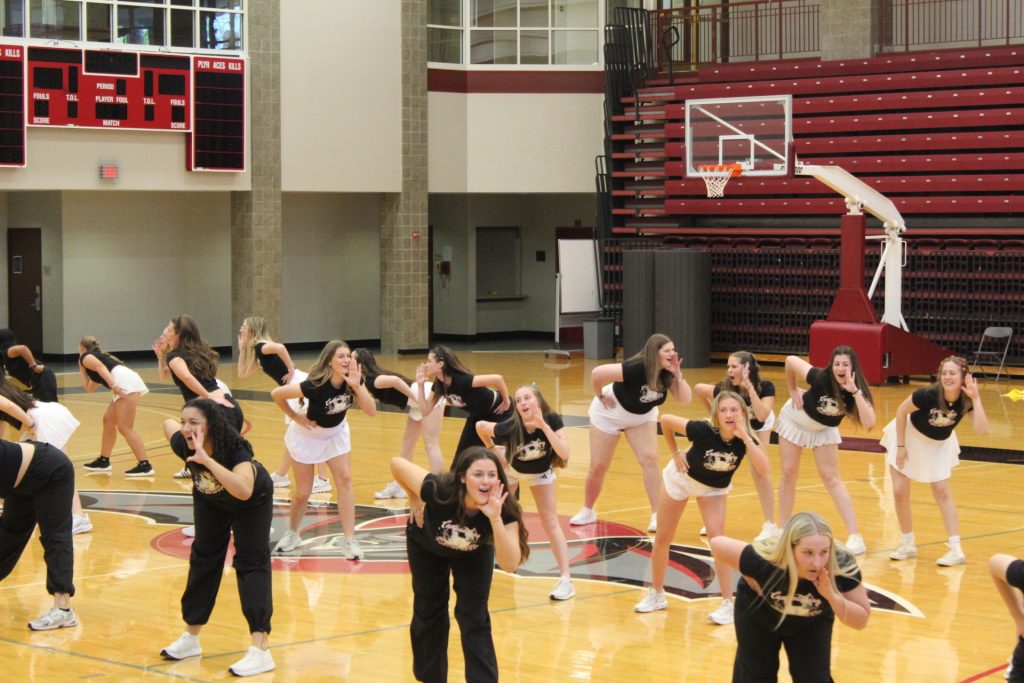
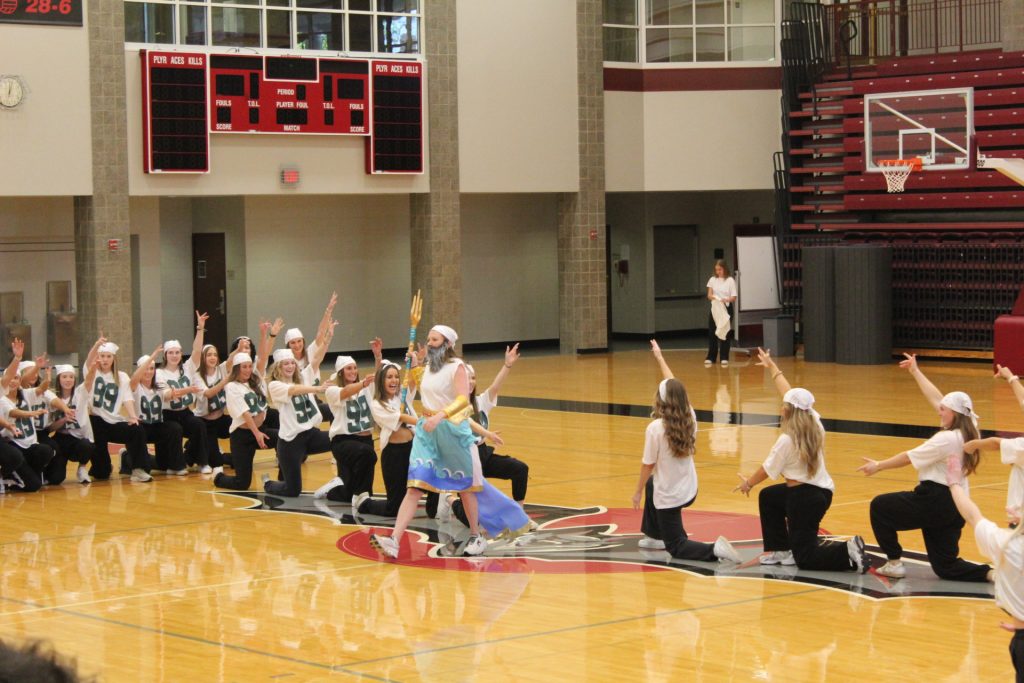
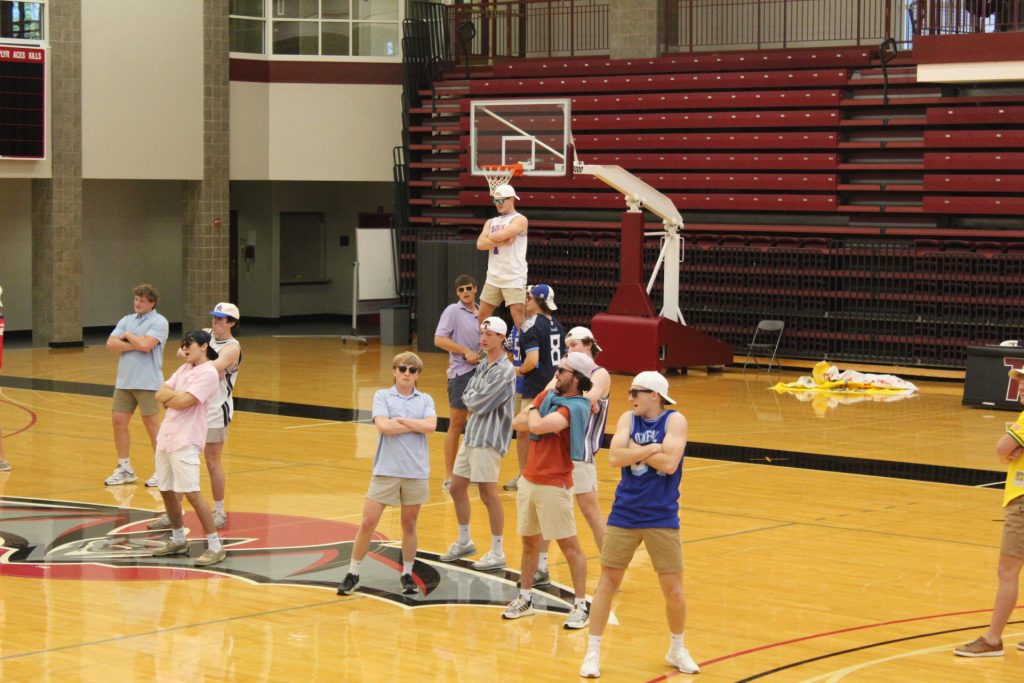
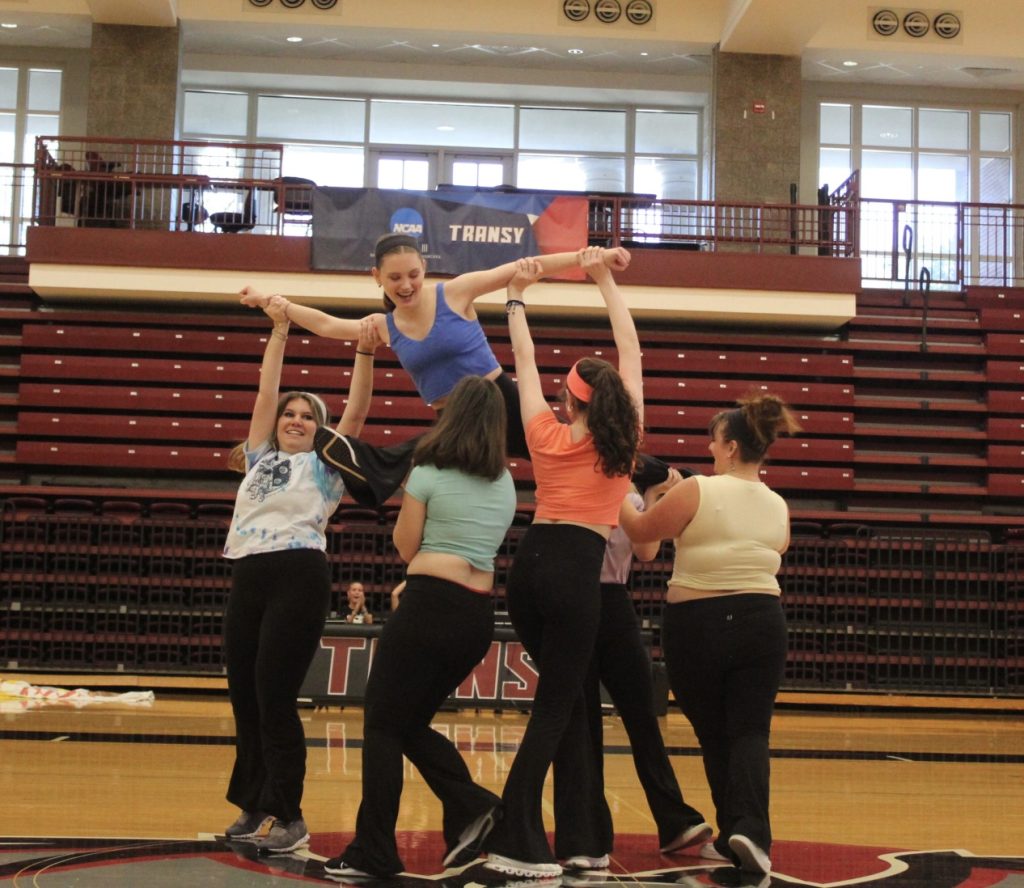
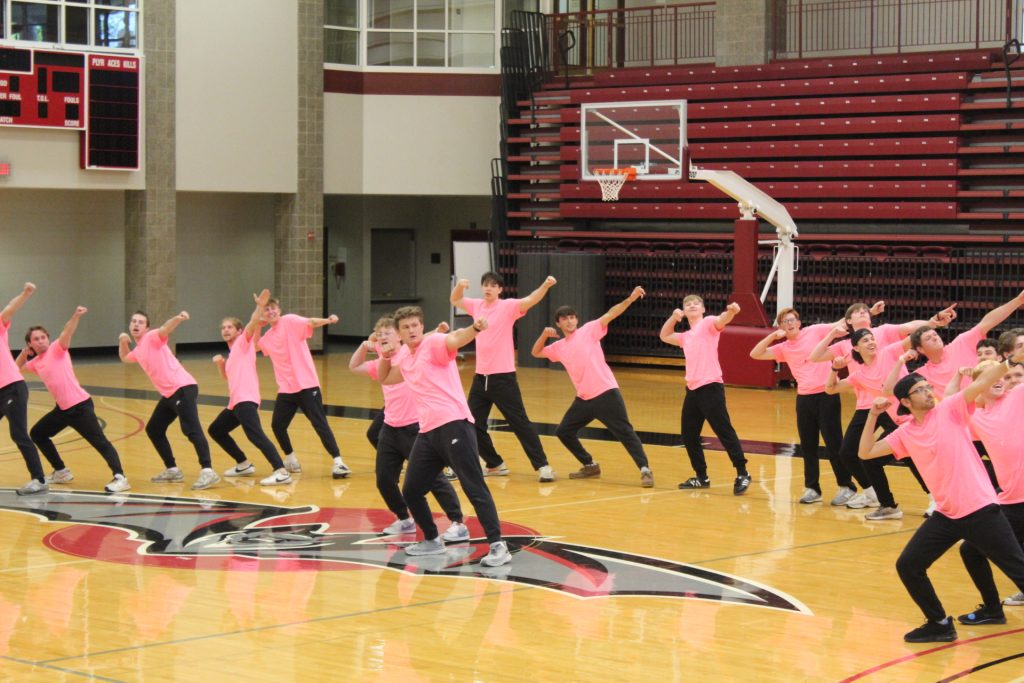
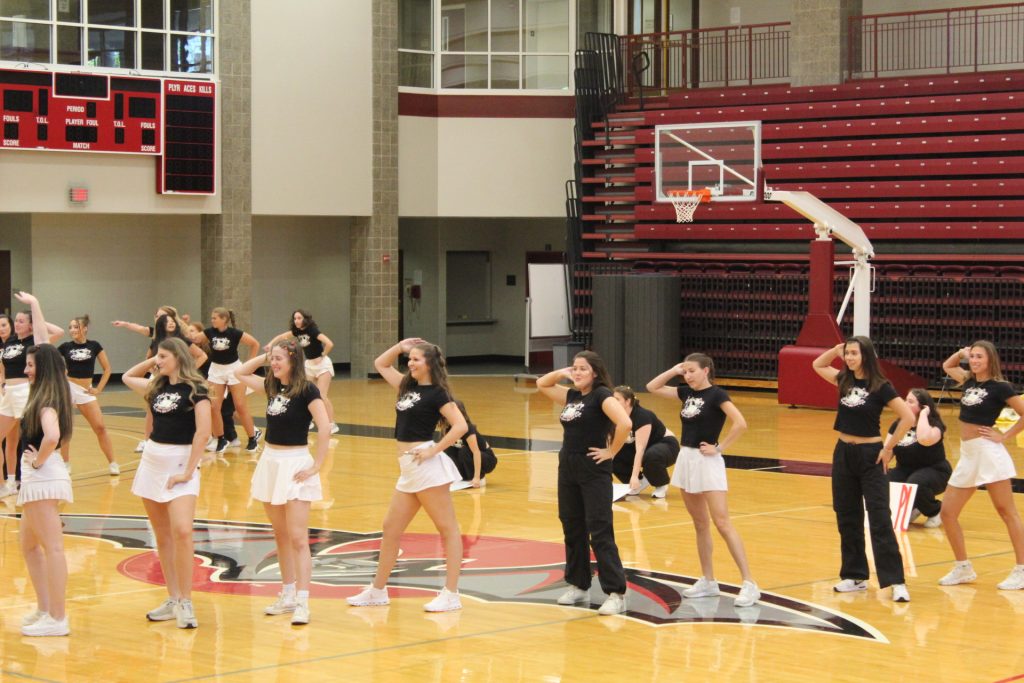
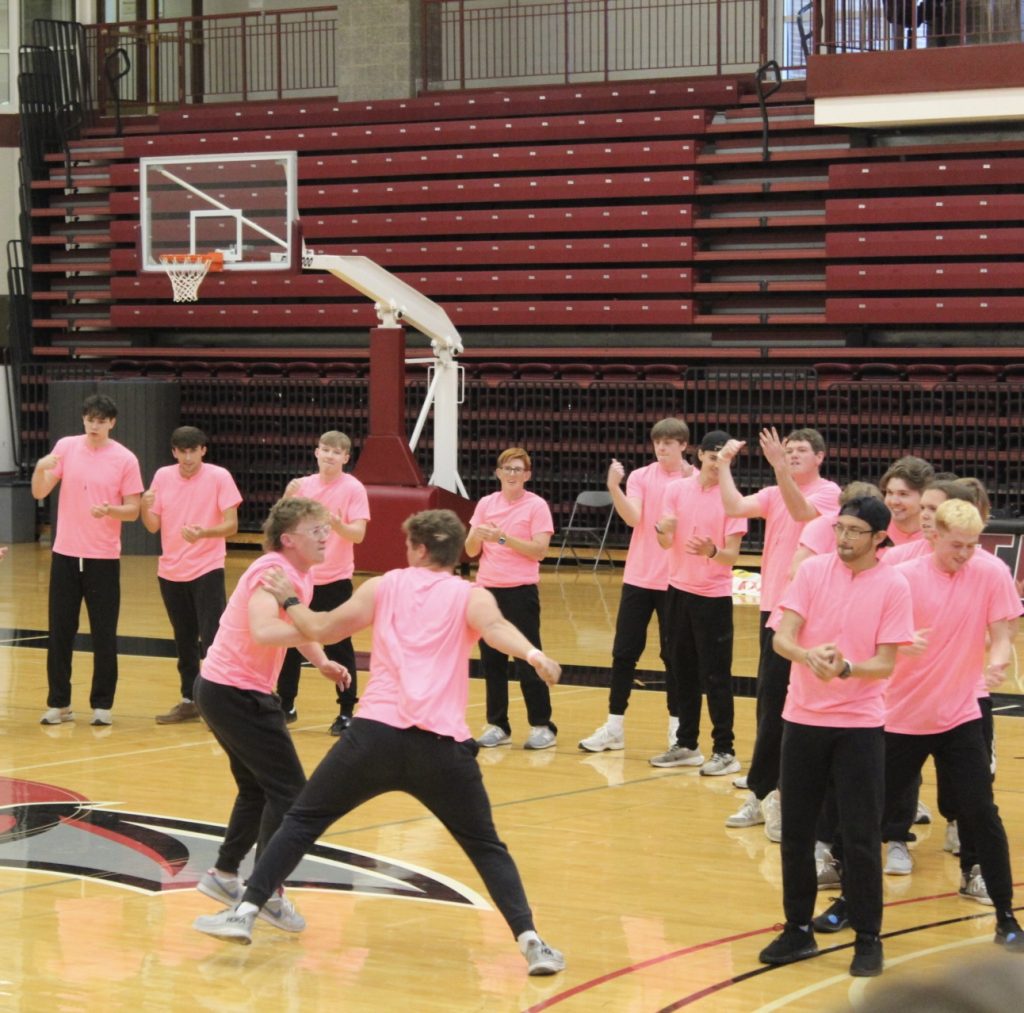
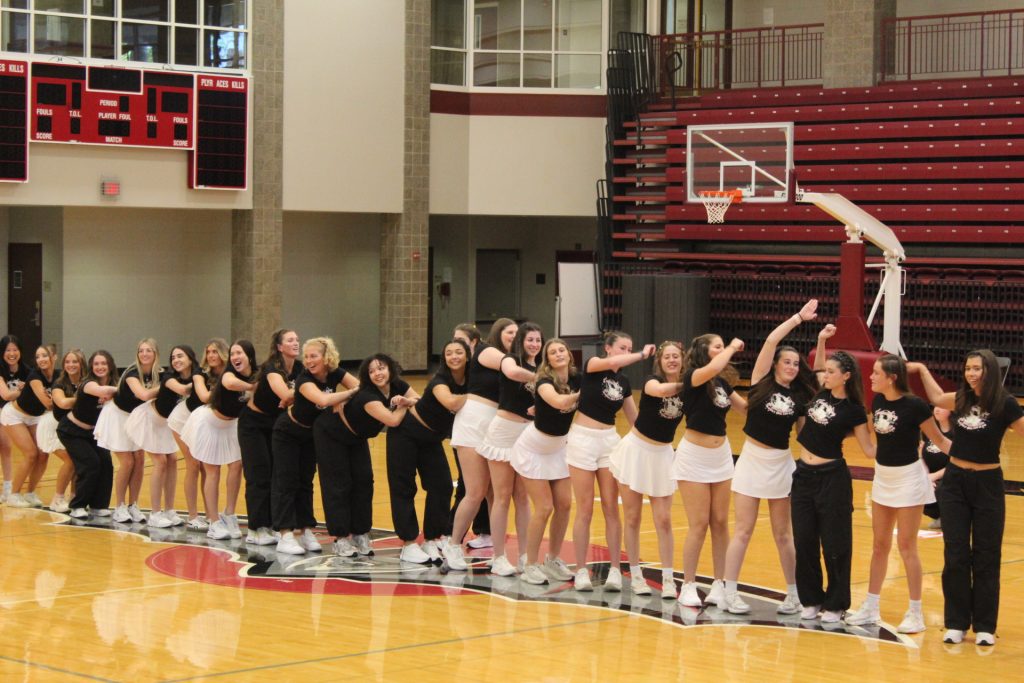
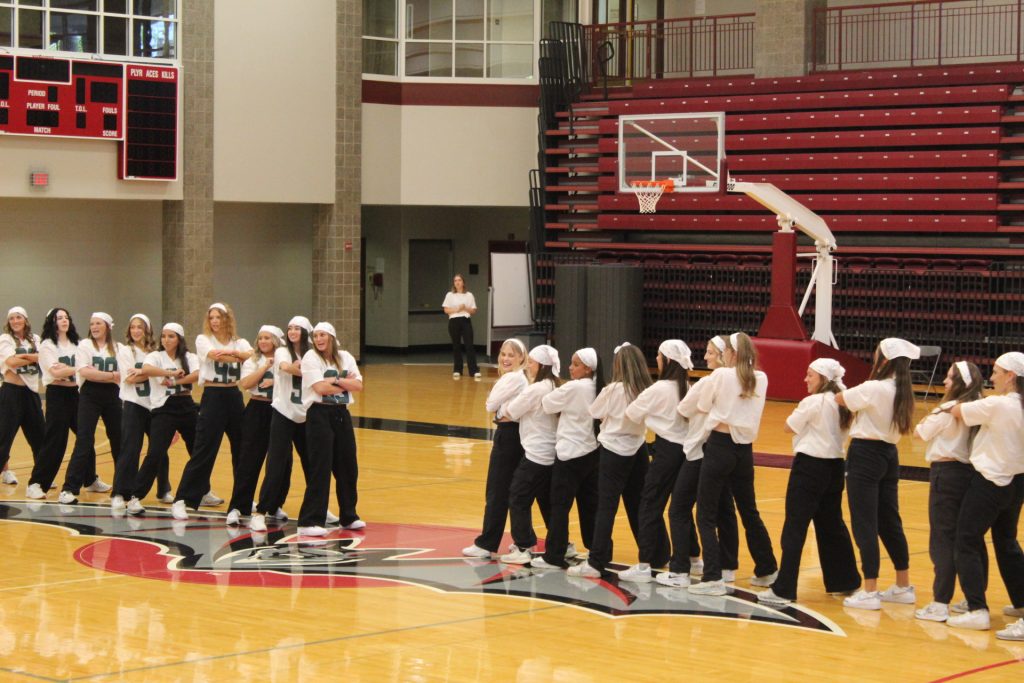
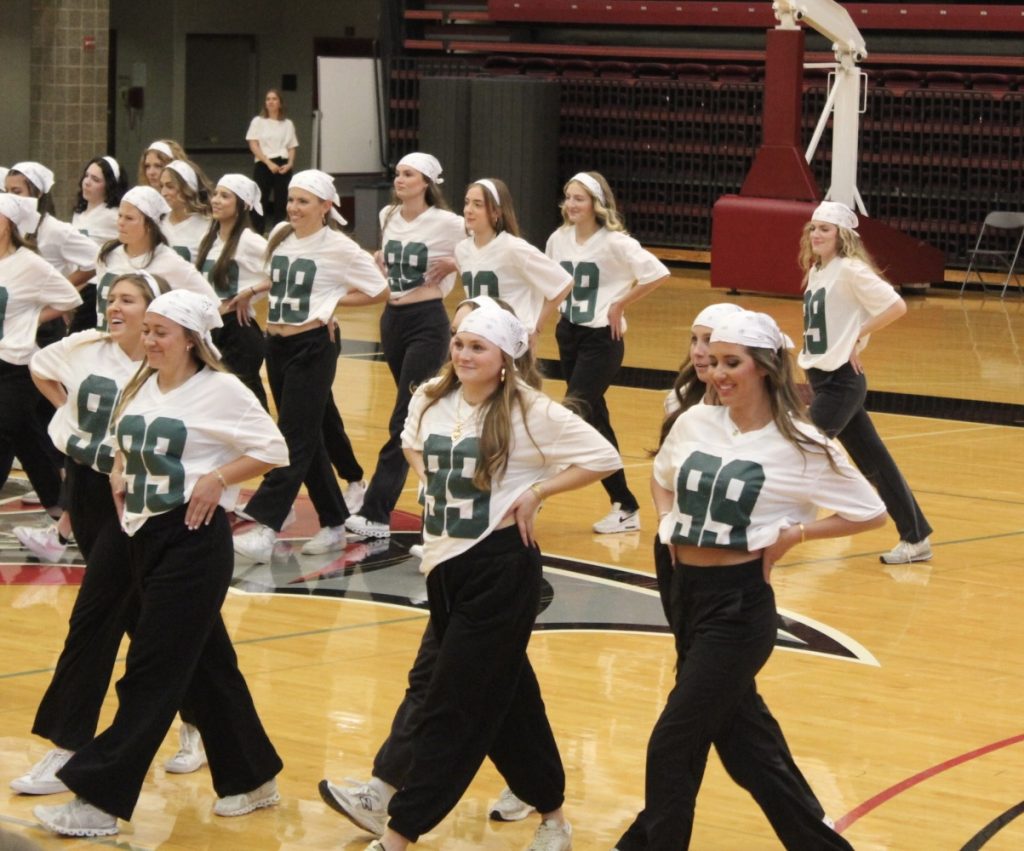
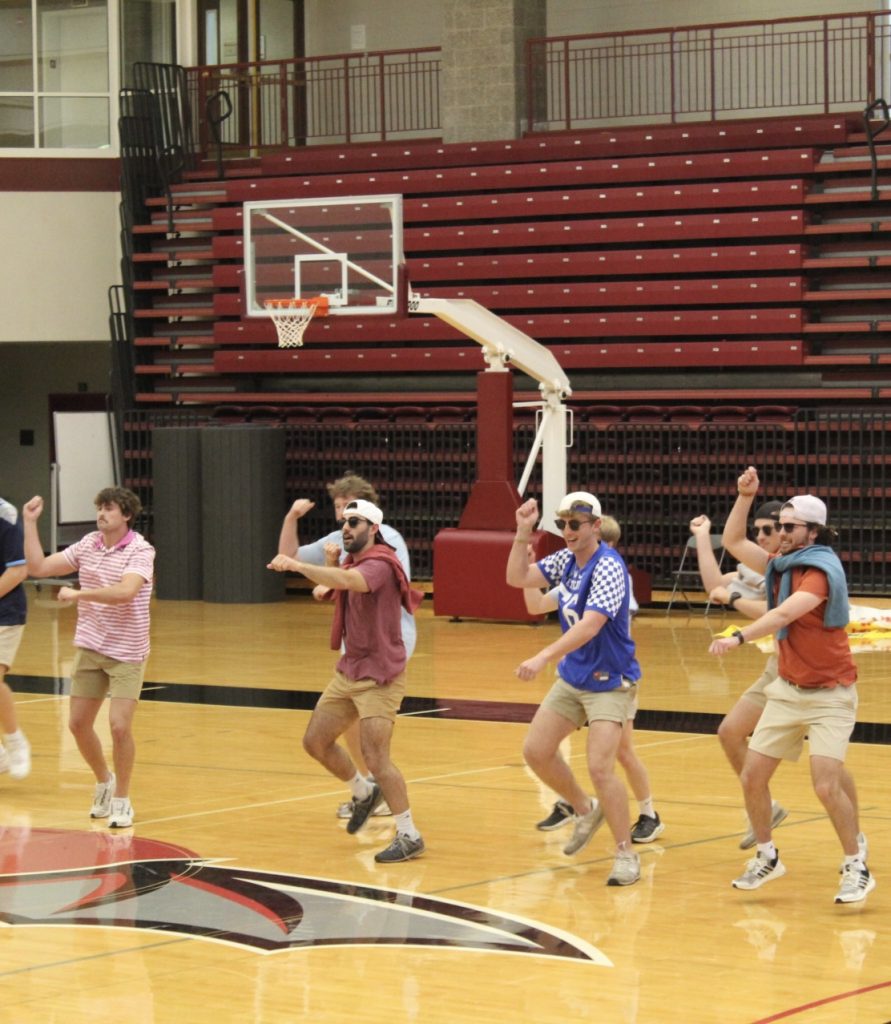
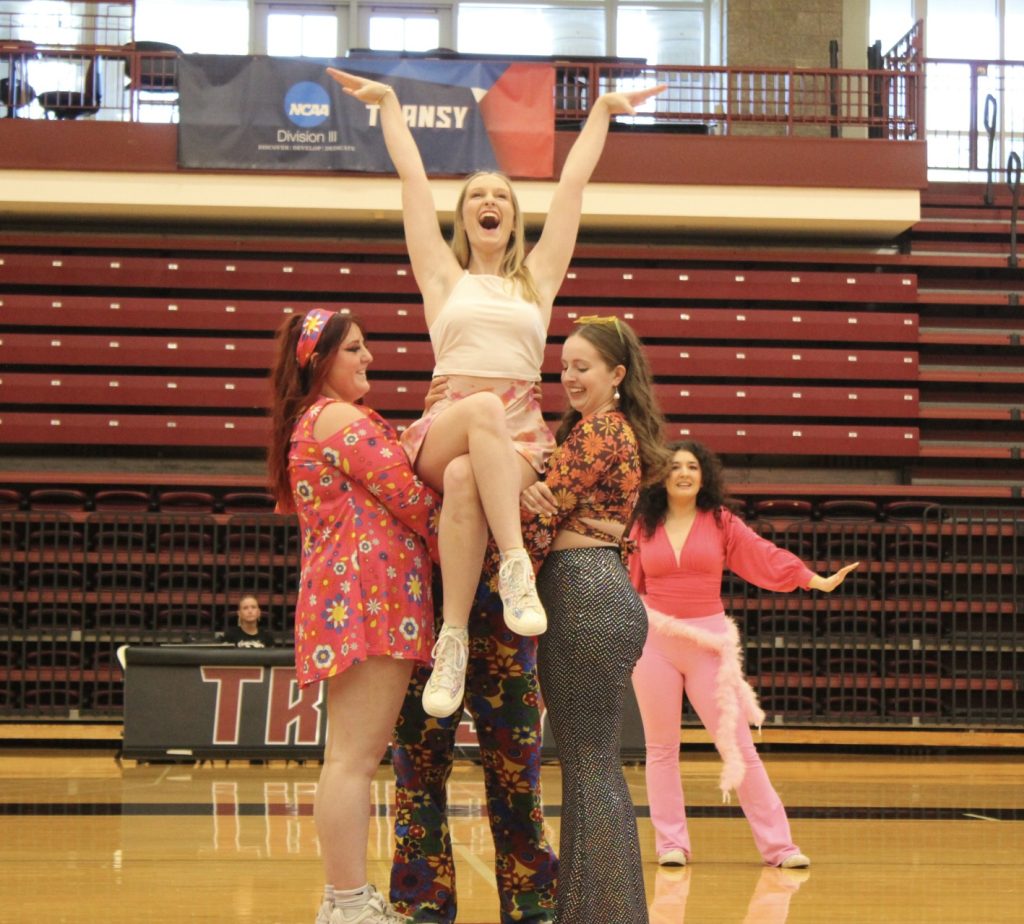
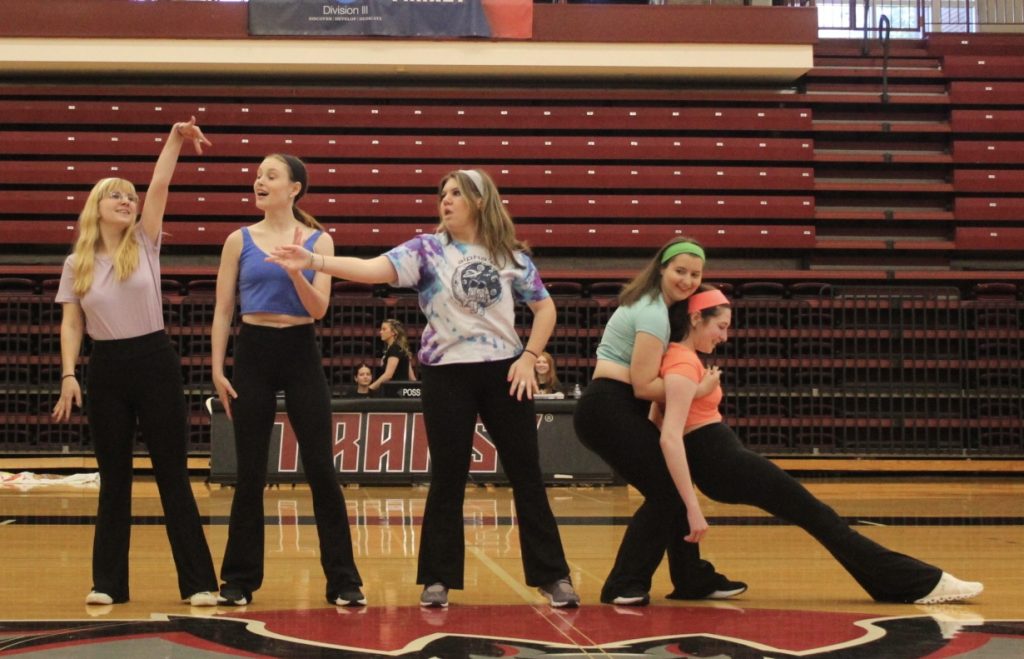
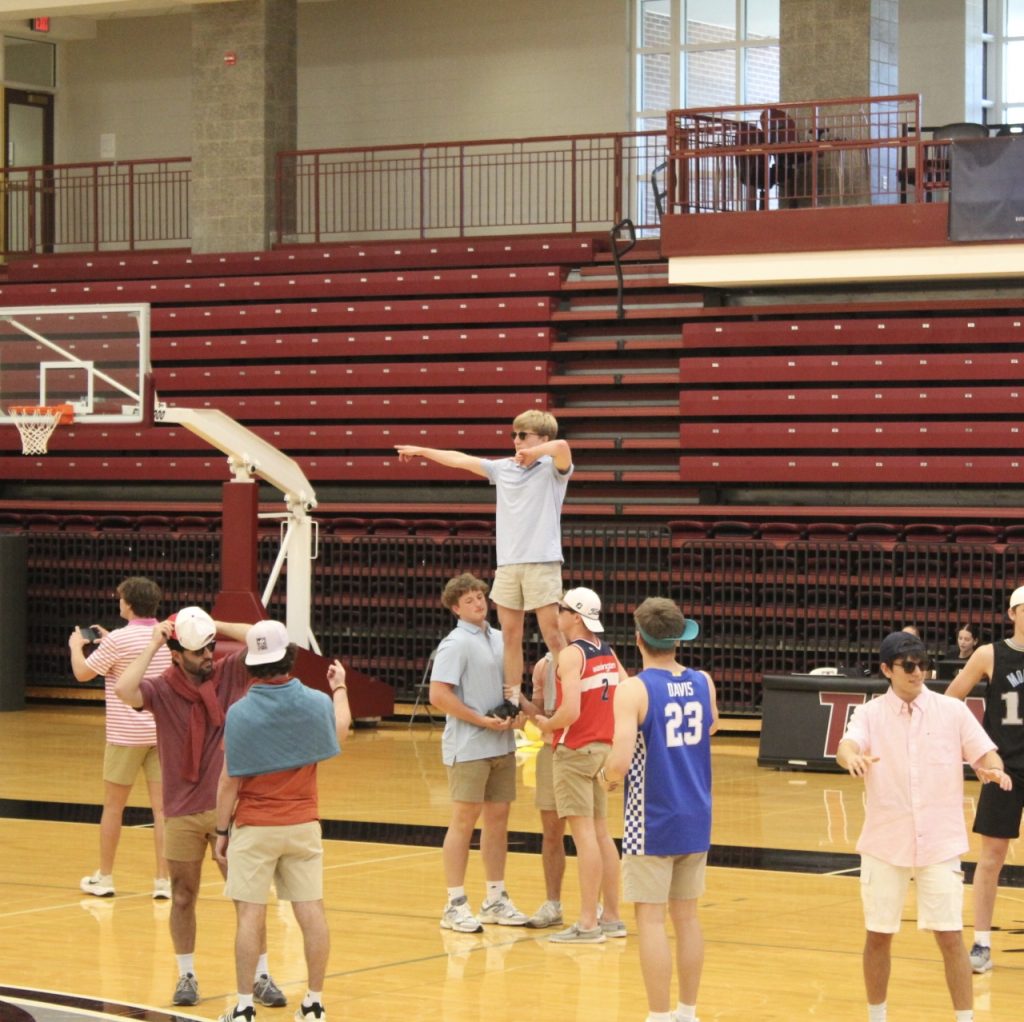
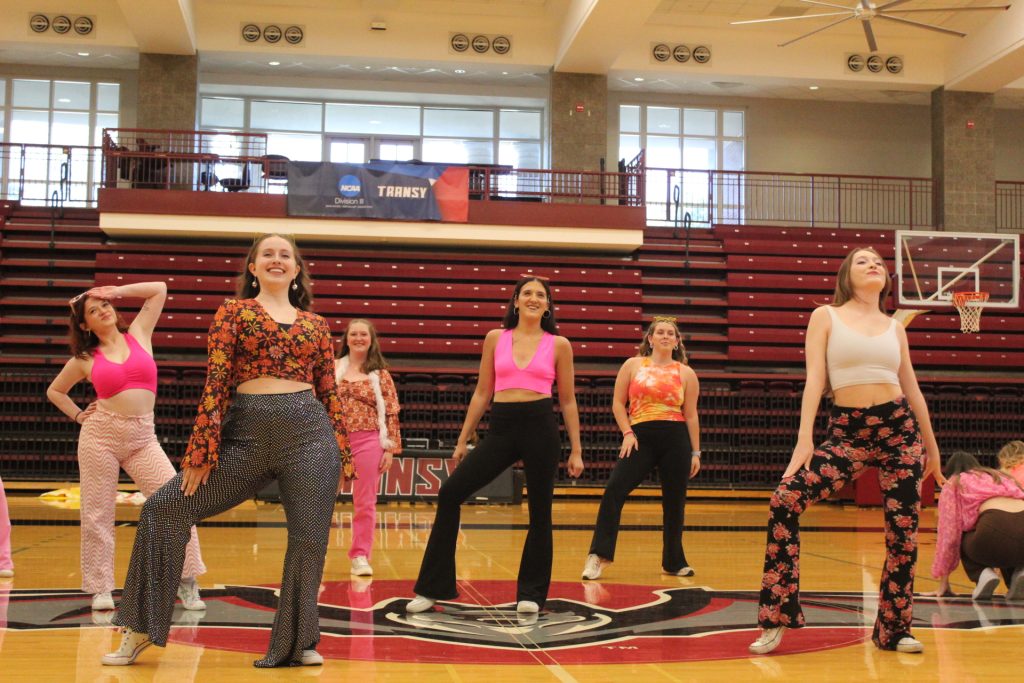
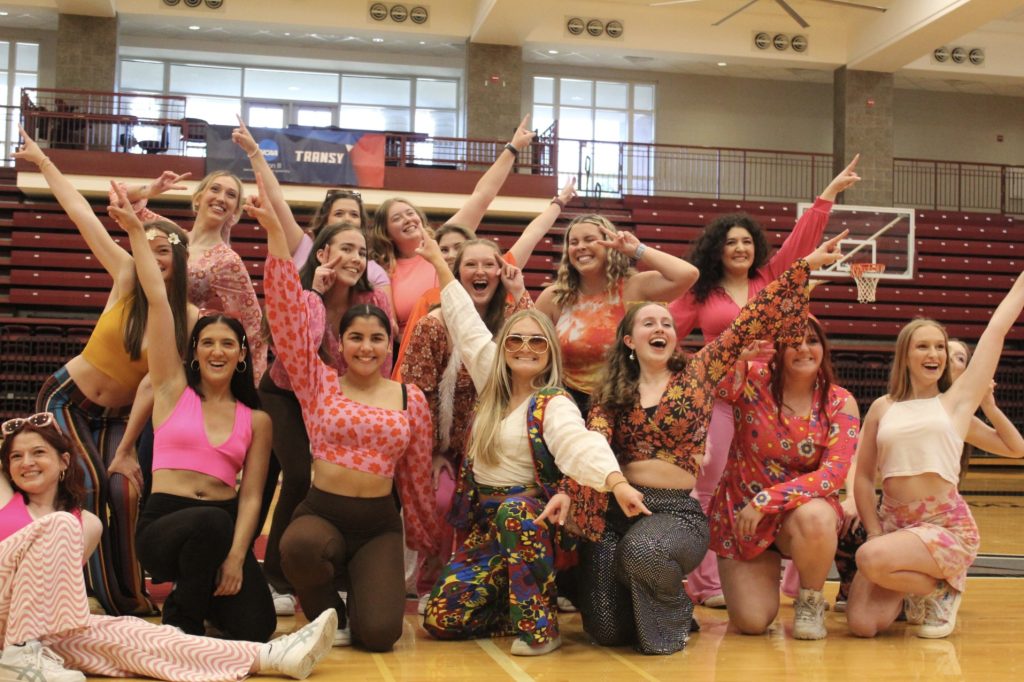
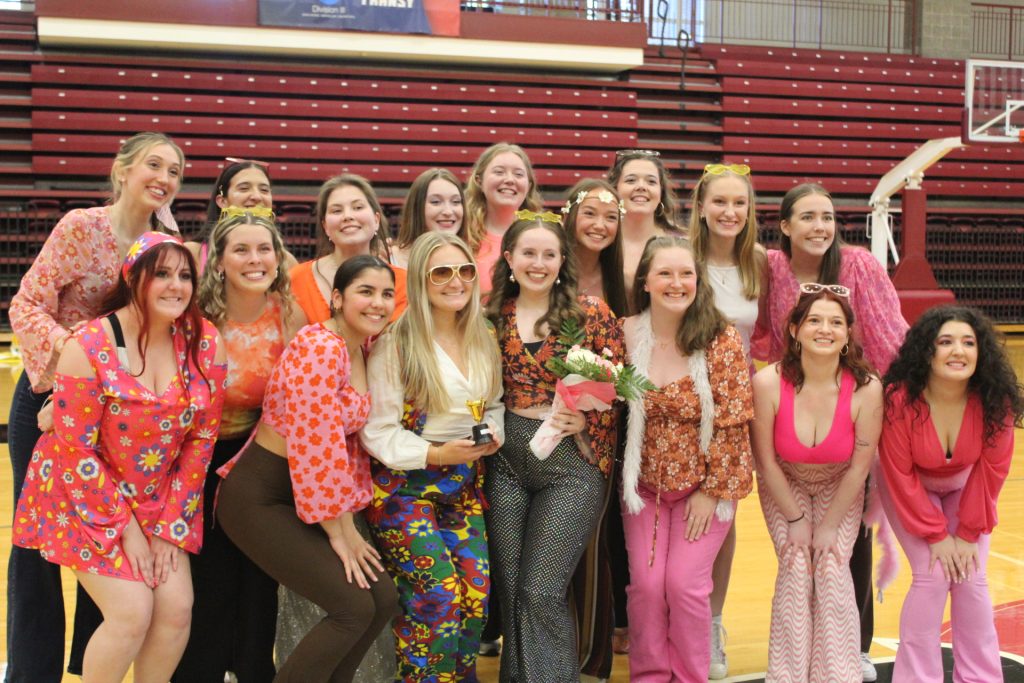
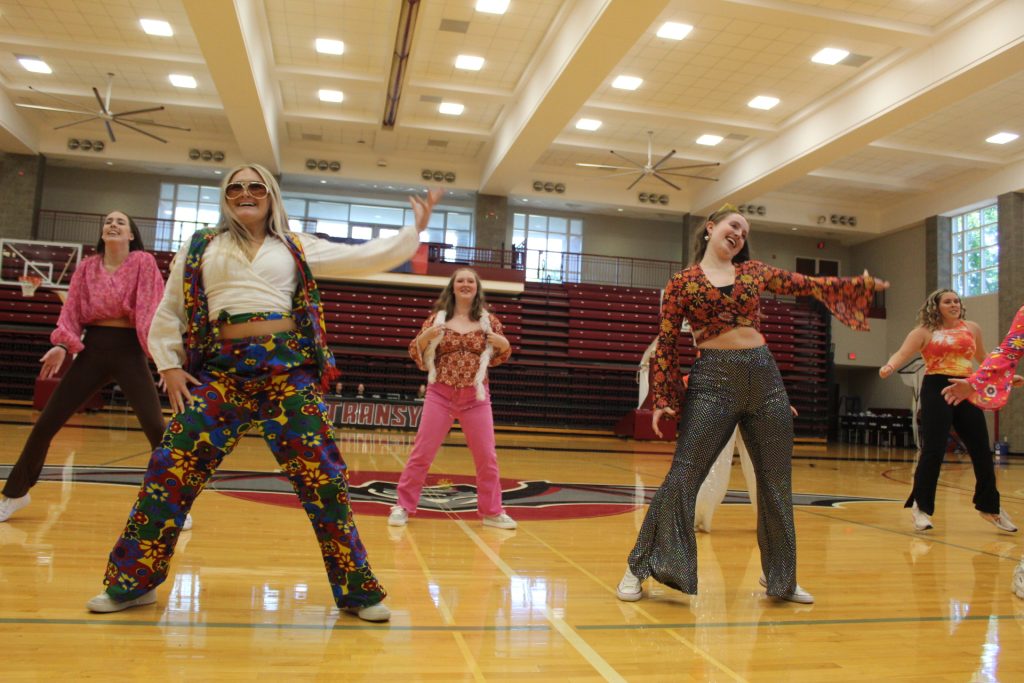
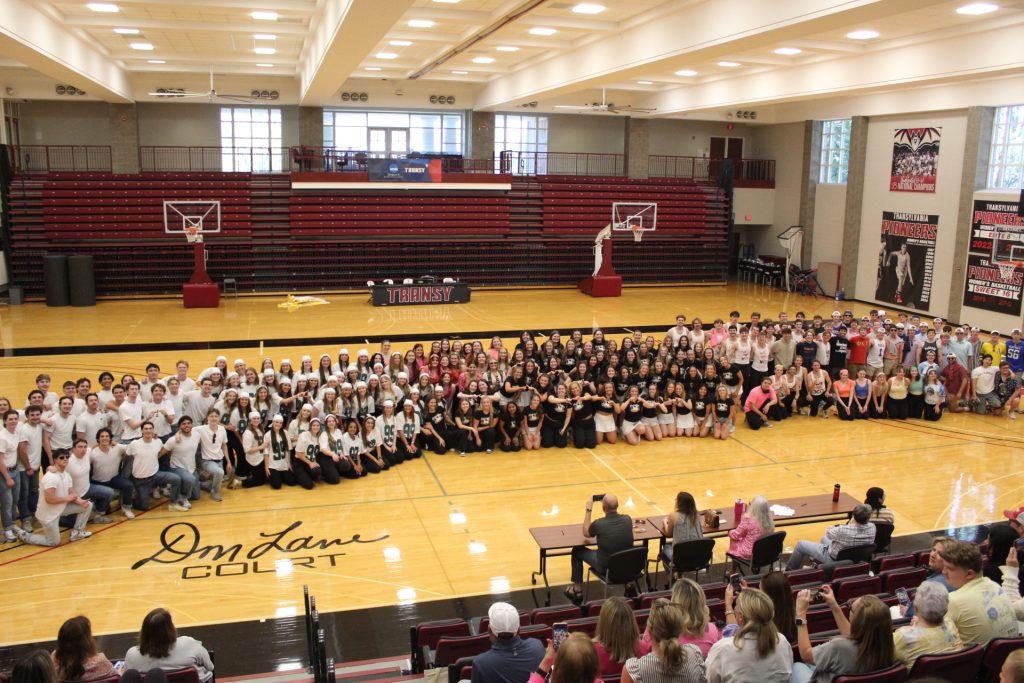
Transy’s own Chi Omega once again hosted their annual Campus Sing event on Sunday, April 27th. Greek Life organizations take part in choreographed song and dance in order to raise money for Chi Omega’s philanthropy, God’s Food Pantry, by collecting cans or a $5 entry fee. Filling Beck Center Gym with competitive music and matching outfits, the event was once again a success. Rambler Photographer Caroline Host photographed the event.
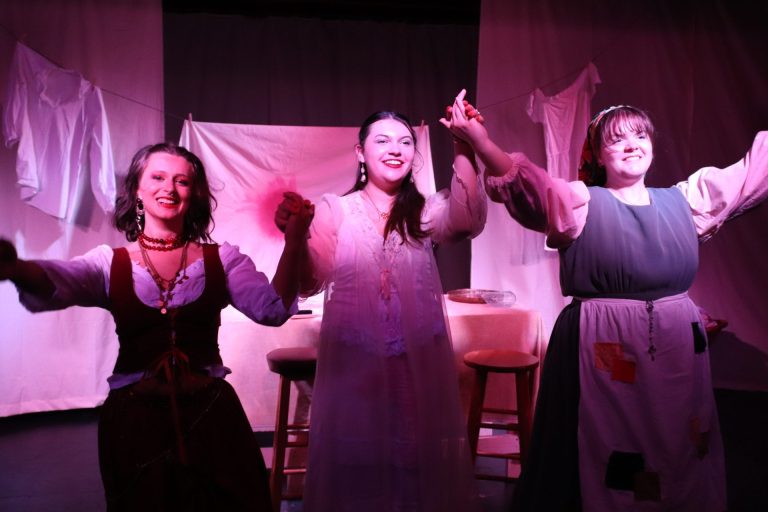
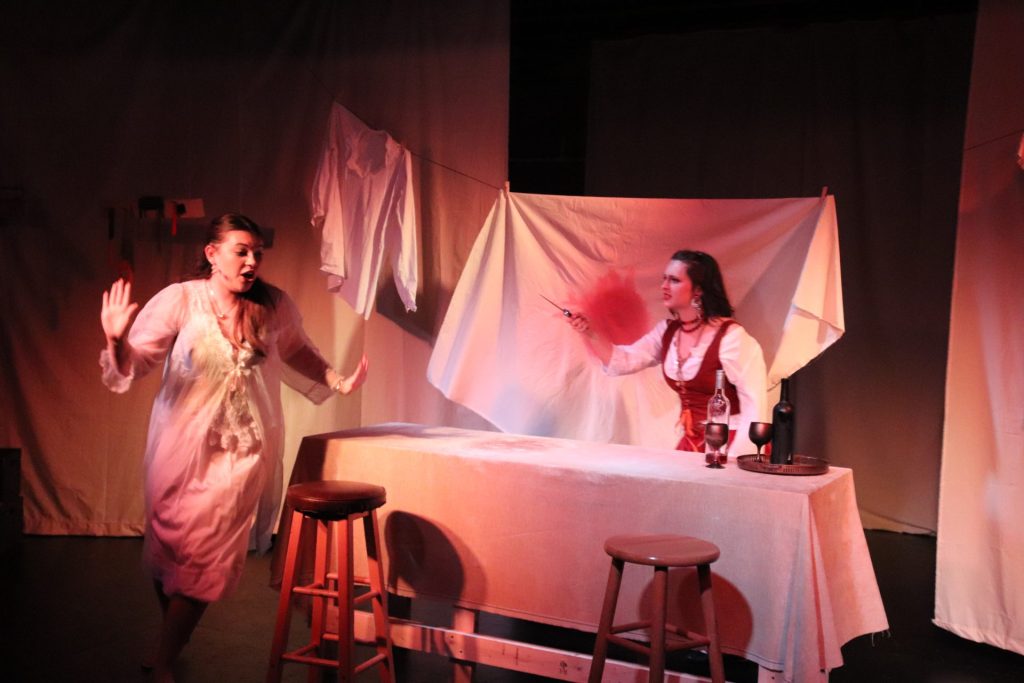
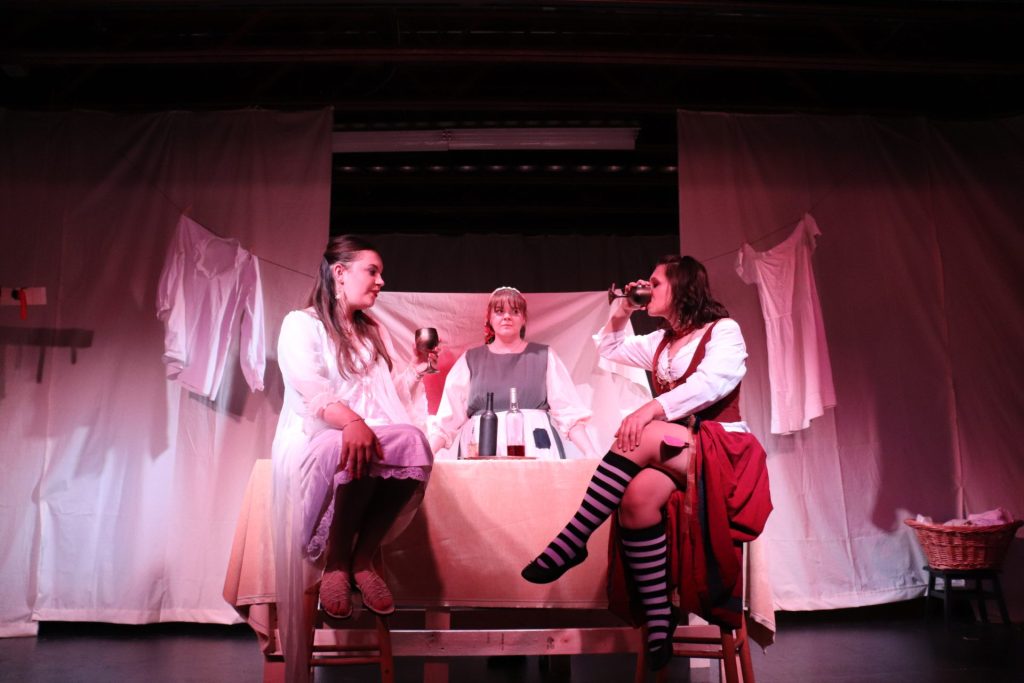
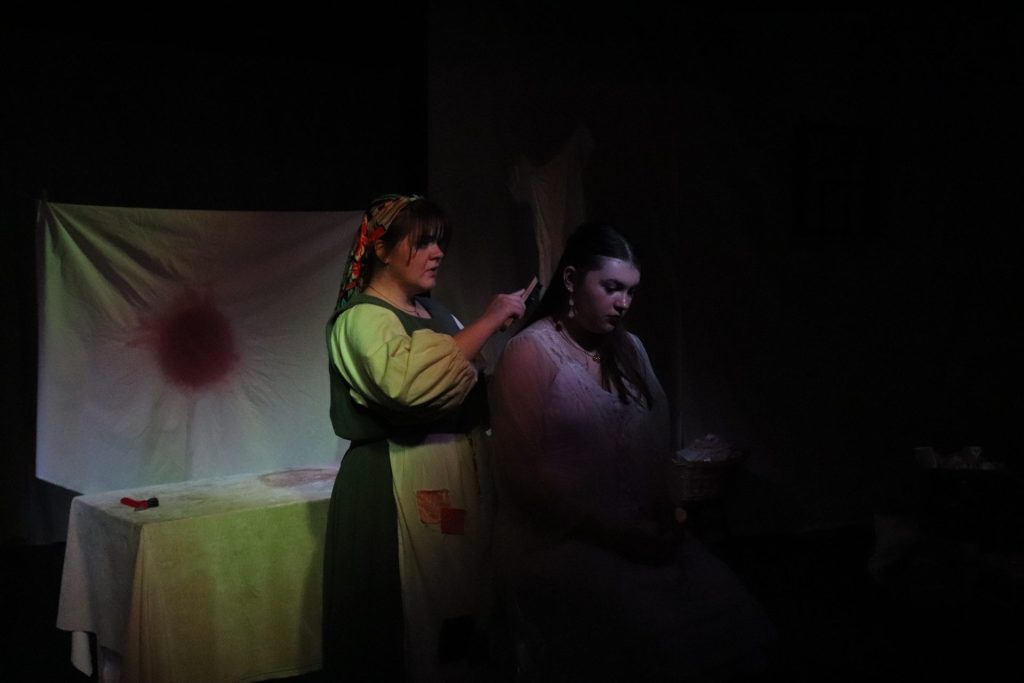
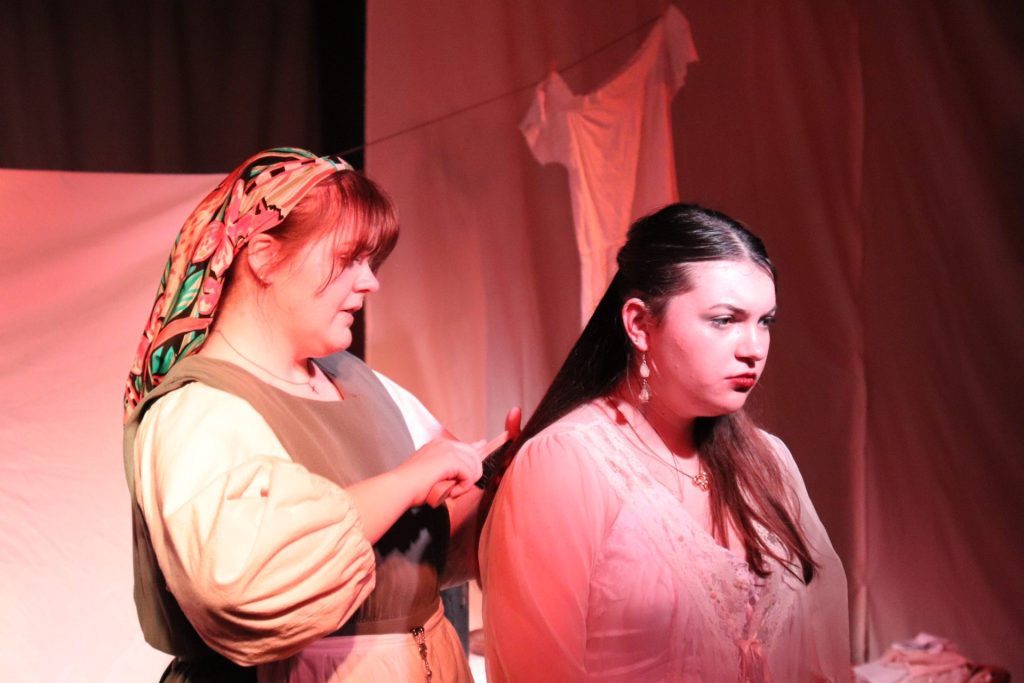
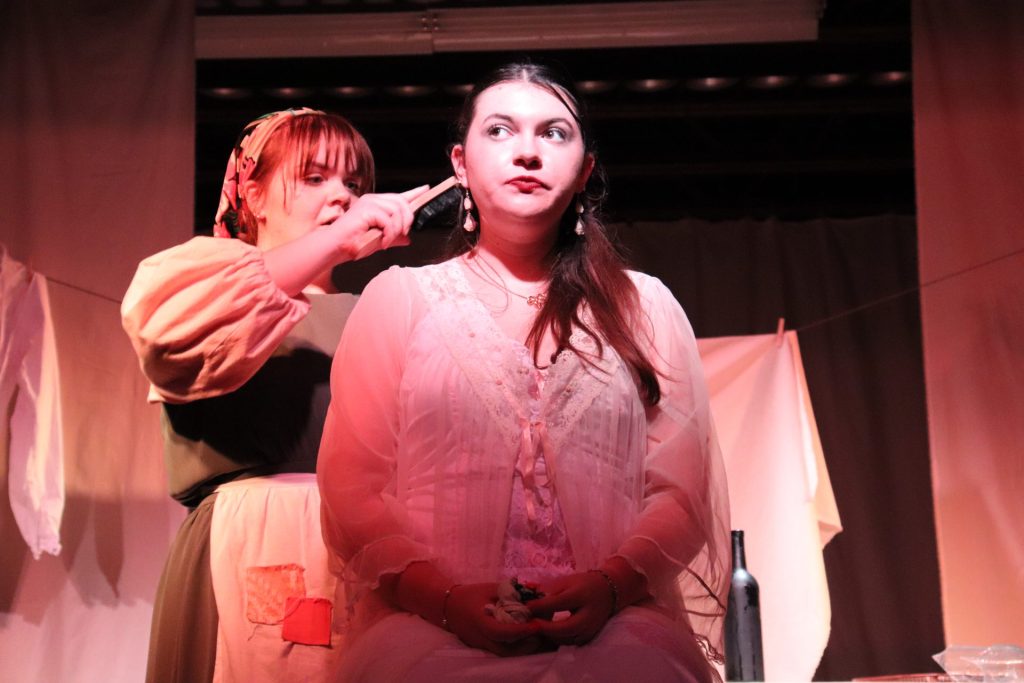
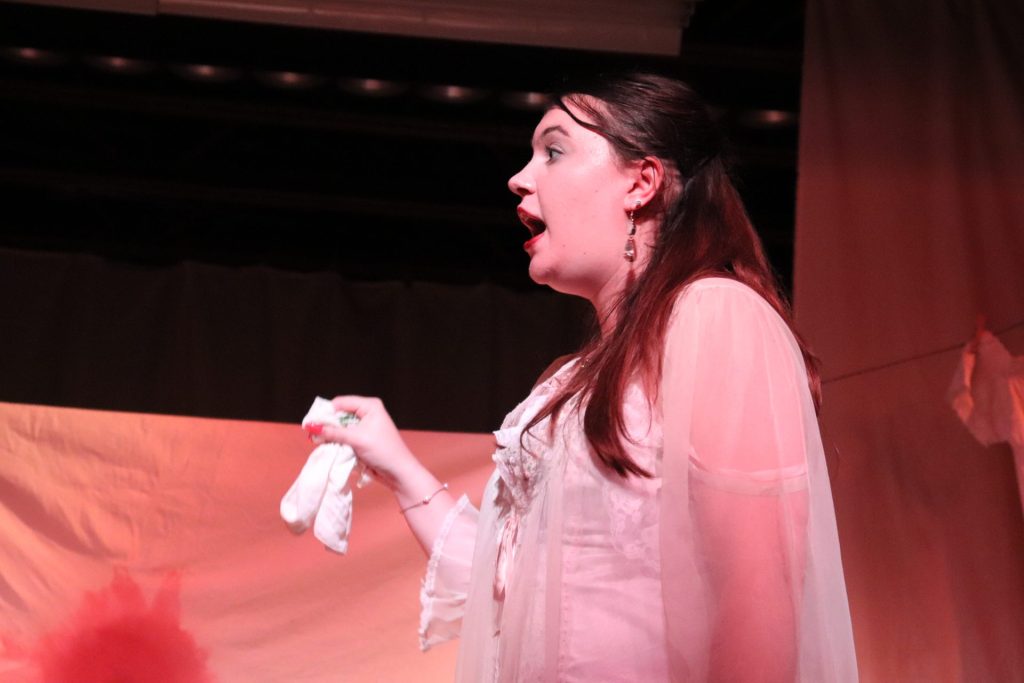
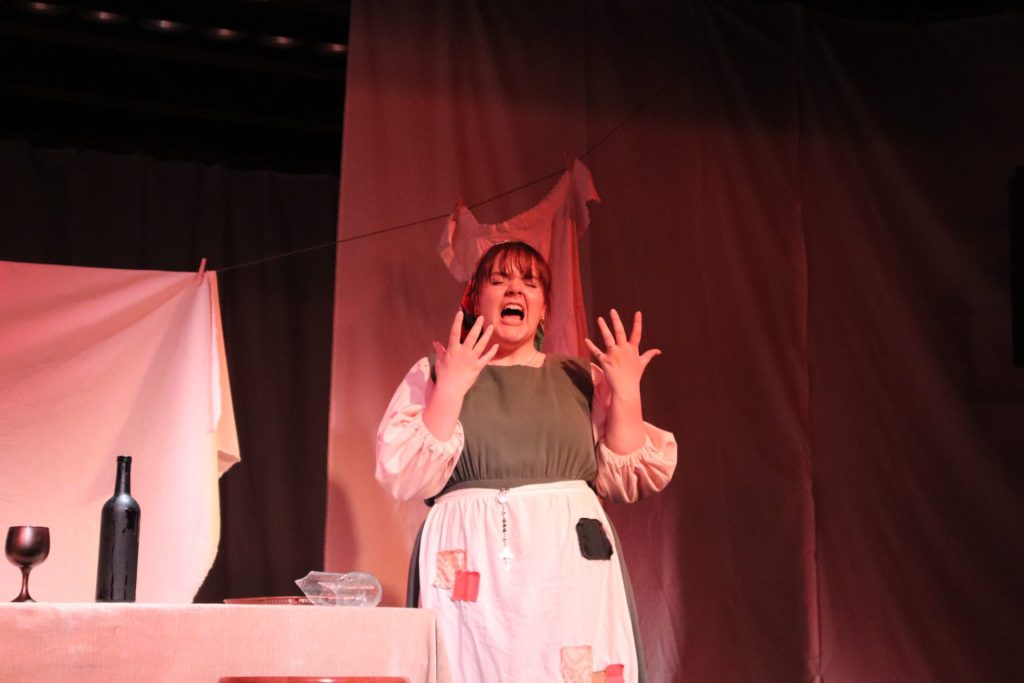
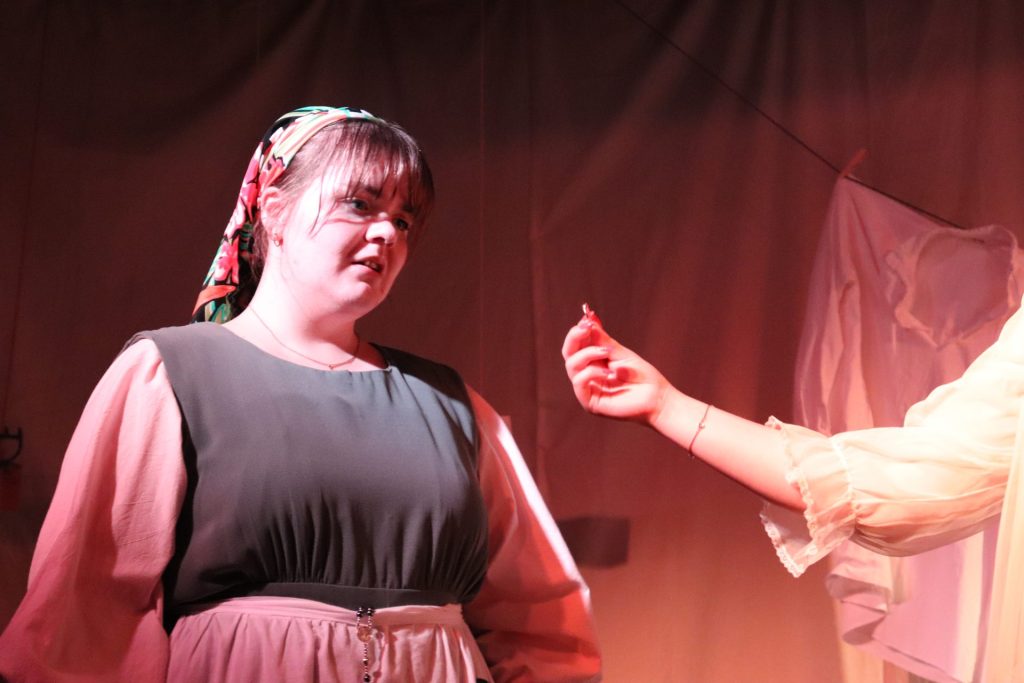
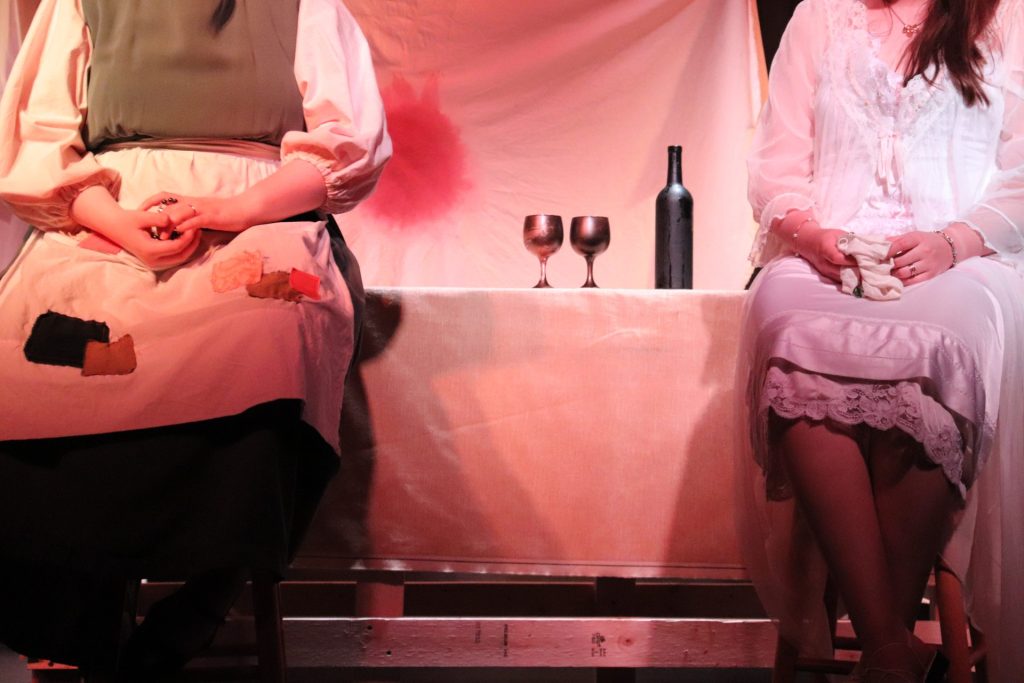
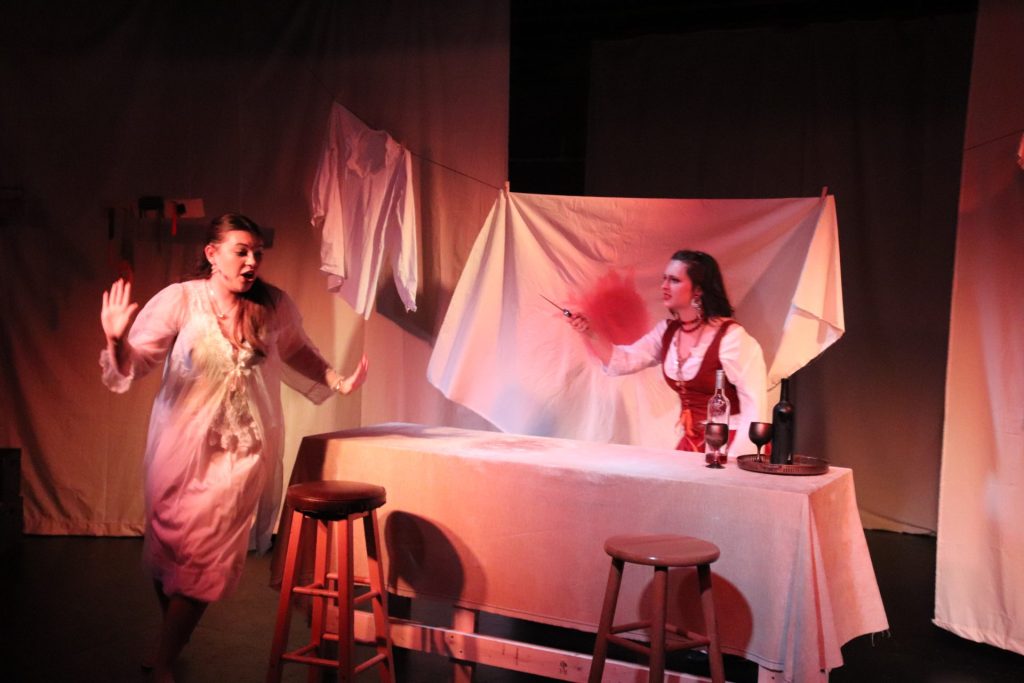
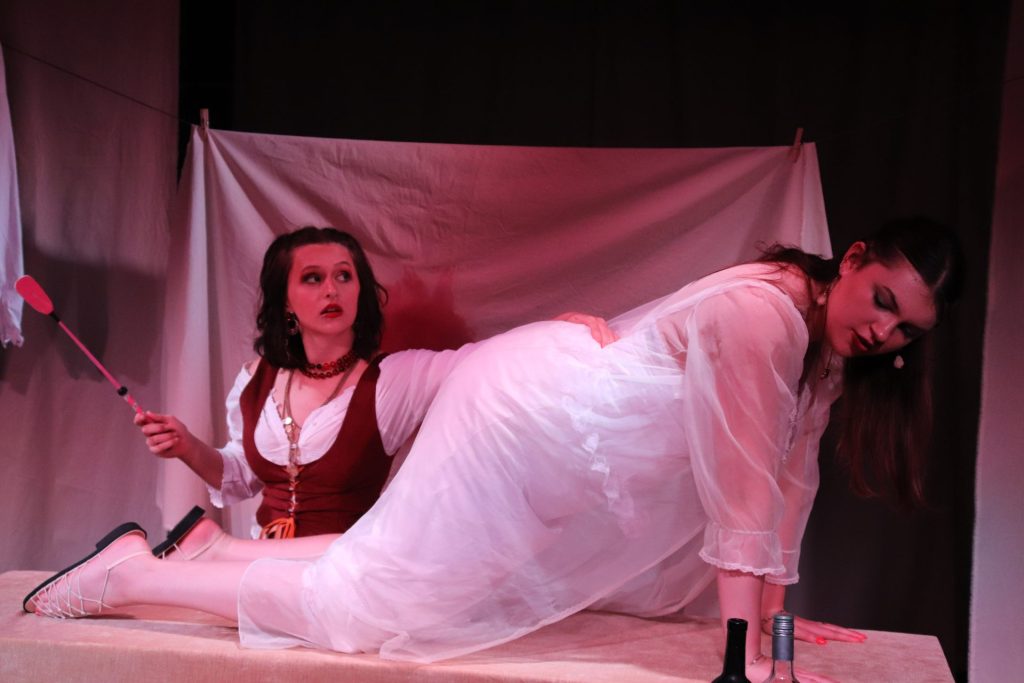
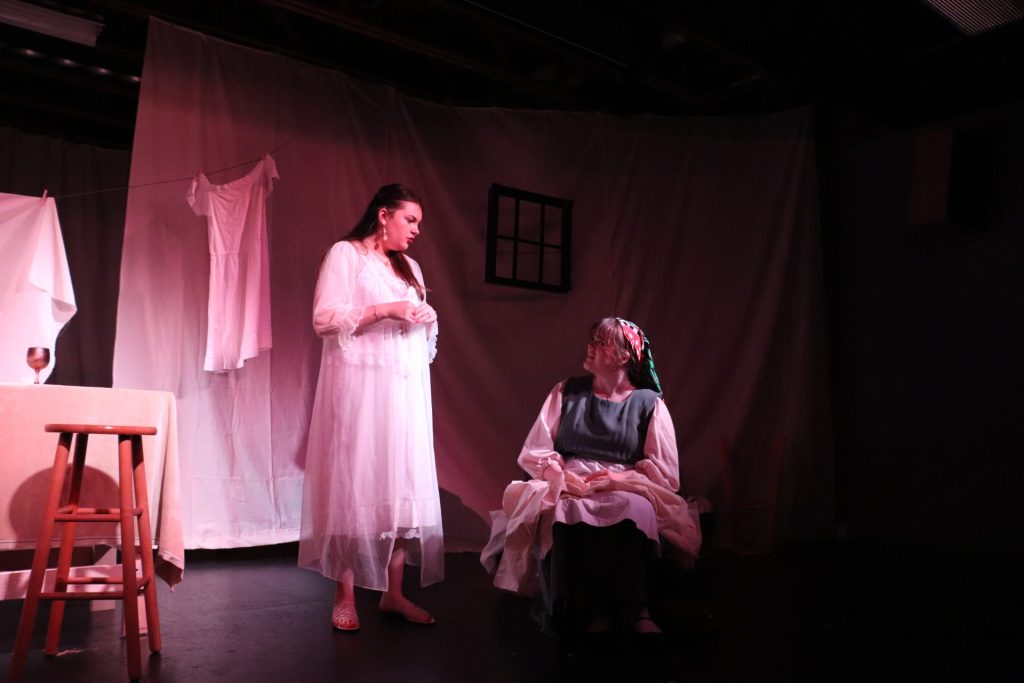
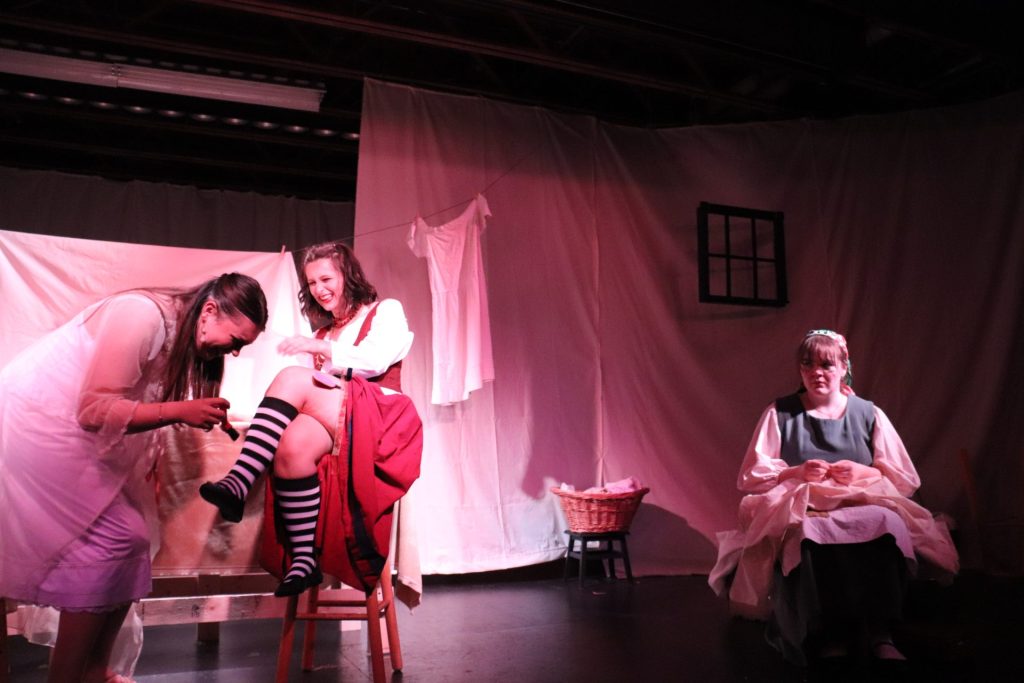
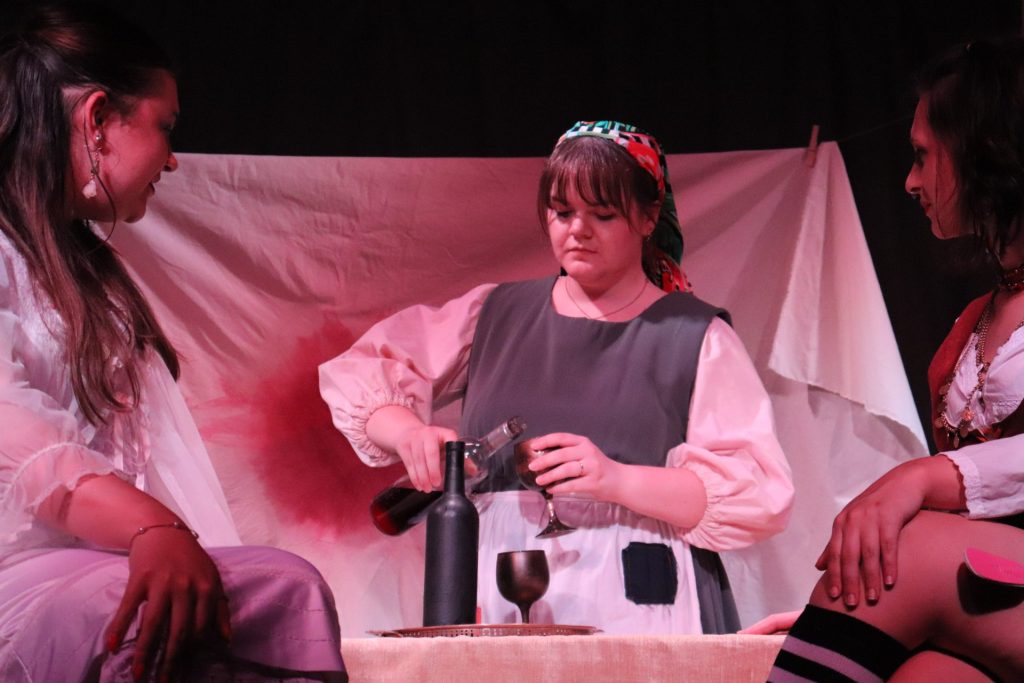
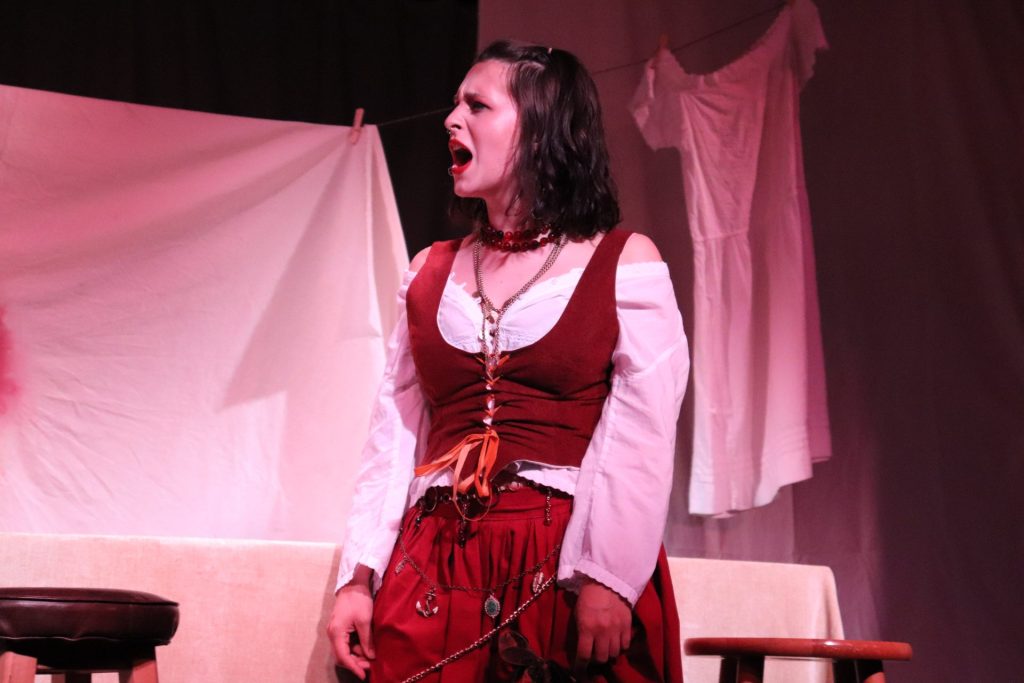
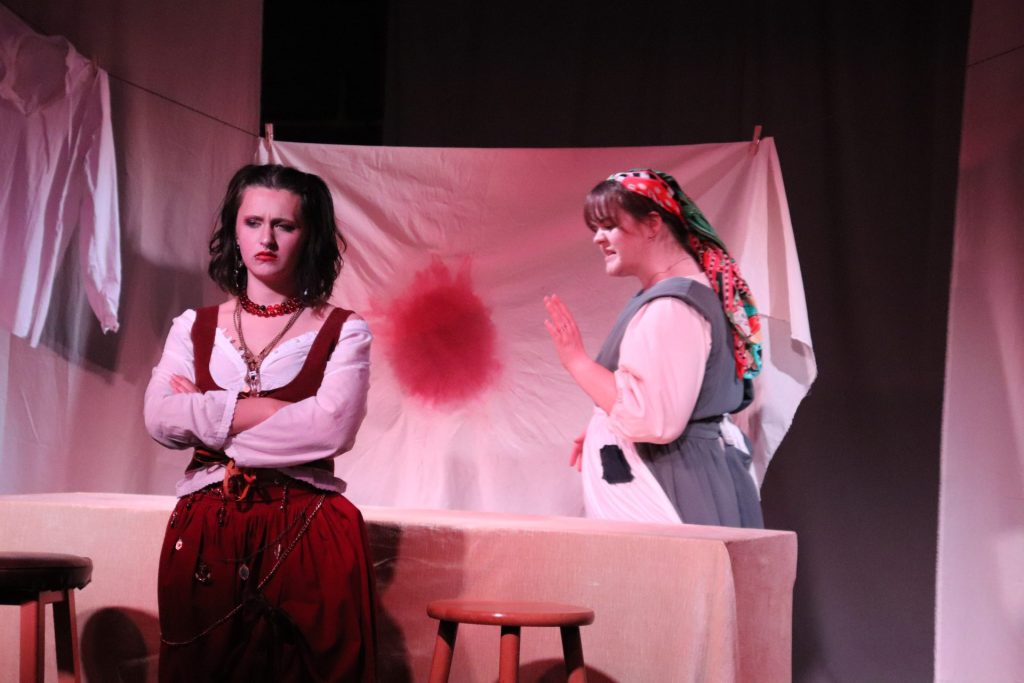
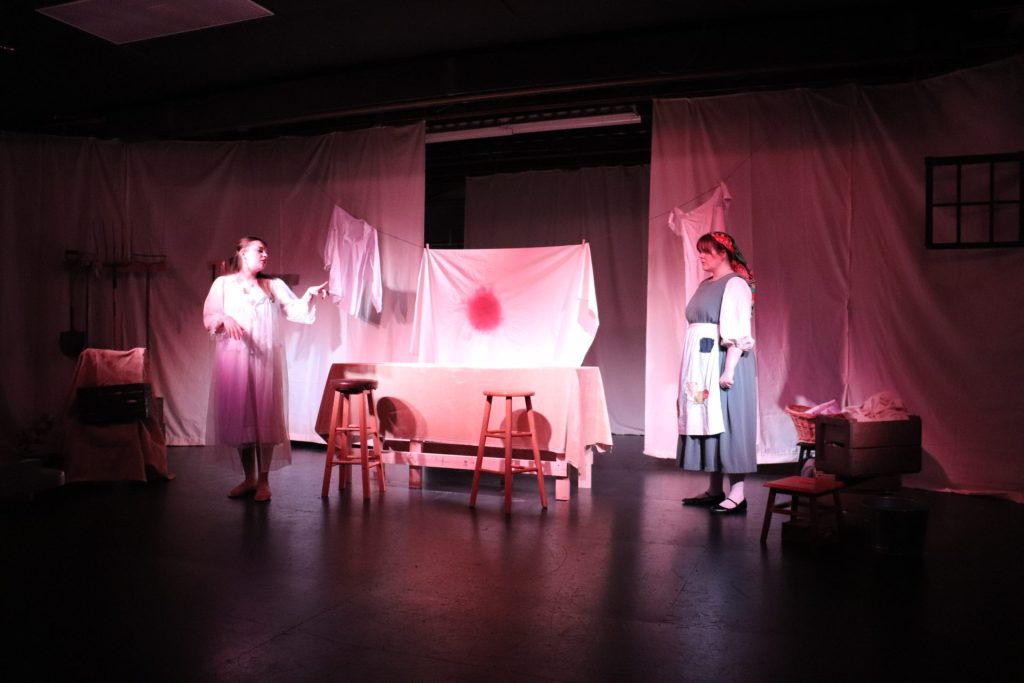
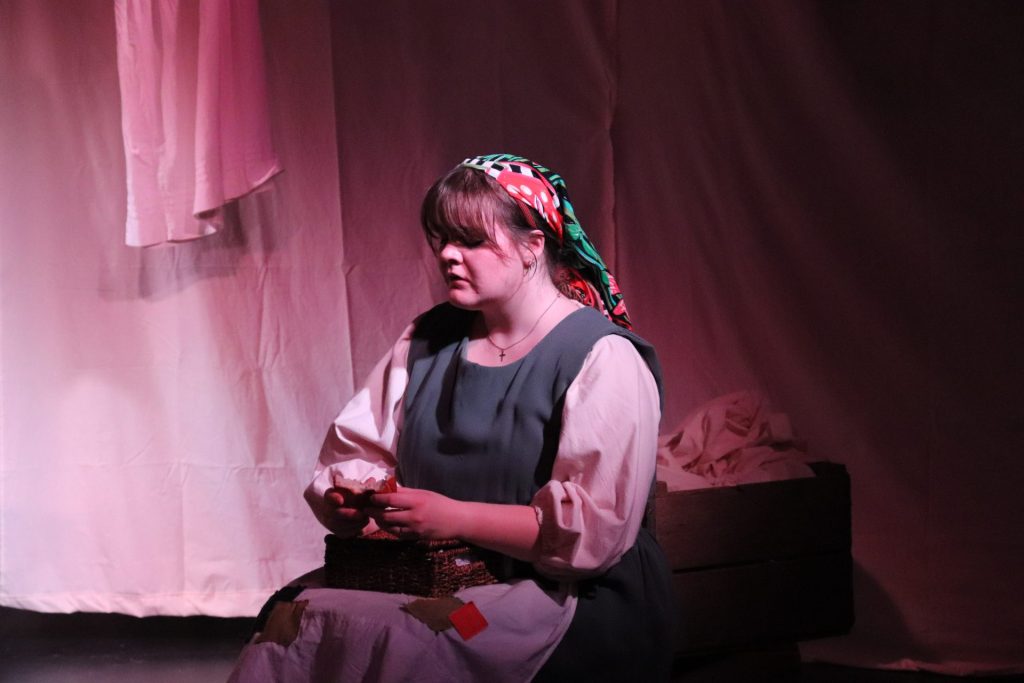
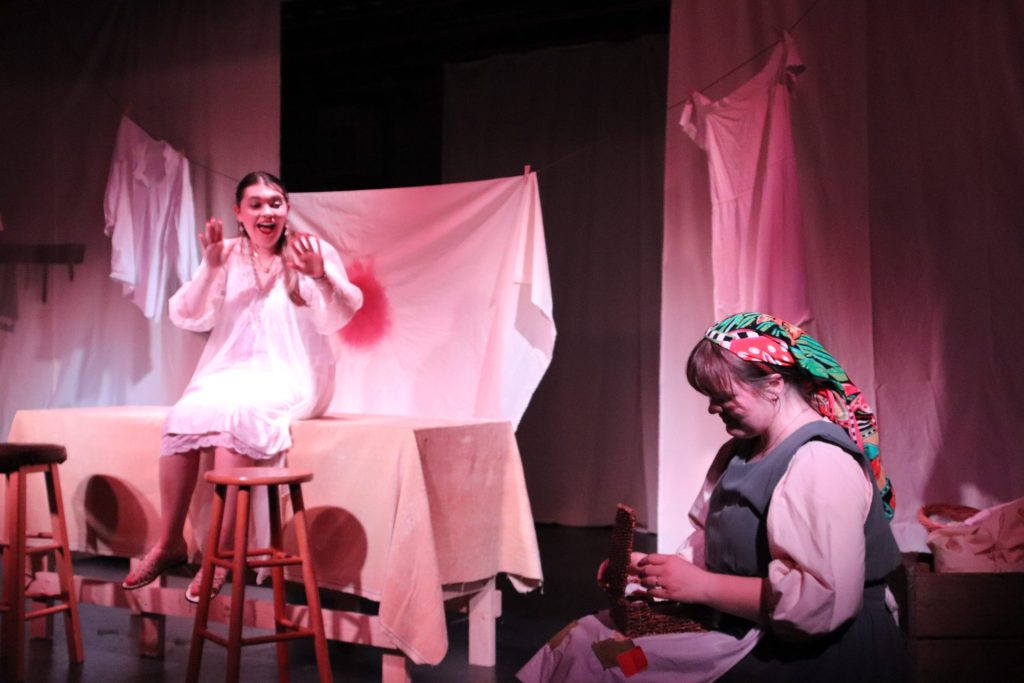
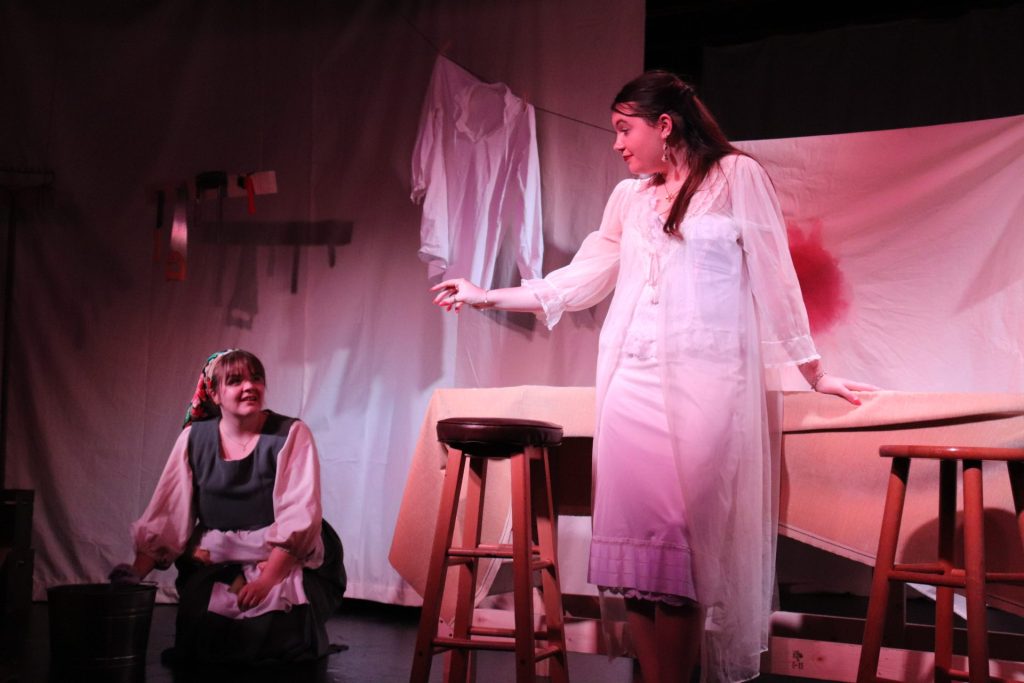
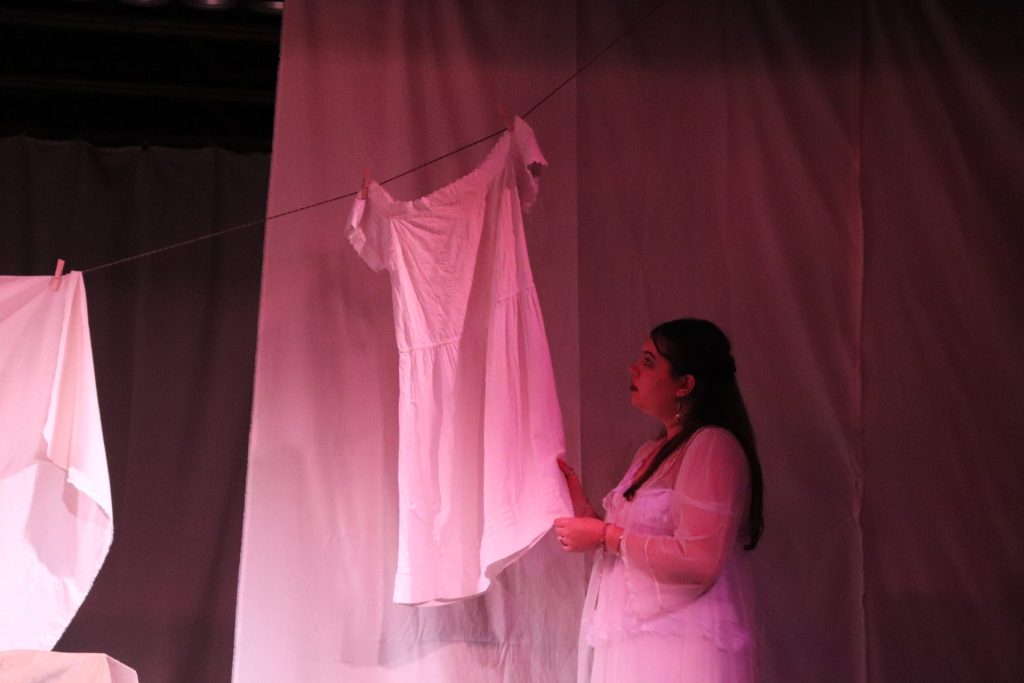
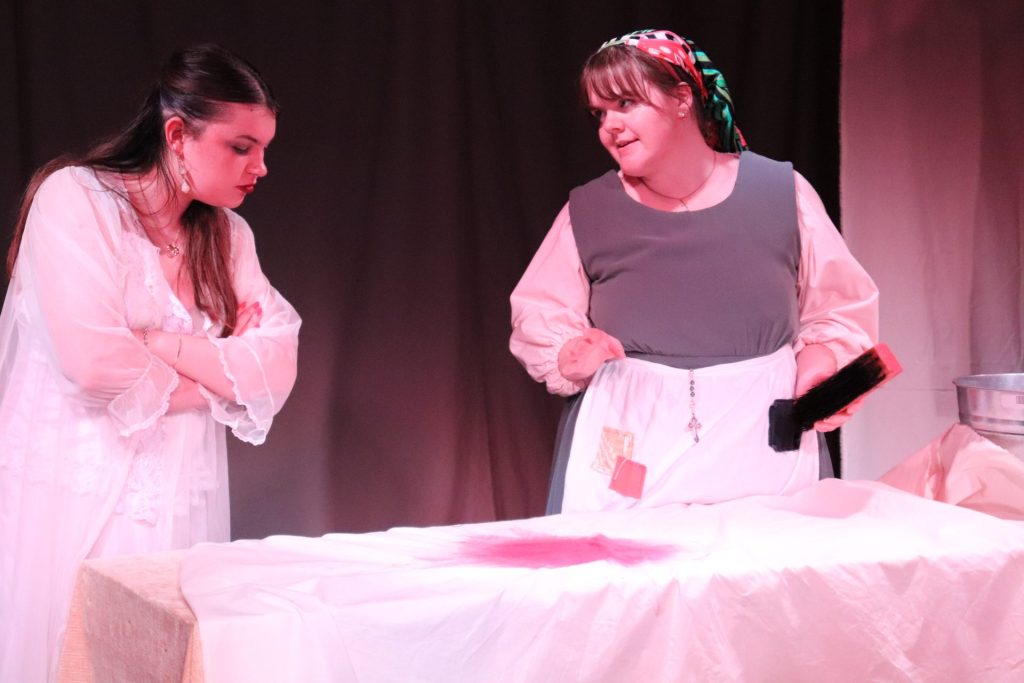
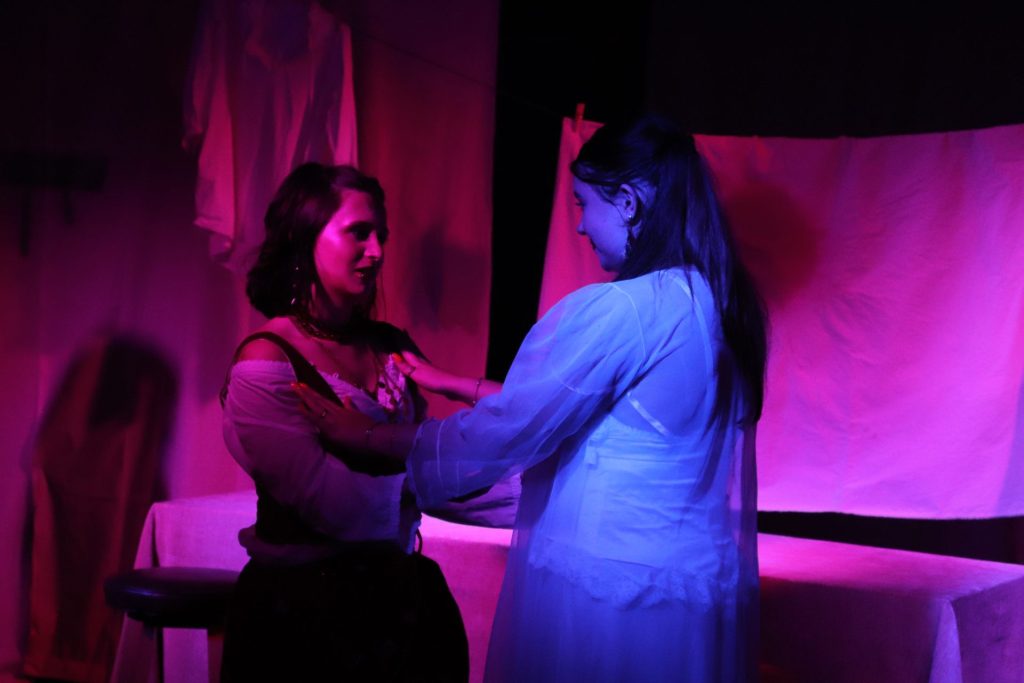
For three nights in the Coleman Recital Hall, Transy Theater once again wowed the Transy community with a comically tragic take on a previous classic. Coming off a raucous run of Kate Hammil’s theatrical adaptation of Pride and Prejudice, Transy Theater once again showed a revisionist perspective on a well-known story, this time the iconic Shakespearean tragedy Othello. Paula Vogel’s Desdemona: A Play About a Handkerchief, first performed in 1993, flips the perspective of the original show from Othello to his titular wife, along with the women surrounding her, including her servant Emilia and friend and bordello owner Bianca. The Transy production of Desdemona was fully student-led, with the three roles being performed by Sophomore Kiah Oney, Junior Sam Farr, and Junior Julie Mattingly. The play was directed by Senior Mary Clark, a climactic final act in her time as a student with Transy Theater.
Adaptations of Shakespeare’s classic that show often ignored character perspectives or put a modern twist on the story are nothing new (think Tom Stoppard’s Rosencrantz and Guildenstern are Dead or Baz Luhrmann’s Romeo + Juliet film adaptation). However, what drove Clark to this retelling in particular was its themes of patriarchy and objectification and how they differ across class divides, ideas that resonate just as heavily as they did when the play was first staged over thirty years ago. Clark wrote about how she saw the theatrical medium of Desdemona as an apt way for audiences to grapple with the limited agency and domestic and sexual violence experienced by the characters; issues that are unfortunately relevant both in Kentucky and at large. Clark wrote, “Desdemona offers the unique opportunity to create a compelling and accessible medium through which audience members can become immersed in the lived experiences of the characters and how they exist within oppressive patriarchal and class structures in an immediate, embodied format. This in turn can lead audiences towards new understandings about how these power structures play out in our own communities and individual experiences.”
Those familiar with Shakespeare’s original may initially gawk at the changes introduced in Paula Vogel’s retelling of this story. Vogel’s titular character is far more nuanced than the overwhelming virtuosity and submissiveness of the original Desdemona. The show, which takes place entirely in a backroom of a Cyprus castle, partially revolves around the burgeoning friendship between Desdemona and Bianca, who is a sex worker in Vogel’s version, with Desdemona fascinated by and ultimately participating in Bianca’s work. Clark spoke about this key part of Vogel’s adaptation, stating, “I liked that Vogel shifted away from Shakespearean representations of women as being virtuous by having the characters, particularly Desdemona, exercise their sexual desire against the social expectations form women as a means of reclaiming agency in a structure that reduces them to sexual objects for men’s pleasure.” Clark spoke about how she was drawn to this adaptation after spending a semester studying abroad in New Zealand, where sex work is decriminalized, and meeting people who participated in sex work. Clark saw these experiences as illuminative of the ways feminine-presenting people are inherently sexualized through the male gaze. Clark argued that “For Desdemona and Bianca, participating in sex work is empowering because they are going to be reduced to sexual objects no matter what they do. In participating in sex work, they are at least able to profit financially and subsequently reclaim some agency from their sexualization.”
On the other end of the spectrum from Desdemona and Bianca’s sex positivity and liberation is Emilia, who offers a more traditional perspective and looks down on Bianca’s sex work and especially Desdemona’s participation in it. The relationship between Desdemona and Emilia both endears and alienates the audience from the titular character. The emotional core of the show lies in the relationship and conversations between the two, with some of the funniest and some of the most tragic moments of the show being intimately between them. However, the connection the two share is just as often undercut by Desdemona’s dreadful treatment of Emilia, emphasizing the socio-economic divide between the two. Clark also described how she was drawn to this dynamic between the two characters, stating, “There is an inherent power dynamic between Emilia and Desdemona, which weaponizes against Emilia…I felt the way the two of them oscillate between selfishness and gentleness towards one another was very compelling. There is never really a moment where you fully want to support or be critical of the characters, which makes them feel genuine and human.” The titular handkerchief, one of Shakespeare’s most iconic props, is used largely in the same way as the original, leading to an ending between Desdemona and Emilia that is haunting even for those who do not know the fate of the characters in the original show. Where this production of Desdemona shines the most is in its three performances. The oscillation between sympathy and callousness in the character of Desdemona comes through perfectly in the performance of Kiah Oney. Sam Farr brings such a believable world-weariness to Emilia, building a character throughout the show and delivering an emotional gut-punch near the finale, despite the character’s contradictions. Julie Mattingly puts on a comedic tour de force as Bianca, bouncing off the hostility of Emilia and the admiration of Desdemona perfectly. One particular scene shared between the three characters, where Bianca demonstrates a method she uses in her bordello to Desdemona, provoked raucous laughter from the audience. Desdemona was clearly a project that all those involved were passionate about and put everything into, especially Clark, in her final production with Transy Theater before graduating later this month. That passion was clear to anyone who was able to come to Coleman Hall between May 1 and 3 and witness Transy Theater’s latest hit.
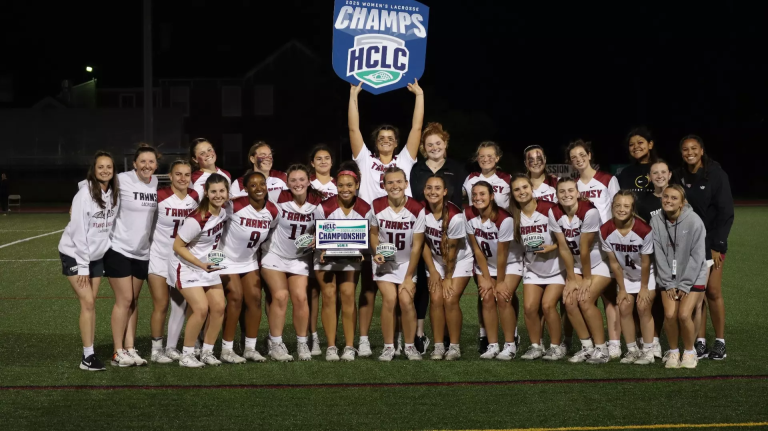
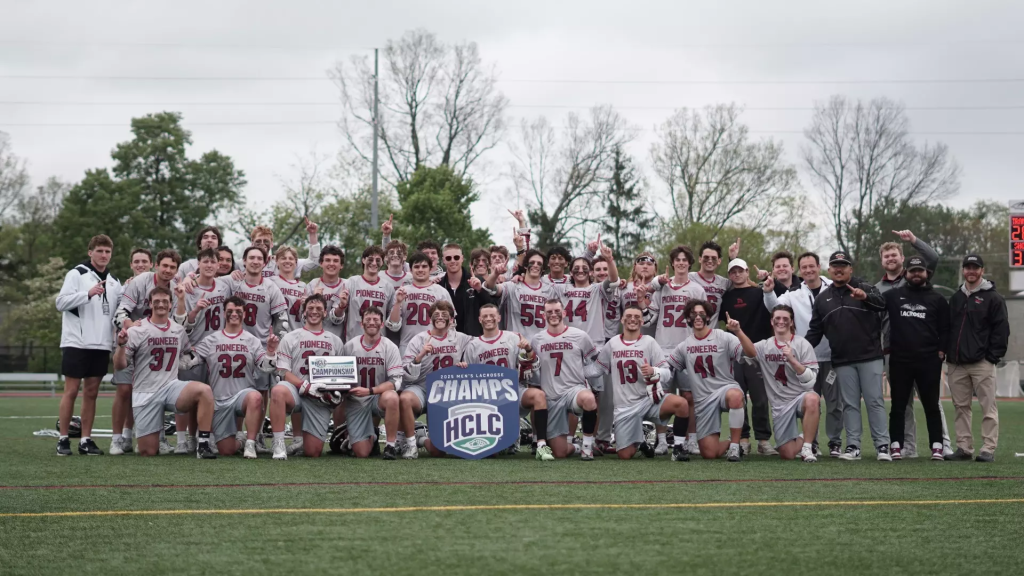
For the second consecutive year, the Transylvania Pioneers have swept the regular season and tournament Heartland Collegiate Lacrosse Conference titles in both Men’s and Women’s Lacrosse. On April 26, Transy Men’s Lacrosse clinched the championship with a dominant 26-5 victory over the Hanover College Panthers. One week later on May 3, Transy Women’s Lacrosse clinched the championship with another dominant 19-3 win over the Anderson University Ravens. With their respective wins, both teams clinched an automatic bid to the NCAA Tournament.
The Pioneers Men’s Lacrosse Team finished the regular season with a 9-5 record and a perfect 4-0 record in the HCLC, earning the top seed and home-field advantage in the conference tournament. On April 24, the Pioneers would host the number four-seeded Anderson University Ravens. The Pioneers would hold a three-score advantage after the first period, but the second period would see an avalanche of scoring by the Pioneers, who scored twelve unanswered goals to take a 16-1 advantage into the half. The Pioneers would not let their foot off the gas in the second half, riding a 75-14 shot advantage and 18 turnovers forced to a 30-3 win that was never in doubt. Two days later, the Pioneers advanced to the championship to face the number two-seeded Panthers. The Pioneers had as little trouble with Hanover as they did with Anderson, scoring ten goals in the first period and taking an 18-2 advantage into halftime. Four Pioneer players would score at least three goals, leading the Pioneers to a commanding 26-5 victory and the HCLC Tournament Championship. The Pioneers would also have an impressive showing in the HCLC season awards. Sophomore Attacker Andrew Welch took home Offensive Player of the Year, and Transy players made up eight out of the fifteen players on the HCLC First Team All-Conference.
The next week, Transy Women’s Lacrosse began their campaign to clinch the HCLC Tournament Championship for the seventh year in a row. The Pioneers finished with a perfect 5-0 conference record, including an emphatic 20-2 victory over the Spalding University Golden Eagles to close the regular season and clinch the number one seed in the conference. The Pioneers earned a bye with the number one seed and automatically advanced to the championship game, where they faced the number two-seeded Ravens. The Pioneers opened the game with seven unanswered goals, eventually taking a 14-1 lead into halftime. Fifth-year goalkeeper Grace Smilek would only allow two more goals in the second half to preserve the Pioneers’ comfortable first-half lead and cruise to a 19-3 championship-clinching victory. Eight Pioneers were named to the All-Tournament Team, in addition to the nine Pioneers named to the First and Second All-Tournament Teams. Senior Midfielder Charlotte Green was also named HCLC Offensive Player of the Year for the second year in a row.
By winning each of their respective championships, both Men’s and Women’s Lacrosse earned automatic bids to the NCAA Tournament. The Men’s team will travel for their first round matchup first, facing off against the Rhodes College Lynx in Memphis on Wednesday, May 7 at 3:00 PM. The Women’s team will travel later to Sewanee, Tennessee to face the Washington and Lee University Tridents on Saturday, May 10 at 2:00 PM.
By: Madalyn Stump, Olivia Jackson, and Scarlet Hohman
Note: this article was created in conjunction with and as an assignment for Black Feminist Theory, taught by Dr. Simona Fojtova. Contributors to this article include Simona Fojtova, Steve Hess, Cameron Ritchie, Kennedy Kniffley, Caroline Host, Val deValinger, Josiah Finley, Krissalyn Love, and Ella Go.
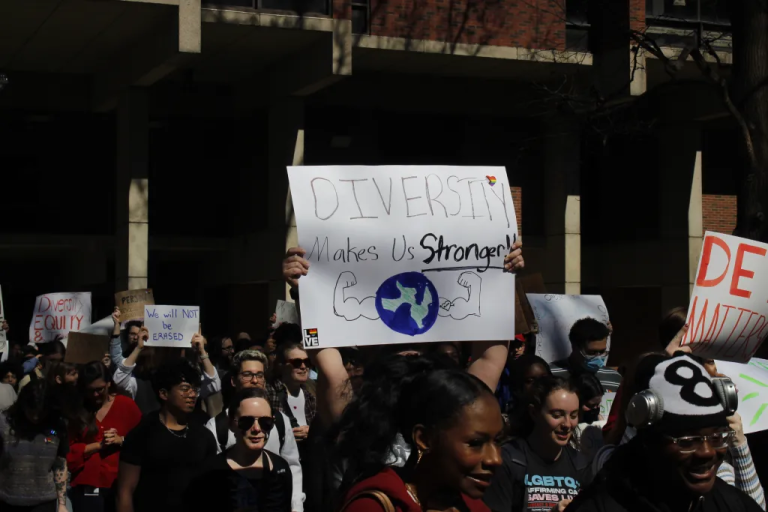
As a result of the election of Donald Trump, Diversity, Equity, and Inclusion (DEI) Programs have faced bans and other hindrances. This was particularly kicked off by a “Dear Colleague” letter sent by Craig Trainor on behalf of the U.S. Department of Education on February 14th, 2025, giving public educators two weeks to dismantle their DEI Programs. This letter claims that white and Asian students have been discriminated against “on the basis of race” and claims that “Educational institutions have toxically indoctrinated students with the false premise that the United States is built upon ‘systemic and structural racism.’” In Transylvania’s Black Feminist Theory class, we are exploring the ways in which this claim is unequivocally false, expanding across fields such as health, education, law, pop culture, and more. We are learning about Black women and Black feminists — such as Kimberlé Crenshaw and Angela Davis, as well as ones not mentioned in this article including the Combahee River Collective, Jennifer Nash, Patricia Williams, and more — who have been paving the way and acting as beautifully articulate predecessors advocating for the same values that align with the vocabulary and DEI efforts we have today. In the wake of these DEI bans, this class decided to have a more open-ended final project. This article focuses on the history of DEI programs and how they impact different student organizations, including the Rambler, FSL, and others, and broadens this knowledge outside the scope of the classroom.
DEI and Its History
You might be asking: “What is DEI?” DEI stands for Diversity, Equity, and Inclusion and was a result of the Civil Rights movement. Steve Hess, professor of political science at Transylvania University, states:
“In these conversations, it’s important to try to unpack the terms we’re talking about. ‘DEI’ itself has become something of a lightning rod in our highly polarized society, but when you think about what it stands for – ‘diversity, equity and inclusion’ — are these really values that we should consider problematic? Would we prefer the opposite: ‘uniformity, inequity and exclusion?’ Much of the value of colleges and universities is their emphasis on free speech, open and often contentious discourse, and the challenging of established dogmas. In contrast to the assumptions of DEI critics who fundamentally misunderstand our mission and allege that universities ‘indoctrinate students in discriminatory concepts,’ students are expected to be creative, consider the range of intellectual thought, and generate new and different ideas, but also subject these ideas to scrutiny, ensuring that they logically hold together and are backed by evidence. This emphasis on critical thinking is central to what we do in higher education; it provides a tool and ability that helps our students thrive in their future lives and careers. However, since the inception of universities in the United States, they have often functioned as agents of social reproduction and exclusion, helping the children of the affluent stay affluent, rather than social mobility, allowing students without means and students from historically marginalized groups to achieve socio-economic advancement. It was over 100 years before Transy admitted its first woman and over 180 years before its first Black student set foot on campus. Students from marginalized groups have thus entered a campus with institutions, practices, and norms that have been almost exclusively determined by and in the interests of cisgendered white men from privileged backgrounds. As a consequence, universities have worked intentionally to identify and remove barriers that deter students from marginalized groups from coming to campus and allowing them to enjoy equal opportunities once they have arrived. We should be skeptical of DEI, but for other reasons. In many organizations, DEI efforts can be tokenistic, performative, and superficial, designed to impress the outside world and improve one’s brand but have little impact on bringing about structural change in the organization’s actual functioning. As a consequence, even in today’s charged political climate, we should be even more active in challenging power structures that exclude and marginalize underrepresented groups, supporting our students and affinity groups, reexamining our own policies and practices, and working to create an inclusive environment on campus.”
The push for diversity in higher education became prominent following the civil rights movement, when student activism and protests were at an all-time high, with 1 in 5These protests resulted in departments of African Studies opening up across the country. The article ‘The History of Diversity in Higher Education’ explains, “The first Black studies department was started at San Francisco State College in 1968 after the longest strike in U.S. history to occur on a college campus”. Not only did academic studies begin to diversify, but student bodies did as well. Affirmative Action was introduced, striving to diversify systems and create spaces with various backgrounds. While Affirmative Action doubled the admission rates for Black students, retention was low, and only half of admitted Black students received their degree due to other systemic factors. The same article states, “In 1976, white students made up over 80% of all U.S. college students, but that percentage dropped to 57% by 2016.”
Historically Black Colleges and Universities have also played a critical role in DEI for higher education. HBCUs began as schools designed to provide opportunities for Black Americans. The UNCF article ‘The Numbers Don’t Lie: HBCUs Are Changing the College Landscape’ discusses how black students continue to have a low retention in graduating in higher education due to many systemic factors, writing, “Seventy-two percent of Black students take on debt as they seek their degrees, as opposed to 56% of their White peers. And while the number of African Americans enrolled in college has increased over the last few decades, going from 10% in 1976 to 12.7% in 2019, African American enrollment at the nation’s most elite colleges (often toting the biggest price tags) has remained mostly the same.” Where elite colleges fail to broaden their enrollment, Historically Black Colleges and Universities seek to provide resources to fight systemic causes of low retention. 29% of students attending an HBCU report feeling more stable and financially secure than at a non-HBCU. While HBCUs only make up 3% of United States universities and colleges, they continue to close the gap for students of color.
The current pushback against DEI is not a new phenomenon. There has been pushback for decades on DEI by conservatives, who define it as reverse discrimination. The Claremont Institute, a conservative think tank, defines DEI as a radical force pushing against U.S. morals, leading to white backlash, school closures, and private segregation in academics. Any push for corporate America to diversify has faced white resistance and accusations of “reverse discrimination.” In the 1980s, Reagan-era policies hampered affirmative action and civil rights policies, and DEI was deemed “special treatment” for Black people. In 1996, California’s Proposition 209 banned affirmative action in public hiring and education, setting the stage for future anti-DEI policies.
The Black Feminist Lens on DEI Removal
Black Feminist Theory provides a unique lens to view the backlash against DEI. One of the key concepts within this theory is intersectionality. The article “Demarginalizing the Intersection of Race and Sex: A Black Feminist Critique of Antidiscrimination Doctrine, Feminist Theory, and Antiracist Politics” by Kimberlé Crenshaw displays this idea. As explained by Crenshaw, intersectionality is the way that intersecting identities affect individuals in our society and how those identities contribute to experiences with discrimination. This is an important concept when considering feminism as a whole, particularly black feminism. Without representation for individuals who share intersecting identities, feminism is not complete. Knowing this, the removal of DEI should be recognized as a feminist concern.
Black Feminist theory also provides suggestions for how to navigate the removal of DEI. Its framework is rooted in collectivism and working together to educate, advocate, and bring awareness to injustices. One of the key concepts related to black feminism is abolition. The book Abolition. Feminism. Now., by Angelia Davis highlights the importance of abolition as an intersecting concept with feminism. This concept highlights that advocacy for the dismantling of anti-black and anti-feminist systemic structures must be a part of feminism. DEI is a large part of these efforts and is necessary to sustain equality in both academia and the workforce.
The article “The Anticipated Impacts of DEI Program and Policy Rollbacks” by Sharon Kalango highlights particular ways that the removal of DEI may affect black women in engineering fields, but this information is transferable to all fields as well. A few of the listed concerns are: “Limited career development opportunities, reinforced workplace discrimination and microaggressions, Slower progress toward leadership roles, Higher risk of job displacement and turnover, and Widening of the pay gap.”
This article also lists a variety of ways to combat the emotional and financial distress that this could place on black women during. It suggests “seeking out mentorship, prioritizing mental Wellness and Emotional Resilience, continuing to advocate for Change, and investing in Personal Development.” These are important resources to consider when struggling with the removal of DEI programns and good for educating yourself and others.
DEI Currently
The Trump administration has made its efforts to dismantle DEI programs a top priority. The federal government has been directed to end DEI programs and investigate private companies and academic institutions that are engaging with DEI. Colleges and schools have begun canceling DEI-related events to avoid lawsuits. Some of these programs still operate under different names and structures, while others have been shut down entirely. According to the article “Tracking Higher Ed’s Dismantling of DEI” published by The Chronicle of Higher Education, over 200 colleges have changed or removed DEI since 2023, as well as changed policies and hiring processes that involve diversity. The article “The Real Reason DEI Is Under Attack: It’s About What It Represents, Not How It’s Practiced” by Dunn discusses how current backlash to DEI strongly resembles previous backlash to the Freedmen’s Bureau, which helped newly freed Black people transition to freedom after being released from slavery. It also discusses the similarities to the backlash against the push for human rights for Black Americans during the civil rights movement. The backlash towards DEI mirror historic trends in that it is rooted in anti-blackness.
This anti-blackness can also be seen in how such backlash and DEI bans are uniquely impacting HBCUs as compared to Predominantly White Institutions (PWIs), such as Transy. Josiah Finley, a student at North Carolina Agricultural and Technical College (NCAT) and friend of the Rambler, states: “The direct impact is that it’s made it increasingly difficult for students to get research opportunities here. Indirectly, students’ jobs are taking a hit (cutback on hours due to boycotts, etc.) making it harder to sustain their lifestyle while pursuing their education.”
While the fight for DEI feels like new terrain to navigate, it has been an ongoing issue in America in many ways. Looking at examples such as these as a guide to navigate our current situation with DEI could be helpful moving forward. According to the New York Times article “These Words Are Disappearing in the New Trump Administration,” Trump has led agencies to flag hundreds of commonly used words to limit DEI.
Cameron Ritchie, a writer for the Rambler, commented on this: “DEI is currently under attack in the United States, making its future uncertain. I think to protect it and preserve its future, we need to make it clear at Transy that we are firmly committed to embracing and upholding diversity at our institution. DEI is important, especially at places like universities that tend to have problematic histories, being primarily composed of white men and only catering to that demographic for centuries. DEI attempts to alleviate this issue by making college education more accessible to marginalized groups. Dismantling DEI serves as part of the larger far-right project of protecting white supremacy in institutions and our country. They’re attacking DEI now, but they likely won’t stop there. We need to defend it to continue uplifting women and minorities and to keep the far-right from encroaching on civil rights.”
Student Organizations and DEI
Prominent student organizations on Transy’s campus include our student newspaper ‘The Rambler’ and Transy’s Literary magazine ‘The Transylvanian.’ Student press activism became prominent in the 1960s, following the civil rights movement. According to ‘The Underground Press @ Archives & Special Collections’ by The University of Pittsburgh’s library, “These papers were often aimed at educating their fellow students, encouraging and supporting on campus activism, and helping to create networks of movers and shakers within their communities.” Despite the flag on certain words and DEI, it is important to utilize our voices as students, especially now more than ever.
Abigail Muncy, President and Co-founder of Transylvania Advocates for Accessibility, explains her thoughts on DEI and student organizations. “Something I learned about accessibility throughout the creation of our organization is that it benefits everyone. While every day it might not be necessary for me to use a wheelchair ramp, it becomes helpful when I have heavy luggage or if I have a hurt leg. I would like to think of any discussion of DEI topics in a similar way. While the discussions of marginalized communities help to uplift said communities and make them feel seen, these discussions also benefit the entire community as they open a line of communication. I fear that with the release of the “Dear Colleague” letter that this open line of communication will be closed, and any hopes of discussions about marginalized communities will be put on pause… but I know our Transylvania Community, and I know that there is nothing that will pause the voice of our students. While this is a scary time in our nation where we fear talking about our ethnicities or the disabilities we may face, I know that our community is strong and has the support to be able to uphold these conversations no matter what. I am extremely disappointed by what is happening in our country now, but I am glad our community on campus is supportive and loving.”
Another organization that is very relevant on this campus and as a cultural institution is Fraternity and Sorority Life (FSL). In fact, 42% of Transy’s campus is involved in FSL. Additionally, while 2% of the U.S. population is involved in FSL, 80% of the leaders of Fortune 500 companies and much of the U.S. Congress, President, and Supreme Court Justices have been involved as well.
The formation of these organizations correlates to who had rights at the time, which is why white fraternities were created first, then white sororities in the postbellum era, then finally historically Black fraternities and sororities, also known as Divine Nine chapters. The white counterparts are wrought with racist history, with some DEI efforts being implemented in recent years. The history of racism among FSL has far surpassed that of DEI. For example, Kappa Alpha was founded on the “gentlemanly values” of Confederate soldier Robert E. Lee and has a history of performing minstrel shows. In the 1960s, former Senate Majority Leader Trent Lott, when he was serving as the University of Mississippi’s Interfraternity Council (IFC) President, tried and partially succeeded in preventing his fraternity (Sigma Nu) from admitting Black members. In 1983, the Divine Nine chapter Phi Beta Sigma at the same university was raided by 1000 white students chanting “Save the Flag,” in reference to the Confederate Flag, during their yearly “Dixie Week.” The following decades included the use of Blackface and Klan wear, and as recently as 2015, there have been instances of the use of the N-word in fraternity chants.
It is for reasons like these that it is not surprising that #AbolishGreekLife circulated in the wake of George Floyd’s murder, but the issue more complicated than that. Divine Nine chapters have long been a source of community and safety for minorities that primarily white fraternities and sororities have not been able to. Kennedy Kniffley, a member of Sigma Gamma Rho at Transy, states: “I feel that people misunderstand what DEI means and who it benefits. DEI is important as it allows for marginalized groups, such as women, people of color, disabled people, and veterans, to have equal opportunities to share their knowledge and identities with the world. Without a push from the previous VP of DEI at Transy, there would be no historically black Divine 9 Greek life on this campus. My sorority, Sigma Gamma Rho, is the first fully chartered chapter of the Divine 9 at Transylvania. The significance of this is often lost because of the lack of knowledge of Divine 9 culture. Our sorority focuses solely on improving the lives of women and their families in the U.S. and globally through community service. This means that we did not start this just for the sisterhood but to create a safe space for young women of color and white alike to become bonded through service and academic excellence. We strive to support women who have struggled to adjust to life in spaces in which they have been marginalized by uplifting them and providing opportunities for growth both as professionals and human beings. In these ways, I believe that chartering this chapter with the support of DEI has allowed me to flourish into the empathetic, empowered, and encouraging leader I am today.”
The National Panhellenic Council (NPC), which oversees all sororities across the country (minus Divine Nine sororities), according to its website, started implementing DEI initiatives in 2014, when it made a statement against discrimination. Efforts since then include creating and updating a Financial Transparency Policy, giving trainings on implicit bias and DEI, having a diversity keynote, the creation of local student positions like VPJEDI (Justice, Equity, Diversity, and Inclusion), and changing language like “colony” to “newly establishing chapter.”
This information shows vague language about DEI efforts without particularly concrete examples of imbuing these values in the organization. The IFC’s website offers a timeline of DEI-focused actions with slightly more specific language but nothing particularly substantive. These precedents set by the respective organizations show improvements in respecting diversity, equity, and inclusion as a whole, but don’t allow for proper accountability for individual campuses. The amount of these values that are highlighted seems to be as much as the student body and FSL leaders care and put in effort, which has different implications for smaller versus bigger schools.
The Panhellenic VPJEDI here at Transy, Scarlett Hohman, states: “I am able to have interactive presentations and higher quality discussions with each sorority due to our smaller size, as opposed to being in charge at a large SEC school. I think my position at UK was renamed to VP of Community and Belonging in the wake of the DEI bans, which potentially puts my role in a precarious position. I hope VPs after me are able to take what I do even further and do more to promote JEDI at Transy and beyond.”
Conclusion
It is this theme of student-led precedents that seems to be a theme in the history of promoting DEI and values that Black Feminist Theory is discussing. It is important to push and open a conversation as students, whether it be through our student press, FSL, or other student organizations. We don’t know what the future holds, but we know what to do right now. Black feminist theory encourages folks to look at the root causes and underlying messages of social and systemic oppression and racism and consider how those causes contribute to broader issues such as DEI. It is important to consider this when navigating the removal of DEI and consider how this will affect individuals with intersecting identities.
Caroline Host, a photographer for The Rambler and a prominent member of the Transy community, states: “The future of DEI is what we make it to be. We have a lot of powerful people trying to go against us at the moment and take away basic rights for minority groups. I think that some people, understandably so, start to feel hopeless and like they can’t do anything about it. This only takes us down a worse path for DEI laws — if we can try to fight back and make our voices be heard, then perhaps the future of DEI could improve. At the most basic level, emailing and calling representatives, protesting, and creating an inclusive and welcoming environment in your classes, jobs, and social circles will be an amazing place to start. DEI is important because it involves EVERYONE. It affects everyone.”
Val deValinger, T-Unity President, states: “Unfortunately, I think the future of DEI is going to be regressed and hidden under different jargon, mostly going misunderstood and unnoticed. DEI is not only underrepresented, but it is under attack. There are people, organizations, and administrations with the mission to erase it, and everyone will suffer those consequences. However, it does not have to be this way. I, like many others, don’t want it to be that way. I strongly believe that DEI can be what we want it to be on this campus and in the world we are growing up in, but it will be something we will have to fight for. These conversations cannot stop. These articles cannot stop being written. It is so important, now more than ever, to talk about DEI and correct the misinformation getting spread about it to fit the narratives of people who believe it harms them, because it doesn’t. DEI is for everyone, even cis-gendered, straight, white men. It is for their wives, their children, their brothers and sisters. It is for their religious affiliation. It is for their health care. It is for everyone, for the betterment of this country, of our organizations, and for our education. DEI is not the enemy or the monster under the bed ripping opportunities and jobs from people; it does the opposite, and we are better for it.
For campus organizations, DEI allows affinity groups to do the work that the campus struggles to do. DEI gives campus organizations the ability to advocate and better their campus. Furthermore, it also holds campus organizations and affinity groups accountable for the responsibility they are taking on. And it saddens me that this work is so underappreciated because these organizations, affinity and otherwise, cannot do everything all at once. DEI will make our organization harder to thrive and reach out to more students who could really benefit from a safe space on campus.
My experience with DEI has been nothing short of amazing. Outside my role as T-Unity President, I have run support groups throughout high school and did some outside mentoring for transgender people beyond that. I am proud of my work and the people I have gained lifelong connections with due to it. DEI allowed that work to happen, for it to be public and talked about. DEI made groups like queer support groups in schools accessible. Lastly, DEI allowed my personal transition to be accessible. I have gained resources and tools I wouldn’t have if I didn’t have DEI organizations reachable during my high school years and early into college. DEI is necessary for all students.”
Simona Fojtová, Professor of Women’s, Gender and Sexuality Studies, states: “I applaud the students for expressing their commitments to social justice and wholeheartedly support their efforts to have their voices heard. Their dedication to positive change is inspiring, and I stand behind their efforts to create meaningful dialogue and make a difference in their communities.”