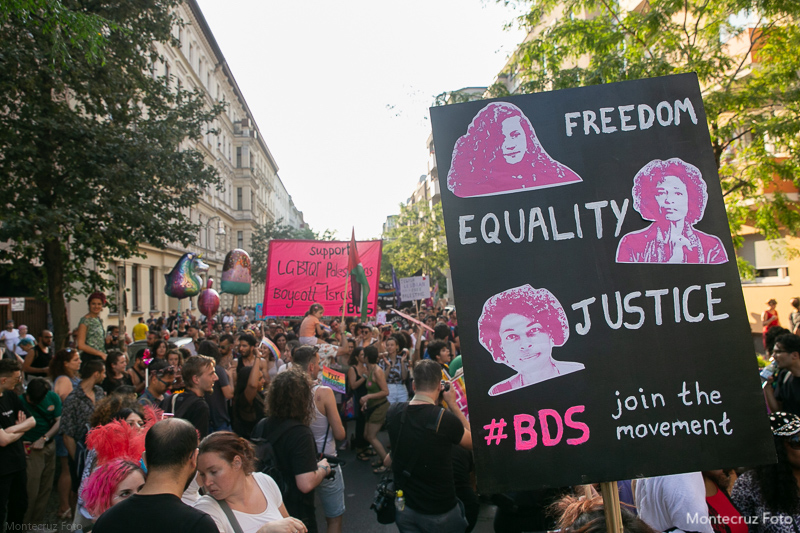
t’s that time of the year again: the Christmas season is upon us, and you now have to start considering what gifts you’ll get for your loved ones. You’re likely tempted to go on Amazon and purchase whatever you can think of, but it’s high time for us consumers to start caring about where we get our gifts, why we get our gifts, and how we get our gifts.
Corporations have become hostile in recent years, growing more and more problematic. Between unfair wages, unsafe labor practices, and a general evident greed, all of the world’s most popular brands are getting a bad name. In the midst of all this lie corporations that are in support of genocide, particularly the one occurring at Israel’s hands. Many companies indirectly or directly fund the genocide by providing soldiers with food, money, or any other sustenance.
Basically, I’m here to tell you that most of your favorite brands are supporting an ethnic cleansing. It’ll be a tough pill to swallow—I can tell you for certain it was when I first heard it—but it’ll become easier as it goes on. I’ll tell you all about the BDS boycotts, and I’ll share with you some other brands that you should likely take off your roster. Don’t worry, I’ll give you some alternatives; I understand that it’s the season of giving, after all.
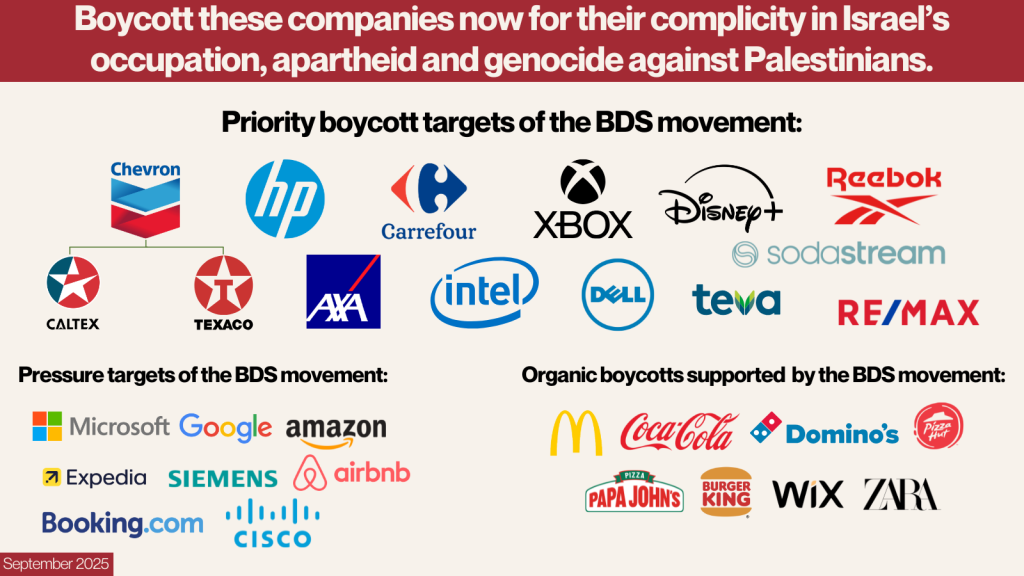
Image credits: Guide to BDS Boycott Movement
BDS and What to Boycott
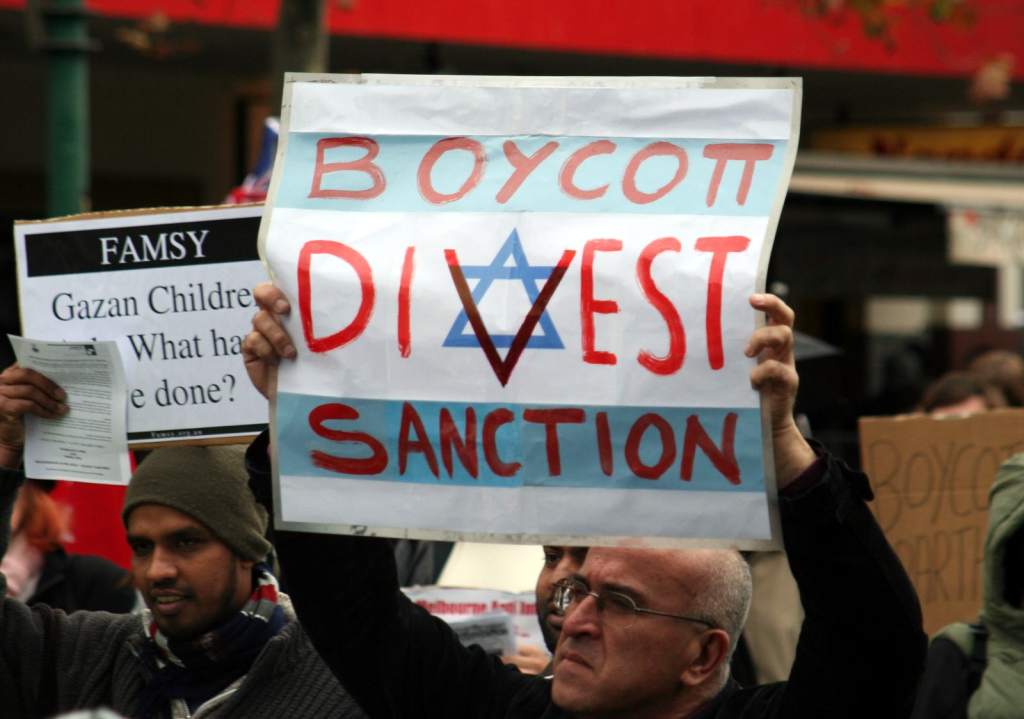
BDS stands for “Boycott, Divestment, and Sanctions”, and is a Palestinian-led movement focused on applying pressure to companies to end their support for Israel. It began in 2005, following a similar model to protest apartheid in South Africa.
According to the website, BDS operates mainly as a “targeted boycott” organization, in which they will pick the largest, most complicit corporations to apply pressure on. This is done in hopes of creating a domino effect in which smaller corporations complicit in the genocide will also opt to end their affiliations with Israel. “Untargeted boycotts” target a greater number of corporations in order to spread influence.
BDS states that their boycott target-selection criteria are as follows:
1. Level of complicity (based on accurate, convincing research that proves complicity)
2. Intersectionality (cross-movement relevance of the target)
3. Brand recognition and media appeal (helps reach a wider audience)
4. Potential for success
Their boycott is split into three targets: consumer boycott priority targets, organic boycott targets, and pressure targets. Consumer boycott priority targets require a complete boycott due to their explicit complicity in Israel’s genocide. Organic boycott targets are boycotts not directly created by the BDS, but are encouraged due to the companies’ complicity. Pressure targets need pressure campaigns: lobbying, social media pressure, peaceful disruption, etc.
The list for each, as of September 2025, is as follows:
Consumer boycott priority targets (direct from BDS website):
1. Chevron (including Texaco and Caltex): responsible for extracting gas used by Israel.
2. Intel: invested $25 billion in Israel during the height of genocide; the largest international investor in Israel.
3. DELL: supplies servers, maintains services, and related equipment to the Israeli military.
4. Siemens: main contractor of the Euro-Asia interconnector, a submarine electricity cable planned to connect Israel to Europe.
5. Hewlett-Packard (HP): provides technological and logistical support to Israel.
6. Microsoft: provides AI software and technology to Israel, crucial in furthering the genocide; by far the most complicit. Advised to boycott Xbox as well.
7. Carrefour: given personal gifts to Israeli soldiers; possesses partnerships with multiple Israeli start-ups and banks.
8. AXA: holds millions of dollars in shares and bonds in companies that are supplying Israel with weapons.
9. Reebok: signed a sponsorship contract with the Israel Football Association (IFA) in early 2025. The IFA includes teams in illegal Israeli settlements on stolen land.
10. Disney+: dehumanizes Palestinians; revived racist character in Captain America, has worked with blatant supporters of Israel (including Gal Gadot and Shira Haas).
11. SodaStream: complicit in displacing indigenous Bedouin-Palestinian citizens; known to discriminate against Palestinian workers.
12. RE/MAX: markets and sells properly in illegal Israeli settlements.
13. Israeli produce/products in supermarkets: most are products made in illegal settlements on stolen land; you should avoid being part of trade that fuels Israel’s economy.
Organic boycott targets:
1. McDonald’s: owns many franchises in Israel and offers free meals to Israeli soldiers.
2. Coca-Cola: operates in illegal settlements; the main factory is in Atarot.
3. Burger King: provides free food to Israeli soldiers and owns many franchises in Israel. Social media is used to uphold Zionist talking points.
4. Papa John’s: donated food to Israeli soldiers, owns many franchises in Israel.
5. Pizza Hut: The parent company is an investor in Israeli start-ups, and social media posts have been made by them that appear to be mocking Palestinian prisoners.
6. Domino’s Pizza: owns many franchises in Israel; has a large presence in Israel.
7. WIX: Israeli company; has fired employees who have spoken out against the genocide.
Pressure targets (direct from the BDS website):
1. Google: has signed a contract with the Israeli military allowing them to access AI services, data, and automation technology.
2. Amazon: provided cloud computing infrastructure and other technological services to Israel, alongside Google. Amazon’s facial recognition technology is used for surveillance of Palestinians, and Ring cameras provide service to the United States police and ICE.
3. Booking/Airbnb/Expedia: listed in the United Nations database of businesses implicated in Israel’s illegal colonial settlement enterprise.
4. Teva Pharmaceutical Industries: Israeli company; has supported Israel’s genocide for decades and exploits the captive Palestinian market.
All of the targets I have just listed are ones officially listed on the BDS website, alongside most of their publicly accessible boycott lists. However, even outside of the BDS boycotts, there are still plentiful corporations that I recommend boycotting due to their support for Israel:
Non-BDS targets:
1. Starbucks: Former CEO Howard Schultz is a well-known Zionist and invests regularly in Israeli companies. Alongside this, Starbucks is known to be a union-busting company, suing a union that publicly expressed support for Palestine.
2. TripAdvisor: listed in the United Nations database of businesses implicated in Israel’s illegal colonial settlement enterprise.
3. Motorola: listed in the United Nations database of businesses implicated in Israel’s illegal colonial settlement enterprise.
4. CitiBank: complicit in the violent occupation of Haiti, and publicly supports right-wing Israeli politicians; invests in Israeli infrastructure and tech sector as the largest bank in the United States. Has also directly lent money to Israel.
5. Hobby Lobby: major Christian Zionist donor. Also largely antisemitic, and has refused to cover contraceptives under insurance, and has stolen ancient artifacts illegally smuggled from places like Iraq.
6. Home Depot: one of the largest neoconservative and Zionist donors in the United States. Has also removed DEI benefits following the Trump administration and has multiple violations from OSHA and SOP.
7. WhatsApp: has donated millions of dollars to Zionist lobbying; an AI system is used by Israel to track and kill Palestinians in Gaza.
Even outside of Israel, there are a number of companies that still should be boycotted due to their human rights violations, their support of the oppression of minorities, etc. That list is as follows:
General boycott targets:
1. Nestle: endangers the lives of infants using their baby milk products, and practices unethical business affairs, such as child labor, slavery, and an adverse effect on the environment through their water bottling.
2. SHEIN: steals designs, creates extensive harm towards the environment, and uses child labor practices in order to produce its fashion items.
3. Temu: products can be highly toxic. Has also been known to steal designs and use extensive child labor to produce items.
4. Apple: numerous human rights issues; known to make products built on child labor (in places such as the Democratic Republic of the Congo) and has unsafe factory conditions.
5. Spotify: known to run recruitment ads for ICE, allow AI-generated advertisements and music, and severely underpay artists. The CEO has also invested $693.6 million in defense startup technology, known to be used by countries like Israel, the United States, and China.
So, what does that leave us?
Not a lot, it may seem at first. However, boycotting is fairly easy; there are numerous alternatives to any given product.
I’ve personally been boycotting since 2023, with much of my boycott efforts being centered around fast food. I’ve not touched McDonald’s or Starbucks. Though I sometimes miss the taste of a McDonald’s Bacon, Egg, and Cheese McGriddle, I can confidently say that no matter how good any food or coffee is, it’s not worth contributing to the problem. It’s the same with things like Microsoft and Disney+; there are numerous ways to access the things these services provide to you without having to give money to a terrible cause.
I would say the general rule of thumb is to shop locally. Whether it be food or gifts, there is always something you can find at a small business that’ll be made with much more love and care than anything from big corporations. Personally, some of the best food I’ve ever had has been from small businesses; they’re far better than fast food any day of the week.
If you find yourself unable to shop locally in person, do it online. Shop small businesses on places like Etsy, or buy stuff second-hand from places like eBay or Depop. Is it expensive? It can be, but I would argue the price is worth it for the knowledge you’re not contributing to something heinous.
Second-hand stores are probably the best advice I can give for getting gifts, whether it be for yourself or someone else. You can call it embarrassing or tacky to get someone something second-hand all you want, but at the end of the day, some of the world’s greatest treasures come from thrift stores. Besides, you don’t need the newest thing every time it arrives; you don’t need the newest iPhone, the newest clothing line, the newest gimmicky decorations that come from Target every holiday that’ll only end up in landfills by the time the holiday’s over. None of it—and I mean this with utmost sincerity—NONE of it is necessary. If you wanna get someone something particular, then go for it—just make sure it’s something they actually want and/or need so it doesn’t end up sitting and rotting on one of their shelves. Or in a landfill.
How/Why to Boycott
You may be wondering to yourself what the point of boycotting even is. “Well, now, it’s not gonna harm any cause if I don’t boycott,” you’re thinking. Unfortunately, you’re not alone in thinking that; I assure you that thousands, if not millions, of others are, too. Yes, one person not boycotting may not hurt the cause, but it isn’t just one person—it’s many people.
Boycotting is vital as it sends a direct message to corporations about what we as consumers think about their values. Boycotting has been an essential part of protesting for decades; by far, the most prominent example of boycotting was the Montgomery bus boycott from 1955 to 1956, where people protested the segregation present on Montgomery buses. Even now, boycotting is a vital part of many movements and has proven effective. Sales have been declining for both McDonald’s and Starbucks, with McDonald’s reporting a decline in global sales in 2024 and Starbucks reporting a dip in North American sales by 2% and a dip globally by 7%. Clearly, boycotting works, so long as everyone does their part.
So, what exactly is the right way to go about boycotting? While there is no exact guidebook, the general consensus is to stop buying products by the brand you’re wishing to boycott. Anything with the label funnels funds directly to the corporation, except for bootleg and second-hand stuff. For all you Starbucks fans, this includes their cups, their instant coffee mixes, those iced coffee bottles you sometimes see… all of it. For all you McDonald’s fans, this means you have to stop buying their Happy Meals or whatever gimmick they have going on that is vaguely attached to your favorite anime or franchise. I can’t begin to explain my frustration with seeing all of my friends rush to buy McDonald’s the second they dropped something related to A Minecraft Movie.
Alongside this, it’s important to spread the word. Tell your friends and families to boycott, explain to them the benefits of it, give them alternatives, the whole nine yards. Post about it on social media, as well, and uplift others who are boycotting the same things you are. Join global boycott days where people don’t buy anything for an entire day, or don’t buy a specific brand or product for an entire day.
Most importantly, do your own research. I am not going to sit here and pretend I know every single brand that has ever done something terrible. Alongside this, while I’ve done a great deal of research on this topic, there is a chance I got things wrong in this article. Make sure to look at everything through your own critical lens and decide what you should and shouldn’t boycott.
Conclusion
At the end of the day, it will take a lot more than just boycotting in order to fully end Israel’s genocide against Palestine. However, as powerless as we may be in terms of government, we are powerful as consumers; we can directly prevent companies from gaining revenue and show them that their support has consequences. So, when you’re buying your gifts this holiday season, just remember: you have a choice. Make it wisely. Be on the right side of history.