

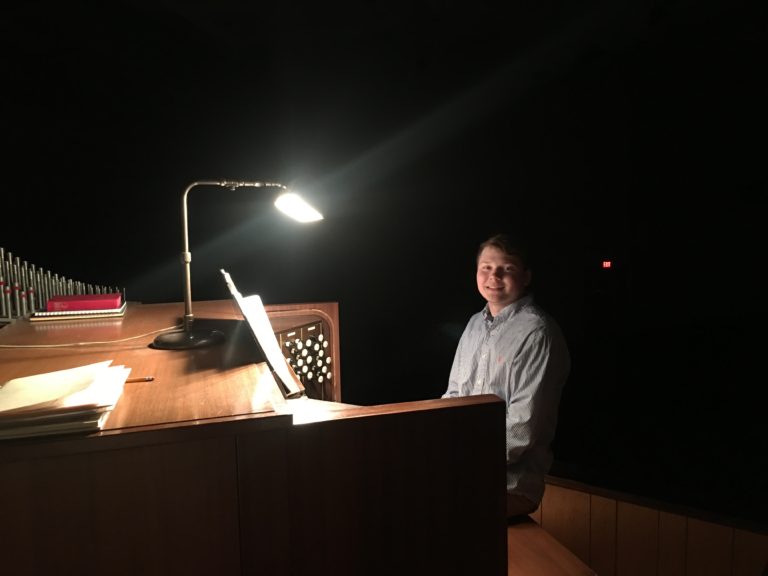
Rumors have been circling around Transylvania University surrounding the possible replacement of the Mitchell Fine Arts’ beloved organ. Many fine arts students oppose the idea, as the organ holds much history near and dear to Transy. In efforts to gather a professional opinion before the organ’s supersession, I reached out to Dr. Allen Fletcher.
Fletcher is a Transy alum who majored in history and music, mainly focusing on organ performance. During his rising senior year of 2017, Fletcher was interviewed by The Rambler on his never-ending knowledge of organ playing. Upon the scare looming over current organ protectors, I conducted a follow-up interview with Fletcher, who has since graduated and works with not only the Kentucky Historical Society, but also as a piano accompanist at Transy.
As Fletcher identified his origins as a Transylvania student, he reflected, “I started as a piano student. I was on a piano scholarship and took lessons with Dr. Greg Partain, and he went on sabbatical- I think it was my second semester here. So, I thought I’d try organ for a change. The organ teacher at the time was Richard Dwyer, and I had a really good experience with him. I enjoyed taking organ lessons so much that I thought, why not make it a second major? To my knowledge, I was the first organ performance major in more than a decade.” When prompted with a question regarding the possibility of majoring in organ performance today, Fletcher provided, “I think that you could potentially make it work as a music performance major, but so few people play it that they don’t come around that often.” Such analysis is crucial to Transy’s current situation, as the university is one of the only in the state to still hold an organ program.
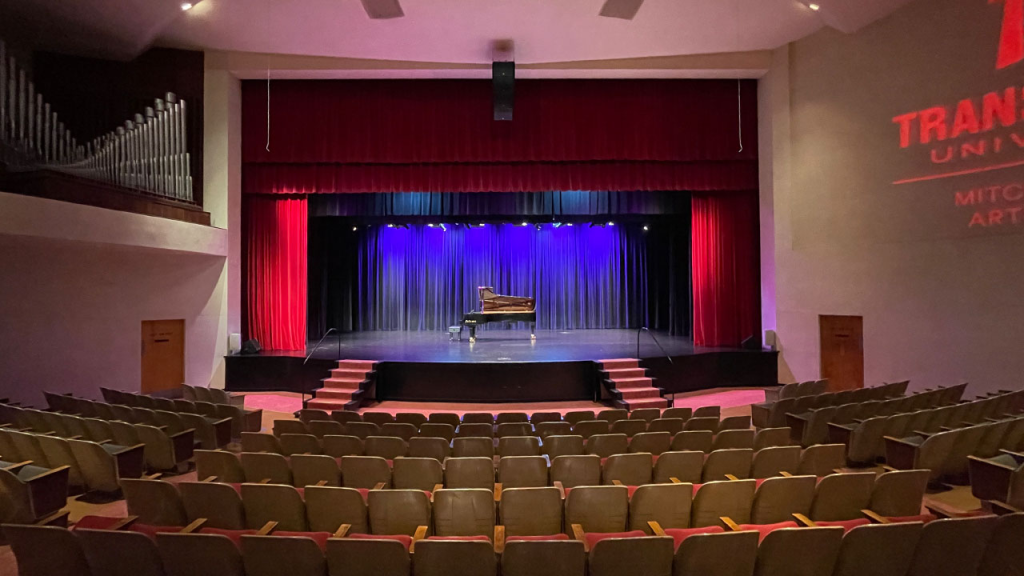
Fletcher continued to elaborate on the intricacies of the organ: “It’s a complex and misunderstood instrument, I think. A lot of people associate organs with churches, which makes complete sense, because that’s where most of the organs are these days. But, they can also serve another purpose. Of course, we have the MFA organ here in Haggin, so some auditoriums and concert halls will still maintain their organs.” With the diminishing presence of organs outside of religious situations, treasuring our organ at Transy is crucial to preserving the instrument’s identity and versatility.
As our conversation ensued, I asked Fletcher if organ lessons are still offered at Transy, as his experience with organ instruction inspired his college direction. He explained, “I think Angela Eaton now offers organ lessons. At least, I’ve seen organ lessons in the course catalog each semester. Whether that means they’re being actively offered, I don’t know.” As a professional organist himself, the uncertainty behind Fletcher’s knowledge of organ lessons at Transy was telling as to how the instrument’s value in instruction has been overlooked throughout the past eight years.
At this point in the interview, I decided to ask Fletcher if he would advocate for the refurbishment or replacement of the organ, considering his expertise in the field: “Well, that’s the million-dollar question, because organs are notoriously expensive to maintain. You can see just the size of this organ- it has over 2,000 pipes, and each one of those has to be individually tuned, so they’re expensive to tune. Especially if you get a lot of moisture, mold can grow in the pipes, so all that to say that it would cost tens of thousands, if not hundreds of thousands of dollars to fix the organ. And, it would also cost hundreds of thousands of dollars to get a new organ! Either way, it’s going to be expensive, and what we’re seeing in the organ at Transy is actually happening to a lot of organs at other schools across the country that are sort of falling into disrepair, and they’re not used all that much. So, it’s really hard for a lot of schools to justify spending so much money to maintain these really expensive instruments… Either option would be expensive, but at this juncture, it would probably make more financial sense to fix what we already have.” Fletcher’s response aligned with many Transy students, as the potential replacement of the organ has been frowned upon within the student body. However, the suggestion to fix the current organ is, in no way, an easy task. From various viewpoints, addressing the organ is going to be a daunting ordeal.
Fletcher went on to elaborate on his care and regard for the organ: “I continue to advocate for the organ, not only in the church- I mean, I am a church organist. But it serves other purposes too. If you’ve ever been to the Kentucky Theatre downtown, they have an old, 1920s theatre organ that they’ve been refurbishing. I think once a week or once a month, they have silent films where they’ll have an organist come in and play before the film, and then actually play during the film. So, that’s one way that I think organs can become more visible.” By addressing the organ as a flexible and relevant instrument, Fletcher provides opposition to the argument that organs are oriented towards a single genre.
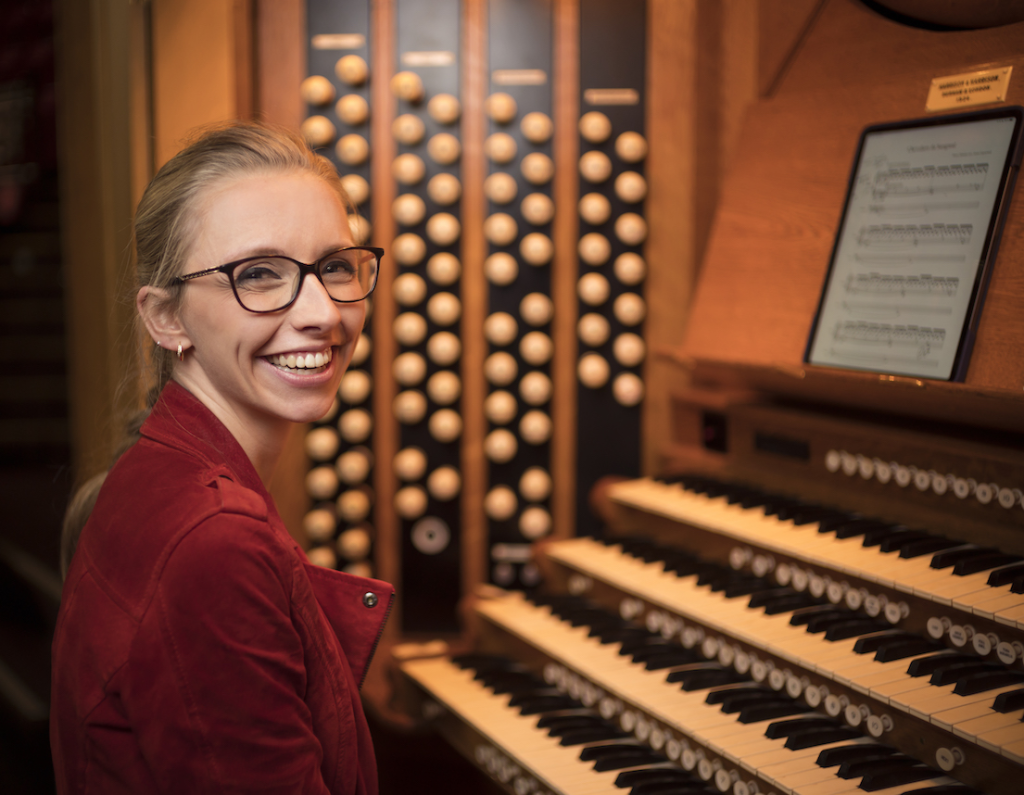
The organist continued to describe others who share his love of organ playing: “Especially today in the age of social media being everywhere, there are some people who have become real ‘organ advocates, as I call them. There’s a lady named Anna Lapwood- she’s British and is about 30, and she has become known as the “TikTok organist” because she’s got an account and is reaching millions of people this way. She’s really trying to push the boundaries of organ music away from classical music and church music, so she goes around the world playing famous organs, and really does a lot with film scores, for example.” By highlighting Anna Lapwood’s work in preserving the art of organ playing, Fletcher established himself as both an ally and an advocate for expanding the organ into other musical contexts.
Throughout our interview, I began to ponder the mortality of organs. Upon asking Fletcher if he worries about organs fading into history, he replied, “I worry about it, but not a whole lot, just because there still is a pretty well-established tradition of organs in churches, and there are some people who are really clinging to the traditional ways, where you have a formal church service that has an organ. This was true eight years ago when I did my first interview, and it’s true now, that fewer and fewer churches are using organs, but I don’t think they’re in danger of extinction any time soon.” While Fletcher held slight concern for organs being played less, he remained realistic and positive that the instrument would not lose its prevalence in the near future.
At the end of our interview, I asked Dr. Fletcher if we could go to the organ in Haggin and experience the different mechanisms; unfortunately, the instrument was blocked off with “DO NOT ENTER” signs. With respect for MFA, we refrained from investigating the organ and its current condition. Such realization led Fletcher to exclaim, “It really is, for lack of a better word, a heck of an instrument, that people see when they come into Haggin, but they don’t always get to experience what it can really do. So, I do hope that they’ll find a way to keep it going.”
Like Dr. Fletcher identified, the organ is truly a misunderstood instrument. It requires extreme efforts to learn and maintain the historic set of pipes, but the challenge and difficulty provided by the organ combine to make beautiful and fulfilling sounds. While Transy might not fully comprehend the organ’s capabilities, the university holds the responsibility of nurturing its beloved instrument.